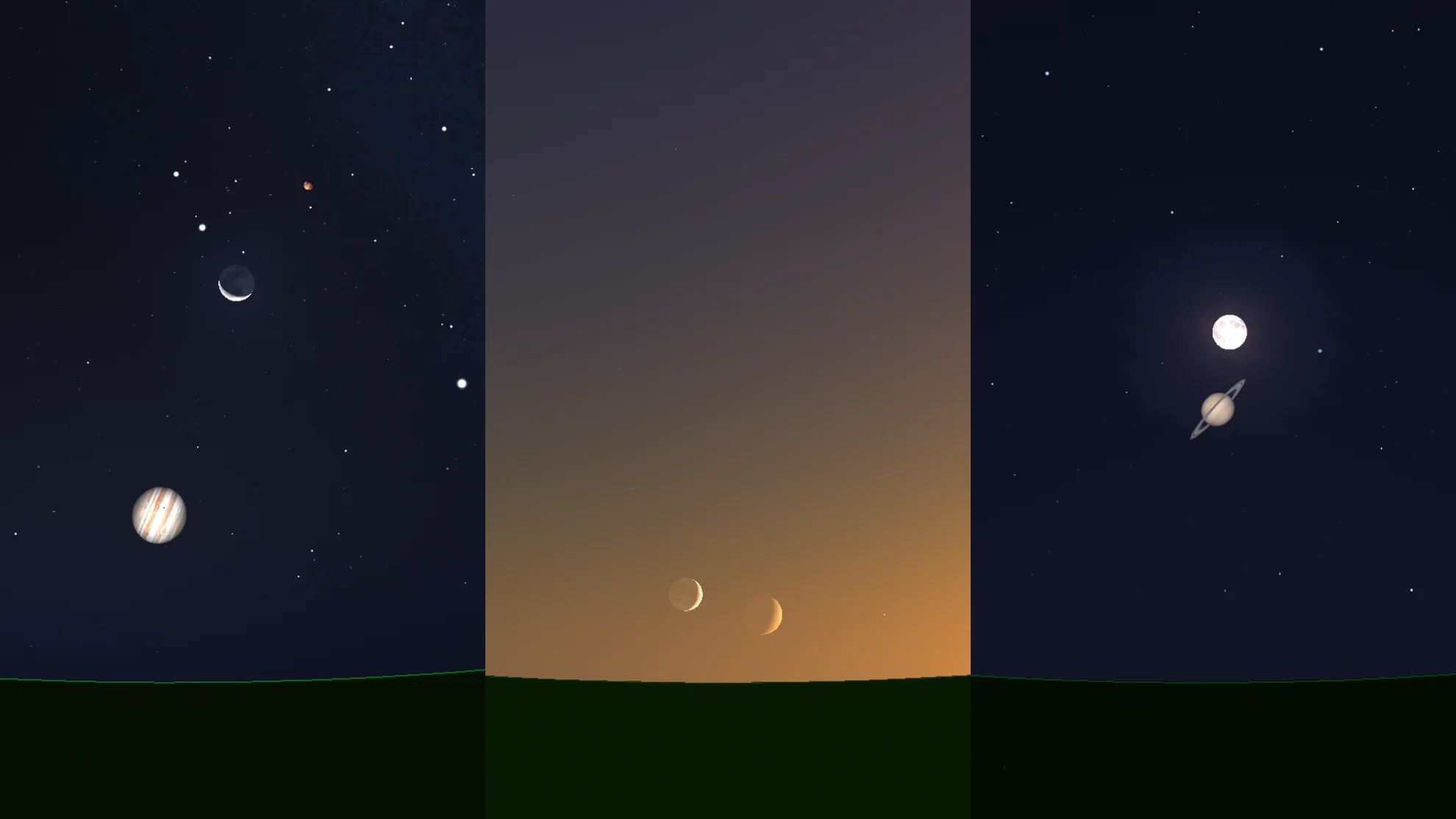
The planets visit with the Moon throughout the month of September

Some of the brightest planets are visible in our night sky, and look for the Moon to shine near them throughout the month of September.
As the nights grow longer in the weeks to come, look up to see some of the brightest planets being 'visited' by the Moon.
Here are the astronomical events of September 2026:
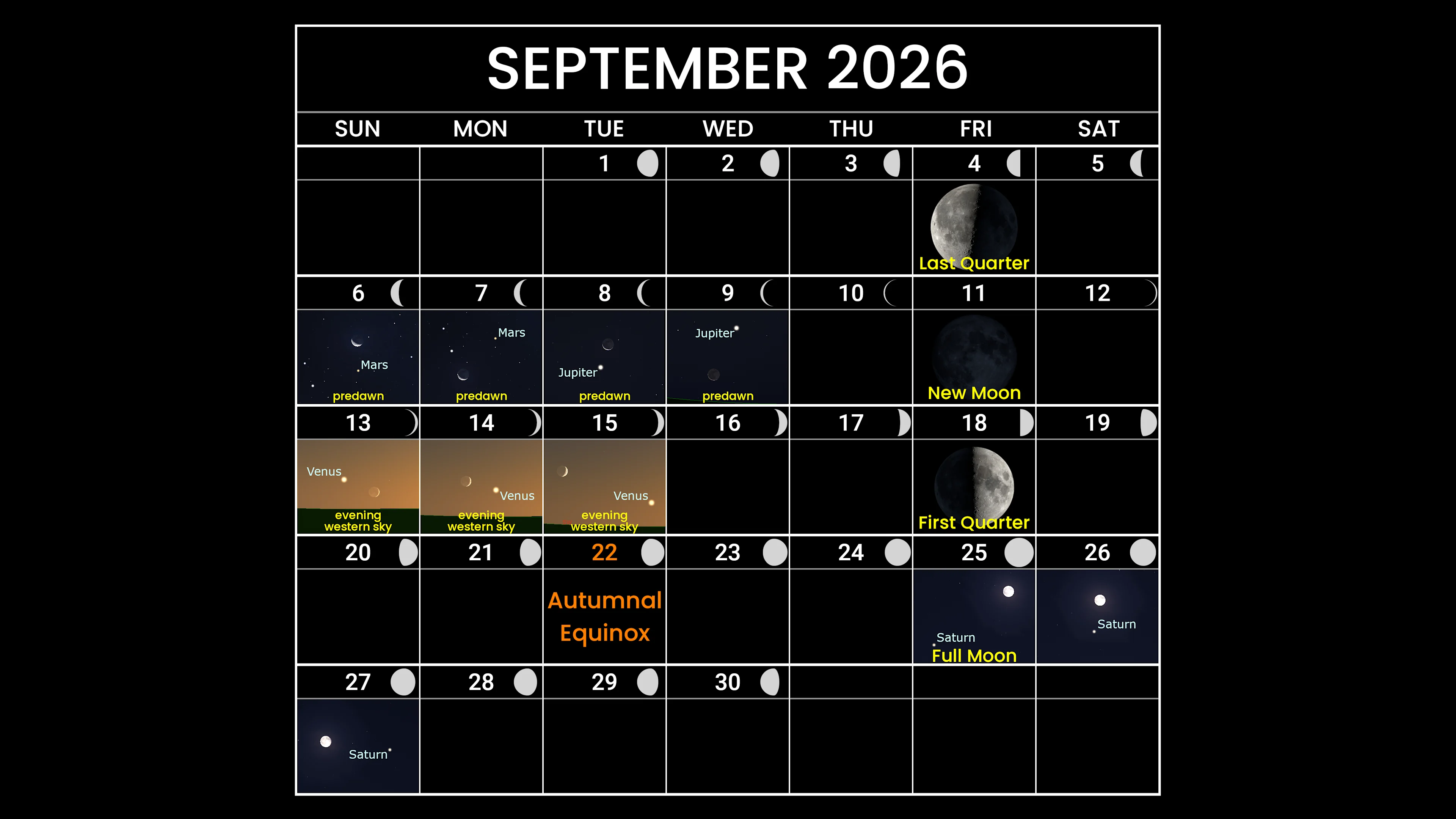
Click here for a zoomable version of the above calendar.
Visit our Complete Guide to Summer 2026 for an in-depth look at the Spring Seasonal Forecast, tips to plan for it, and much more!
The Moon
With the Full Sturgeon Moon in the last week of August, we start off the month of September with a Waning Gibbous Moon in the sky.
The illuminated part of the Moon (from our perspective) will shrink down to half, giving us the Last Quarter Moon on the 4th. Then, it will shrink further, producing the Waning Crescent Moon in the sky from the 5th through the 10th.
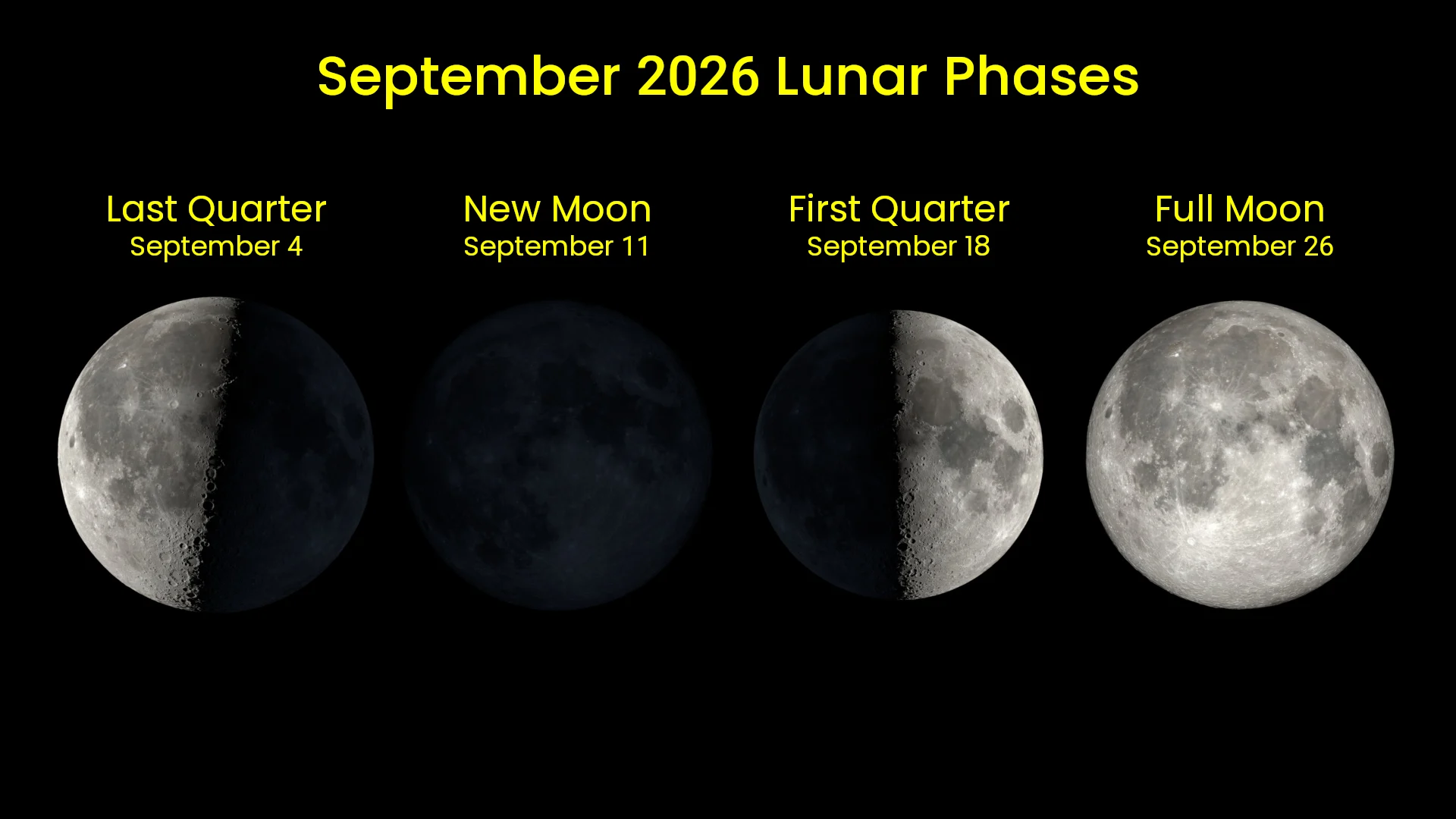
The phases of the Moon for September 2026. (NASA's Scientific Visualization Studio/Scott Sutherland)
The New Moon occurs on the 11th, giving us our darkest skies of the month. If you have clear skies, this is an excellent night for stargazing, spotting the Milky Way, or aiming a telescope at deep sky objects, such as nebulae and other galaxies.
The Waxing Crescent Moon will be in the evening sky from the 12th to the 17th, with the First Quarter Moon shining in the southern sky after sunset on the 18th.
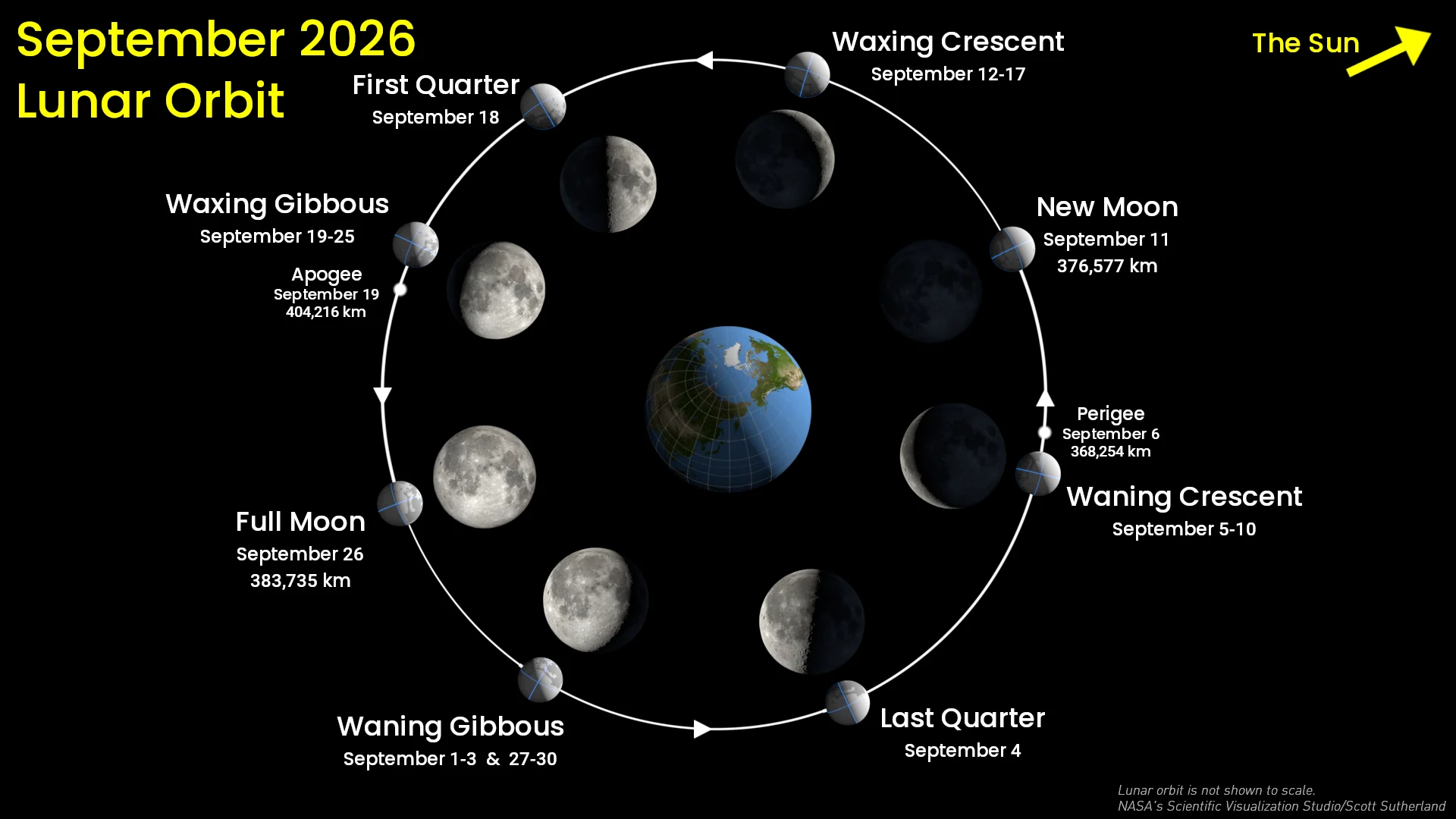
The Moon's orbit around Earth for September 2026, as it delivers its different phases to those of us here on Earth's surface. (NASA's Scientific Visualization Studio/Scott Sutherland)
A Waxing Gibbous Moon will greet us at nightfall from the 19th to the 24th, with the nearly Full Moon rising on the 25th.
Since the Full Moon is actually timed for around midday on the 26th (EDT), the Moon will appear full on the night of the 25th to 26th, then again all night on the 26th to 27th, and even as it rises on the night of the 27th.
We will then, again, have a Waning Gibbous Moon in the sky for the remaining nights of the month.
The Planets
Early risers can spot the planets Mars and Jupiter in the eastern sky just before sunrise throughout September. Mars will be distinctly red, while Jupiter will be quite bright.
Watch on the mornings of September 6 through 9 to see the Waning Crescent Moon nearby the two planets. It will appear near Mars on the 6th, between Mars and Jupiter on the 7th, near Jupiter on the 8th, and lined up with Jupiter and Mars on the 9th.
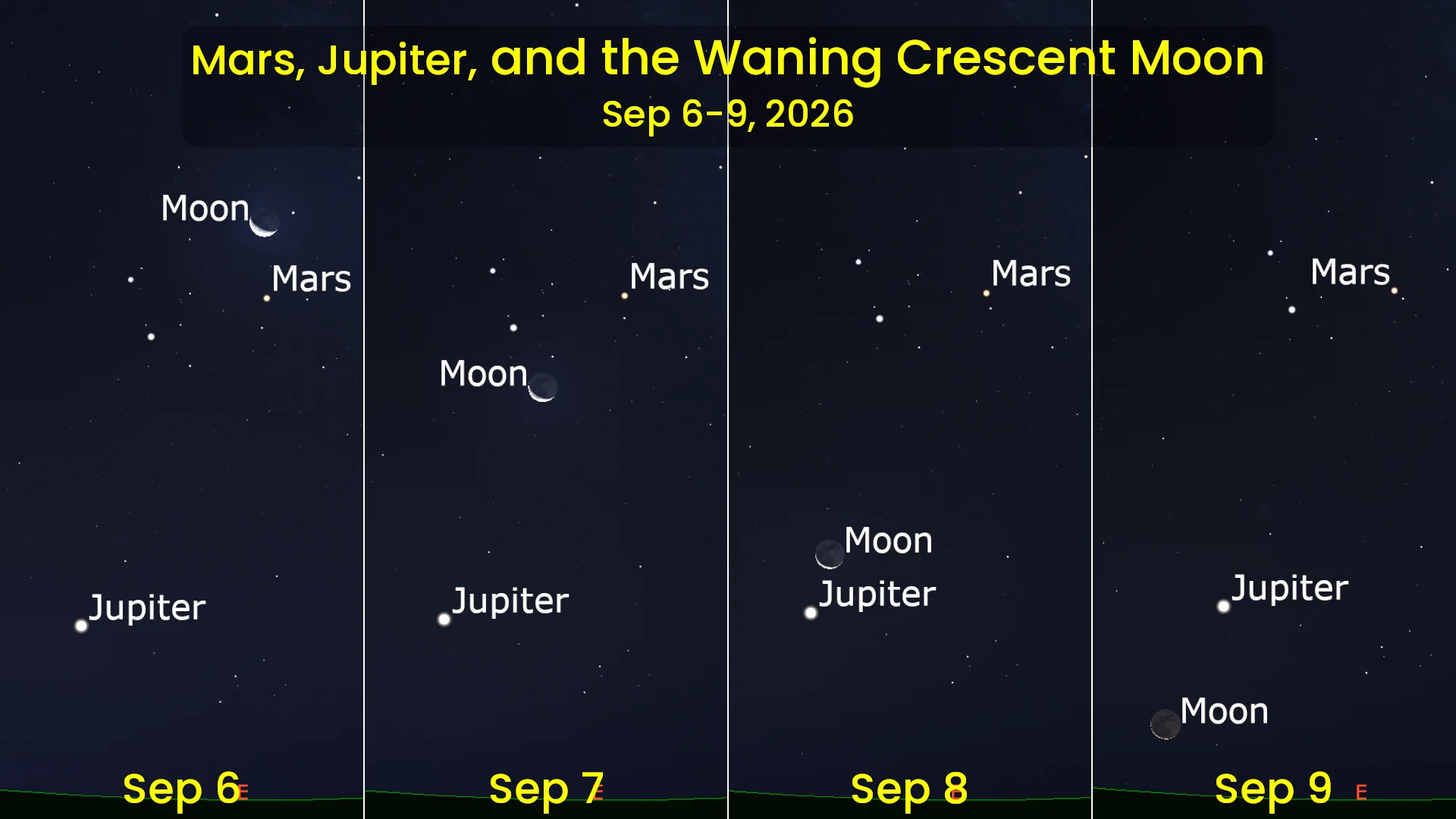
The Waning Crescent Moon appears near Mars and Jupiter on the mornings of the 6th through 9th. (Stellarium/Scott Sutherland)
Also on the 8th, skywatchers who locate the Waning Crescent Moon in the western afternoon sky can watch as Jupiter passes behind the Moon in an occultation. As this occurs during daylight, Jupiter will be invisible to the unaided eye. Thus, a telescope or set of binoculars will be necessary to observe this event.
Look to the western sky just after sunset for a chance to spot Venus just above the horizon.
The 'evening star' will remain above the horizon for only around an hour at the beginning of the month. The time between when it emerges from evening twilight and when it sets will grow shorter as the month progresses.
On the nights of September 13 to 15, we can also see the Waxing Crescent Moon nearby.
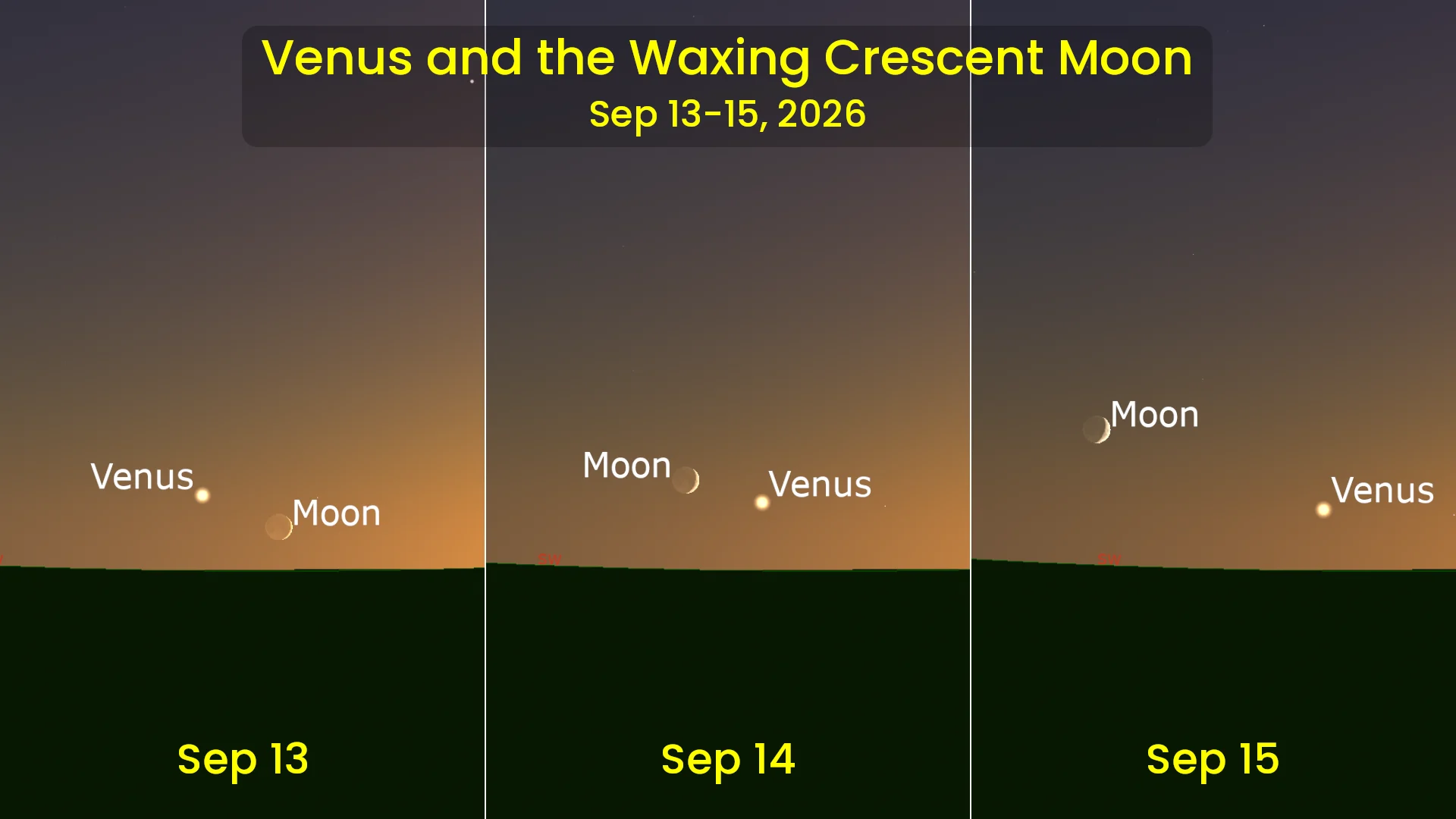
Venus and the Waxing Crescent Moon from the 13th to the 15th. (Stellarium/Scott Sutherland)
Meanwhile, Saturn will rise in the east around 9:30 p.m., local time, at the start of the month. It will then rise earlier and earlier each night, as it approaches its 'opposition' in early October.
September and October are the best times to see Saturn in 2026, as the planet is at its closest to Earth, and brightest in our skies, until mid-October of 2027.
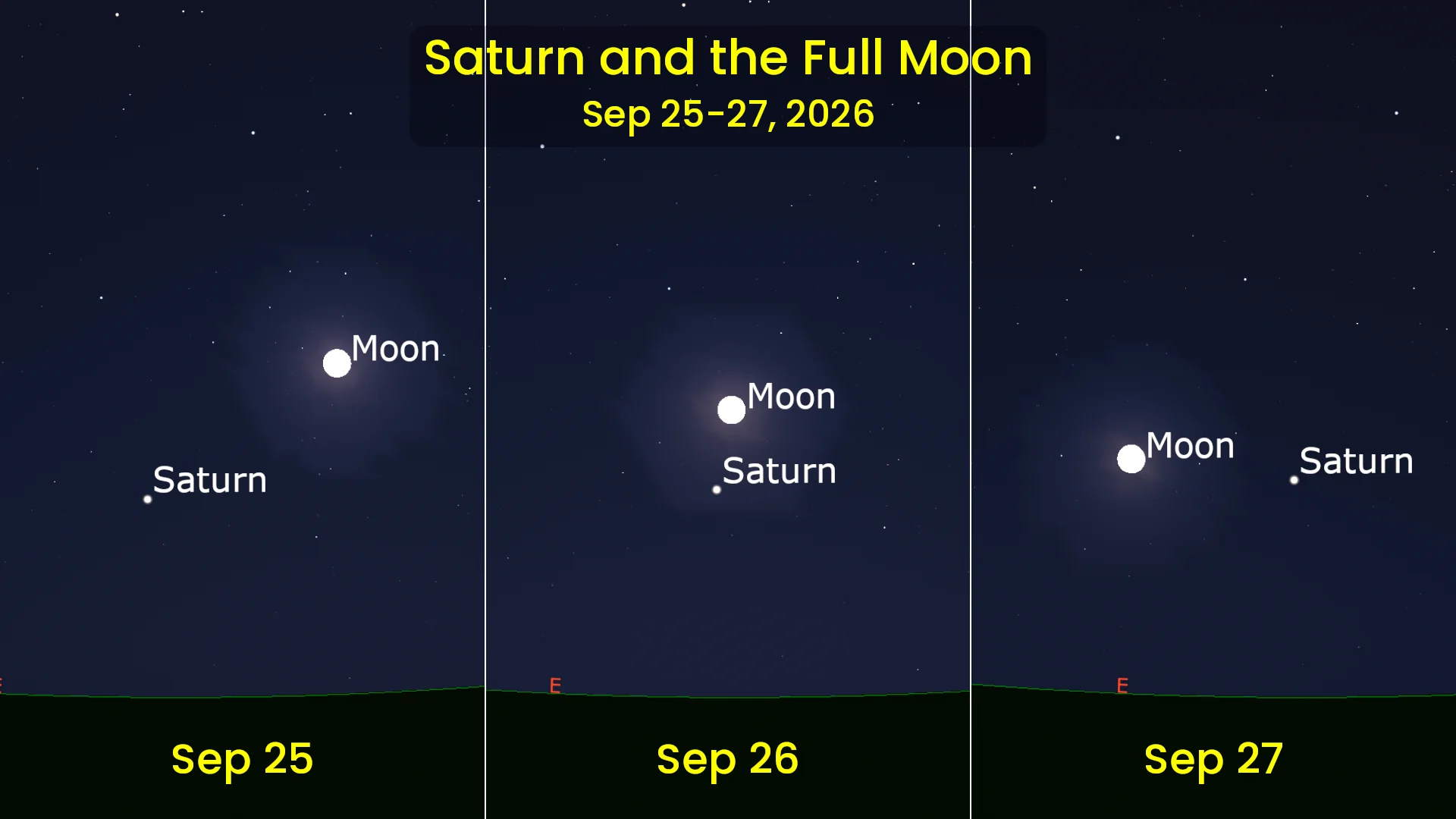
The Moon and Saturn on the nights of Sept. 25-27. (Stellarium/Scott Sutherland)
From September 25-27, we can see Saturn near the Full Moon and Waning Gibbous Moon, as they cross the sky together on those nights.
The Constellations
The summer constellations are beginning to give way for the constellations of fall during the month of September.
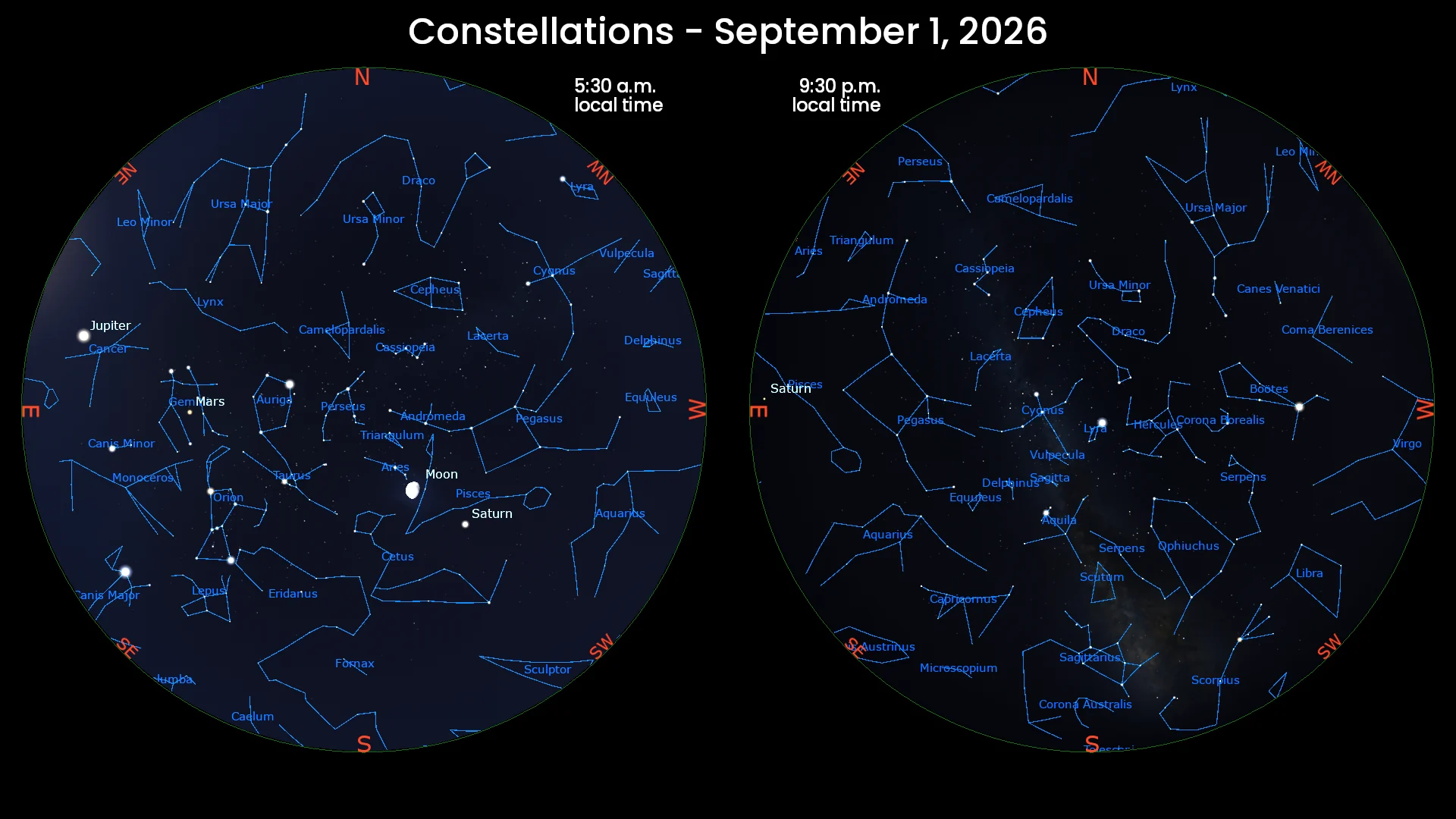
All-sky views of the predawn and evening constellations on Sept. 1, 2026. (Stellarium/Scott Sutherland)
At the beginning of the month, the predawn skies will be dominated by Cancer, Gemini, Orion, Taurus, Eridanus, Cetus, Pisces, and Aquarius to the south. Lynx, Perseus, Cassiopeia, Andromeda, and Pegasus will be visible higher up in the sky. To the north, we will see Ursa Major, Ursa Minor, Draco, and Cygnus.
In the evenings, Pisces, Aquarius, Capricornus, Sagittarius, Scorpius, Libra, and Virgo will be arrayed along the southern horizon from east to west. Higher up, Pegasus and Cygnus will have swung around into the eastern sky, and will be joined by Aquilla, Hercules, Ophiuchus, and Bootes. Lynx, Perseus, and Cassiopeia will appear with Ursa Major, Ursa Minor, Draco, and Cygnus to the north.
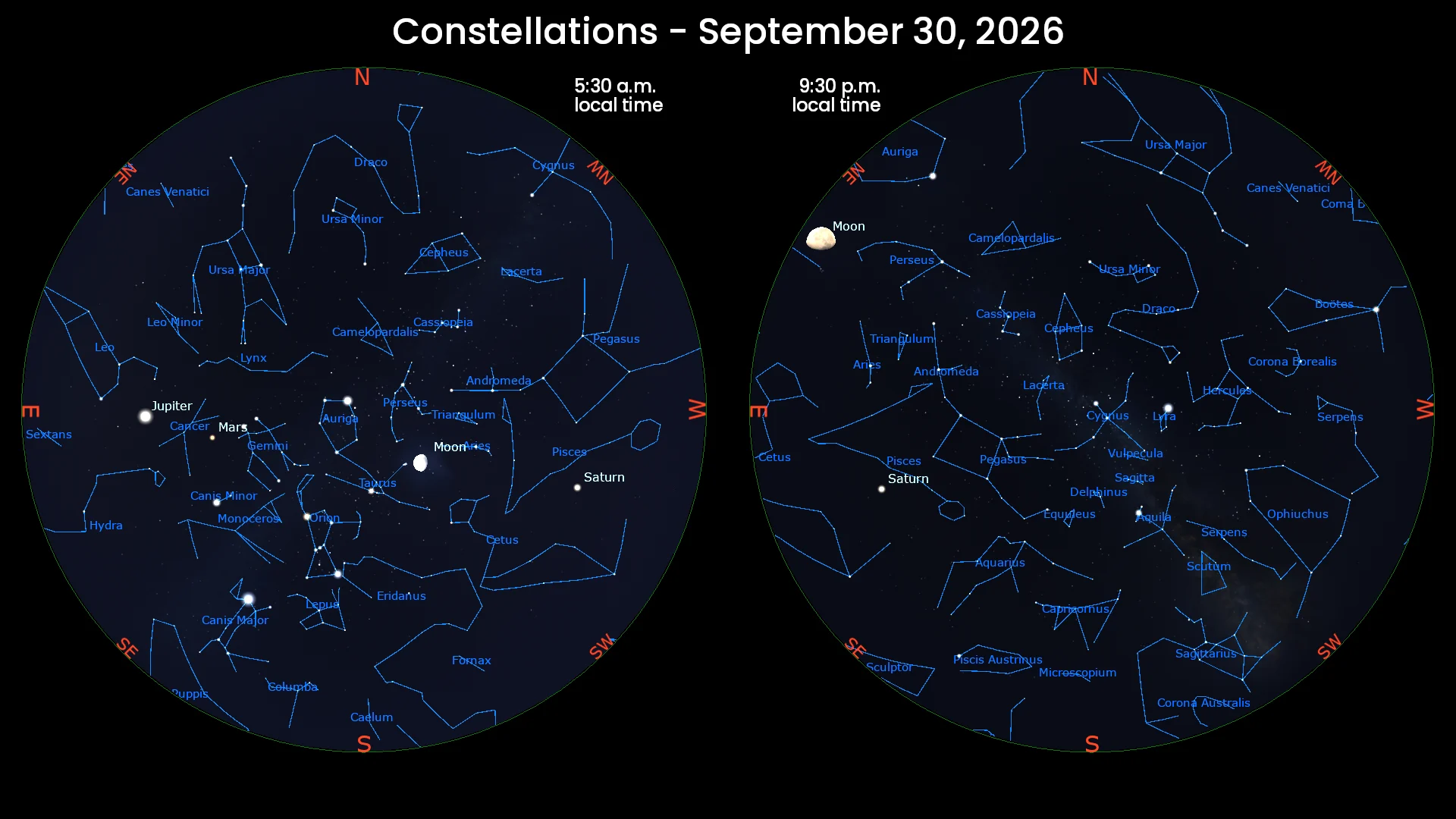
All-sky views of the predawn and evening constellations on Sept. 30, 2026. (Stellarium/Scott Sutherland)
By the end of September, the constellations will have shifted, putting Aquarius off the western horizon by morning, making way for Leo in the east. In the evening, Virgo will be pushed out in the west to make way for Pisces in the east.
With files from The Weather Network
Note: The thumbnail image for this article, made using the open-source planetarium software Stellarium, depicts the planets far larger than how they actually appear in the sky. The simulations presented within the article, itself, more accurately depict what the planets will actually look like.