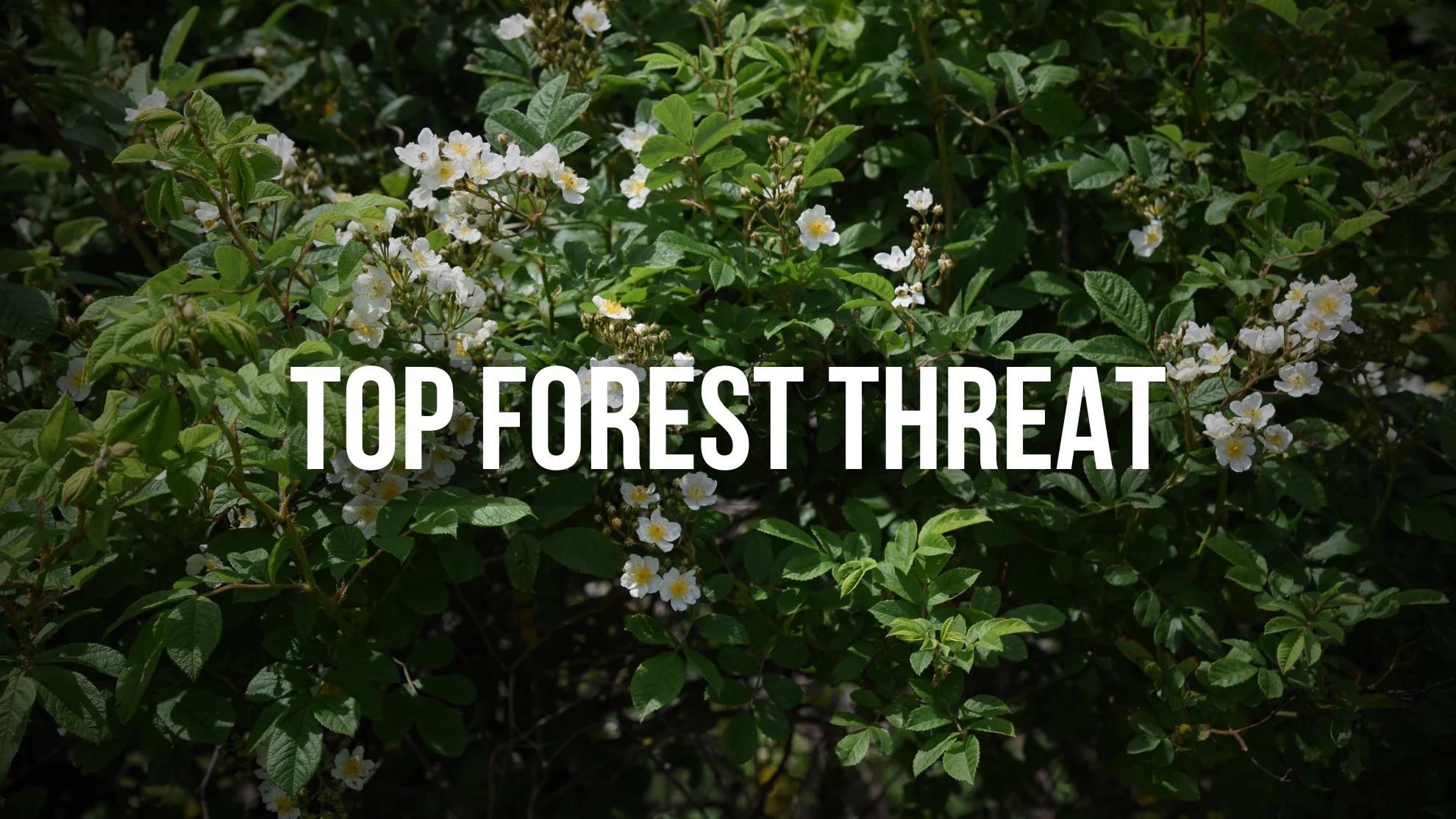
This ‘rogue’ flower is the ‘single greatest obstacle’ to healthy N.S. forests

Each plant produces up to 500,000 seeds annually that can stay dormant in the soil for 20 years.
While originally brought to North America in the 1800s from Asia and planted on purpose for decades, experts now call multiflora rose a rogue plant that spreads quickly and threatens ecosystems.
Speaking with the CBC, Samantha Knight, an ecologist and lead steward with Fort Needham Memorial Park in Halifax, called multiflora rose "the single greatest obstacle" to Nova Scotia's forest structure.
"What it does by disrupting the physical and biological environment around it is it really just provides opportunities for further degradation of the ecosystem," Knight told the outlet.
Between May 1 and August 13, 2026, there have been 978 reported sightings of multiflora roses across Canada, mainly concentrated in southern Ontario, and then heading eastward into Nova Scotia.
A problematic rose
With its clusters of small white and pink flowers in late spring and red berries in winter, multiflora rose may look inconspicuous, but it is equipped with several advantages that help it spread and make it hard to control.
Its fruit is often eaten by wildlife, which helps disperse seeds to new areas, where it can spread quickly, blocking out the sunlight and taking resources other plants depend on. Experts say it can quickly overwhelm and dominate an ecosystem.
Each plant produces up to 500,000 seeds annually, which can remain dormant in the soil for up to 20 years.
It can also tolerate a variety of weather conditions and can withstand both heat and cold. It has a long, sturdy cane that helps it remain intact during a strong wind event.
A host for a fatal disease
Multiflora rose is the primary host for rose rosette disease, which spreads from plant to plant by mites that are moved primarily through wind and human and animal activity. The fatal disease can infect and kill a variety of rose species.
Nova Scotia removal efforts underway
In Halifax, volunteers are gathering to attempt to remove the plant from parts of the city. Meanwhile, Knight told the CBC she is surveying the rose in Halifax Park and prepping for removal efforts, which include cutting back the plants and starving it by continuing to cut new shoots.
"We know it's going to be a big task and it's going to take a lot of very persistent effort," she told the outlet.
"We rely on intact habitats for our food, clean air, filtered water, carbon storage, all these things.
Even just getting out and enjoying a forest feels a lot different when you're in a natural ecosystem compared to one that's been completely degraded by invasive species."