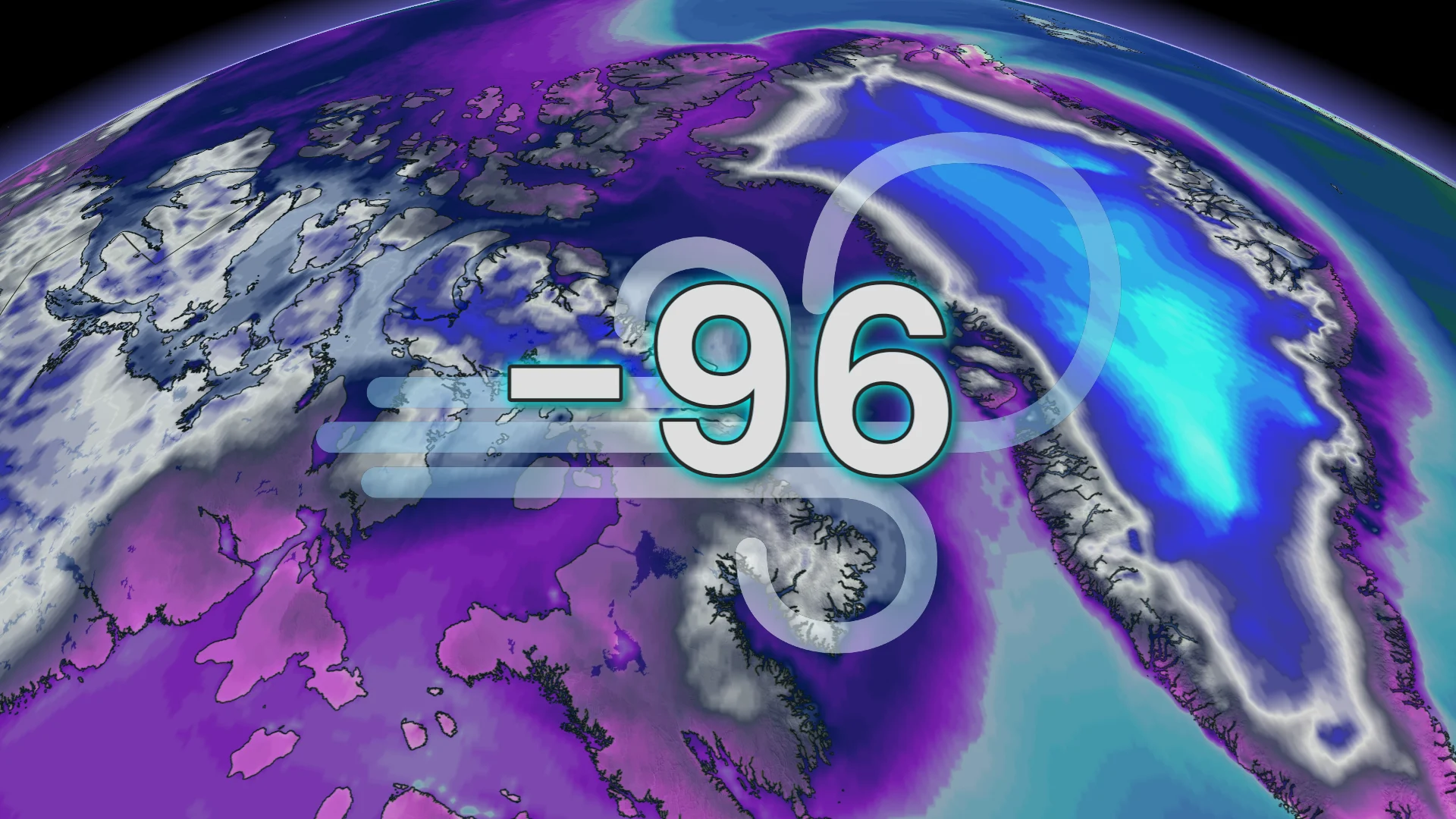
Wind chill of -96: Winter completely bottomed out this year

A bone-chilling temperature in Greenland took this season’s frigid air to a whole new level
A long, dark winter sent deep chills bearing down on far-flung corners of the northern hemisphere this winter.
Actual air temperatures dipped into the -50s and even -60s in some locations, pushing the bottom of the barrel for how cold temperatures can get during even the most frigid spells.
DON’T MISS: Canada feels its coldest December temperature in 50 years
Canada, Russia, and Greenland led the pack
Three of the coldest locations in the northern hemisphere pushed it to a new level this winter, with one spot in Greenland dropping about as cold as possible.

Here in Canada, the community of Braeburn, Yukon, saw readings fall to -55.7°C on Dec. 23, marking the country’s coldest temperature since 1999.
Two days later, temperatures fell to -58.8°C in Delyankir, Russia, in the midst of a stretch during which readings failed to rise above -50°C for more than three days.
While Siberia and the Canadian Arctic have dabbled with the -50s a few more times since the start of the new year, Greenland just took it to a whole new level.
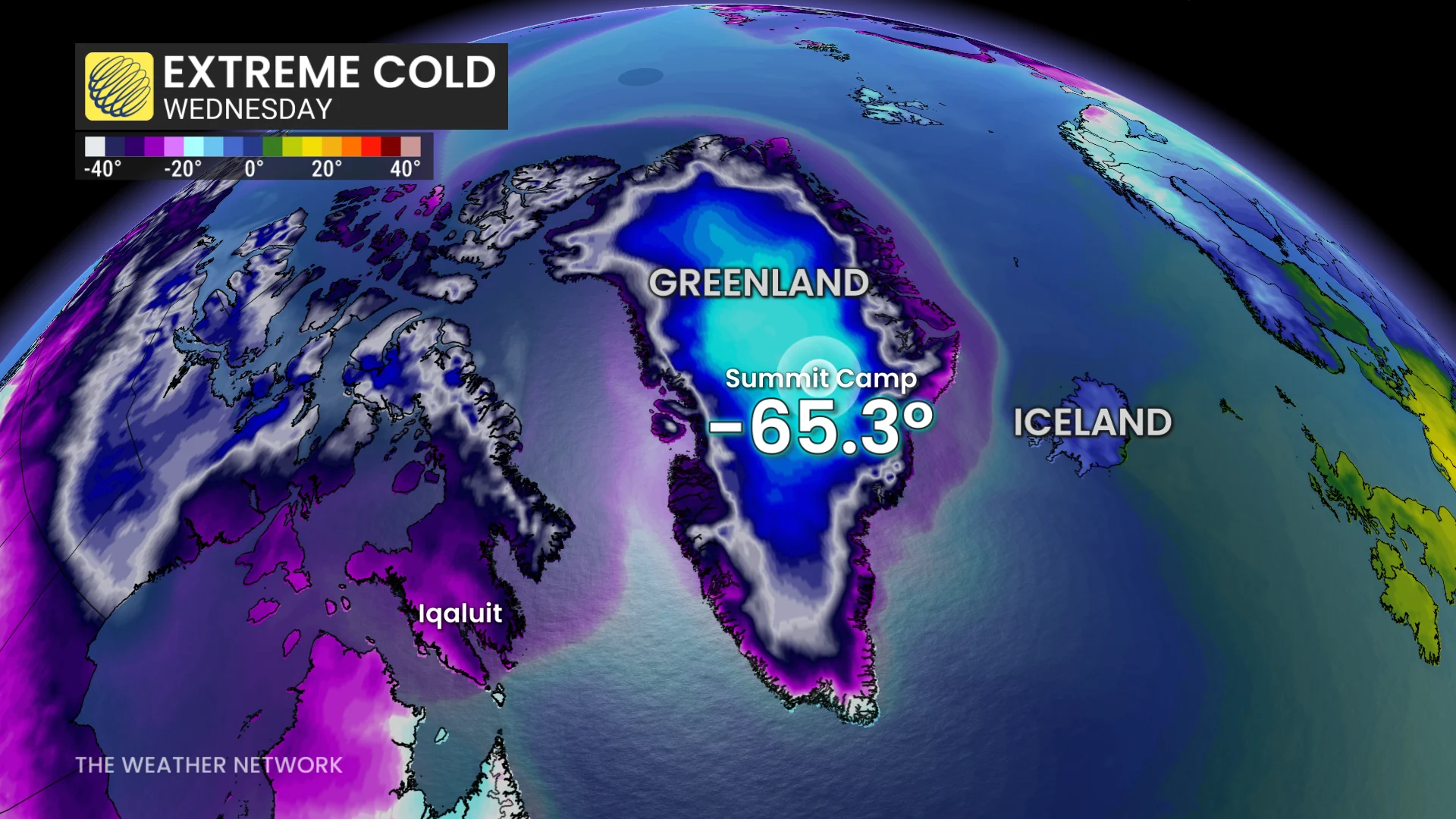
Summit Camp, which is located in the middle of Greenland at an elevation of 3,200 m, dropped to -65.3°C on the morning of Wednesday, Feb. 25.
RELATED: Greenland is a pristine gem of the Arctic. It’s warming fast
At that temperature, a moderate walking speed of 5 km/h would result in a wind chill reading of -76. Usain Bolt’s top running speed of 44 km/h would have him feeling a wind chill value of -96.

Greenland is no stranger to the deepest Arctic chills. A weather station on the world’s largest island recorded an astonishing low of -69.6°C on Dec. 22, 1991, which stands today as the coldest temperature ever observed in the northern hemisphere.
The world’s all-time coldest temperature occurred at Antarctica’s Vostok Station on Jul. 21, 1983, when the weather station recorded a bone-chilling reading of -89.2°C.