
Too cold to fly? Some flights in the Far North cancelled Sunday

Temperatures below -50°C forced at least one airline to cancel its flights on Sunday
When is it too cold to fly? Some travellers in far northwestern Canada found out the answer on Sunday after several flights were cancelled due to frigid temperatures.
The region has endured an exceptional cold wave over the past couple of weeks, which culminated in Canada’s coldest reading in 50 years.
DON’T MISS: Six annoying ways weather forces airlines to cancel your flight
Several flights cancelled due to cold on Sunday
Travellers are used to dealing with weather disruptions at the airport.
A weekend snowfall in Amsterdam, for instance, cancelled hundreds of incoming and outgoing flights. That’s no small ordeal given that the city is a major European travel hub.
But snow and ice aren’t the only conditions that can cancel your flight.
“Due to exceptionally low temperatures, all flights scheduled for today have been cancelled,” North-Wright Airways posted on social media on Sunday. “Safety is always our top priority, and our team is already working to reschedule all affected passengers as conditions allow.”
The airline, based in Norman Wells, operates several small aircraft throughout the Northwest Territories.
Extreme cold throughout the Far North
Northwestern Canada is in the final days of a brutal spell of intense cold that’s lasted for several weeks.

RELATED: Yukon U-turn underway after one of longest cold snaps on record
Braeburn, Yukon, saw a reading of -55.7°C on Dec. 23, marking the coldest temperature measured in Canada in 50 years. Several communities in the region endured nineteen consecutive days with nighttime lows at or below -40°C.
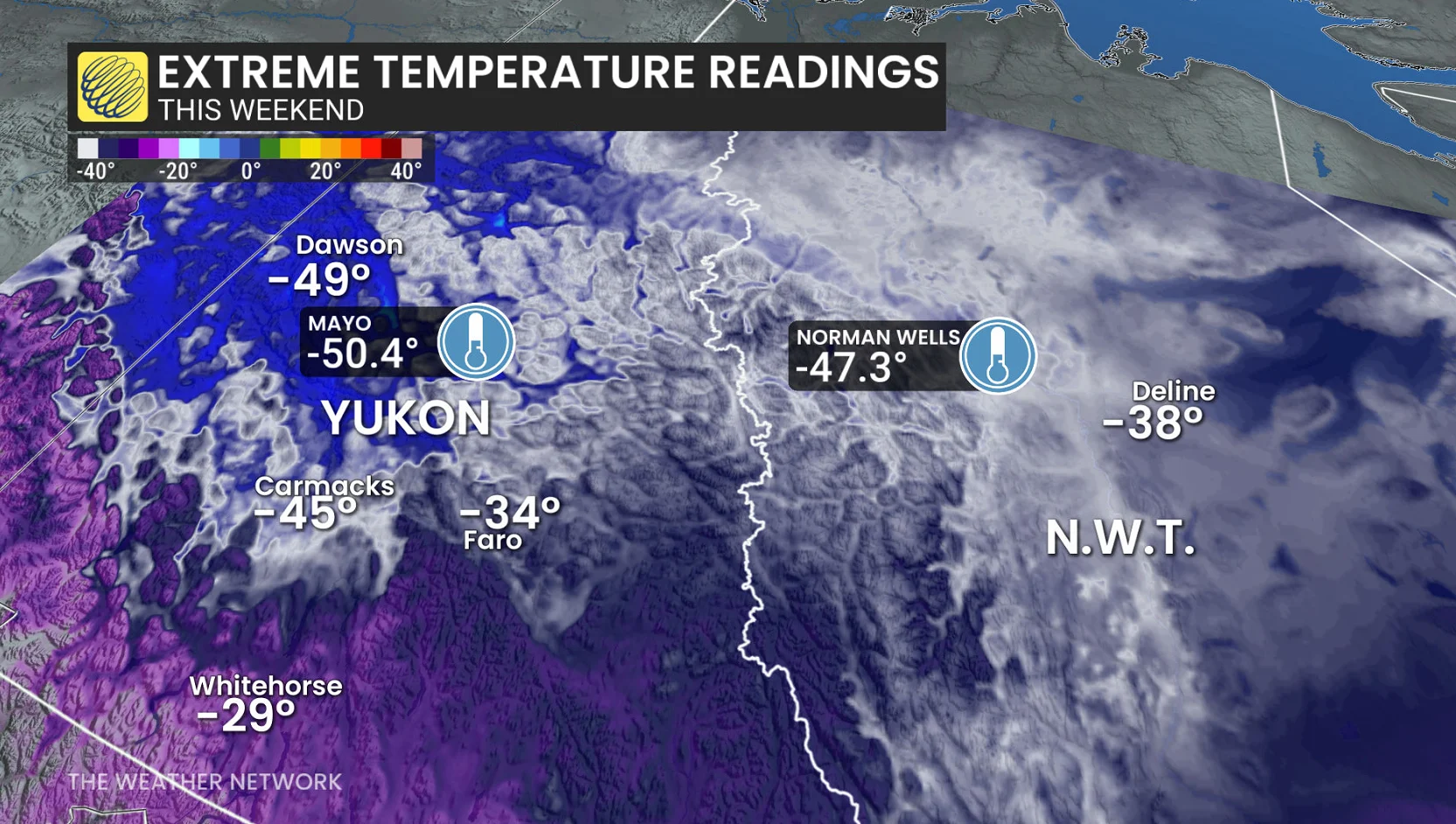
This weekend’s intense cold saw temperatures dip below -50°C in some areas. Mayo, Yukon, bottomed-out at -50.4°C, while Norman Wells saw a low temperature of -47.3°C.
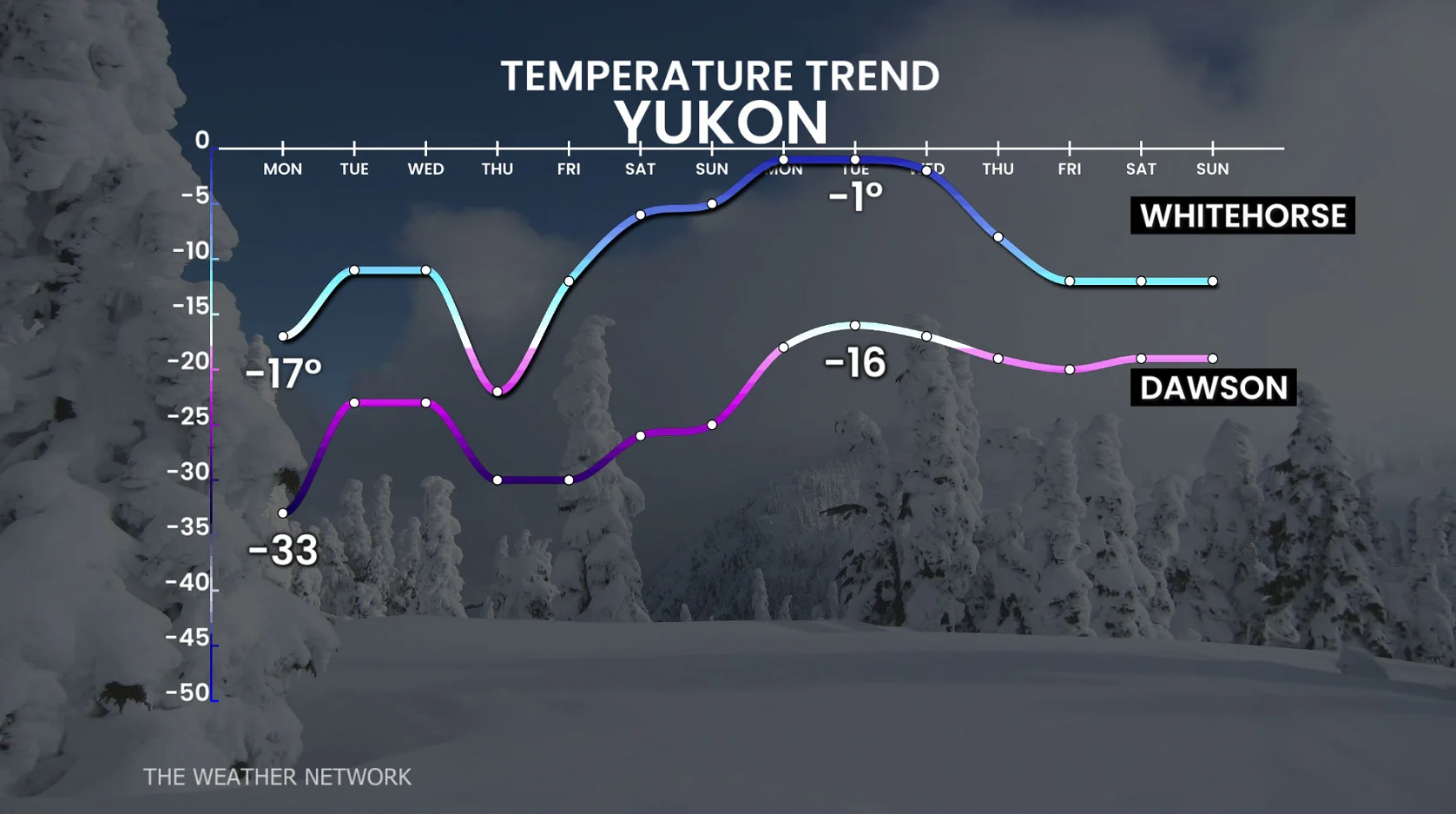
Conditions are expected to moderate in the days ahead as a surge of Pacific air moves into the region. Temperatures should rebound significantly by the middle of the month, with Whitehorse forecast to approach the freezing mark in about a week’s time.
Why airlines cancel flights for extreme temperatures
Flying in the wintertime presents a unique set of hazards. Ice is the most pressing concern. Even a light frost can significantly disrupt airflow over the aircraft’s skin.
But extremely cold temperatures on their own can affect various aircraft systems, potentially posing a safety risk when temperatures approach the -50s.
Travellers may be more familiar with the opposite end of the spectrum. Conditions can also be too hot to fly due to reduced engine thrust and longer runway requirements.
Flights through desert locations such as Phoenix and Las Vegas are sometimes delayed or cancelled in the heart of summer due to temperatures as hot as 50°C.