
The strongest nor’easters are getting even stronger, study finds

Nor’easters are growing more intense and producing more rain and snow than ever before, according to a recent study
Nor’easters are getting stronger as the planet warms, a recent study warns, representing a trend that could have significant consequences for coastal communities along the Atlantic coastline.
The trend of stronger nor’easters carries the risk for coastal flooding, beach erosion, significant snowstorms, and even more intense cold snaps for inland communities.
DON'T MISS: 'Weather bombs': Explosive storms that create ferocious conditions
Nor’easters can pose major issues along the East Coast
A nor’easter is a low-pressure system that produces strong northeasterly winds along the eastern coasts of the U.S. and Canada.
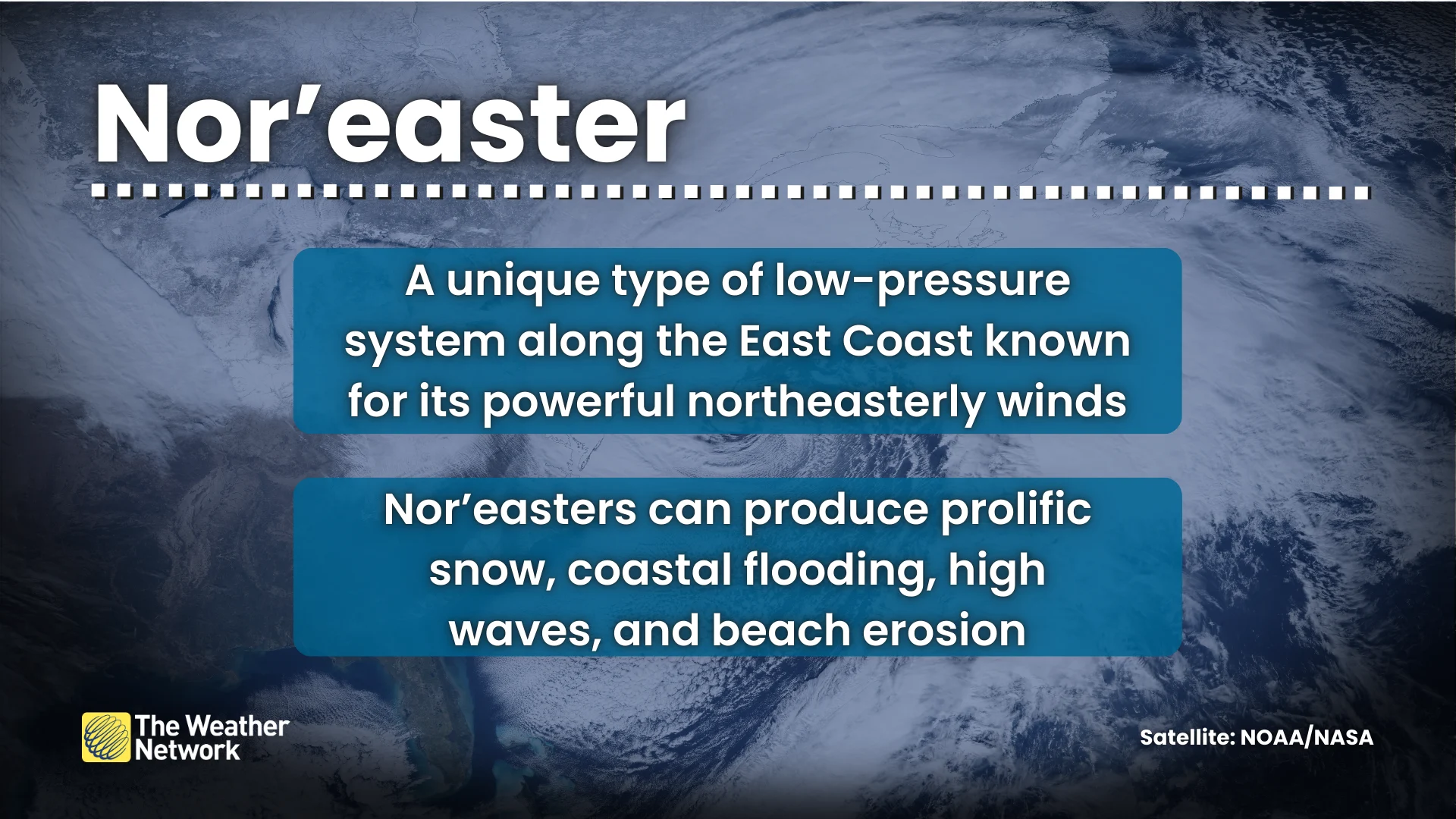
Drawing on intense dynamics within the upper levels of the atmosphere, as well as relatively warm ocean waters below, these storms develop distinct characteristics that make them more intense than your run-of-the-mill lows.
Nor’easters are especially impactful given that they affect many dense population centres between Washington, D.C., and Halifax, Nova Scotia.
A particularly intense system can produce damaging winds, dangerous storm surge flooding, as well as intense spells of heavy snow, ice, and rain.
Researchers uncover trends studying 75 years of nor’easters
What effect will climate change have on nor’easters heading into the future? Experts have found that low-pressure systems like nor’easters will actually become less common as the atmosphere warms.
However, a recent study published in the Proceedings of the National Academy of Sciences found that these sprawling storms will have the opportunity to produce more intense winds and greater precipitation rates going forward.
Several factors are contributing to the long-term intensification of nor’easters. A warmer atmosphere can provide a richer feed of moisture to a budding nor’easter. Warmer sea surface temperatures can allow these storms to draw some additional energy from the ocean, lending an extra hand to intensification.

The growing trend of more intense nor’easters is bad news for coastal communities from Florida to Newfoundland.
For example, one nor’easter in early January 2018 proved exceptionally damaging and disruptive. Coastal communities throughout New England and Atlantic Canada saw wind gusts higher than 115 km/h as the system hit the region, leading to widespread power outages and coastal flooding.
Cold air wrapping into the system from the north allowed snow to fall from the Gulf of Mexico to the Gulf of St. Lawrence. Portions of northern Florida witnessed a rare dusting from the system. Bathurst, New Brunswick, picked up nearly 60 cm of snow over the course of two days.
A future with stronger and wetter nor’easters could increase the risk for wind damage, dangerous flooding, and highly disruptive amounts of rain and snow for communities throughout the Atlantic seaboard.
Header image courtesy of NOAA/NASA.