The Groundhog Day Blizzard was a billion-dollar disaster

Intense snow and whipping winds hammered communities from Texas to Nova Scotia during the historic storm in 2011
Legendary storms live in the history books with equally lofty nicknames. A powerful snowstorm that swept across North America in early 2011 was one of those storms.
The Groundhog Day Blizzard of 2011 spun to life on Jan. 31 and roared toward Eastern Canada jam packed with Arctic air and tropical moisture.
Records fell as relentlessly heavy snow and high winds hit communities from Texas to Nova Scotia.
DON’T MISS: What turns a snowstorm into a raging blizzard?
A powerful storm with Arctic and tropical roots
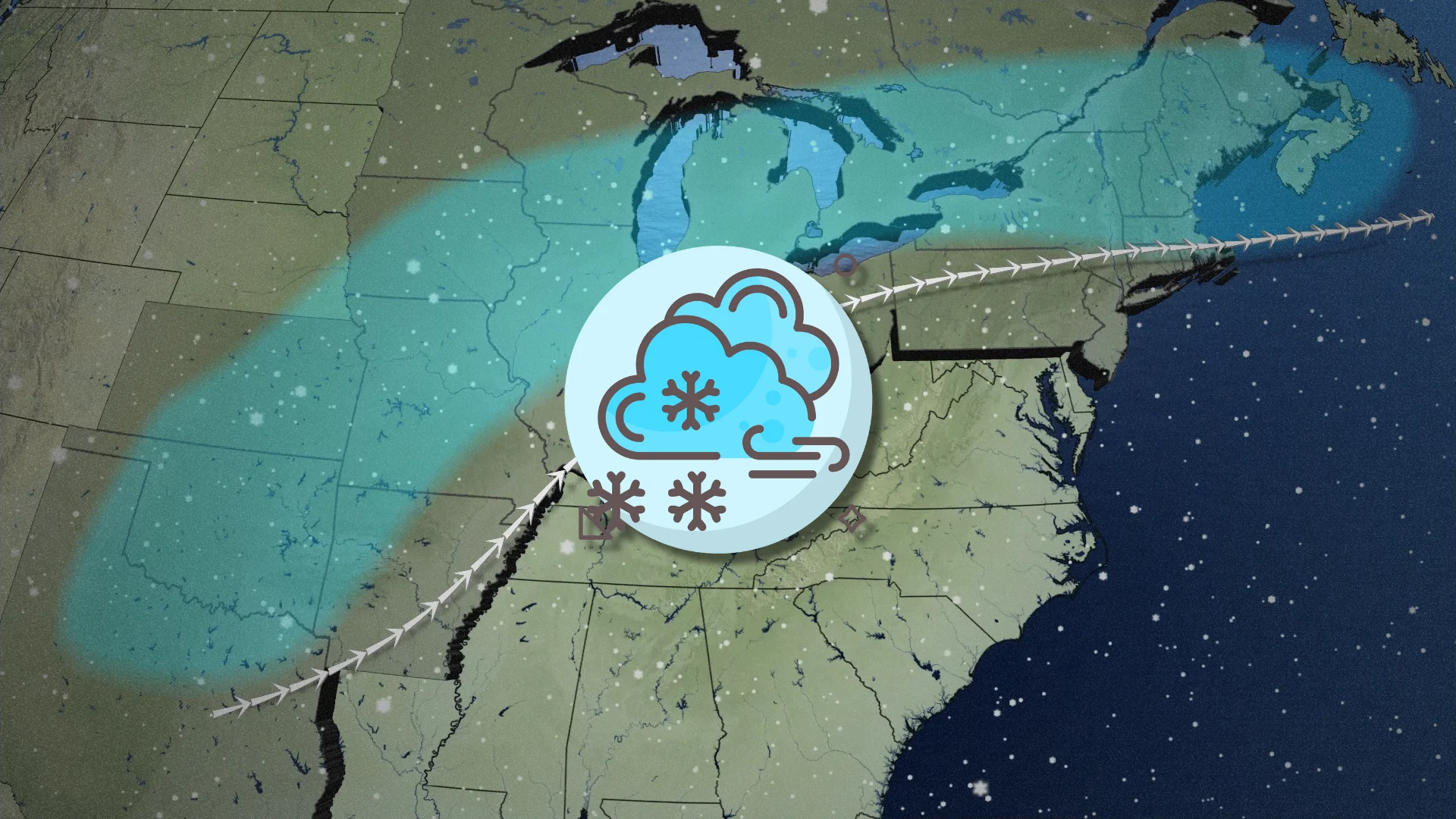
A sharp trough digging over the central United States in the closing days of January 2011 allowed a flood of Arctic air to dive as far south as Texas. The pattern gave rise to a strong low-pressure system over southern Texas late in the evening on January 31.
Forecasters watched the low-pressure system rapidly intensified as it moved north up the Mississippi River. Extremely heavy snow followed the track of the system as it curved north and east toward the Great Lakes.
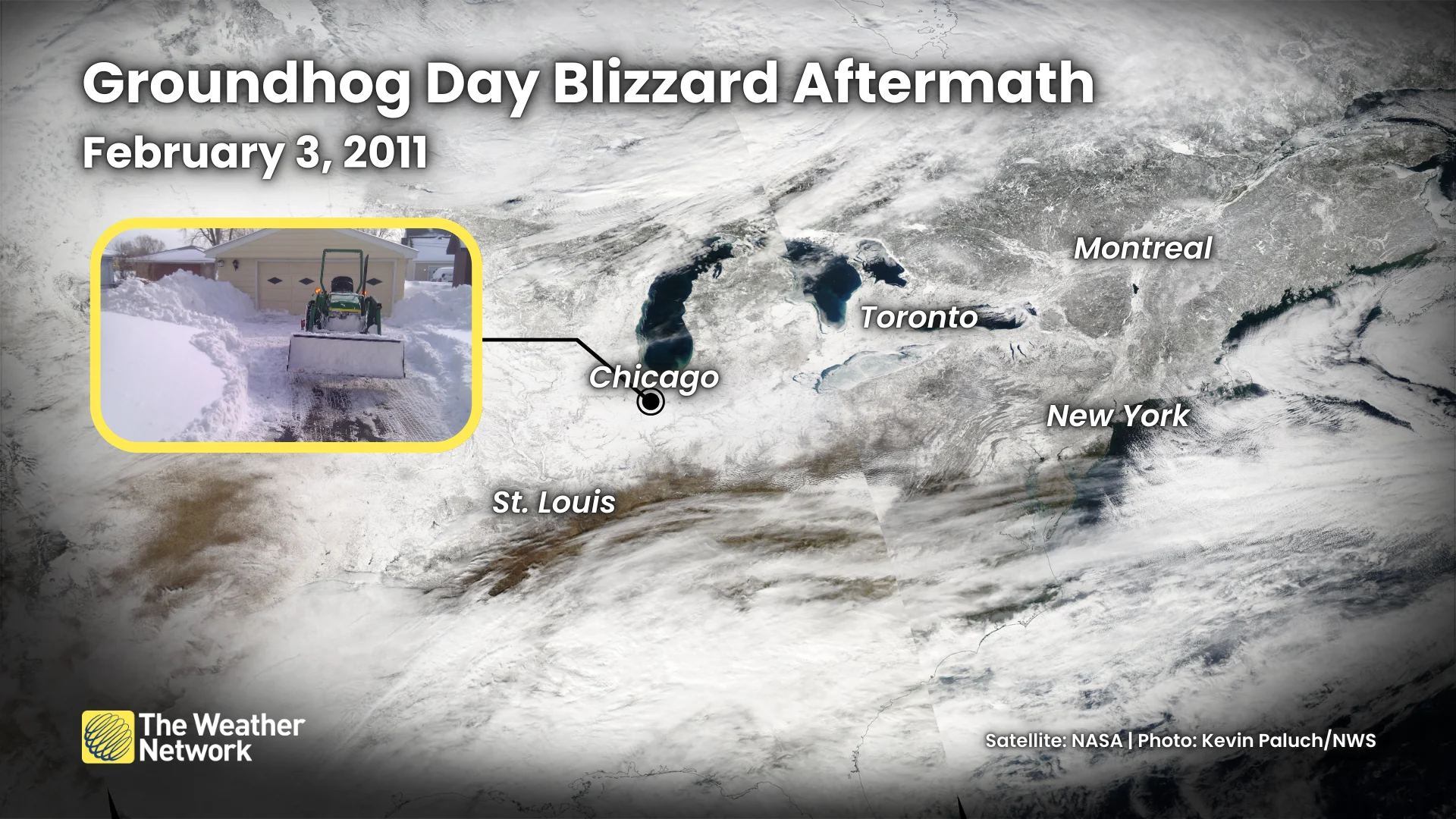
Whiteout conditions accompanied the heavy snowfall for many communities affected by the storm, leading to widespread travel delays by road and air and extensive school closures.
Significant amounts of freezing rain fell south of the swath of snow. Some communities saw major tree and power line damage as the ice built up on exposed surfaces.
The storm ranked a Category 5 on NOAA’s Regional Snowfall Index, which takes into account the intensity, coverage, and population affected by a winter storm. NOAA says that the storm caused more than $1 billion (USD) in damages between Texas and Maine.
RELATED: How an intense snowstorm can match the ferocity of a thunderstorm

Historic totals fell in some areas. Tulsa, Oklahoma, picked up 35.6 cm for its largest snowstorm since records began in 1893. Enhancement off Lake Michigan helped produce 53.8 cm of snow in Chicago, providing the city its third-largest snowstorm on record.
The heart of the storm directly affected the Great Lakes and Eastern Canada. CBC News reported at the time that the city of Toronto saw its first widespread school closures since 1999.
Dry air cut down on snowfall totals in the area, however, with Toronto-Pearson Airport only measuring 14.4 cm of snow. Heavier amounts fell to the north and south, with 30.2 cm in Windsor, 25.2 cm in Hamilton, and 26.7 cm in Brockville.
The storm continued into Quebec and the Maritimes with high winds and hefty totals. CBC News also reported that the storm caused a 70-vehicle pileup accident along Highway 20 near Sainte-Julie, Quebec.
Montreal, Moncton, and Charlottetown all ended the storm with around 20-25 cm of accumulation, while folks in Halifax saw 30.3 cm of snow from this historic Groundhog Day blizzard.