Super El Niños can accelerate global sea level rise: study

A recent study found a strong link between Super El Niño events and notable levels of global sea level rise
The world’s oceans may rise faster than normal over the next couple of months.
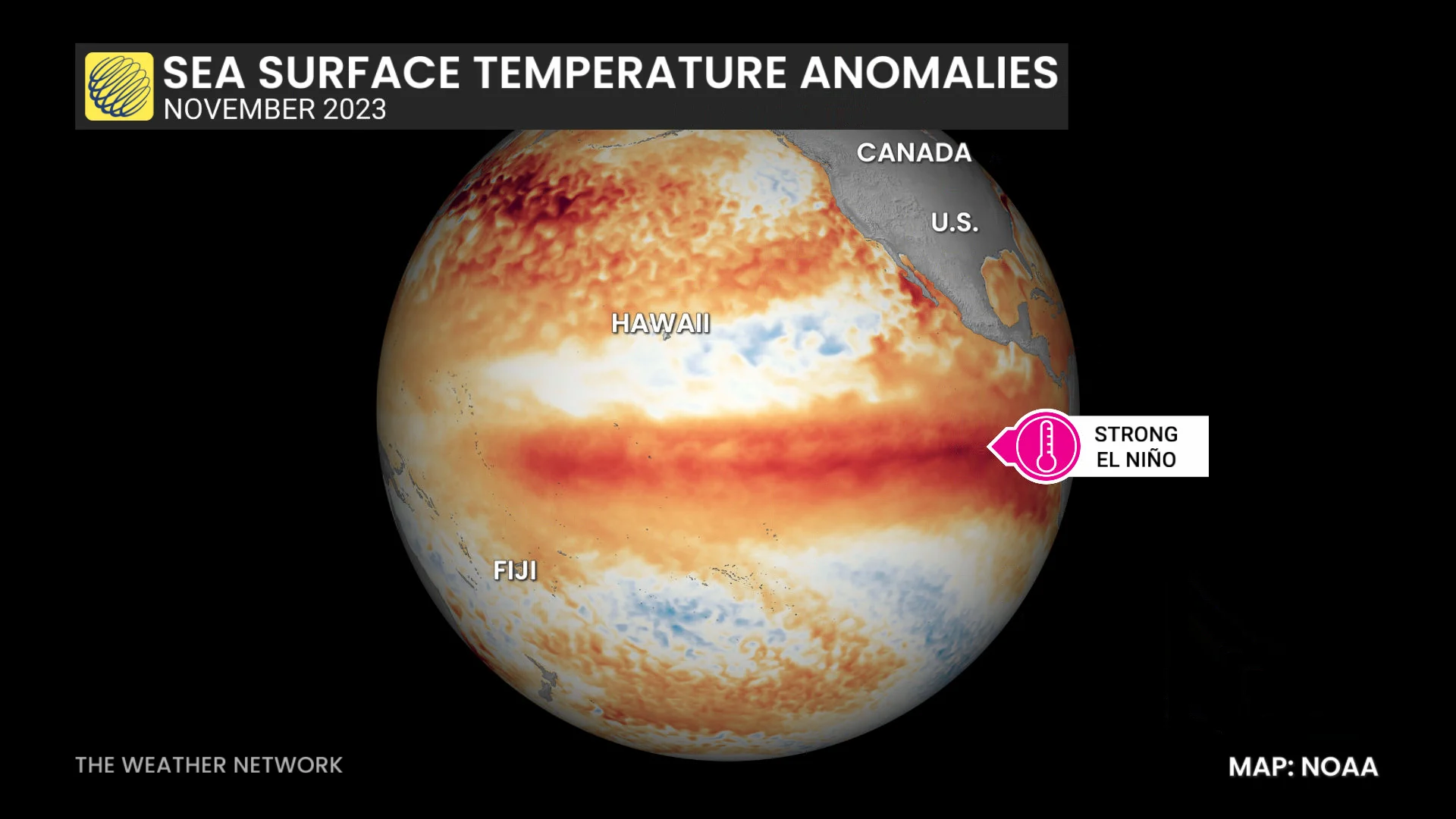
A recent study found that very strong El Niño events, sometimes dubbed Super El Niños, cause accelerated sea level rise as these anomalously warm waters peak in temperature.
The exceptional El Niño event developing in the Pacific Ocean to end 2026 will almost certainly follow the lead of these significant events from recent years.
DON'T MISS: The last strong El Niño quadrupled this region’s sea level rise: study
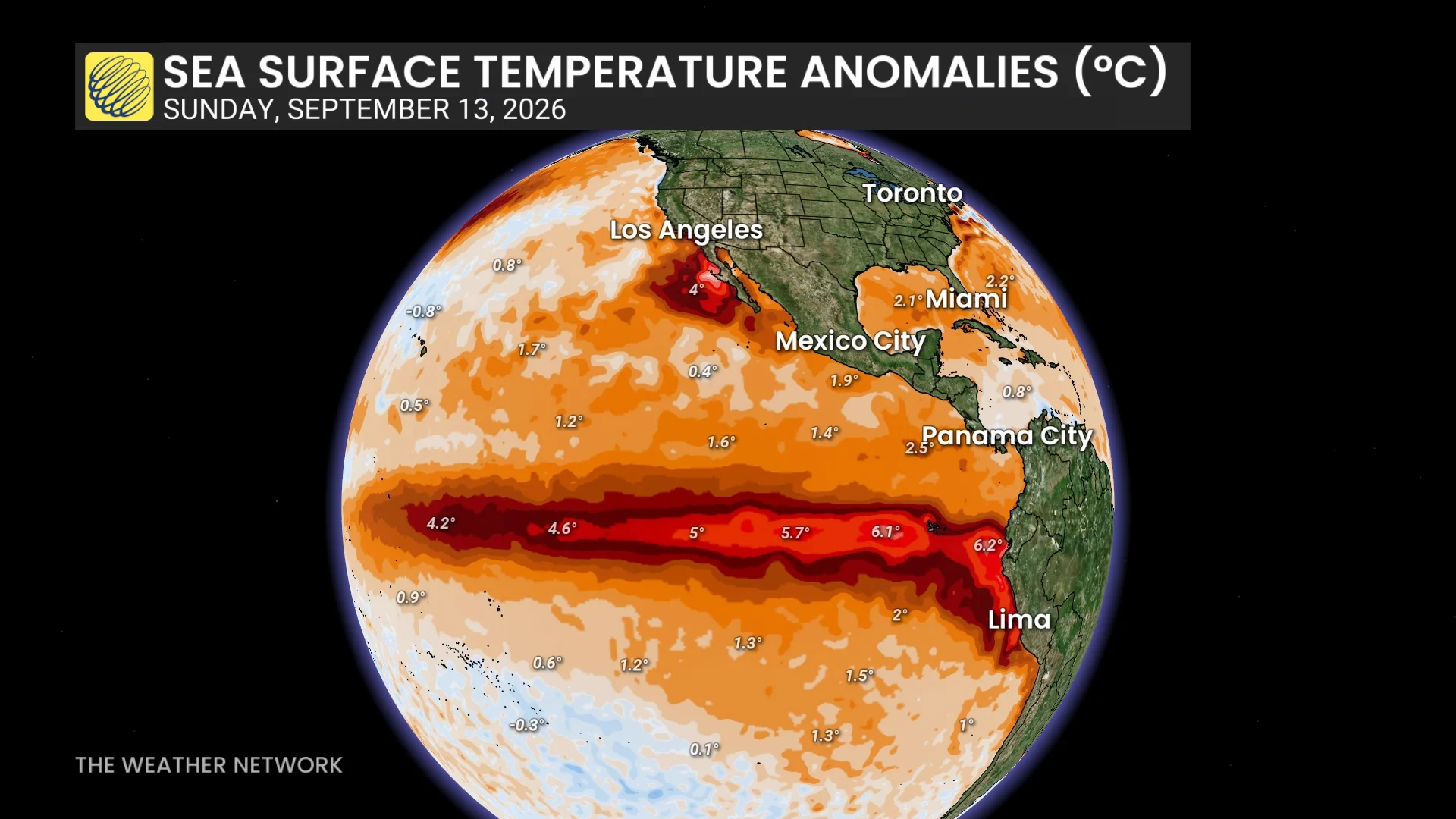
Balmy water temperatures around the equator in the Pacific Ocean are running 3-6°C warmer than normal for this time of year, indicative of a strong and growing El Niño throughout the region.
Experts predict that this El Niño will likely achieve a historic peak this winter, growing stronger than any previous event on record since the 1950s.
El Niño and its cold-water opposite La Niña have a significant impact on global weather patterns. But their influence also extends to the world’s oceans.
A recent study by researchers with China’s Sun Yat‐sen University found that global mean sea level rise accelerated during two recent El Niños, one in 2014-16 and the other in 2023-24.
Global mean sea levels rose by 9.16 mm during the 2014 event and by 7.70 mm during the 2023 event, the team found.
RELATED: Sea level rise threatens millions of Canadians by 2100, study finds
The study reveals that the vast majority of El Niño-induced sea level rise occurred through increased mass added as icemelt and runoff reach the oceans. The remainder of the rise came about through changes in the density of seawater caused by increasing water temperatures.
Previous studies have found that El Niño can cause even more significant sea level fluctuations in certain parts of the world.
Oceans rose by nearly 30 mm around some African coastlines during the 2023-24 event, causing significant issues for some low-lying areas, including coastal flooding, erosion, and freshwater salinization.