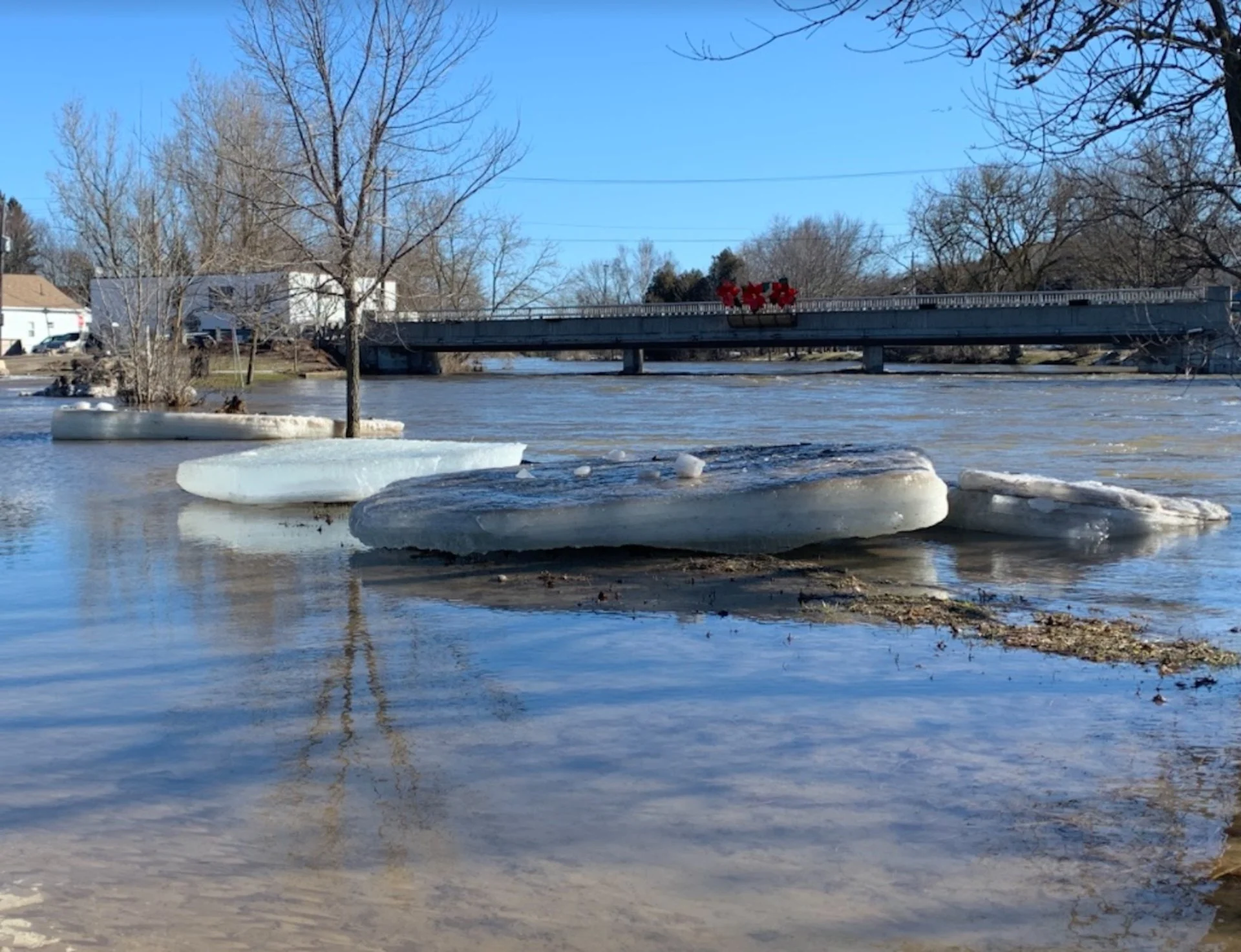
Grand River at risk: Spring thaw raises flood and ice jam concerns

After a cold, snowy winter, the GRCA is monitoring spring flood risks as heavy river ice raises the potential for ice jams and flooding in nearby communities.
The bridge shook violently, echoing like a bass drum struck with force, and looking over the edge revealed the perilous situation below. An upstream ice jam had broken, sending debris crashing into the bridge as spring floods surged through Brantford. Several neighbourhoods had already been evacuated, with the threat of more damage looming.
That was the scene in 2018, one of the worst years for spring flooding along the Grand River—a year many communities still recall vividly. Now, as the spring melt begins in 2026, a pressing question arises: "What challenges will this year’s thaw bring?"
DON'T MISS: Ontario set for a slow start to Spring with continued chances of snow
To predict what could unfold as spring’s ice and snow melt, it’s important to assess how much frozen precipitation remains across fields and forests in the Grand River watershed—and what happens during the thaw.
For insight, Vidal Taleban, Director of Flood Operations with the Grand River Conservation Authority (GRCA), shares concerns about this year’s potential for flooding.
"This year, we had a dry fall, followed by a strong winter with a very cold January," said Taleban. "The snowpack is comparable to last year’s levels, and in some areas, there is even more. Additionally, the water content within the snowpack is high, creating significant potential for flooding."
Adding to the concern, the Grand River is heavily iced, increasing the risk for ice jams.
"We have more ice in the system this year, though not as much as in 2018. However, the risk for ice jams is higher due to significant ice coverage across the watershed," Taleban noted.
RELATED: Snow, warmer temperatures in southern Ontario create river flood risk
Ice jams occur when melting causes river ice to break up and move downstream. When the ice encounters an obstruction, it piles up, blocking water flow and causing upstream flooding. This situation is exacerbated by heavy rain and snowpack melt, which increases streamflow. Prolonged freezing after an initial thaw can further lock jams in place until the next melt.

In previous years, ice jams have caused devastating flooding in areas like Brantford and Cambridge. According to Taleban, about 20 communities in the watershed are at risk, including Brantford, Ayr, West Montrose, and Cayuga.
"We can’t eliminate flood risks, but we strive to manage and mitigate them," he said.
The GRCA is actively monitoring river conditions using stream gauges and meteorological sensors placed strategically along watercourses like the Grand River. This data is publicly available on their website.
DON'T MISS: Melting ice and flood risk: How ice jams can endanger Canadian communities
Taleban also issued a warning to the public to avoid river ice. There is significant ice cover on all major watercourses. With the warming weather and rain in the forecast, the ice can quickly erode and weaken, making rivers extremely dangerous. The public should stay off the ice at all times.
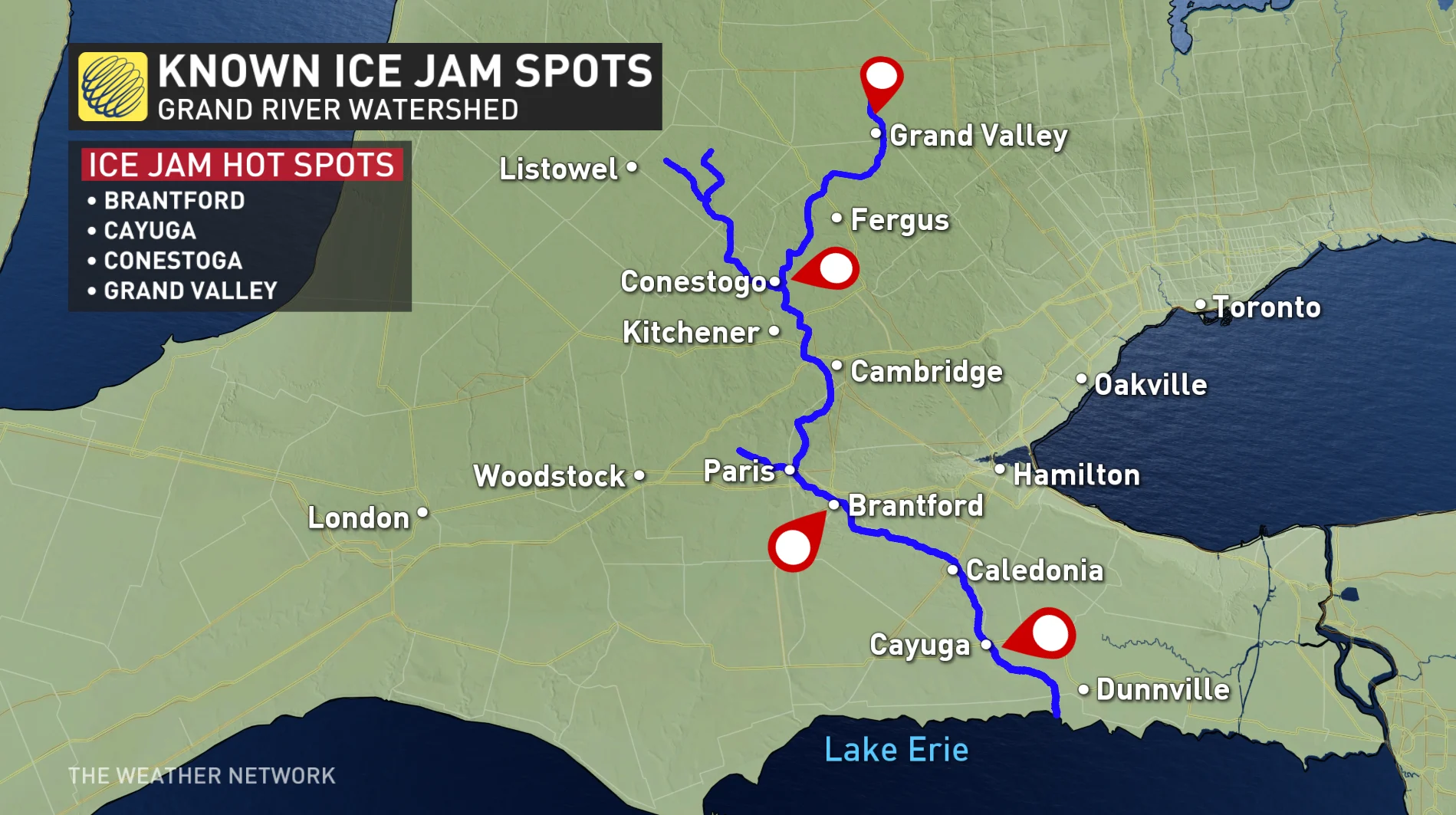
Key factors to monitor as spring approaches:
Below-freezing temperatures that maintain ice coverage on rivers.
Rapid warming, with temperatures rising quickly from below freezing to above in a matter of days.
Heavy rainfall accompanying the quick thaw.
Ice breakup leading to potential jams at obstruction points.
Persistent rainfall contributing to significant runoff into watercourses.