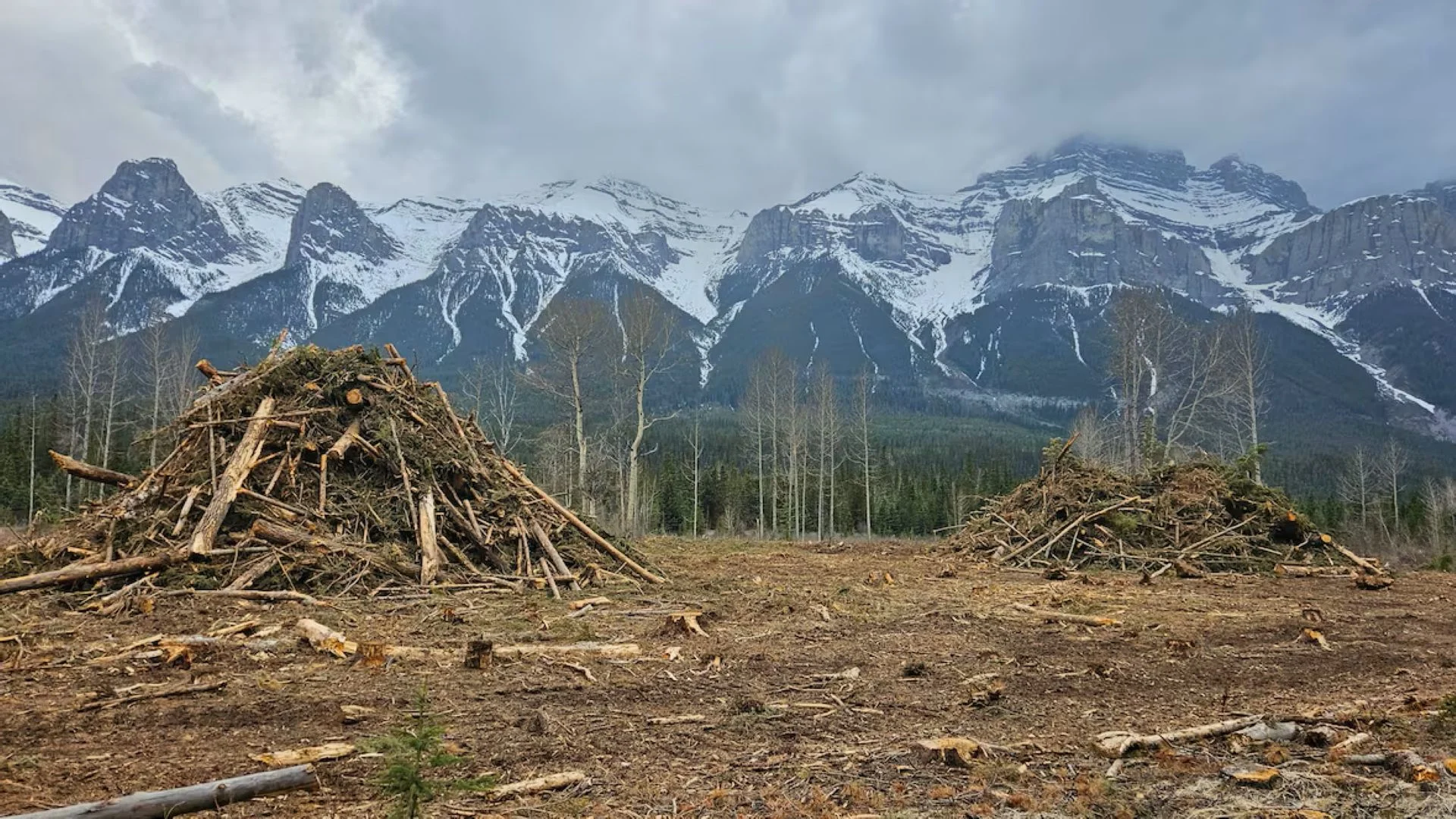
Fireguards to protect residents also a boon to Alberta wildlife

Fireguards are designed to protect people and communities by clearing land to slow the spread of wildfires.
From Lake Louise through Banff and Canmore into Kananaskis Country, hundreds of hectares of forest have been removed in the last five years, with more to come.
SEE ALSO: We know the human costs of wildfires, but what about our wildlife?
But residents and visitors aren’t the only ones benefitting.
Wildlife such as elk, grizzly bears and birds are also taking advantage of the work.
“They use the opening to move, but they’re mainly using the opening to feed,” said Shelley Tamelin, a wildfire risk reduction manager for Parks Canada.
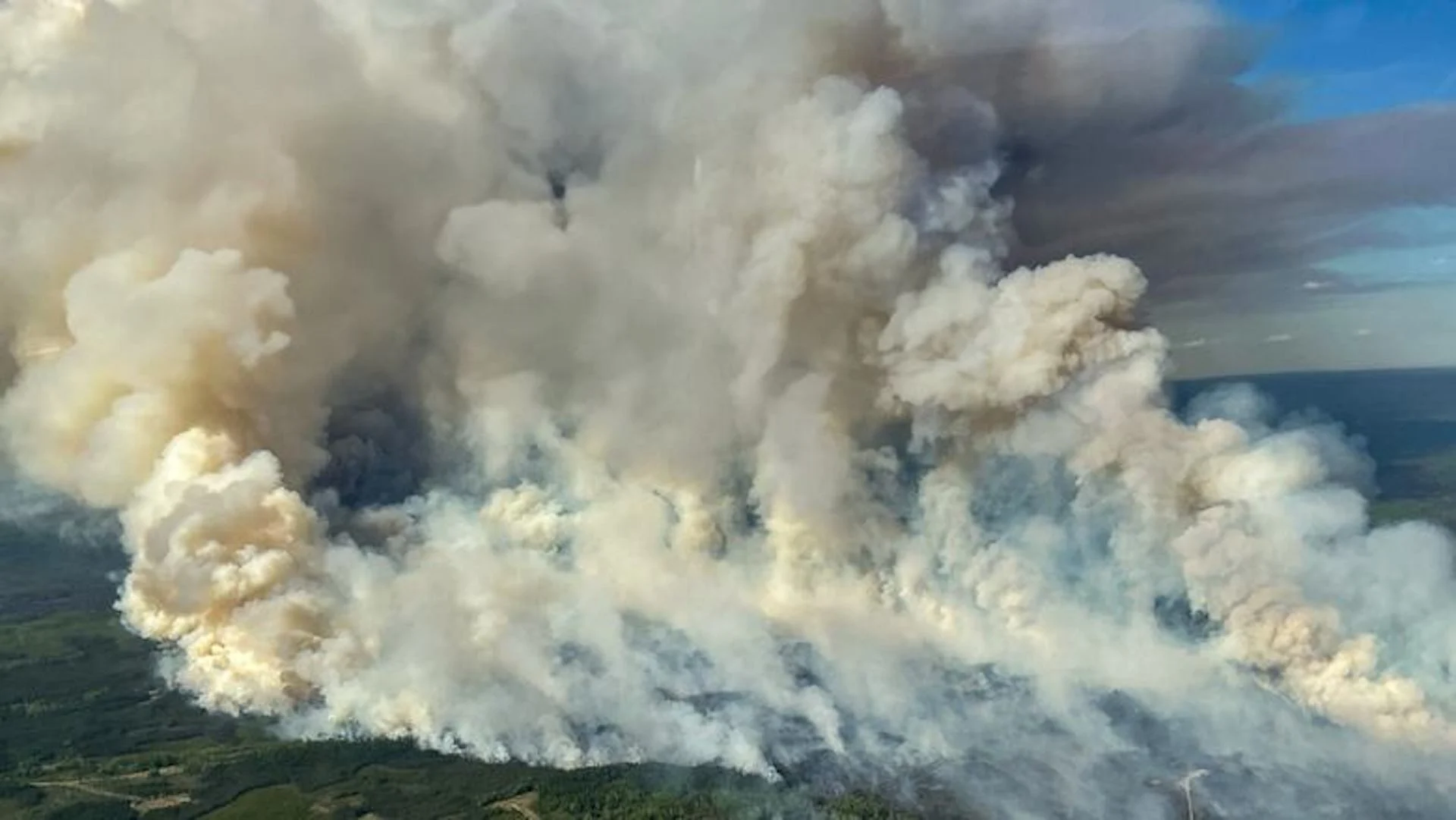
(Alberta Wildfire via CBC News)
Short-term disruption, long-term gain
Wildlife are inevitably impacted as fireguards are built.
Animals steer clear as human and machine increase, but when work is finished they often return.
The newly exposed land and growth of willows, grasses and shrubs create fresh food more room for wildlife to move, said Bill Hunt, Yellowstone to Yukon Conservation Initiative's senior director of conservation programs.
“That offers a whole bunch of habitat opportunities that weren’t there before for nesting birds, for foraging ungulates, for black bears and grizzly bears feeding on things like buffaloberries,” Hunt said.
Hunt is a former long-time Parks Canada employee worked on human-wildlife co-existence for decades.
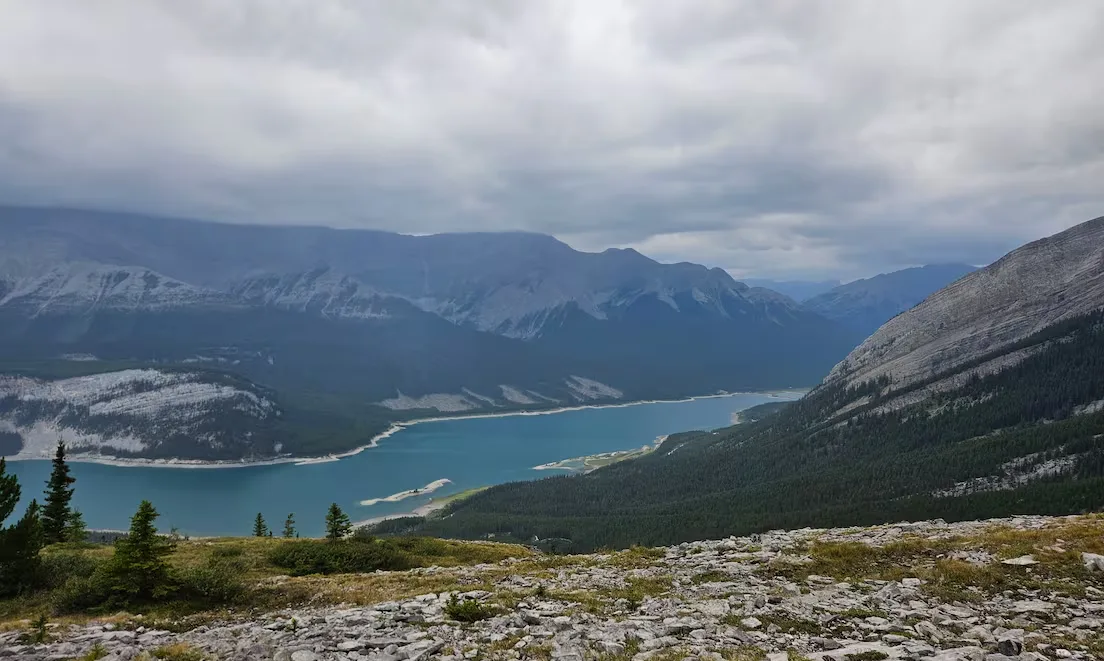
The view of the Canmore townsite from the top of Lady Macdonald Mountain in Kananaskis Country. (Greg Colgan/CBC)
He said fireguards can help guide wildlife to move around communities, meaning fewer conflicts between humans and wildlife.
Tamelin said a secondary goal of fireguards is giving wildlife safe open space to move.
“We don’t really want them roadside. We don’t really want them hanging out on the train tracks,” she said.
“Those aren't safe areas for them and there's more chances for negative visitor interactions if they’re in those areas.”
Avoiding wildlife impact
Planning for fireguards takes about five to 10 years before trees are removed.
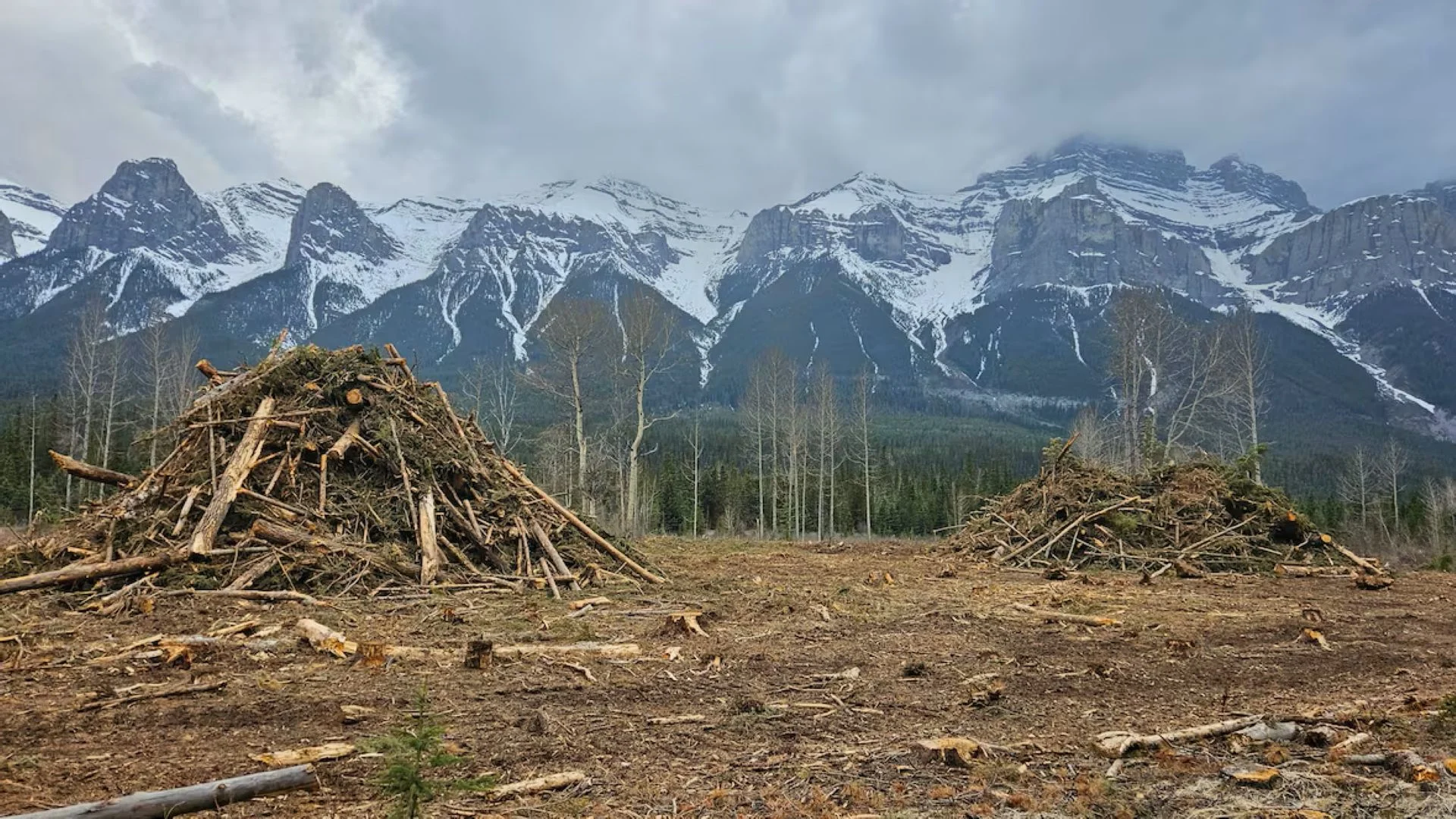
Part of a fireguard near Banff National Park's gates. (Greg Colgan/CBC)
The best landscape for fireguards are areas with natural openings, since fewer trees will be removed. Officials hold consultations with regional groups and governments to find potential issues, and conduct studies to see if there are negative impacts on area wildlife.
The logging takes place from mid-November to March, when the ground is frozen and soil protected, Tamelin said.
That also avoids the period for bird and bat nesting, but a biologist will do a survey once a week to see if some species are impacted.
“We don’t decide to just build a fireguard and be building it six months later It doesn’t go that fast," Tamelin said. "It takes time to pick the really good location and talk to stakeholders and engage all our specialists and keep tweaking the plan until we can get a plan that mitigates most of the risk.”
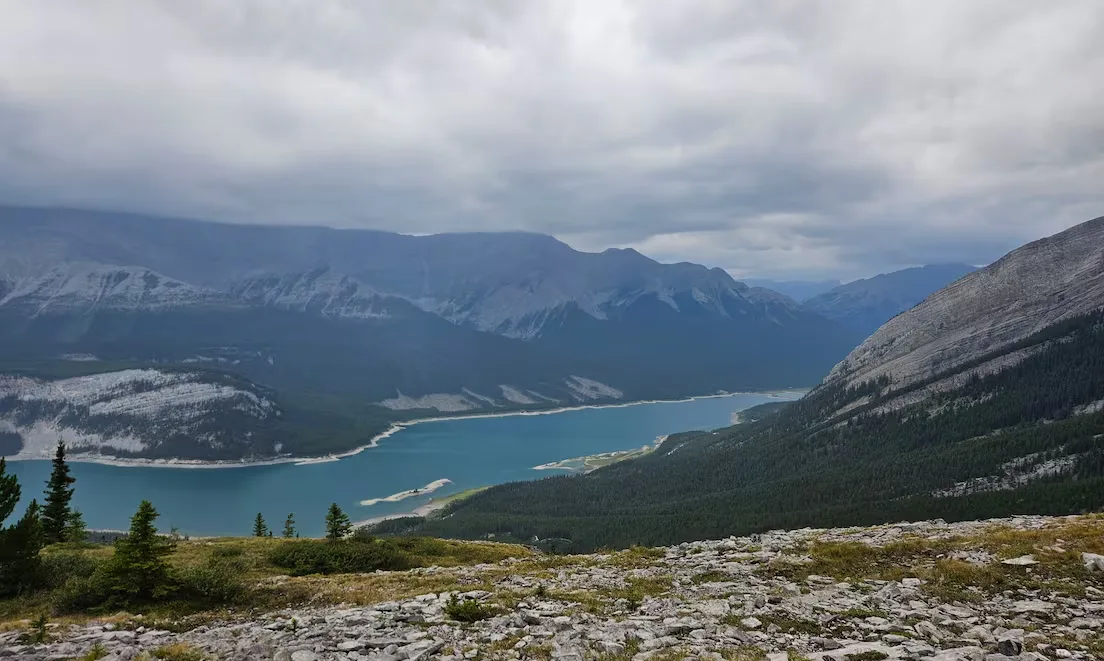
A fireguard in Spray Valley Provincial Park in Kananaskis Country as seen from Windtower on Aug. 15, 2025. The guard is meant to act as protection from any potential wildfire. (Greg Colgan/CBC)
Wildlife use open spaces to move
The Bow Valley has seen continuous growth in tourism as people visit the Canadian Rockies.
The provincial government has emphasized tourism as a key economic driver, aiming to expand it to $25 billion a year by 2035. It means more people will come to enjoy the outdoors shared by residents, visitors and wildlife.
Hunt said it’s vital for all groups to “work collectively to manage human use in those areas.”
“If we want wildlife to make use of those and avoid coming into town, we need to provide a space and time where those patches can be secure for wildlife,” he said.
(Alberta Wildfire via CBC News)
In a public November talk hosted by the Biosphere Institute of the Bow Valley, Alberta Parks biologist John Paczkowski showed 75 per cent of a grizzly bear's movement in Kananaskis Country near Barrier Lake was in forest openings.
Data from grizzly bear 148, who frequently moved through the Canmore area after spending most of its time in Banff National Park, used open areas to travel.
The Bow Valley human-wildlife co-existence report that came out in 2018, after bear 148’s death, recommended enhancing wildlife habitats through logging and prescribed fires.
Paczkowski said there’s about 120 wildlife cameras around the valley to track how wildlife adapt.
“It’s really exciting to realize a dream of restoring habitat on a large scale,” he said.
The provincial government biologist could not be reached for an interview.
WATCH: Human impact of Jasper wildfires captured in exhibit by local artists
Thumbnail courtesy of Greg Colgan/CBC.
The story was originally written by Greg Colgan and published for CBC News.