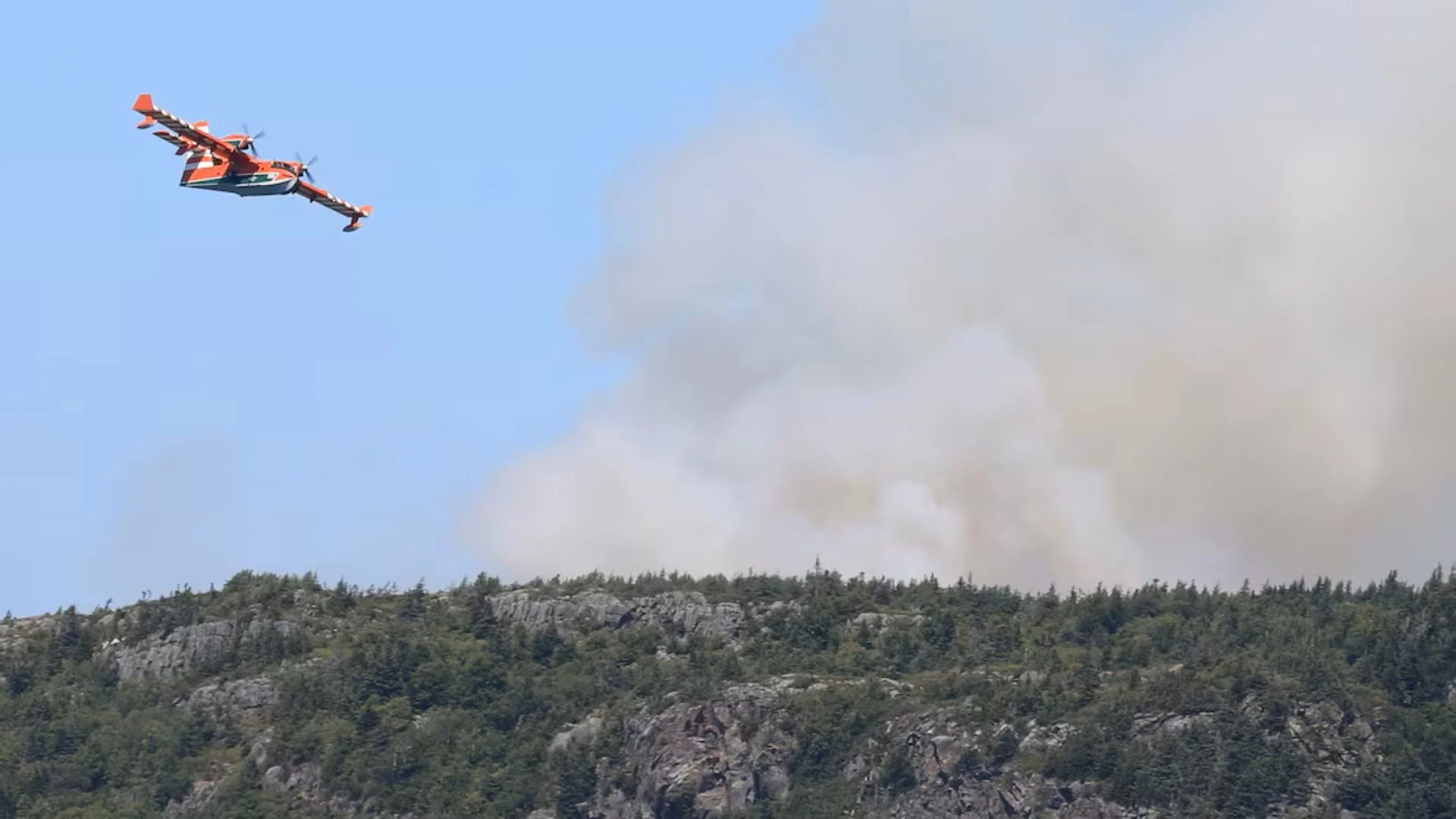
Snow buffers against spring fire risk in N.L. but summer still risky: Scientists

Snow lingering across Newfoundland and Labrador is a good sign for those worried about the possibility of spring fires, but scientists say it’s too early to say if there will be another historic wildfire season this summer.
Lucas Brehaut, a wildfire resilience research scientist with the federal government's Atlantic Forestry Centre, said there are three “main ingredients” for fires: an ignition event, warm and dry weather, and vegetation that fuels fire.
SEE ALSO: 2026 Wildfires: Which parts of Canada are most at risk?
“Historically we're seeing a trend in more severe fire years. Over the last 20 to 30 years, fires are happening more frequently and they're becoming more severe across the landscape,” Brehaut told CBC News.
He added weather is the element that changes the most and anticipating what the upcoming wildfire season could look like is “tricky.”
Moreover, Brehaut said in Atlantic Canada most fires are human-caused, as opposed to natural events like lightning.
Snow on the ground will help prevent spring fires, which typically start as grass fires “because we have a lot of moisture ... in the soils that snow will slowly dissipate [into].”
However, it might not help prevent summer wildfires, he said.
“It's really hard to predict because there is so much annual or seasonal fluctuation. But [the] overall trend is that Newfoundland and Labrador is going to be experiencing warmer weather conditions or drier conditions in the summer, which could facilitate, you know, an increased chance of fires in the summer or even into the fall.”
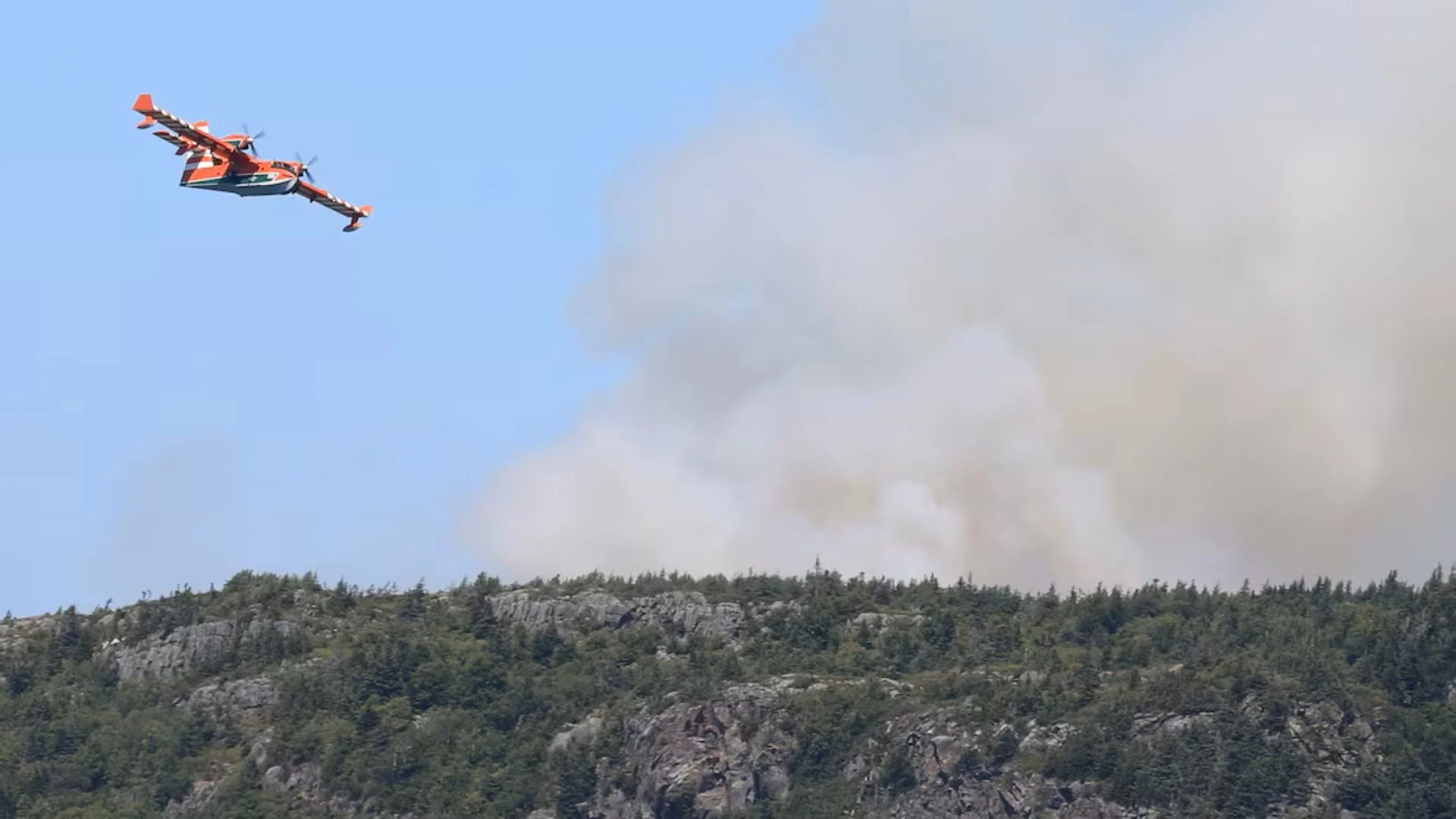
Lucas Brehaut, a wildfire resilience research scientist with the Atlantic Forestry Centre, says overall, trends show the province is expected to get warmer with less precipitation. (Ryan Cooke/CBC)
Overall, Brehaut said trends show the province is expected to get warmer with less precipitation. While some climate predictions anticipate warmer and wetter weather, “wetter doesn't necessarily mean wetter during the summer, right? It could mean more rain in the spring or rain in the winter.”
'Weather-driven'
The province experienced an historic number of wildfires last year, of which a wildfire in Kingston, Conception Bay North burned 10,095 hectares, forced hundreds to evacuate their communities and destroyed 200 structures. The same summer, parts of the province experienced drought conditions.
University of New Brunswick forest ecologist Anthony Taylor said based on weather forecasts, there is an elevated risk of another bad wildfire season in the coming months.
“The prevalence of fire and whether you have a good or a bad wildfire season, it's primarily weather driven,” he told CBC News.
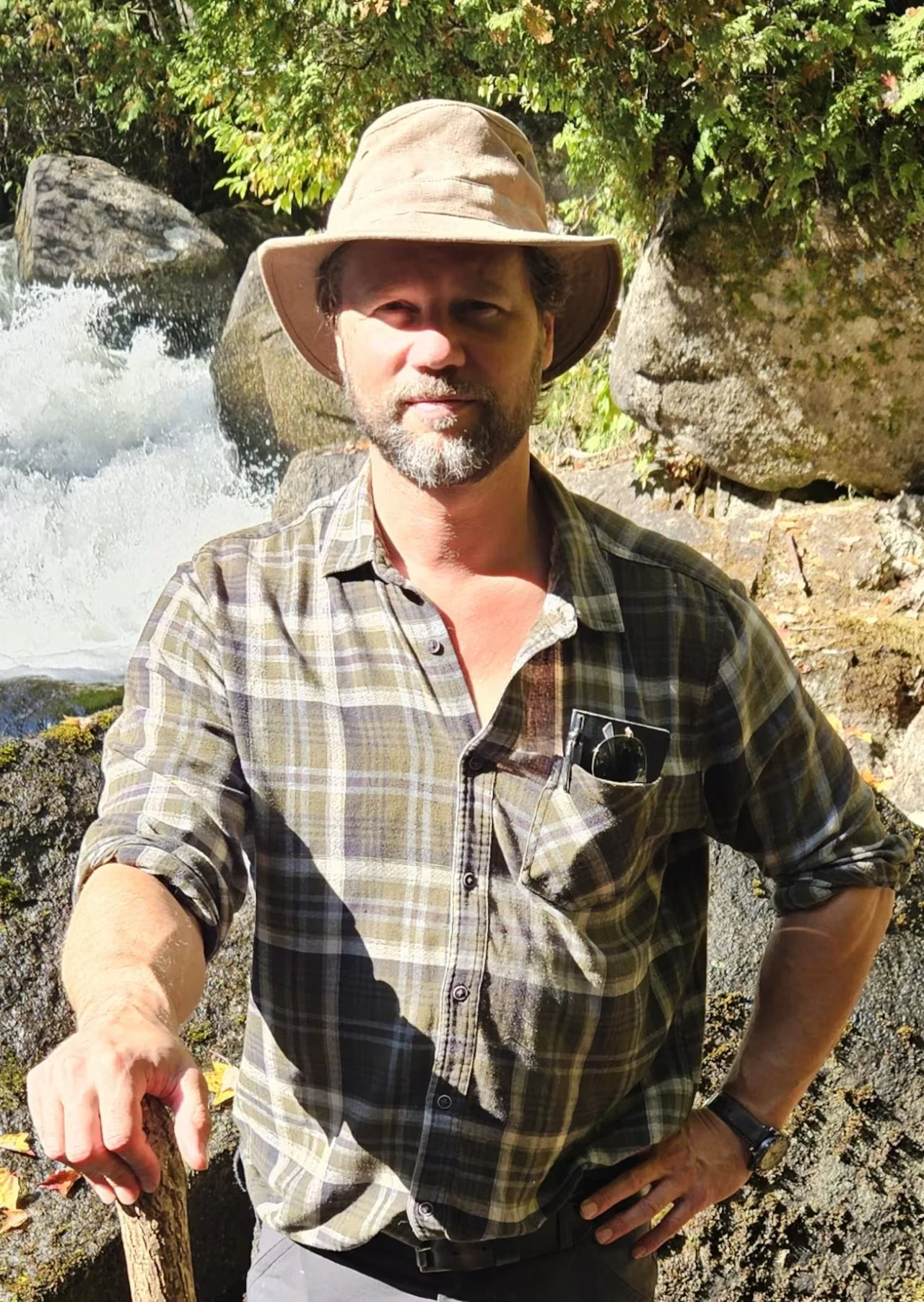
University of New Brunswick forest ecologist Anthony Taylor says snowfall is good for preventing spring fires but that might not mitigate the risk of wildfires in the summer. (Submitted by Anthony Taylor)
Environment Canada is also forecasting warmer-than-average temperatures for the province this spring and summer, but normal levels of precipitation, said Taylor.
“Then you have the potential for drier conditions just because you don't have the increase in precipitation coinciding with the increase in temperature," he said.
Taylor also said snowfall is good for preventing spring fires but that might not mitigate the risk of wildfires in the summer.
“Even with that spring snowpack, it could still lead to a high fire risk in the summer,” said Taylor.
Taylor said climate change is “100 per cent” playing a role in rising temperatures, adding the province as a whole has warmed by about 2 C in mean annual temperature since the start of the 20th century.
“Labrador has warmed by over a degree since the 1960s,” he said. “The climate’s warming globally.”
That comes with an increase of the type of weather conditions that can lead to fire conditions, he said.
Thumbnail courtesy of Ryan Cooke/CBC.
The story was originally written by Elizabeth Whitten and published for CBC News.