Canada hits 100+ tornadoes, how unusual is such a busy year?

This has been a busy year for tornadoes across North America as active patterns were stuck on repeat
Tornadoes tore up the landscape from the oil sands of Alberta to the rocky coasts of Prince Edward Island as North America endured a relentlessly busy storm season this year.
Canada and the U.S. are both on track to far exceed their annual average number of twisters, and the data reveals some surprising trends across the continent.
DON’T MISS: Tornadoes are still possible across Canada through September
Canada crosses 100 tornadoes so far in 2026
Experts with Western University's Northern Tornadoes Project (NTP) have confirmed at least 110 tornadoes throughout the country so far this year.
This year’s strongest tornado struck North Portal, Sask., with estimated winds of 245 km/h and EF-3 damage. Fewer than one per cent of all tornadoes confirmed by the NTP since 2017 were rated EF-3 or stronger.
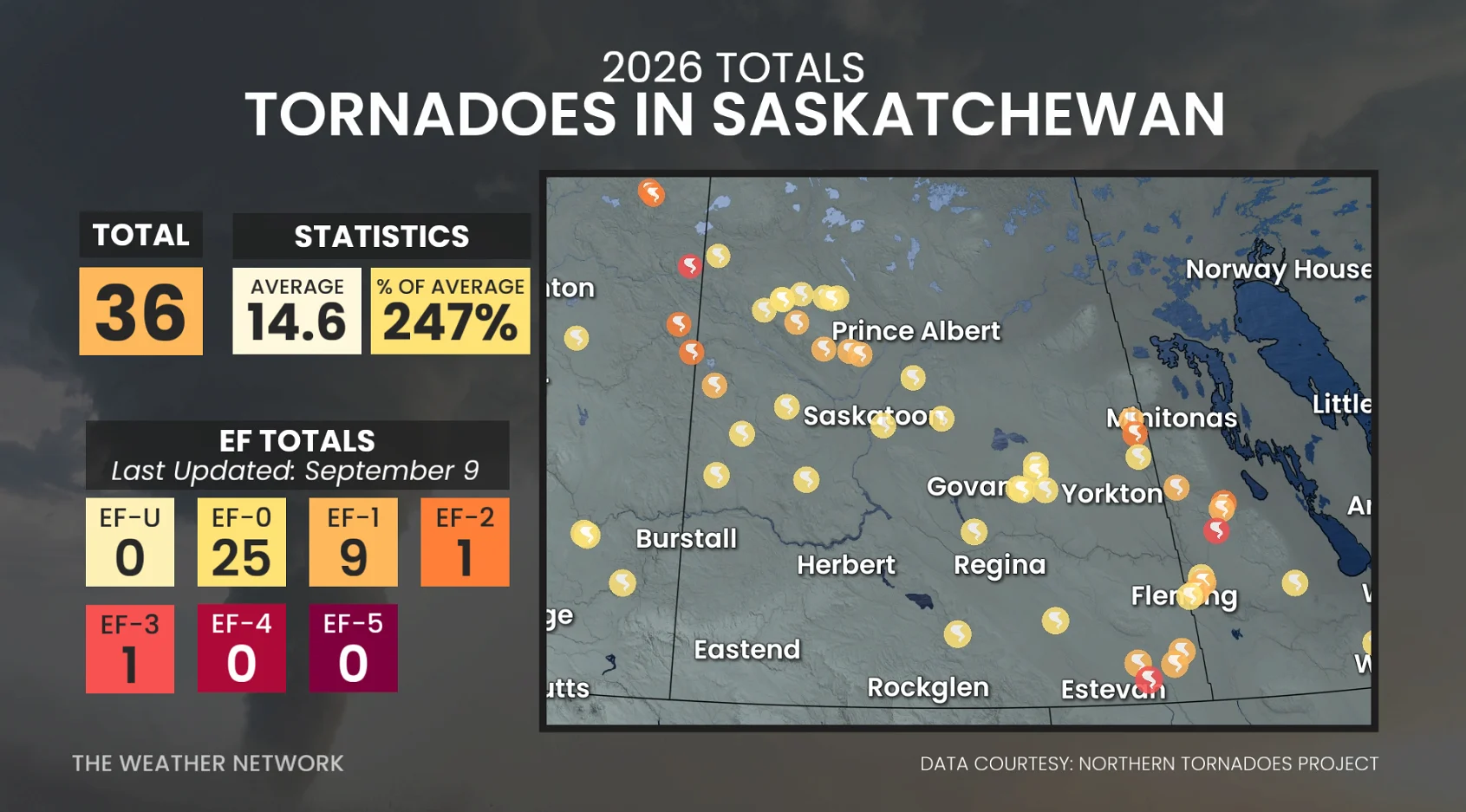
Alberta (30) and Saskatchewan (36) have accounted for more than half of Canada’s total twister count so far this year. Manitoba has seen 15 tornadoes so far this year, including two that struck neighbourhoods in southern Winnipeg.
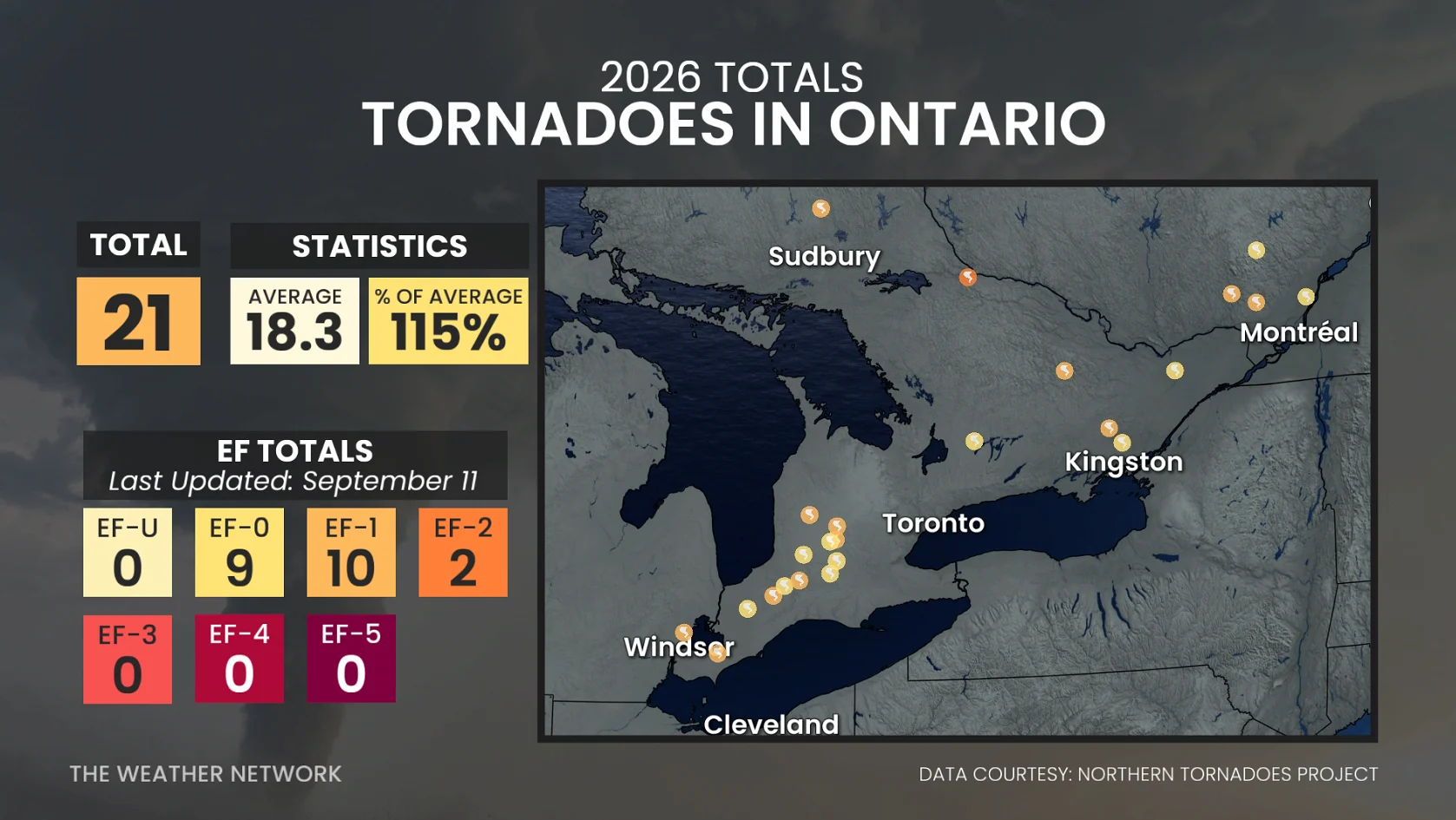
Ontario (21) and Quebec (6) have seen fewer tornadoes than usual, with the bulk of the region’s tornadic storms hitting southwestern Ontario during severe weather events in both mid-May and early September.
At least two tornadoes hit the Maritimes this year, including one southwest of Moncton, New Brunswick, and an exceptionally rare twister in eastern Prince Edward Island. This was P.E.I.’s first confirmed touchdown since Aug. 2007.
This year’s count of 110 is closing in 2022’s 120 touchdowns for the highest annual number of confirmed twisters in the NTP’s database.
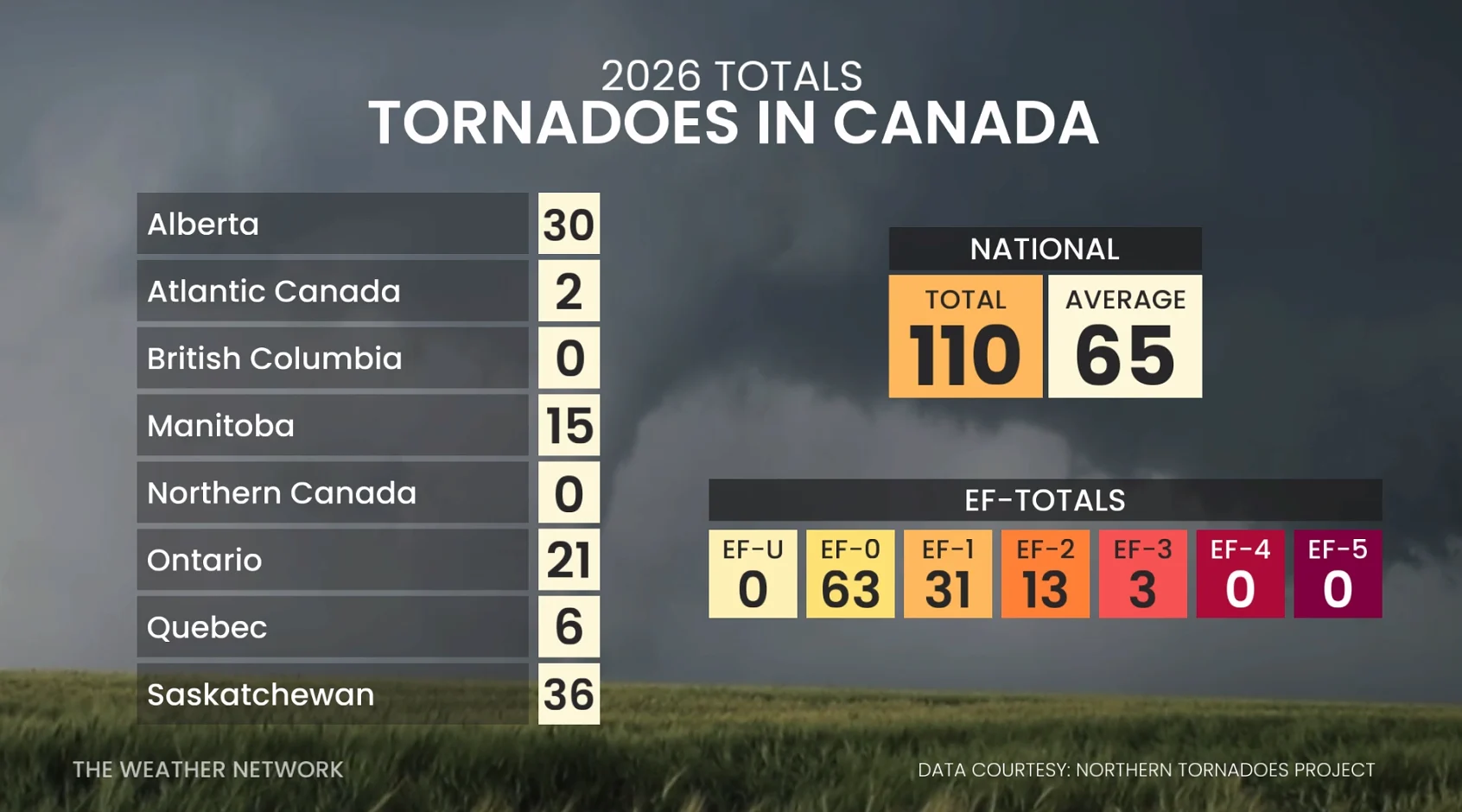
Canada officially averages around 65 tornadoes in a typical year. The true annual average is likely much closer to 100, though, as many tornadoes went undetected before the NTP began its intensive research and survey efforts in 2017.
We’ve seen no tornado-related fatalities across the country this year. Such deaths are relatively rare in Canada, a function of both improved warnings and sparse population density.
U.S. count also set to rise above average
It’s been a very busy year south of the border as well.
The U.S. National Weather Service (NWS) confirmed 1,206 tornadoes through Sept. 13, which is very close to the country’s 20-year annual average of 1,263. Tornado season is a year-round ordeal in the U.S., where they typically experience a secondary peak in tornado activity during the late autumn and winter.
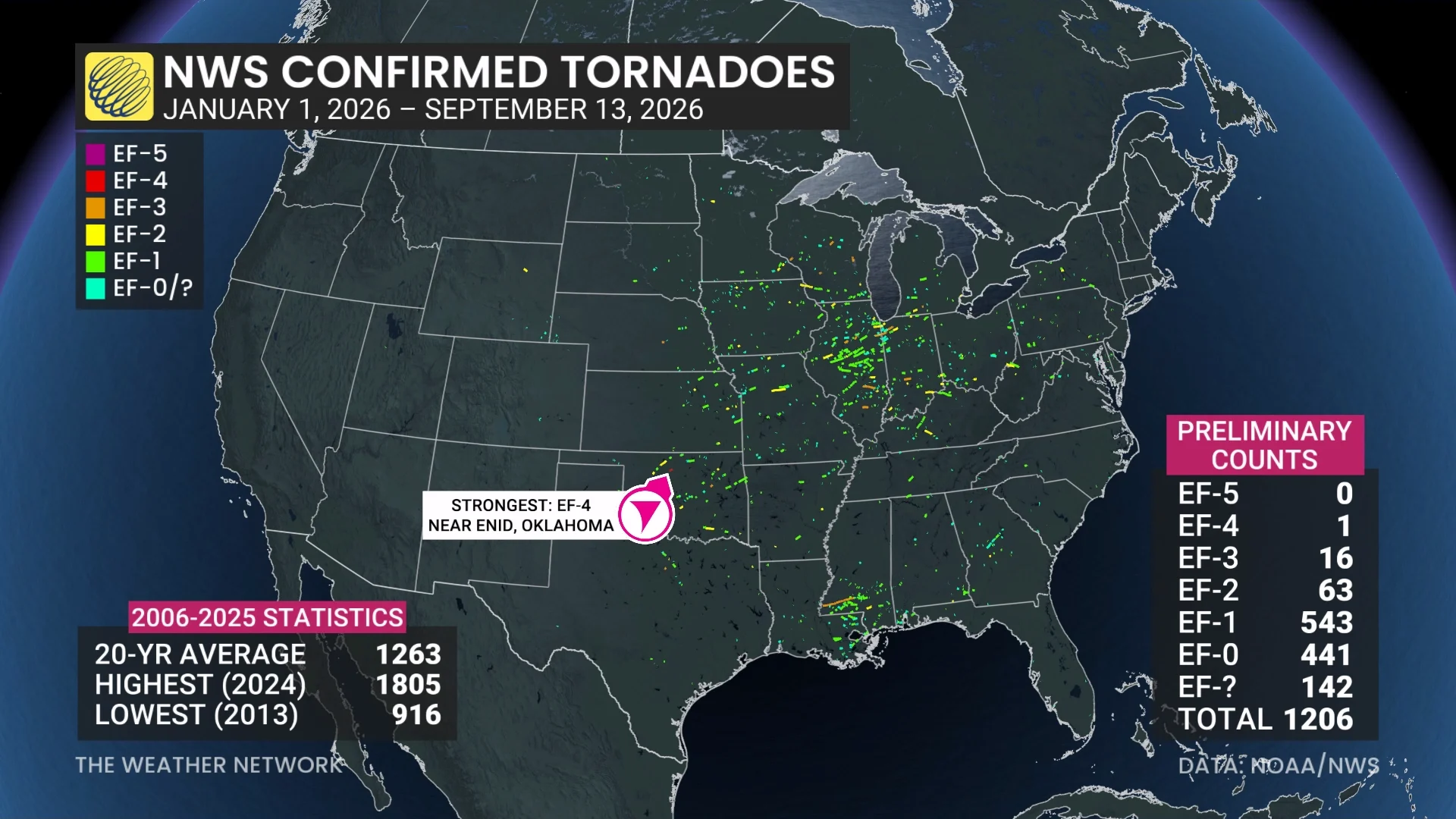
Stateside tornado activity has followed a very unusual pattern so far this year. Areas traditionally considered tornado alley, such as Oklahoma and Kansas, have seen far fewer tornadoes than the Midwestern states.
Illinois, for instance, has accounted for nearly one-fifth of the U.S.’s entire tornado count this year, with more than 210 touchdowns across the state. Neighbouring states of Iowa and Indiana have also seen an above-average number of twisters.
Why so many tornadoes across North America this year?
Several factors are behind the unusually busy tornado activity across the continent this year.
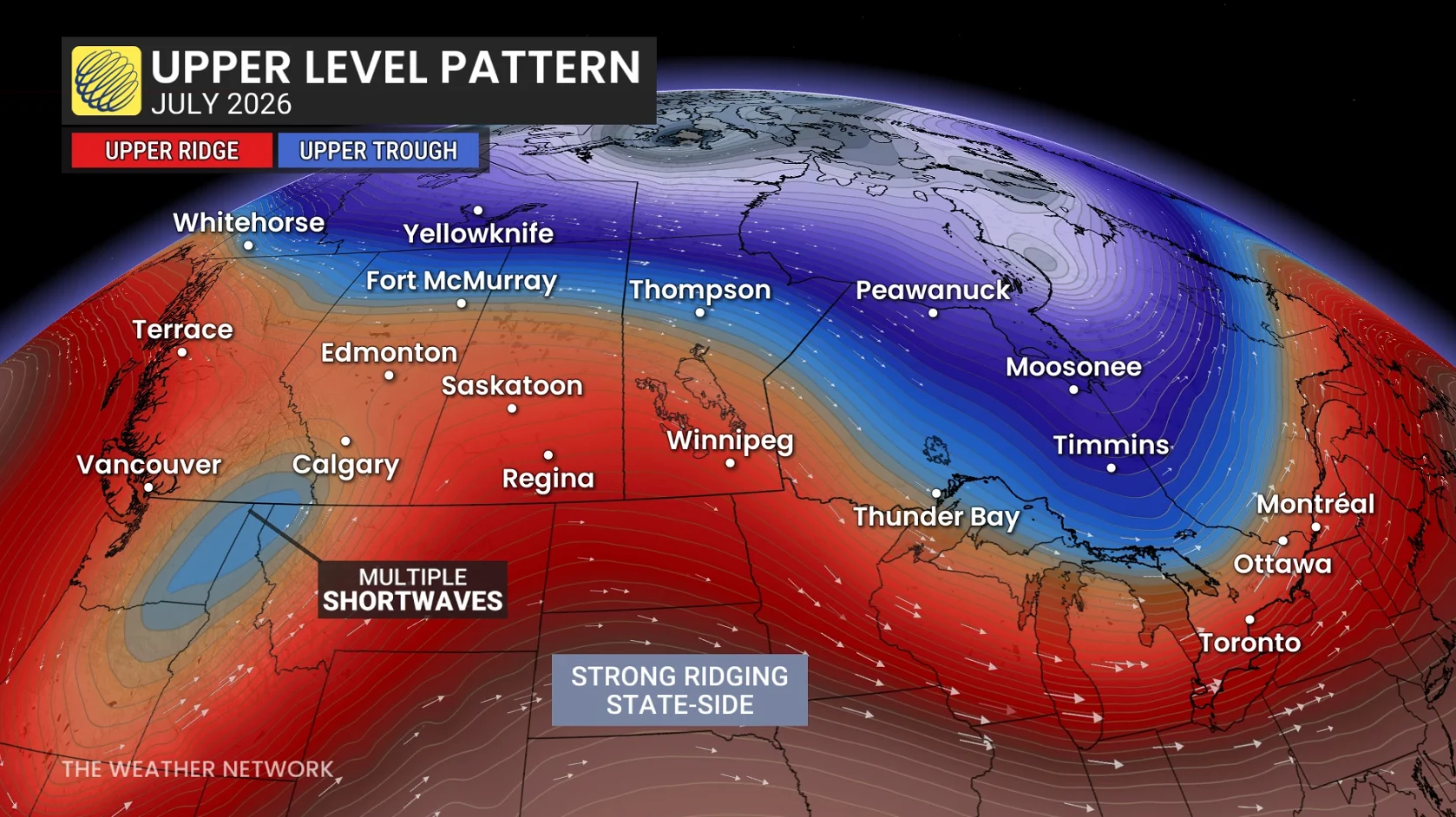
We’ve seen numerous upper-level troughs dive across the Rockies since the springtime, allowing for persistent rounds of severe thunderstorms to roll across the Canadian Prairies and the U.S. Midwest.
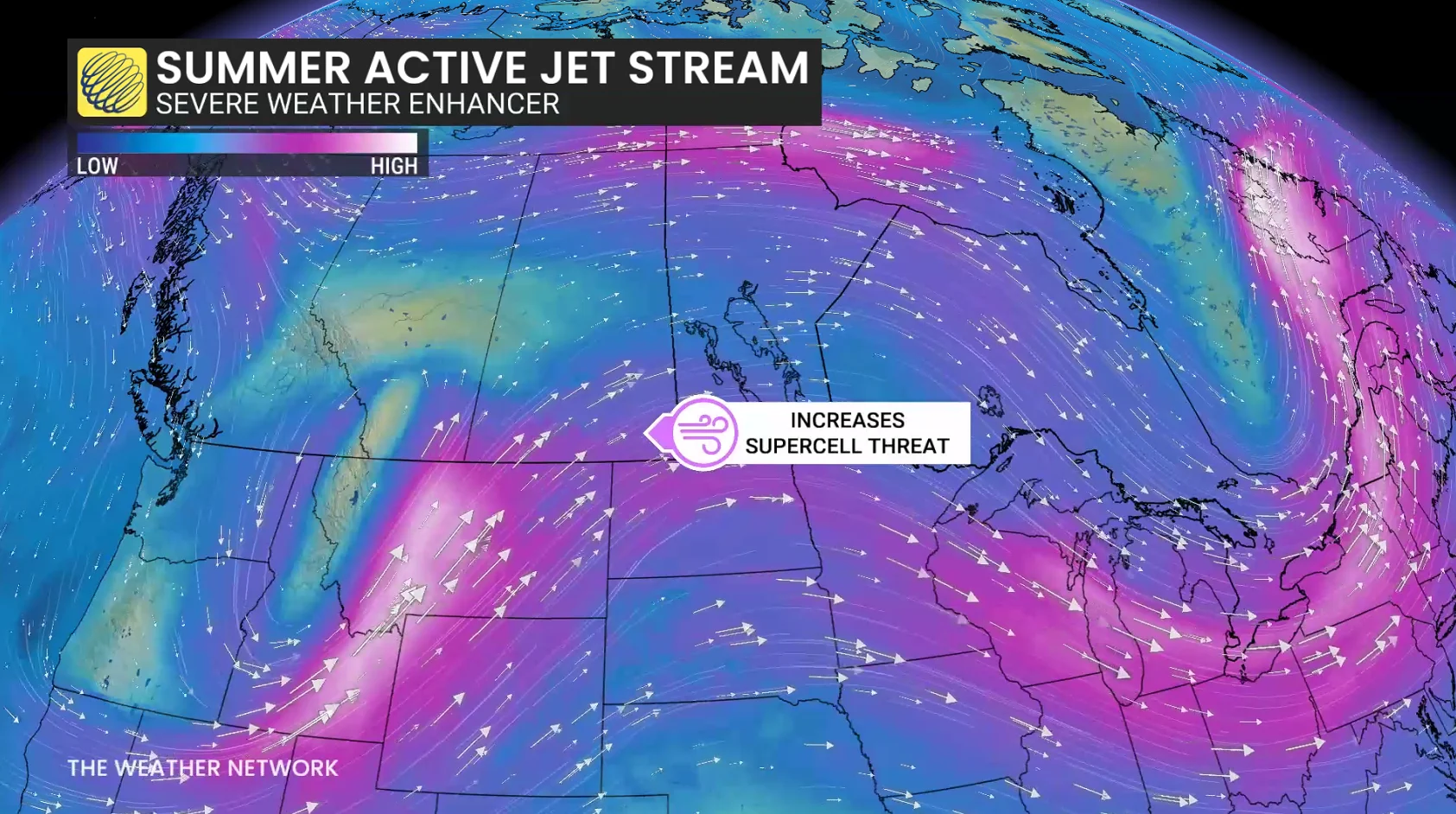
These severe weather events were fuelled by repeated low-pressure systems tracking over the same regions, drawing warm, unstable air from the south while providing the spark needed to kickstart thunderstorm development.
Tornadoes also require plenty of low-level moisture in order to form. Bountiful rains across the Prairie provinces reinforced the mugginess needed to support the development of tornadoes within rotating thunderstorms.
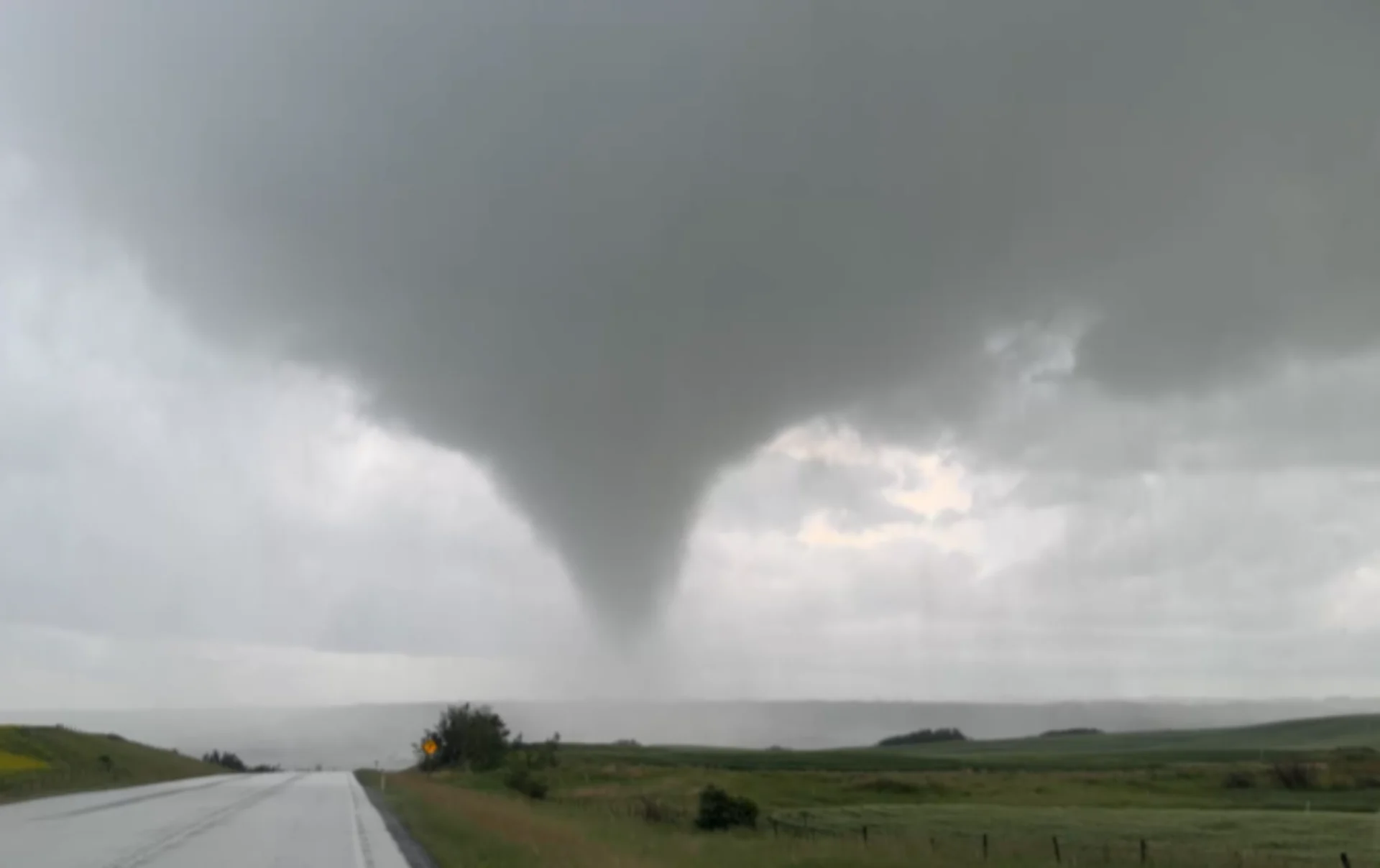
Header image of a tornado in Alberta on July 8 courtesy of Braydon Morisseau.