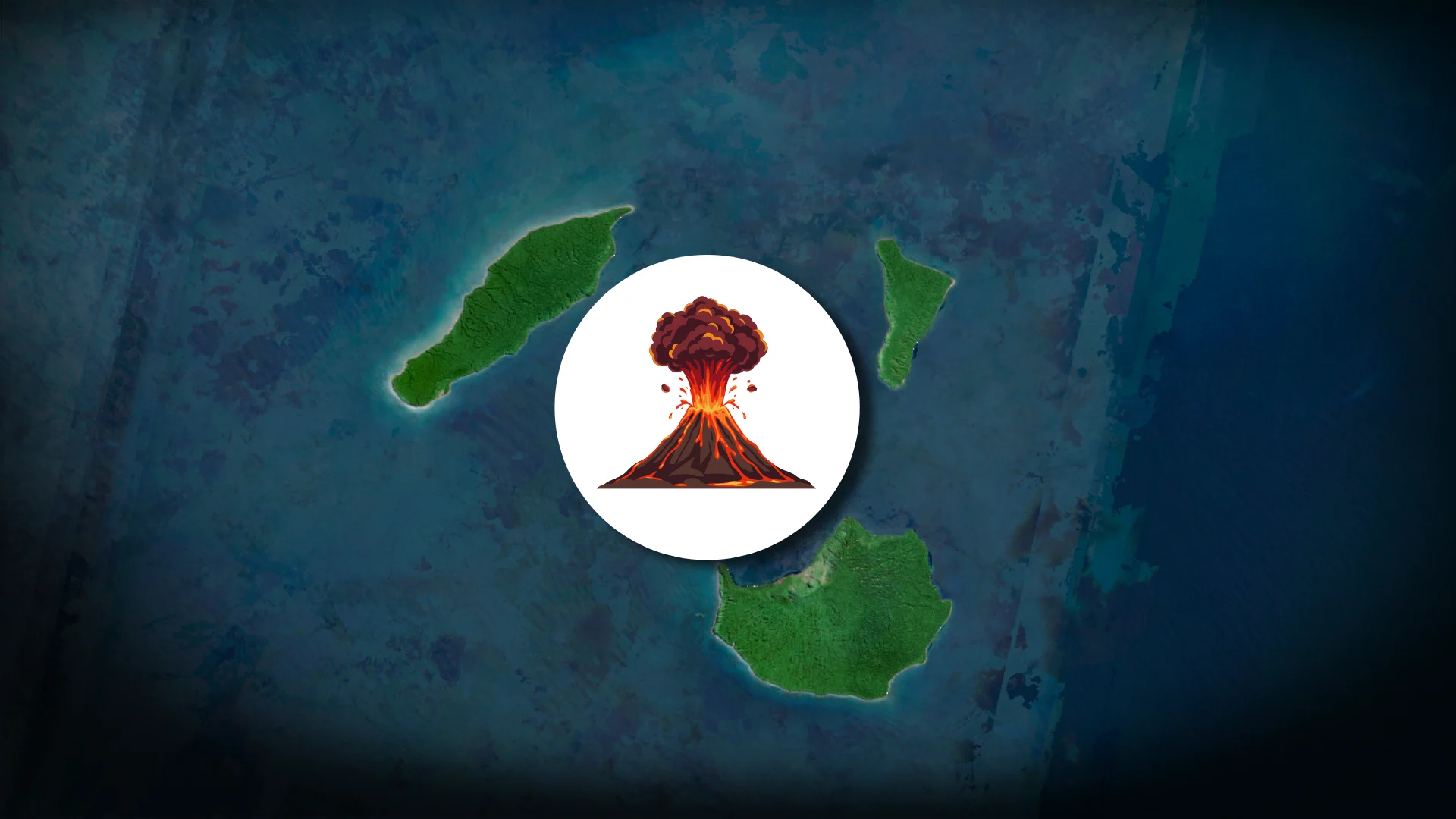
Krakatoa’s eruption created the loudest sound in human history

Krakatoa’s eruption and subsequent tsunamis killed more than 36,000 people across the region
Some disasters strike with little to no warning. Krakatoa gave plenty of warning that something was wrong in the lead-up to its colossal eruption in August 1883.
The disaster remains one of the most powerful volcanic eruptions in modern history, sending pressure waves circling the world and altering the global climate for years to come.
DON’T MISS: Huge Hunga-Tonga volcanic eruption altered atmosphere, report finds
Indonesia sits on one of the most geologically active parts of the world. Consisting of more than 10,000 islands, the rugged archipelago nation hosts more active volcanoes than any other country.
Chief among them was Krakatoa (sometimes spelled Krakatau), situated about halfway between the islands of Java and Sumatra.
The volcanic island had a history of eruptions dating back millennia, but it sprang to life in earnest in May 1883. Small explosions and belches of ash emanated from the volcano for several months.
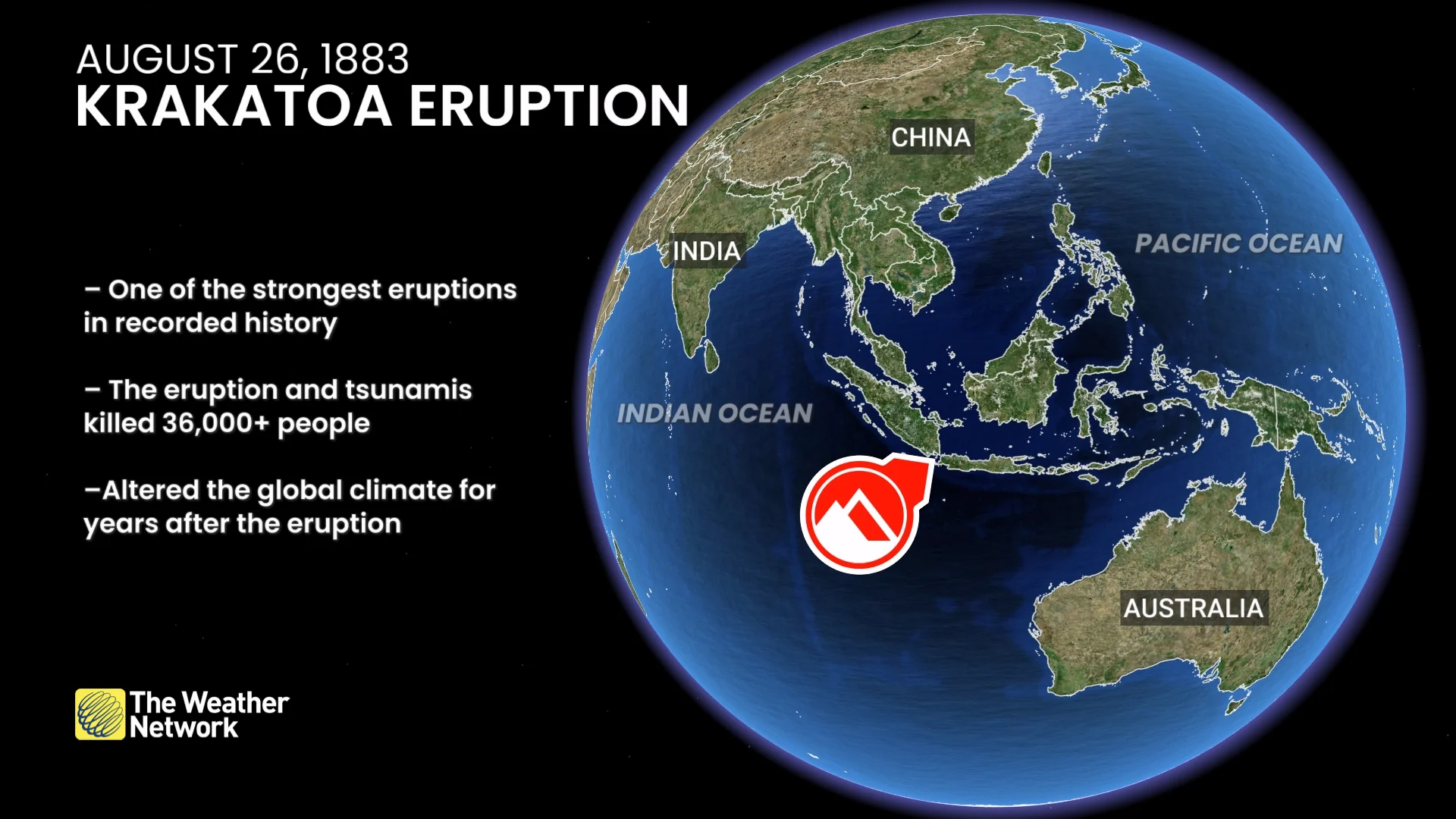
A series of colossal explosions rocked the region on Aug. 26, 1883, culminating in a cataclysmic eruption that destroyed most of the island. Some of the land was simply obliterated, while much of the remainder collapsed into the magma chamber to create a formation called a caldera.
The eruption was so forceful and sudden that it reportedly created the loudest natural sound ever observed. Some accounts hold that the noise was audible more than 4,500 km away in Australia and beyond. Weather instruments recorded the pressure wave as it circled the Earth several times in the hours after the event.
RELATED: The world’s largest landslide caused Mount St. Helens to erupt
Experts with NOAA state that the eruption column rose more than 80 km into the atmosphere and covered more than 800,000 square kilometres in ash.
Immense tsunamis generated by the eruption and the island’s collapse devastated communities on surrounding islands. The vast majority of the 36,000+ people killed by Krakatoa died in the tsunamis, which reportedly reached more than 40 metres high in some areas.
Ash and water vapour remained in the upper atmosphere for years following the eruption. Climate records indicate that global temperatures temporarily fell by as much as 0.5°C as a result of Krakatoa’s influence.
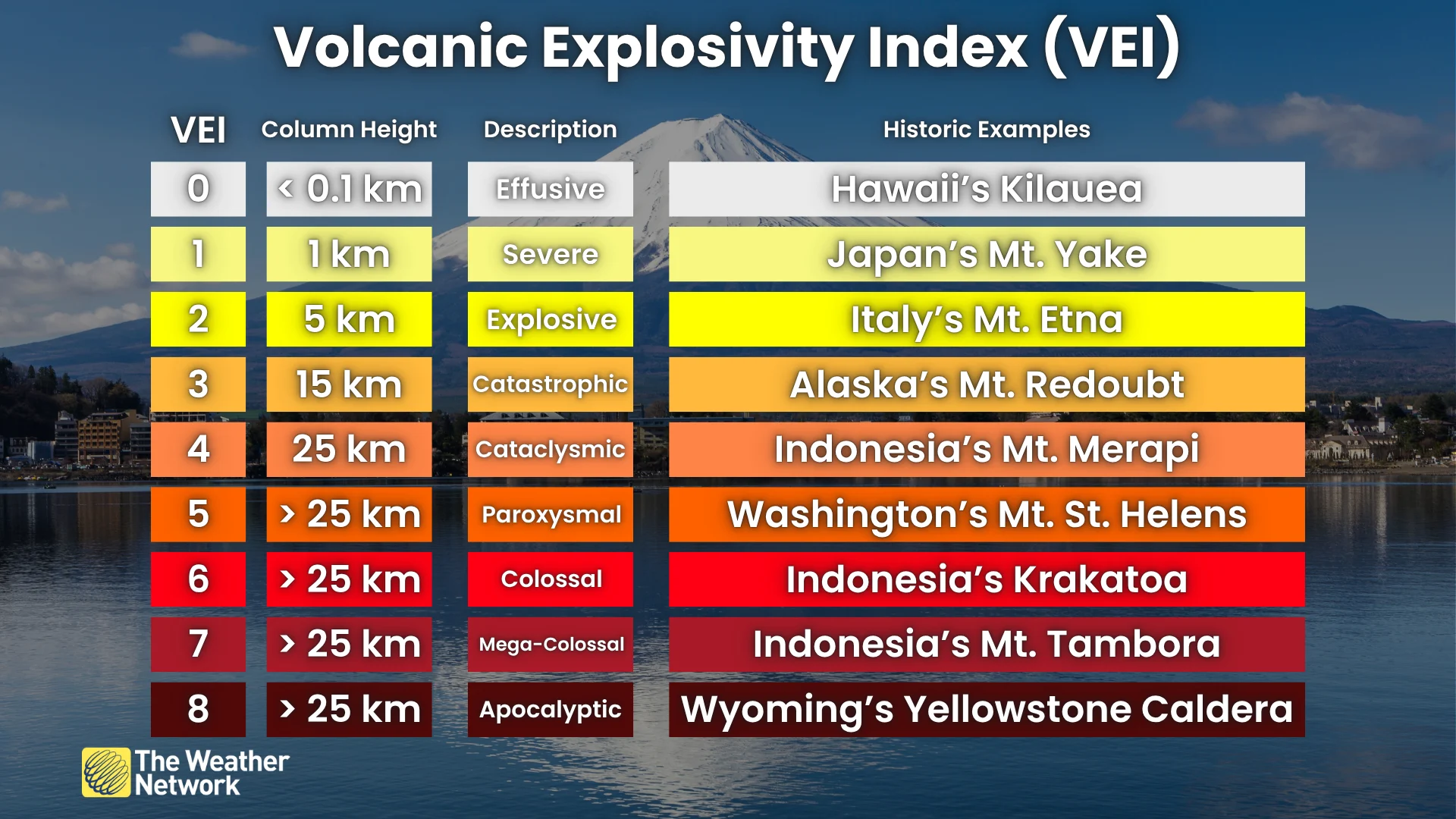
The disaster in 1883 ranked as a 6 on the Volcanic Explosivity Index (VEI), making it one of the most powerful such events in recorded human history. Very few eruptions in the modern era have received such a high VEI score.
Krakatoa’s VEI of 6 places it roughly on par with the eruptions of Pinatubo in 1991 and Hunga-Tonga in 2022, the latter of which also had significant regional and global effects. Only the 1816 eruption of Mount Tambora received a higher VEI score.
A new volcano rose from Krakatoa's caldera in 1927. Part of this fresh feature, known as Anak Krakatoa, collapsed during an eruption in 2018 and unleashed another deadly tsunami throughout the region.