The historic outbreak that spawned twin tornadoes

The Palm Sunday Outbreak of 1965 remains one of the strongest tornado outbreaks in modern history
One of the most violent tornado outbreaks in modern history unfolded just a short drive away from the Canadian border.
Dozens of twisters touched down south of the Great Lakes in the middle of April 1965, causing widespread damage and hundreds of fatalities throughout the region.
Recommendations issued in the wake of this outbreak helped pave the way for significant improvements in tornado warning capabilities.
DON’T MISS: Tornado debris can travel surprisingly far after a violent storm
An ideal setup for violent thunderstorms
Many of history’s notable tornado outbreaks unfold in April when the atmosphere is primed for intense, rotating thunderstorms.
A textbook setup developed across the central United States beginning on Saturday, April 10, 1965. The day kicked off with a budding low-pressure system near the Mississippi River. Thunderstorms erupted in Arkansas and Missouri, spawning numerous destructive tornadoes.

The atmosphere kicked into high gear the following day, which was Palm Sunday. Strong winds blowing in from the south provided the instability and wind shear needed to spawn supercell thunderstorms from Iowa to Ohio.
45 twisters touched down during the heart of the outbreak, including 18 tornadoes that received an F4 rating. The sheer number of violent tornadoes hitting populated areas resulted in more than 260 fatalities and thousands of injuries.
One tornado in northern Indiana hit a small airport in the town of Goshen. The wing of a destroyed airplane was reportedly found more than 50 km away in Michigan.
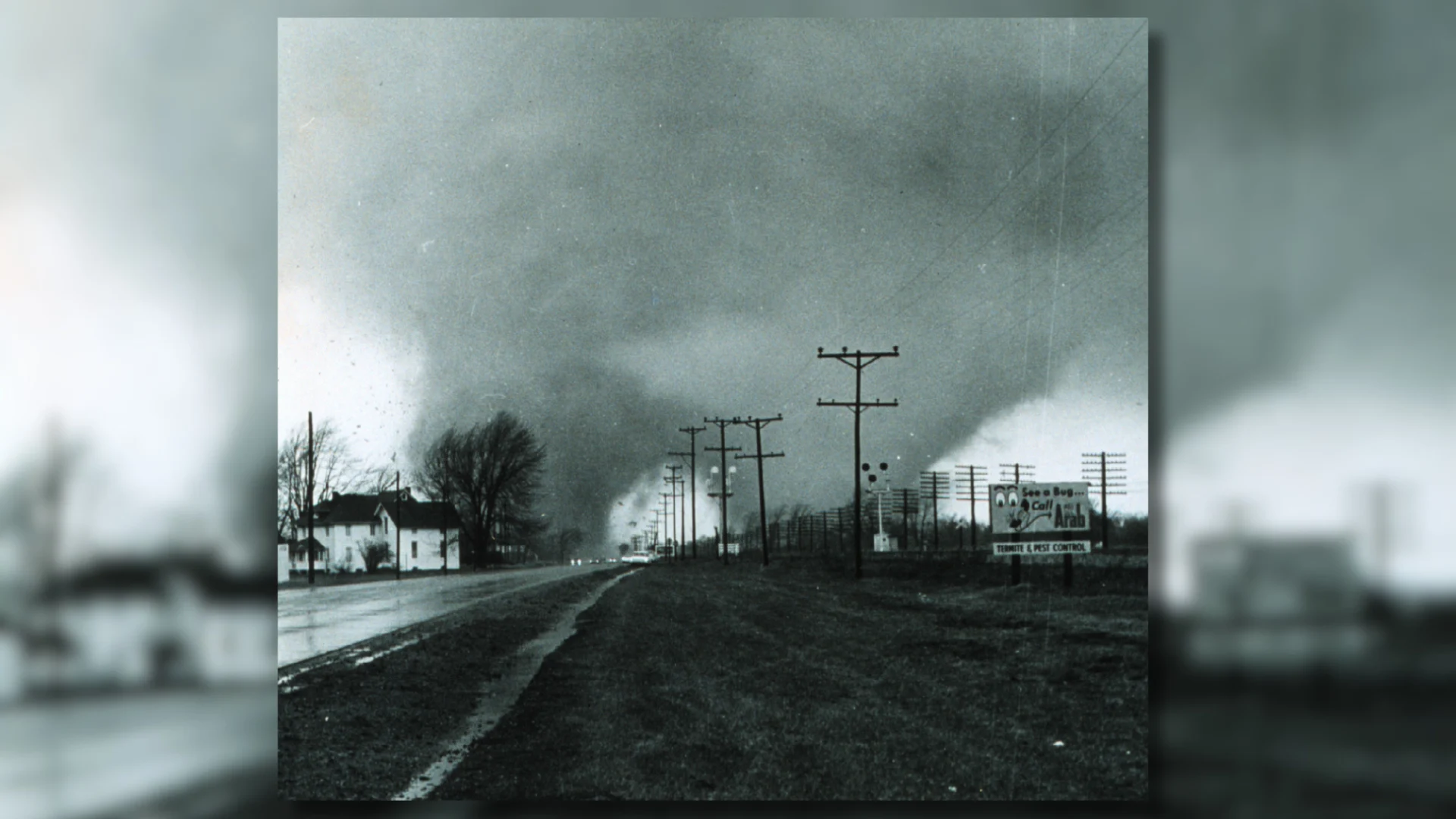
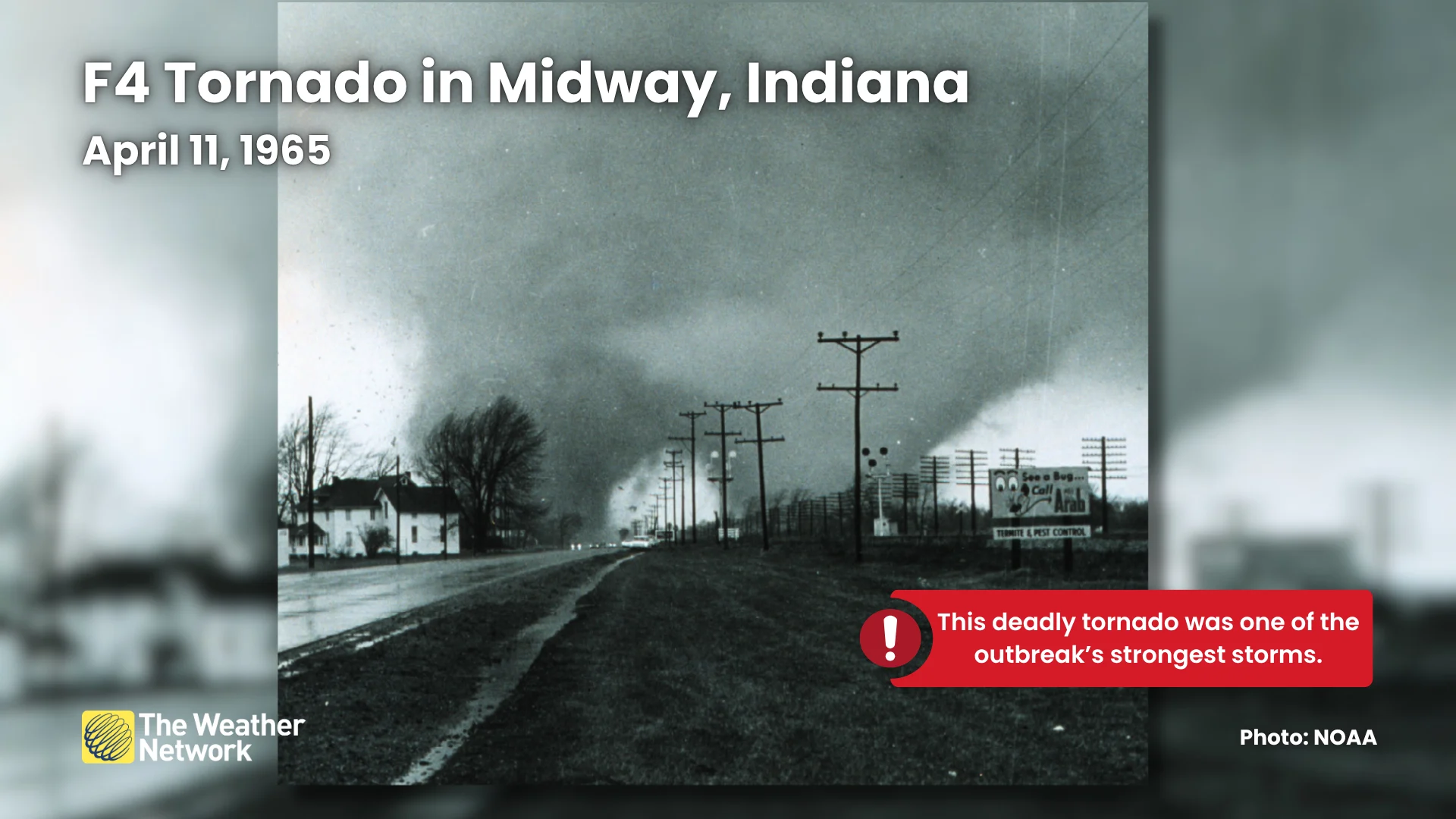
Several of the thunderstorms produced multiple tornadoes at once. This rare phenomenon can lead to “twin” tornadoes. A photographer in Midway, Indiana, captured one pair in what remains today one of the most famous photos in storm chasing history.
Outbreak response paved the way for future of safety
Meteorologists and officials conducted an extensive post-storm assessment of the forecast and warning process in the weeks following the storms.
One recommendation made in the report was a plea to “saturate” schools and media with tornado education, such as basic tornado safety and the meaning of severe weather alerts.

DON’T MISS: How Doppler radar revolutionized weather and saves lives
Another urgent recommendation was for the U.S. Weather Bureau to speed up the construction of its relatively new network of weather radar sites.
The first weather radar came into operational use just six years before this outbreak, and the only permanent radar sites nearby at the time were relatively far away in Chicago and Detroit.
Early radar provided minimal details about a storm, but certain features such as hook echoes helped meteorologists provide advanced warning to communities in harm’s way, marking a huge technological leap for the era.