446 cm: Canada’s winter saw extreme snows and bitter cold

This was a memorable season across the country, with 70-degree temperature swings and hundreds of centimetres of snow
We just endured a winter to remember across much of Canada amid extreme temperature swings and historic snowstorms.
An outbreak of frigid air delivered the country’s coldest temperature in decades. The season also produced Toronto’s snowiest day on record.
DON’T MISS: Wind chill of -96: Winter completely bottomed out this year
Memorably cold flooded Canada this winter
Canadian winters are known the world over for their bitterly cold temperatures.
But this meteorological winter, which runs from Dec. 1 through Feb. 28, saw a truly impressive share of extremely cold readings.
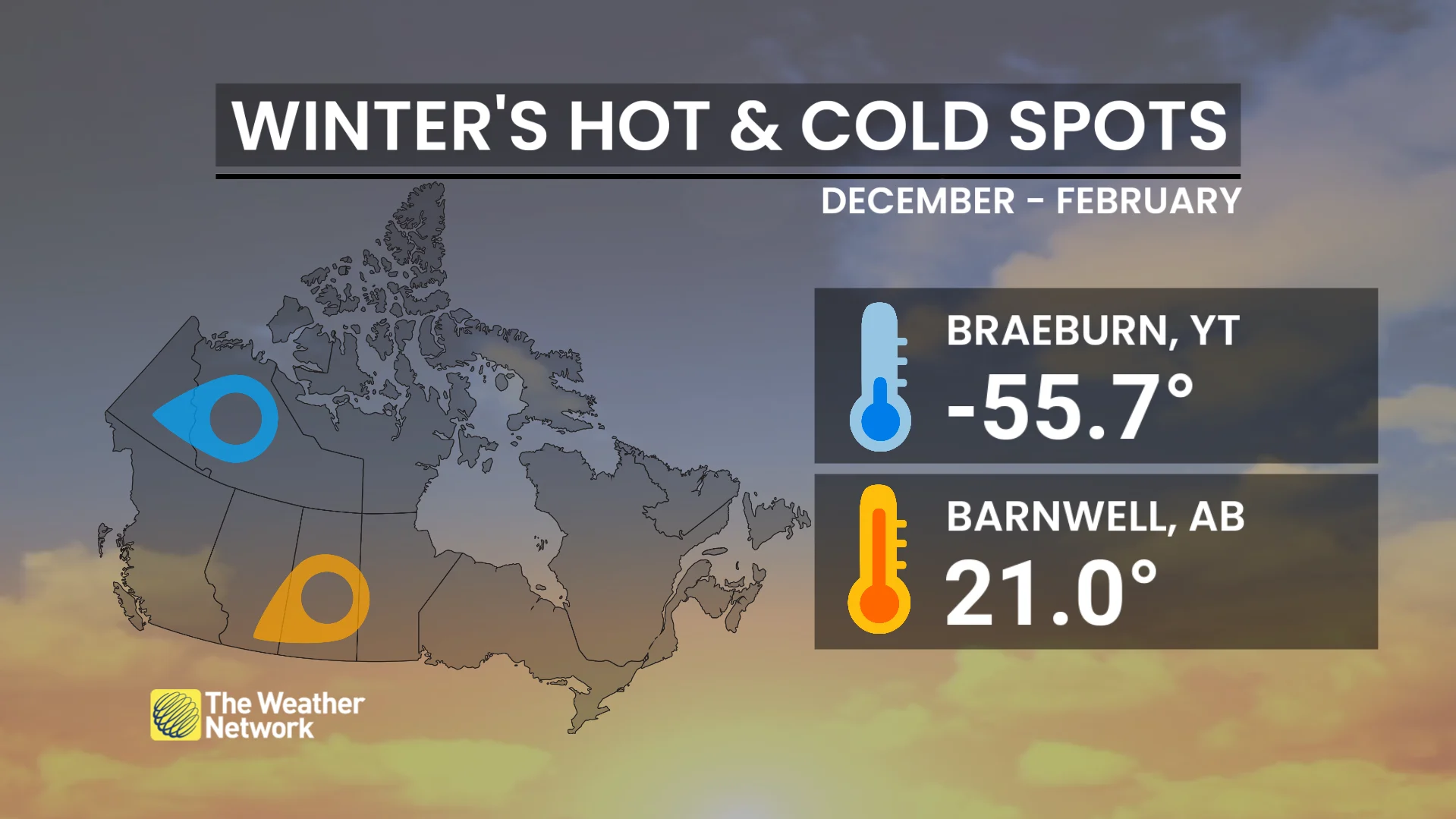
We saw a 76.7°C spread between the season’s highest and lowest temperatures. Braeburn, Yukon, measured the season’s coldest reading of -55.7°C on the morning of Dec. 23, which was the lowest temperature observed in Canada since Jan. 1999.
Farther south, a bout of Chinook winds in February helped raise the heat to a relatively balmy 21.0°C in Barnwell, Alta., which marked the season’s warmest temperature across the country.
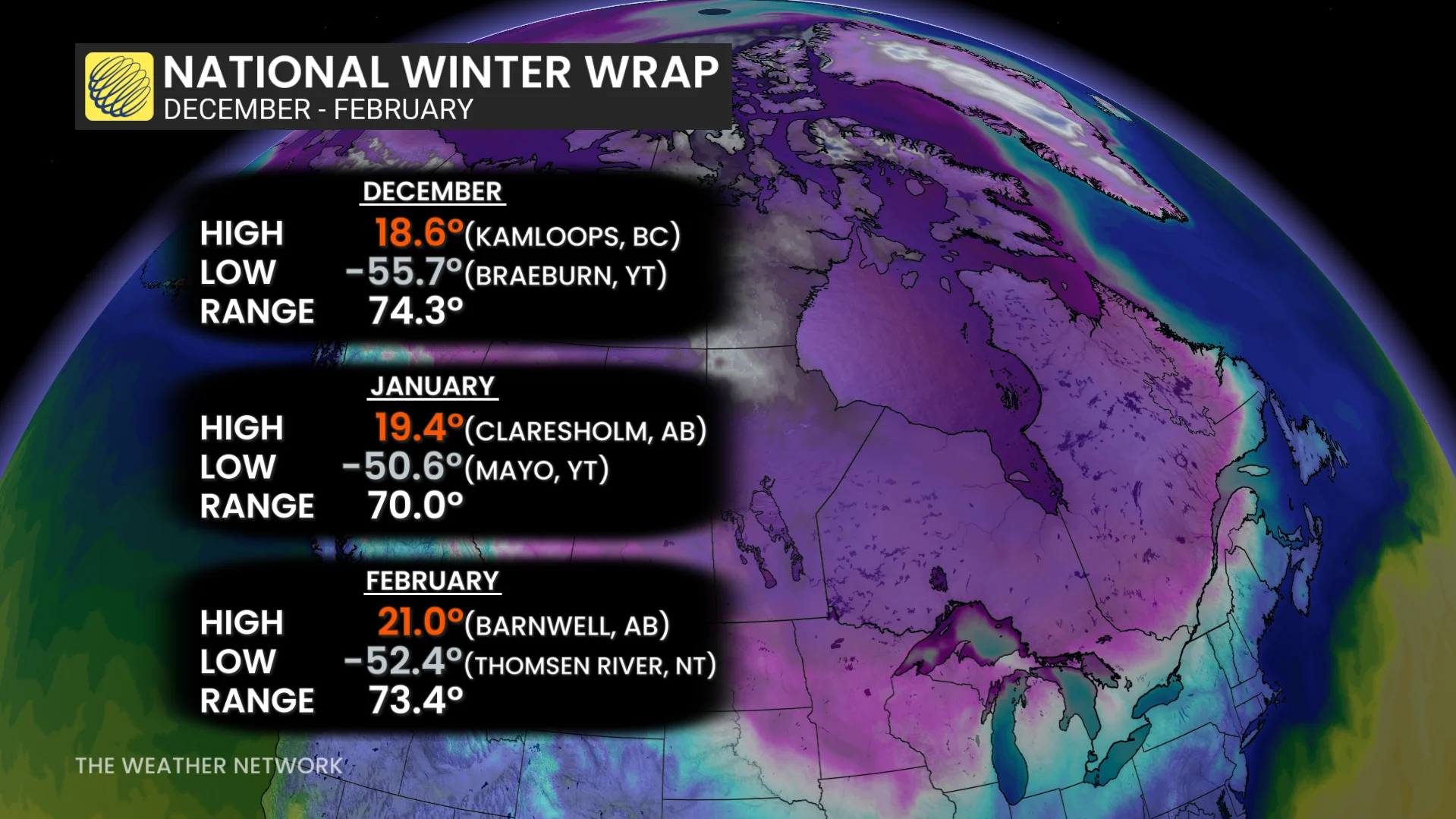
Every month this season witnessed a temperature of -50°C or colder, which is a rare feat to happen even once in a winter. The extreme cold we saw across Northern Canada helped give each month at least a 70-degree spread between the lowest and highest readings.
Farther east, the town of Kirkland Lake, Ont., measured its coldest temperature in 42 years when it saw a low of -43.7°C on Jan. 24.
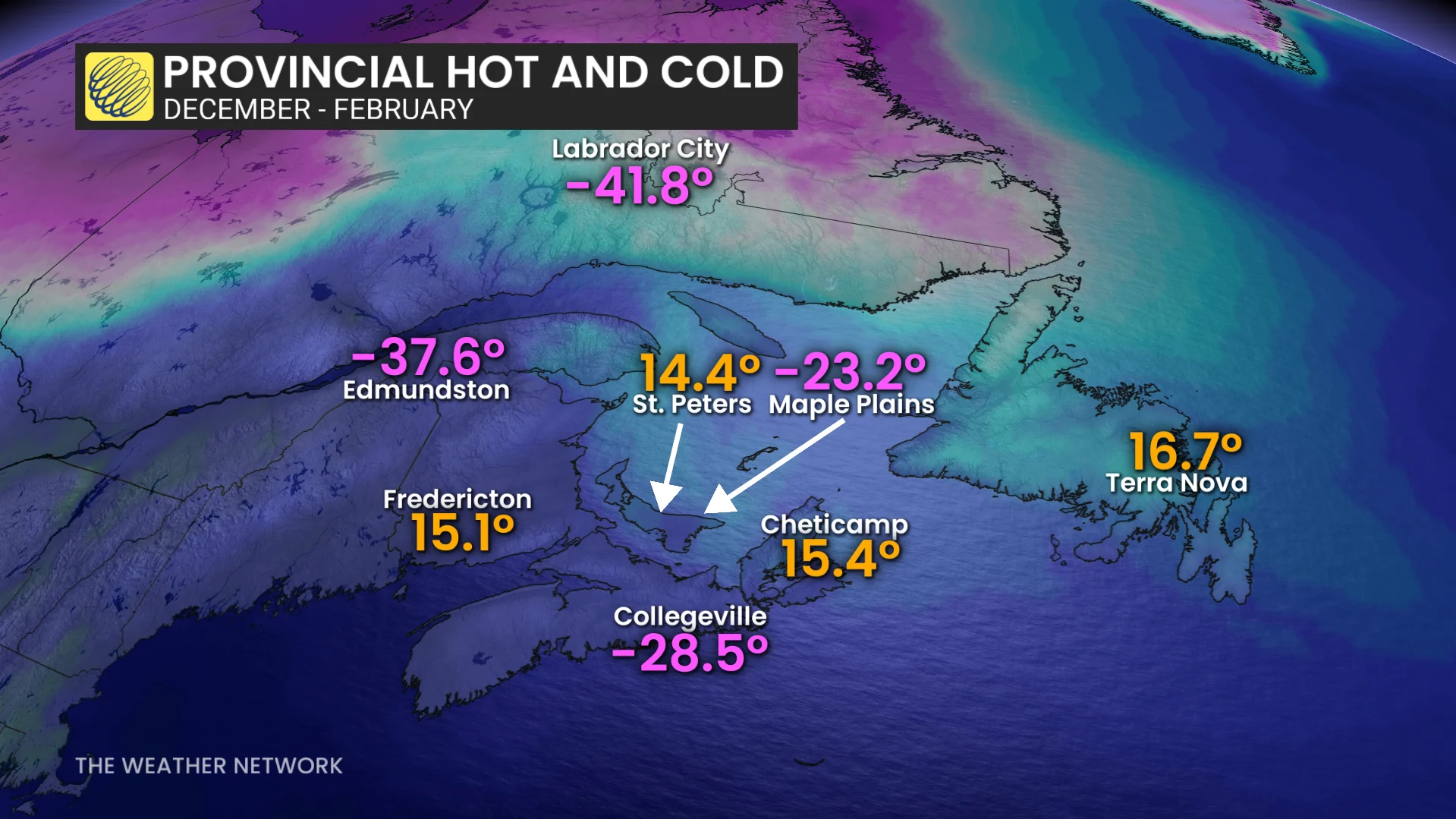
Conditions grew quite chilly in the Atlantic provinces, as well. Edmundston, N.B., dropped to a bone-chilling -37.6°C on the morning of Jan. 25.
Prince Edward Island saw the smallest temperature spread of any province or territory this season, with a 37.6-degree swing between the island’s warmest and coldest winter readings.
A historic snowstorm hit Canada’s biggest city
Many spots across Western Canada missed out on their typical snows this season. Vancouver International Airport made it the entire season without any measurable snowfall. Calgary saw just 80 per cent of its normal snowfall between December and February.

But it was a different story back east.
A major snowstorm that hit southern Ontario on Jan. 25, dropped 46 cm of snow at Toronto-Pearson Airport to make for the airport’s snowiest day on record. This storm beat out a 39.9 cm snowfall that occurred back in Feb. 1965.
Ample snowfall from lake-effect bands and nor’easters helped beef up totals throughout Eastern Canada.
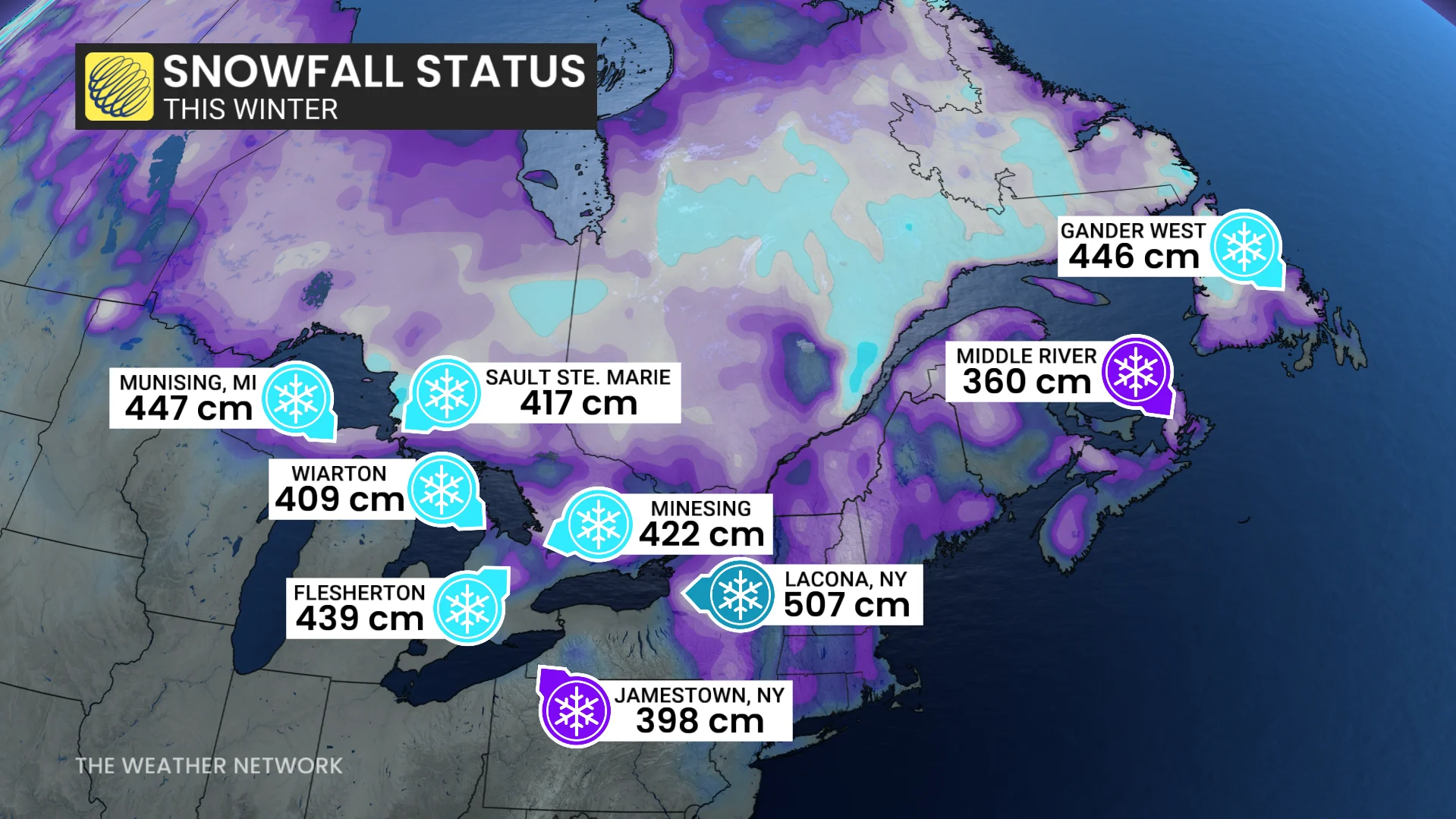
St. John’s saw its snowiest February in more than a century with 178.2 cm on the books there. Gander West has seen a whopping 446 cm of snow this season.
Communities downwind of the Great Lakes also built a formidable snowpack. Flesherton, Ont., picked up 439 cm of accumulation, while Sault Ste. Marie will end the season with more than 400 cm of snow on the board.