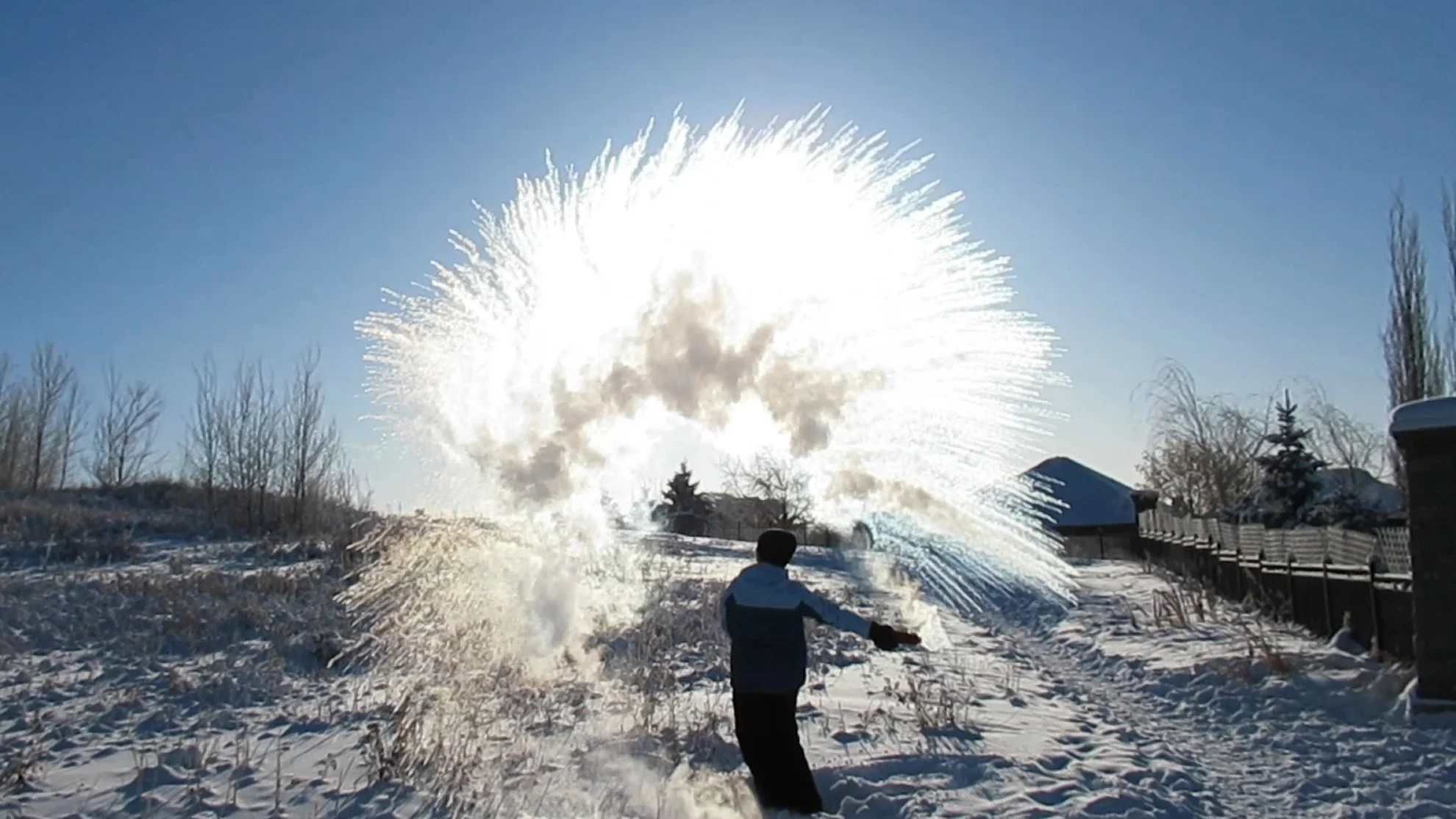
Want to try this famous cold weather experiment? Keep these tips in mind

Every winter when outdoor temperatures plunge, the 'boiling water experiment' takes over social media. Here are some simple common-sense tips to keep in mind to minimize your risk of getting burned in the cold.
When extreme cold hits, social media becomes flooded with pictures and videos of people tossing boiling water into the air, creating beautiful arcs of condensation. But there are also plenty of posts online showcasing what can happen when this experiment is done wrong. While these ‘fail’ videos may seem funny, they highlight the extreme danger handling boiling water poses.
Before you boil a kettle or pot of water and head outside, it’s important to note that throwing boiling water is never safe, and there is no truly safe way to do it. If you still want to try the experiment, you can, however, minimize the risk to yourself and others with a little common-sense.
RELATED: When is the cold too cold? How extreme weather warnings are issued in Canada
What is the boiling water experiment?
The boiling water experiment involves throwing a bottle of boiling water into extremely cold air. As the hot water rapidly cools, it condenses into a cloud of fine particles that disperse into the air.
Temperatures need to be at least -25°C for this experiment to work.
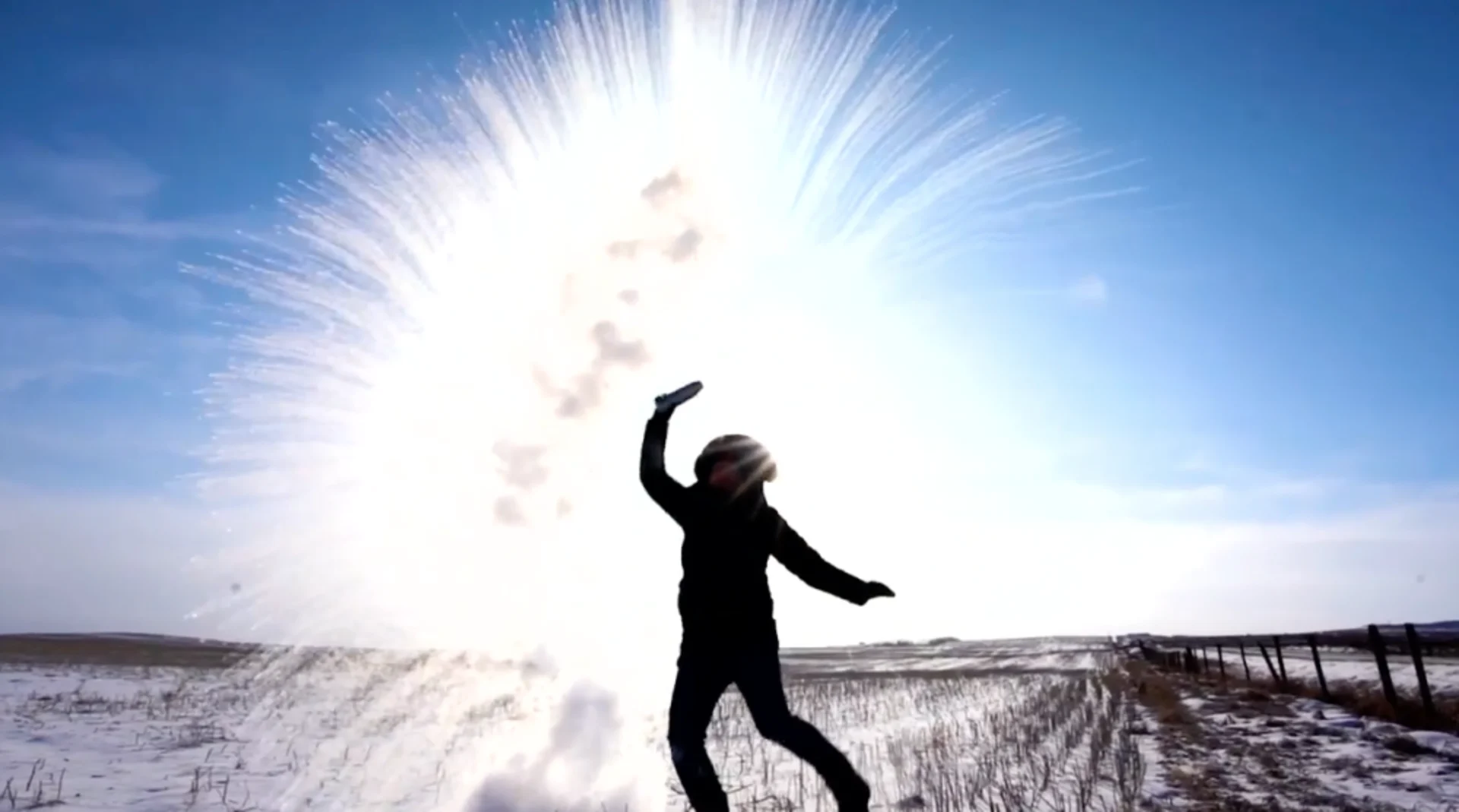
Throwing boiling water into extremely cold air causes the water to rapidly cool and condense into a cloud of fine particles, which can make for some awesome photos. (Credit: Kyle Brittain)
How can it be done safely?
In truth, there is no absolutely safe way to conduct this experiment. In 2019, when the polar vortex descended over southern Canada and the United States, at least eight people who tried the experiment were sent to the hospital for severe burns from getting boiling water on themselves. This prompted doctors to put out a warning urging others to not put themselves or others at risk by throwing boiling water into the air.
DON'T MISS: The freezing level is the invisible line that controls winter
However, that hasn’t stopped people since then from still trying. Here are a few tips to keep in mind that will reduce your chances of getting yourself or others burned:
Use a thermal bottle with a narrow opening—this will give you more control over the direction you throw the water.
Throw water away from your body, with your arm extended to the side—do not throw it directly over your head.
Know which direction the wind is blowing and throw in the same direction—do not throw against the wind.
Make sure nobody is around you that the vapour could reach, including downwind from you.
Make sure the outdoor air temperature is at least -25°C (wind chill does not count).
Never let a child try this experiment.
Thumbnail image submitted by Kalyna Steciw.