Spring’s arrival and time change: March marks new beginnings

After what has felt like a long and challenging winter for so many across the country, there’s a lot to look forward to in March.
Although it might not seem like it when you step outside, spring is just around the corner, Canada!
March 1 marks the beginning of meteorological spring, while we officially celebrate the equinox on March 20. However, in the days between these two dates, most Canadians will once again face the twice-annual bout of chronological confusion, as clocks spring forward at 2 a.m. local time on Sunday, March 8.
To help you prepare for the upcoming changes, here’s a brief refresher on what's ahead.
Spring has two start dates
Meteorological spring is determined by the annual temperature cycle and aligns with our calendar year, starting on March 1 and lasting until the end of May.
Astronomical spring, often referred to as the first official day of spring, is determined by Earth's relationship with the Sun. This year, the season runs from March 20 and ends on June 21, when the summer solstice begins.

“Astronomical spring starts on or around March 20th each year, when, due to the tilt of Earth's axis, the Sun appears to cross the celestial equator, headed from south to north, on its way to reaching its highest point in our sky in late June,” explains Scott Sutherland, a meteorologist and science writer at The Weather Network. “However, meteorological spring starts on March 1, since that not only lines up better with weather records, making it easier to compare seasons, it also tends to capture the true essence of the season from a weather perspective, as the most spring-like weather tends to occur between the beginning of March and the end of May.”
Some cities gain sunlight faster than others
The spring equinox marks the arrival of 12 hours of daylight at all latitudes, which comes three months after the shortest day of the year (winter solstice).
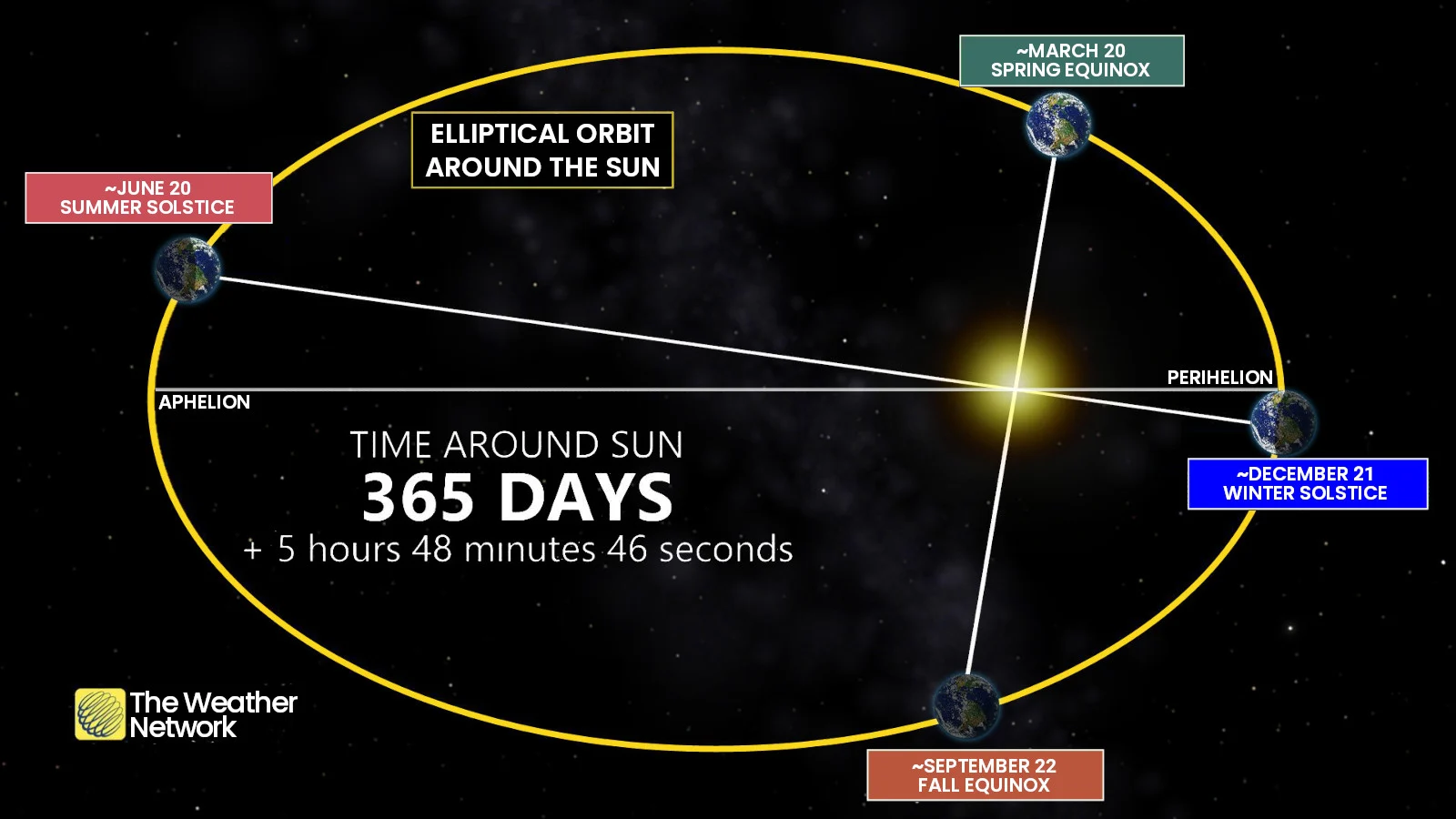
Over a three-month period between the winter solstice to the spring equinox, Yellowknife progresses from four hours and 57 minutes of daylight to 12 hours, whereas Toronto transitions from eight hours and 55 minutes to 12 hours.
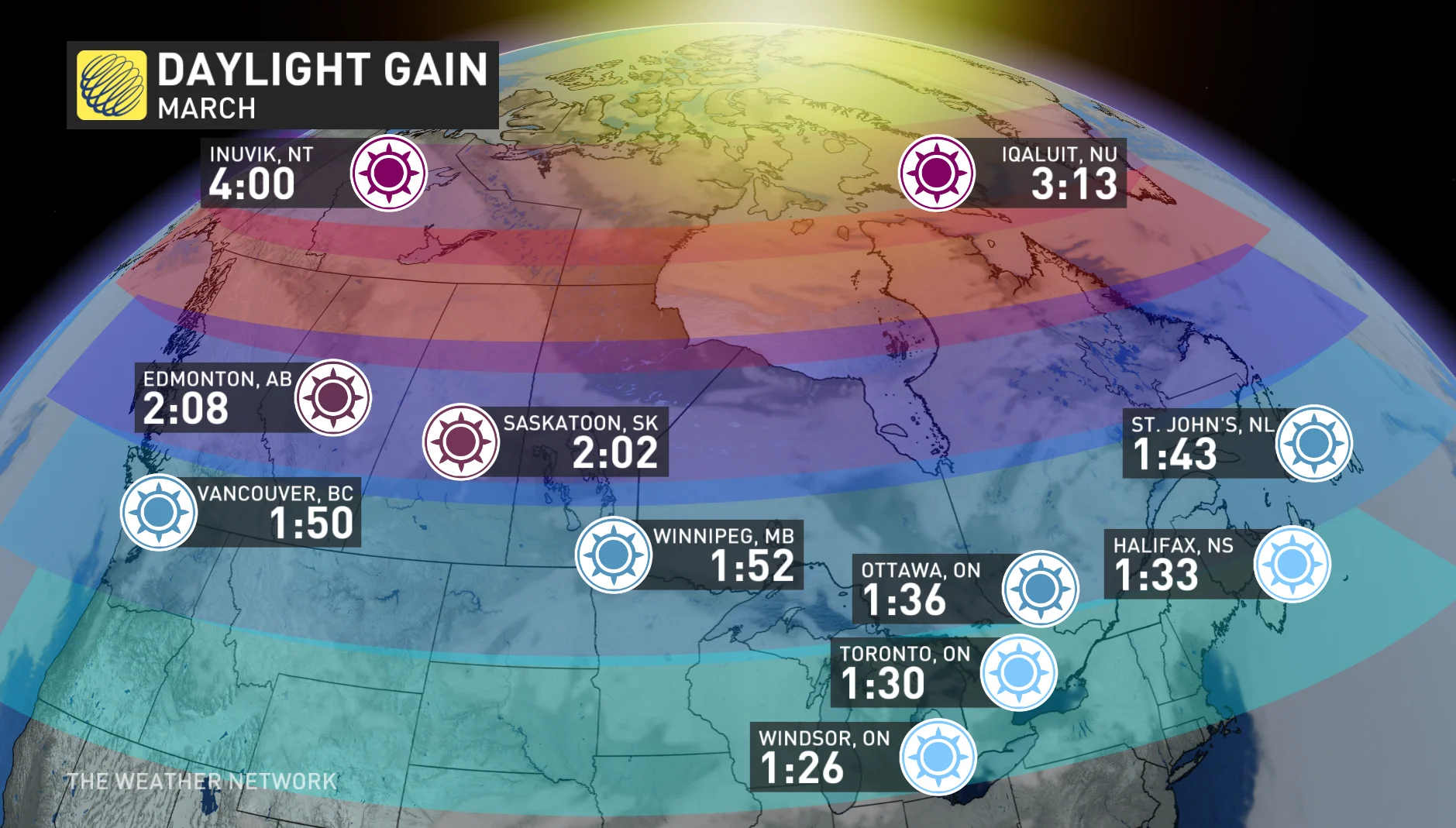
Daylight gained in March.
'Spring forward' on March 8
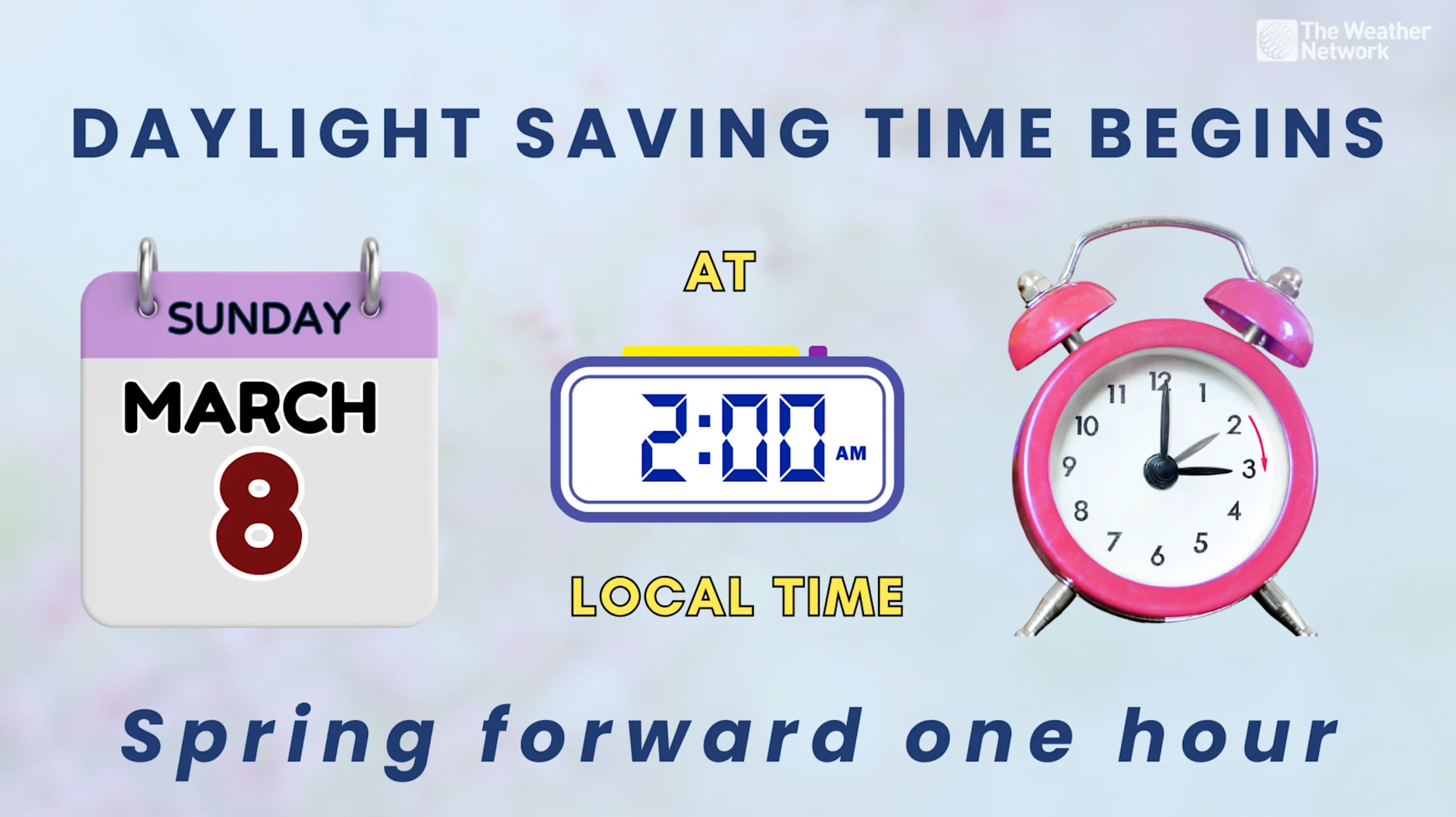
Love it or hate it, daylight saving time begins on March 8. That means clocks will move forward one hour across most parts of Canada at 2 a.m. local time.
According to Heather Young, a certified child sleep consultant with Good Night Sleep Site Waterloo, planning ahead is essential for making the transition a bit easier.
RELATED: What would permanent Daylight Saving Time look like in Canada?
“A general rule of thumb is that for every hour of time change, it takes about a day for our bodies to adjust," she says. "Other factors that can influence this include how tired you are leading up to the time change and whether you are going to bed on time each subsequent night. As a result, it can take a few days or even up to a week to fully adjust.”
Some tips to keep in mind:
Avoid caffeine too close to bedtime
Avoid technology within one hour of bedtime
Avoid alcohol consumption too close to bedtime
Use blackout blinds, eye masks, earplugs, or sound machines to help you sleep better
Start a bedtime routine that signals to your body that it is time for bed
Block out sounds that will disrupt sleep (e.g., putting your phone on do not disturb while you sleep)
You can find more helpful tips from Young in the video below.