Canada to feel magnified March madness in the month ahead

Changeable temperatures and a stormy pattern will define Canada’s weather through the month of March
A dramatic month is in store for Canada as winter fights to hold on against spring’s steady advance.
We’re looking ahead to a period of magnified March madness, featuring regular temperature flip-flops as well as a bustling storm track that could produce a whole slew of messy conditions.
Canada's 2026 Spring Forecast: Taking the scenic route from winter to summer
Cold lingers to begin March
Arctic air will assert its dominance into the opening days of March.
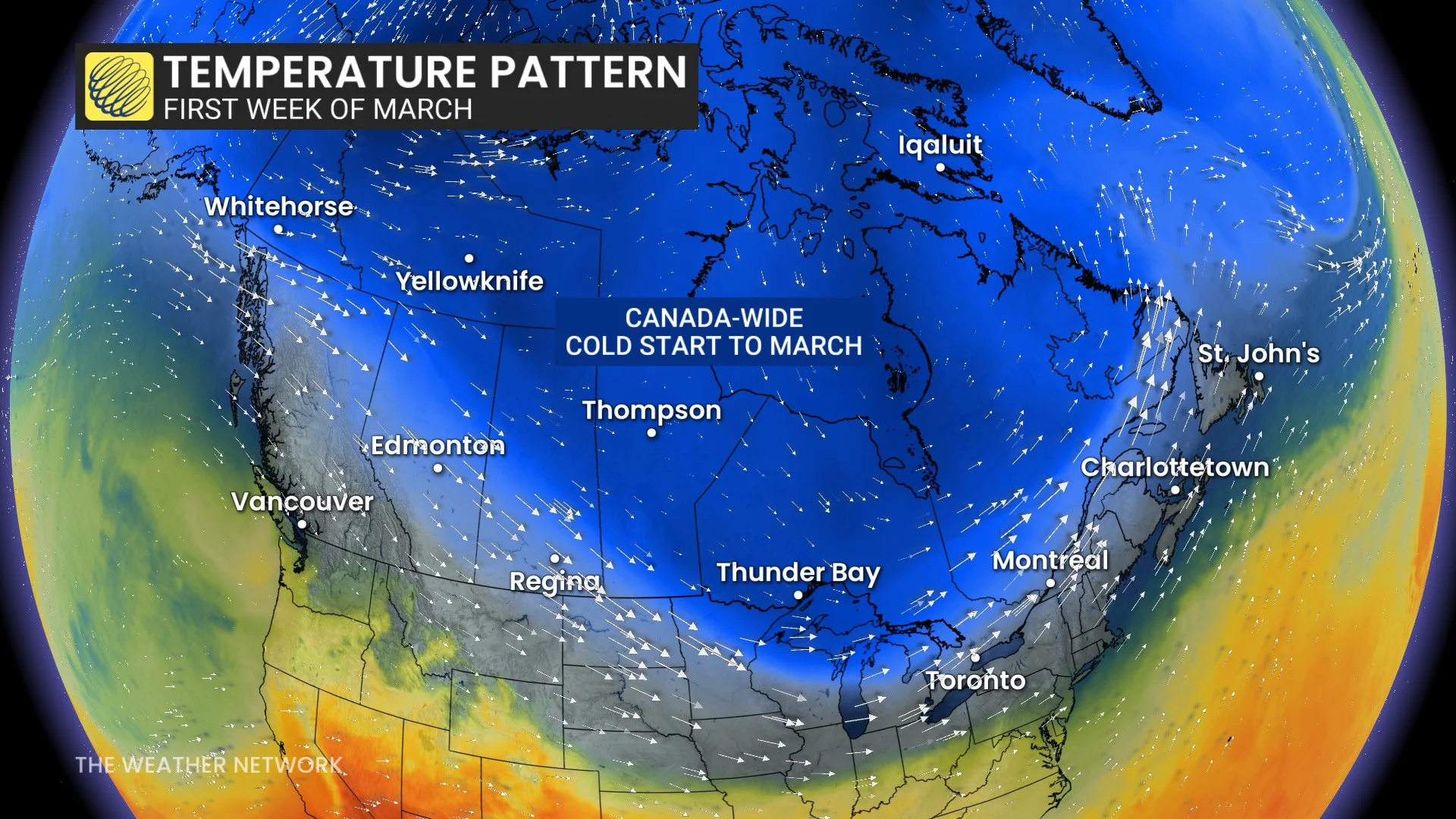
This is such a forceful push of cold northerly air that we’ll see below-seasonal temperatures stretch from the heart of Alaska all the way into Eastern Canada, which is a rare feat.
We’ll see these frigid temperatures stick around through the first week of March before a new pattern takes hold.
Expecting a dramatic second week of March
The month will continue with several dynamic weather features pushing and pulling on one another. A split polar vortex will dominate the Far North as a strong ridge of high pressure builds over the southeastern United States.

DON’T MISS: What does a ‘normal’ spring look like across Canada?
Signs currently point toward cold air spilling into the western half of Canada while exceptional springtime warmth builds toward the east during the second week of the month.
This type of pattern is primed for an active storm track that could bring plenty of messy weather to those communities stuck in the middle.
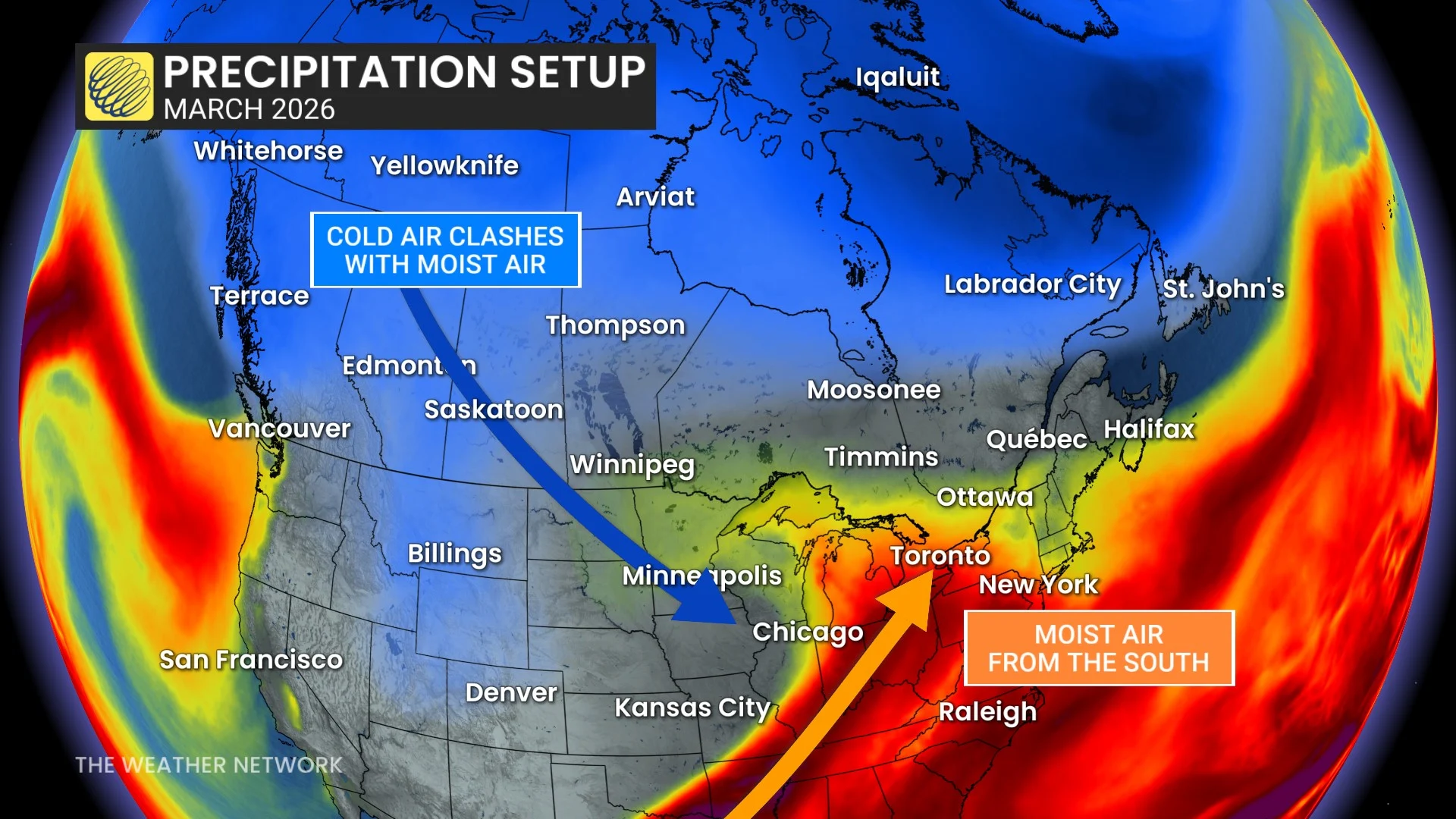
Low-pressure systems that track through Ontario, Quebec, and Atlantic Canada will have the opportunity to produce wintry weather to the north and west, while areas to the south endure periods of heavy rainfall.
Given the combination of heavy rainfall, mild temperatures, and melting snowpacks, residents across the region will have to closely watch the potential for flooding.
A stormy pattern is also expected for the central and northern stretches of the West Coast, which would bring a steady stream of precipitation into the region.

Forecasters will monitor the potential for colder temperatures to shift east during the second half of the month, though some uncertainty remains around how quickly this widespread cold will take hold.
The expected return to chillier temperatures to close out the month serves as a reminder that wintry conditions stick around across Canada despite the calendar flipping over to meteorological spring.