It’s not just 7 C: The real rules for switching your tires
It's just about time (or it is right now) for that yearly vehicle maintenance that always comes with an important question: When should I make the tire switch? You will have to look beyond the calendar date and a specific temperature for the right answer
Well, it's that time of the year again.
After a long, snowy winter in many parts of Canada, the spring not only heralds the arrival of warmer temperatures, but it means we partake in a tradition that helps us keep our vehicles aligned with the weather conditions when we're on the road for the next several months.
SEE ALSO: Winter tires are still top of mind for Canadians: Survey

The standard practice is to make the summer tire switch when daytime temperatures climb to 7°C or higher, and remain there consistently.
Well, there is a little more to it than that.
Factors to consider before changing the tires
Because of the fluctuating temperatures in March, April and even in May, it's not always reasonable to expect a tire change at the same time every year, especially if you live in regions in Canada that continue to experience more wintry weather than others.
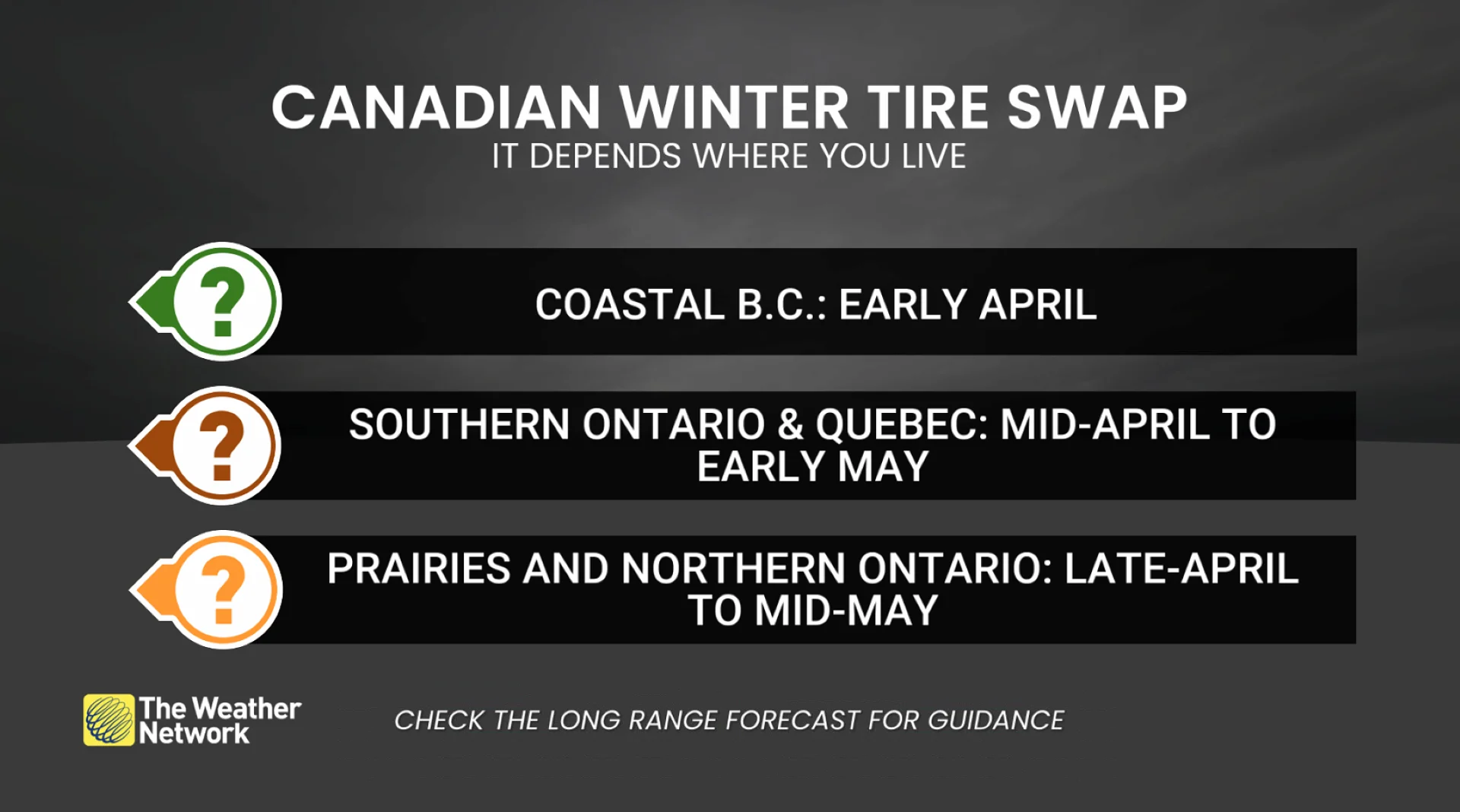
The graphic below has suggested timelines on ideal tire changes, based on locations in Canada.
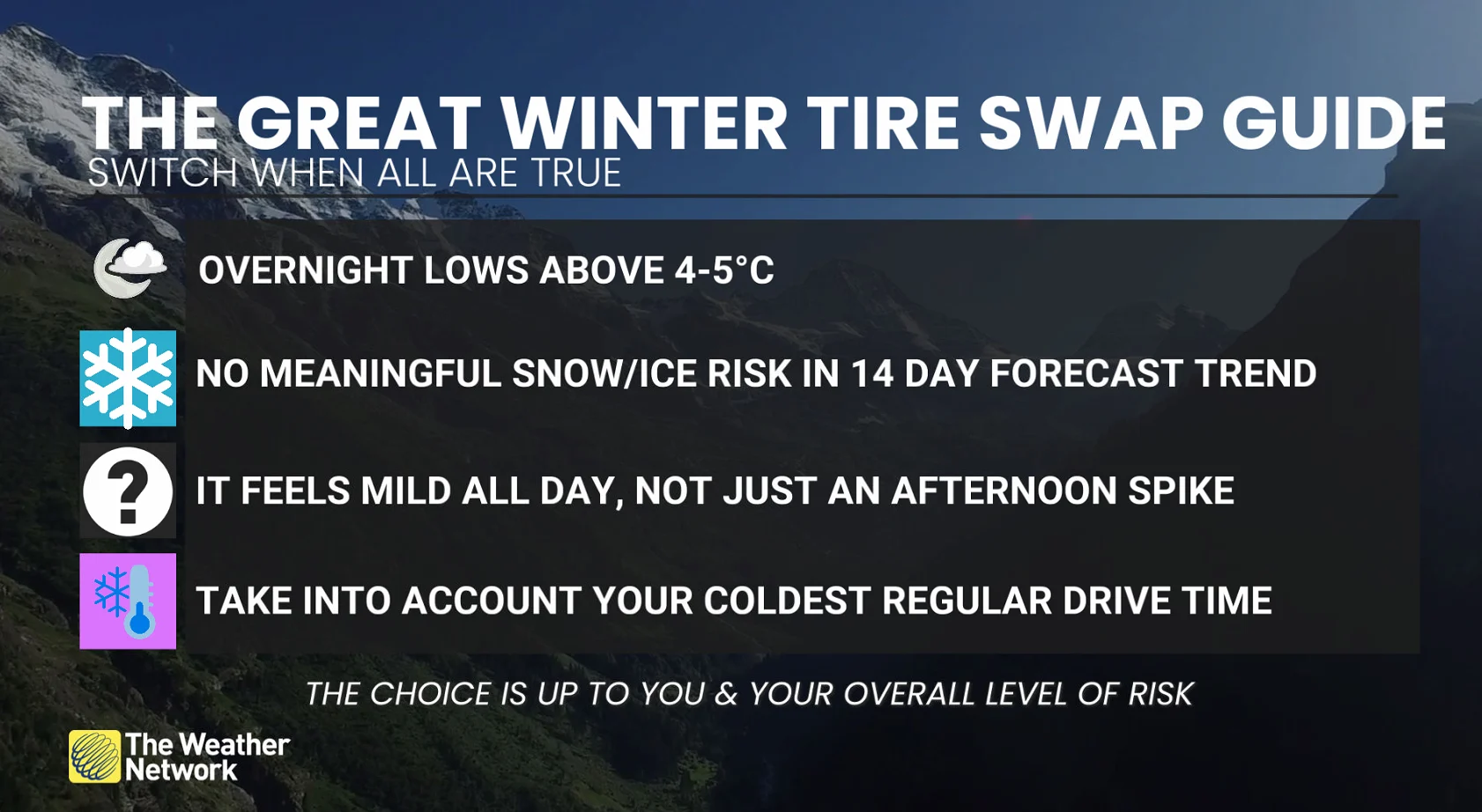
For starters, overnight lows need to consistently stay above 4 C. As part of that, there should be no meaningful snow or ice risk in the 14-day forecast trend.
The temperature should feel mild for most of the day, not just a brief, afternoon spike.
What also factors into it is when your coldest, regular drive time is.
Taking them off too early or too late can have risks
On the other hand, the worst thing about taking your winter tires off too early is the possibility of snowfall (or ice) on the ground and/or decreasing temperatures a day or two after the switch.
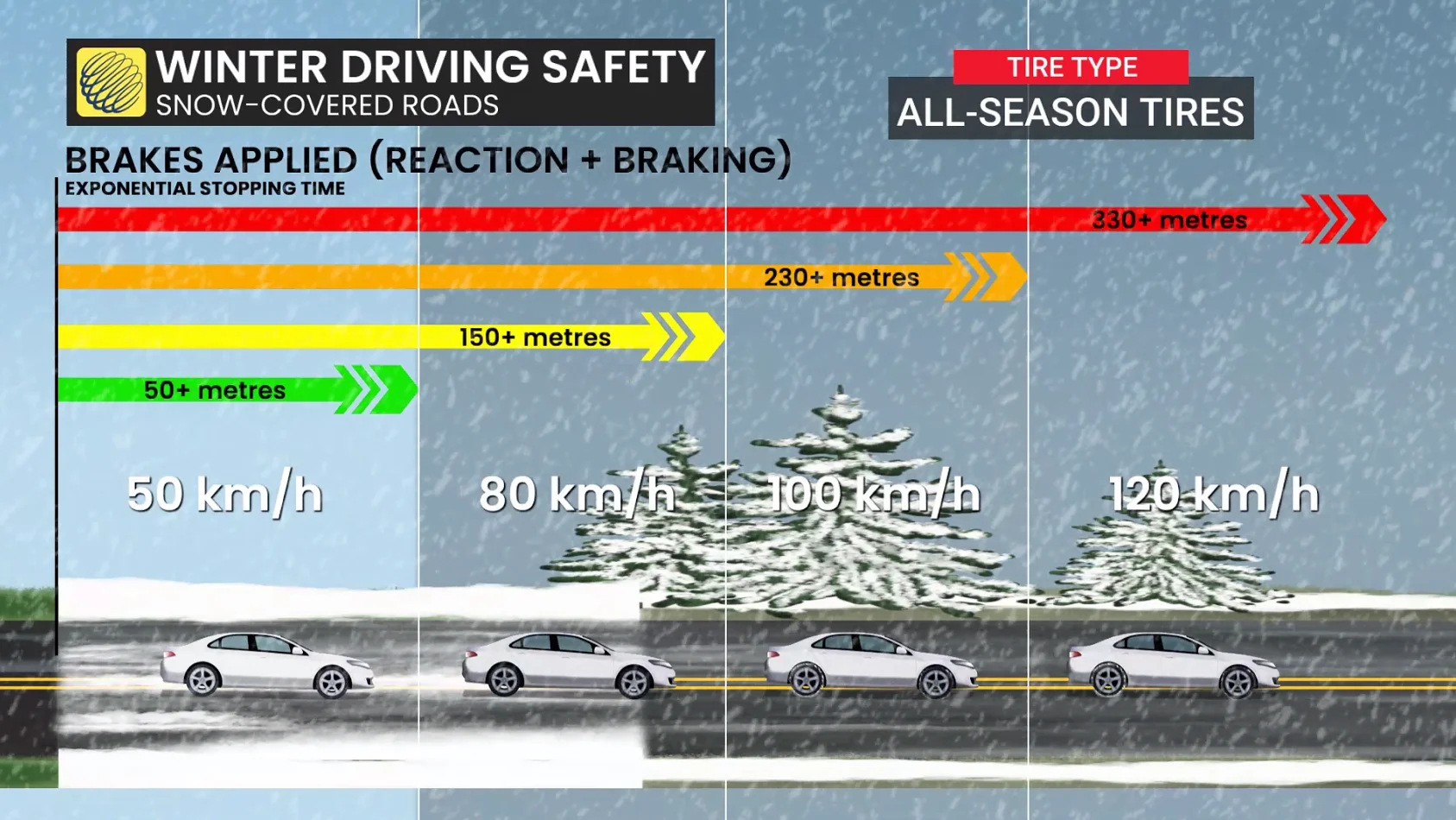
Removing your winter tires too early can be a high-impact risk as there are dicey conditions such as morning black ice, wet-snow events, and even a cold rain, which can lead to trouble, including a reduction in the braking performance.
Winter tires are designed to function on slush and snow, but are worse than all-seasons at evacuating standing water. As a result, there is a hydroplane risk.
While that is a low-probability event, it does heighten the chances of a catastrophic crash if it occurs.
Meanwhile, taking them off too late brings a lower-impact cost, but there are cons to that still.
Waiting too late to change the tires can lead to faster tire wear with warmer air and concrete temperatures, reduced fuel efficiency and a slight drop in handling in warm conditions.
Keeping winter tires on longer than they should be are predominantly financial and performance costs to you, even if they are marginal.
Here's what the science says about some of the tire usage in the spring.
Above 10 C, winter tires experience:
Reduced, dry-handling precision.
Faster wear.
Warm pavement matters:
Road surfaces can be 10 C to 20 C warmer than the air temperature in the sun.
That accelerates wear and performance loss.
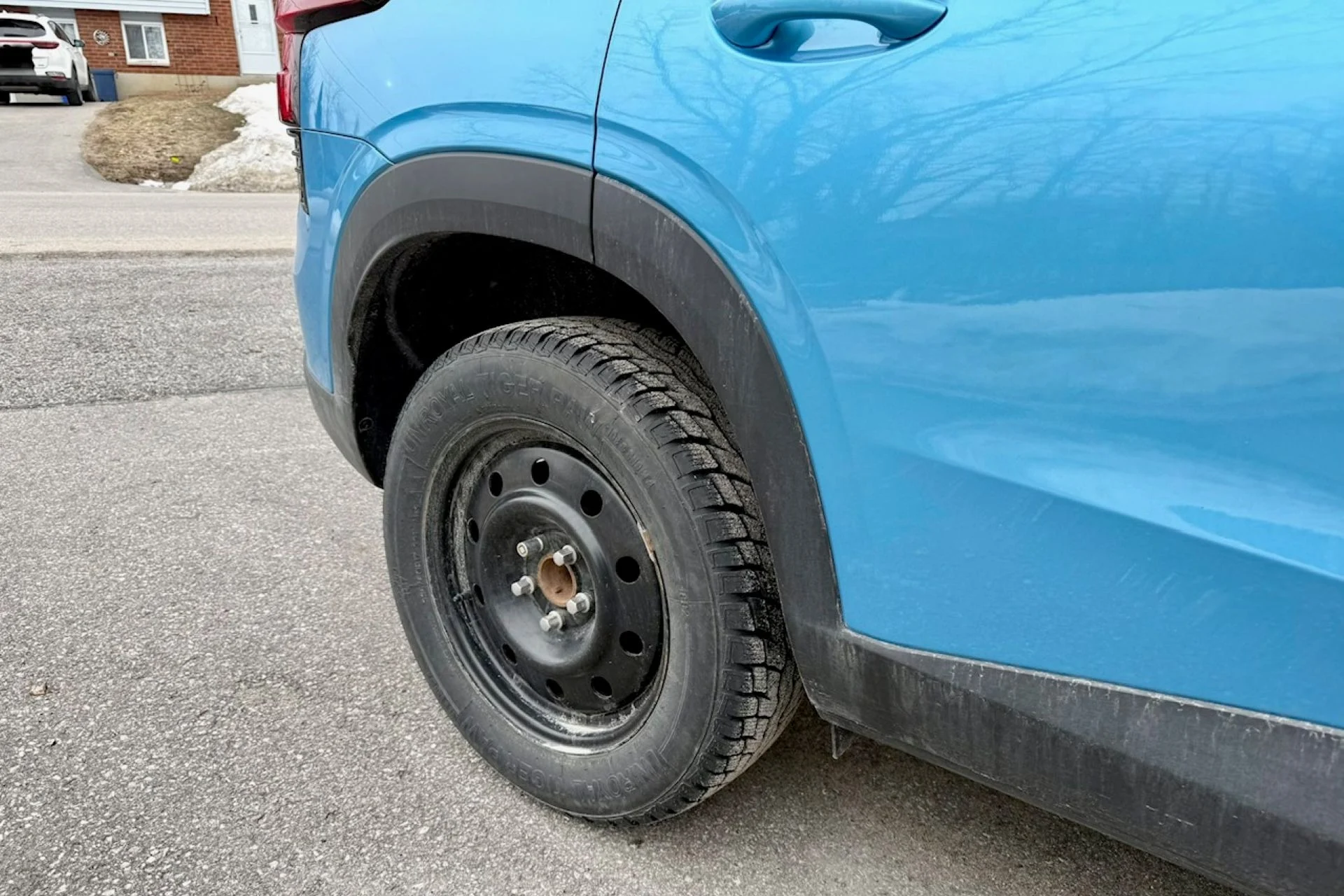
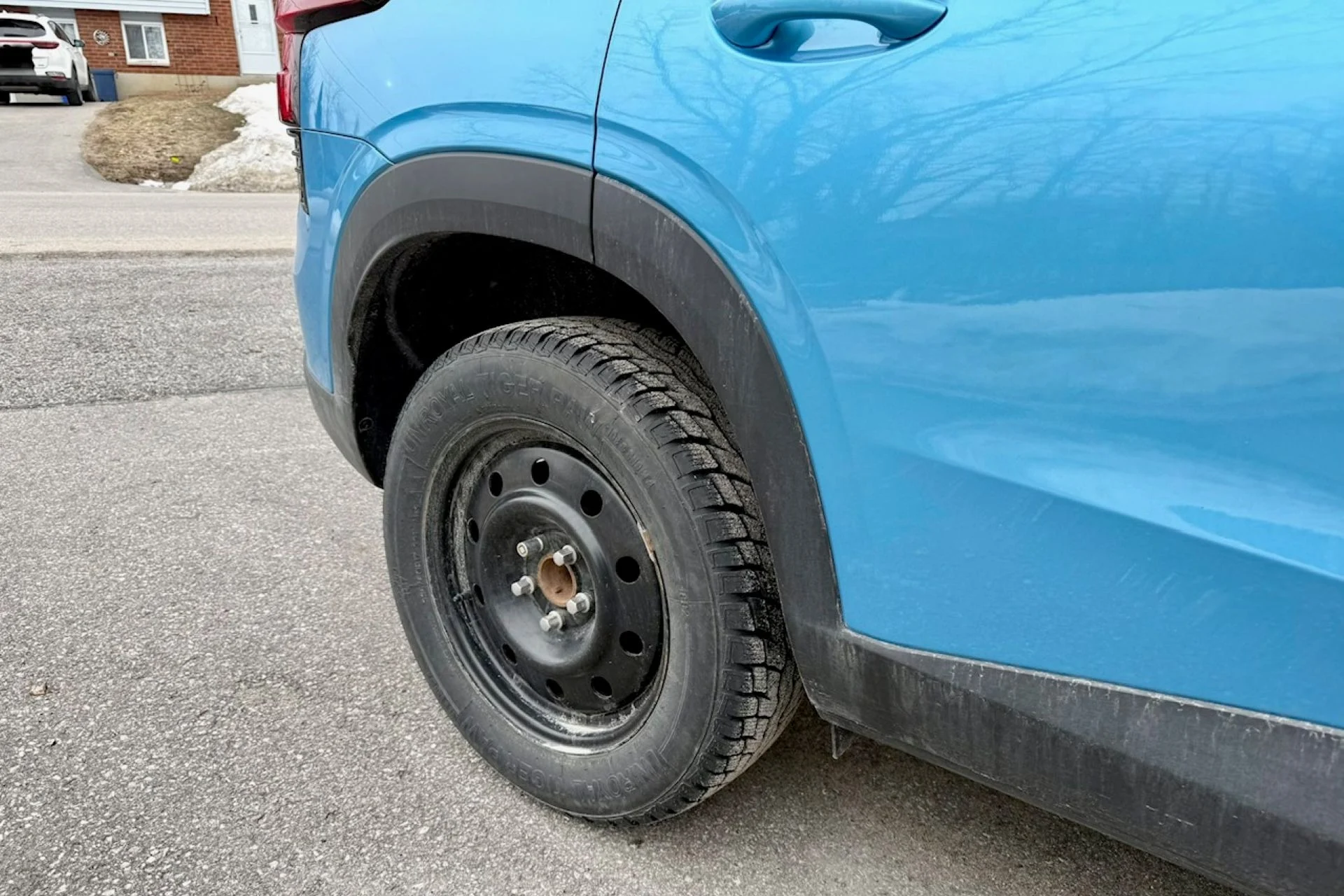
Winter tires. (Nathan Howes/The Weather Network)
Below 7 C, if using all-season or summer tires:
Stiffen significantly.
Lose braking grip, especially in wet or near-freezing conditions.
Switch your tires when you meet this checklist
So, you can go ahead and book that tire appointment to switch the tires when the following criteria have been met:
Overnight lows are consistently above 3 C or 4 C. Look for stability.
No meaningful snow and/or ice risk in the 14-day outlook.
Average daily temperatures stay above (approximately) 8 C to 10 C (not just daytime highs).
You’re not regularly driving early mornings, late nights, or in cold-prone or elevated areas.

(Getty Images)
Also, and this will be told to you by a mechanic or dealer, make sure to retorque your wheels after 50 kilometres to 100 kilometres of driving. That is a critical safety item as the lug nuts settle.
Transport Canada checklist
Transport Canada has a 10-item checklist for drivers to review in order to maintain the safety of their tires.
Measure your tire pressure at least once a month, using a good-quality pressure gauge. Measure the pressure when the tires are cold. Don’t forget the spare.
Before inflating your tires, check the recommended tire pressure for your vehicle. This information is usually on the tire information label, normally located on the edge of the driver’s door, the door post, the glove box or the fuel door.
This information can also be found in your owner’s manual. Don’t use the pressure indicated on the tire. It’s the maximum pressure, not necessarily the recommended one.
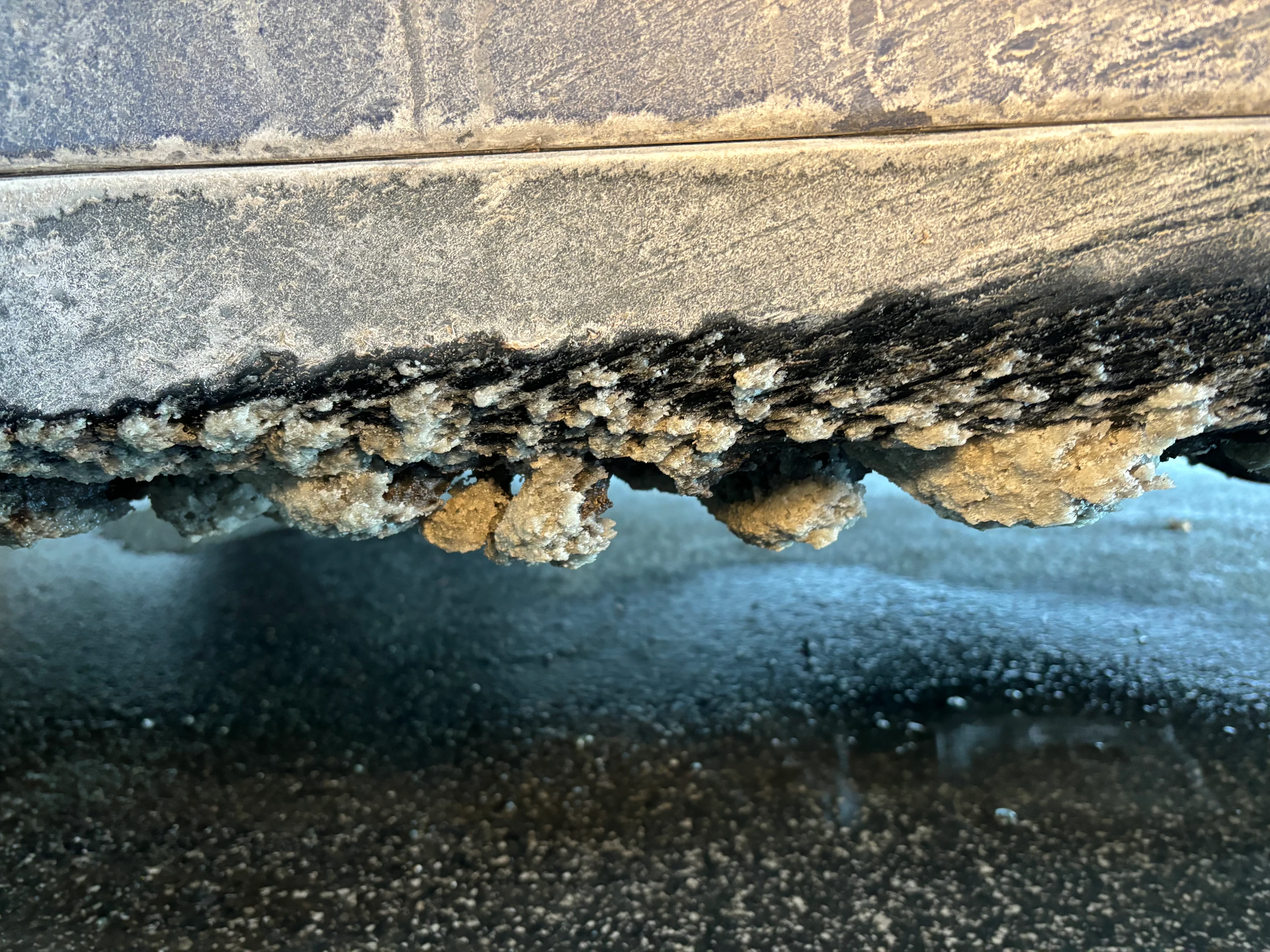
(Nathan Coleman/The Weather Network)
When inflating your tires, make sure the air-pump hose valve and tire valves are free of dirt and other obstructions. Make sure the tire valves have caps.
Always measure tire pressure before going on a long trip.
Once a month, inspect tires for uneven tread wear, cuts or cracks, bulges, foreign objects or other signs of wear or trauma.
Rotate your tires on a regular basis. Check your owner’s manual to find out how--and how often--tires should be rotated.
Buy the most appropriate tires for your vehicle and your driving needs.
When installing new tires, always make sure tires of the same type, size, speed rating and load index are on all wheel positions.
Register your new tires with the manufacturer upon purchase.
Don’t overload your vehicle. The tire information label indicates the maximum recommended load.
For more information on road and tire safety, visit the Transport Canada website.