
Experts are changing how we measure El Niño and La Niña

A new index will help scientists and forecasters better identify El Niño and La Niña events in the future as the climate changes
Beginning this February, experts will make a small but critical change in how they measure the onset of El Niño and La Niña across the Pacific Ocean.
This tweak is important to account for the effects of climate change, as well as making sure the data accurately reflects how these events are affecting the atmosphere.
DON’T MISS: What happens when El Niño and La Niña disappear?
Scientists measure sea surface temperatures
El Niño occurs when water temperatures around the equator in the eastern Pacific Ocean come in 0.5°C warmer than normal for several consecutive months. La Niña is the cold-water opposite of El Niño.
These two phenomena are part of a larger pattern known as the El Niño-Southern Oscillation (ENSO), which tracks how the ocean and atmosphere are coupled with one another.
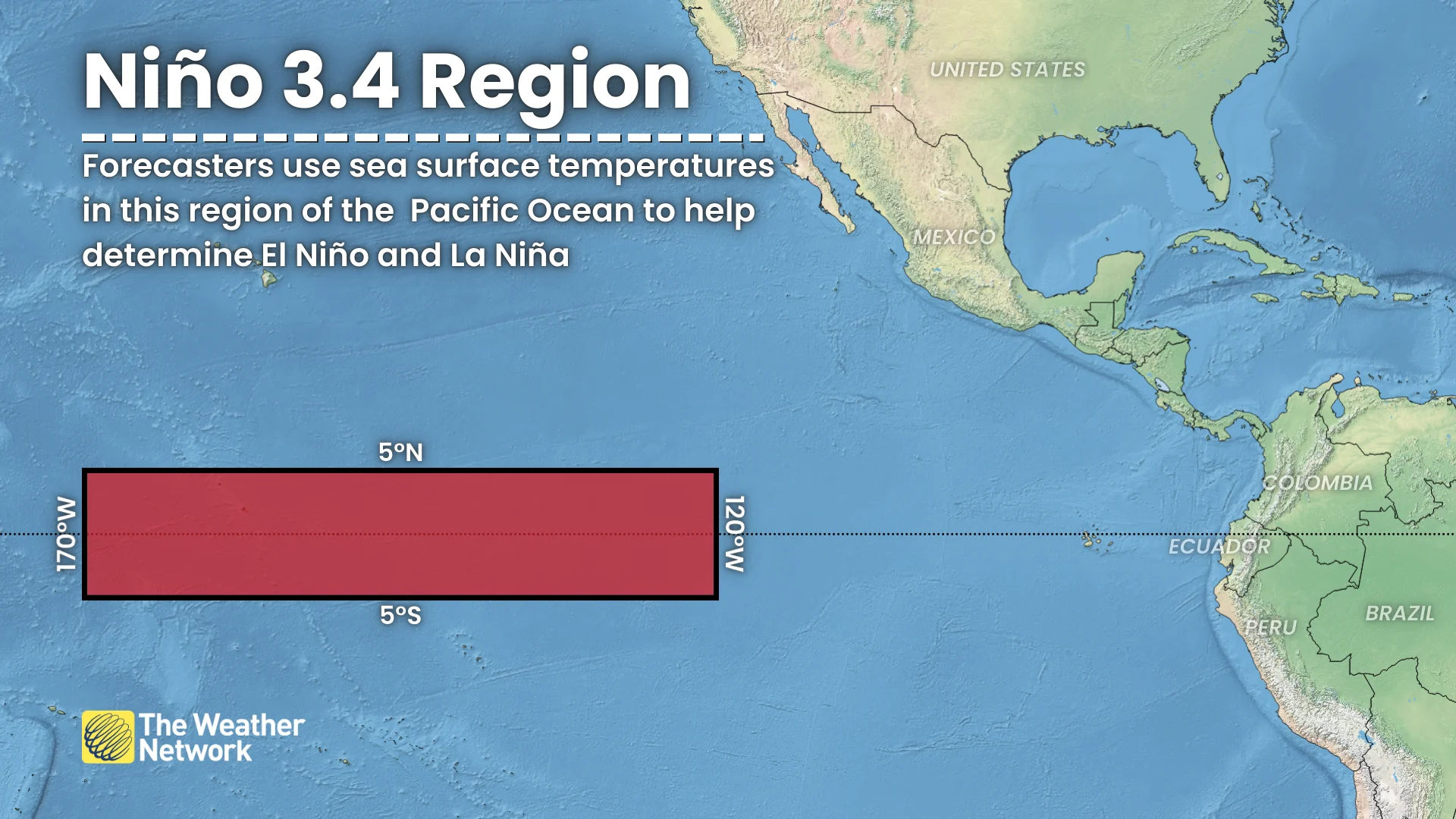
One of the major ways scientists keep tabs on ENSO is by tracking ocean temperature anomalies in a key region of the Pacific Ocean known as Niño 3.4.
Sea surface temperatures in this particular section of the ocean are critical to the overall maintenance of El Niño and La Niña conditions.
A better way to keep tabs on El Niño and La Niña
Up until now, scientists have measured ocean temperature anomalies by averaging the temperature across the Niño 3.4 region and comparing it to the region’s past climatology. The resulting temperature anomaly is known as the Oceanic Niño Index (ONI).
As climate change causes overall ocean temperatures to increase, comparing current readings to climatology can result in temperatures that seem much warmer than normal, potentially resulting in more frequent El Niño events and less frequent La Niña events.
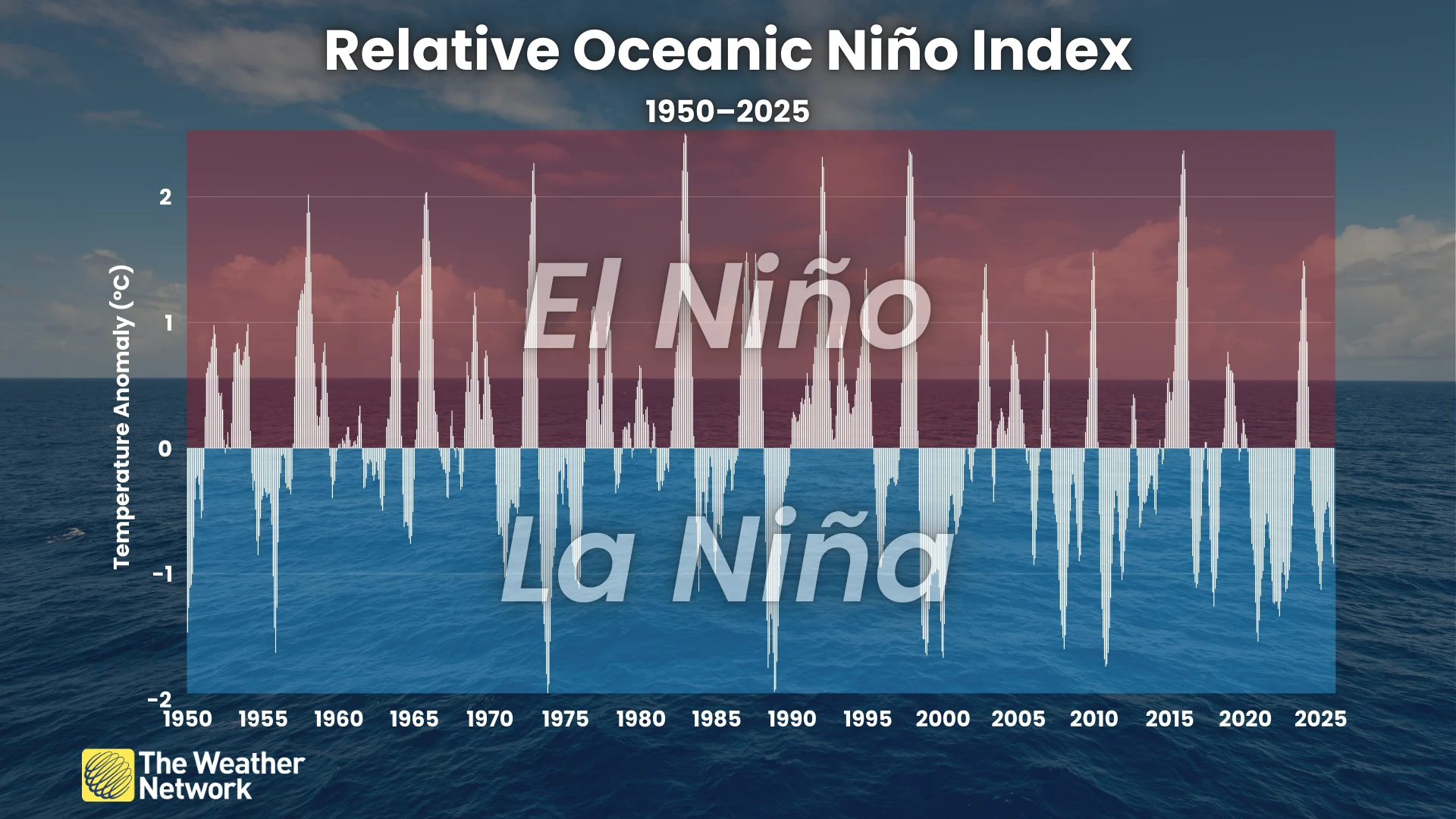
Experts have developed the Relative Oceanic Niño Index (RONI) to account for this discrepancy.
Beginning this February, average ocean temperatures across the Niño 3.4 region will now be compared to average ocean temperatures across the entire global tropics instead of that specific region's climatology. Think of it like a sliding scale instead of a stationary ruler.
For example, the strong El Niño event that occurred between 2023 and 2024 unfolded during a period of record-high global ocean temperatures.
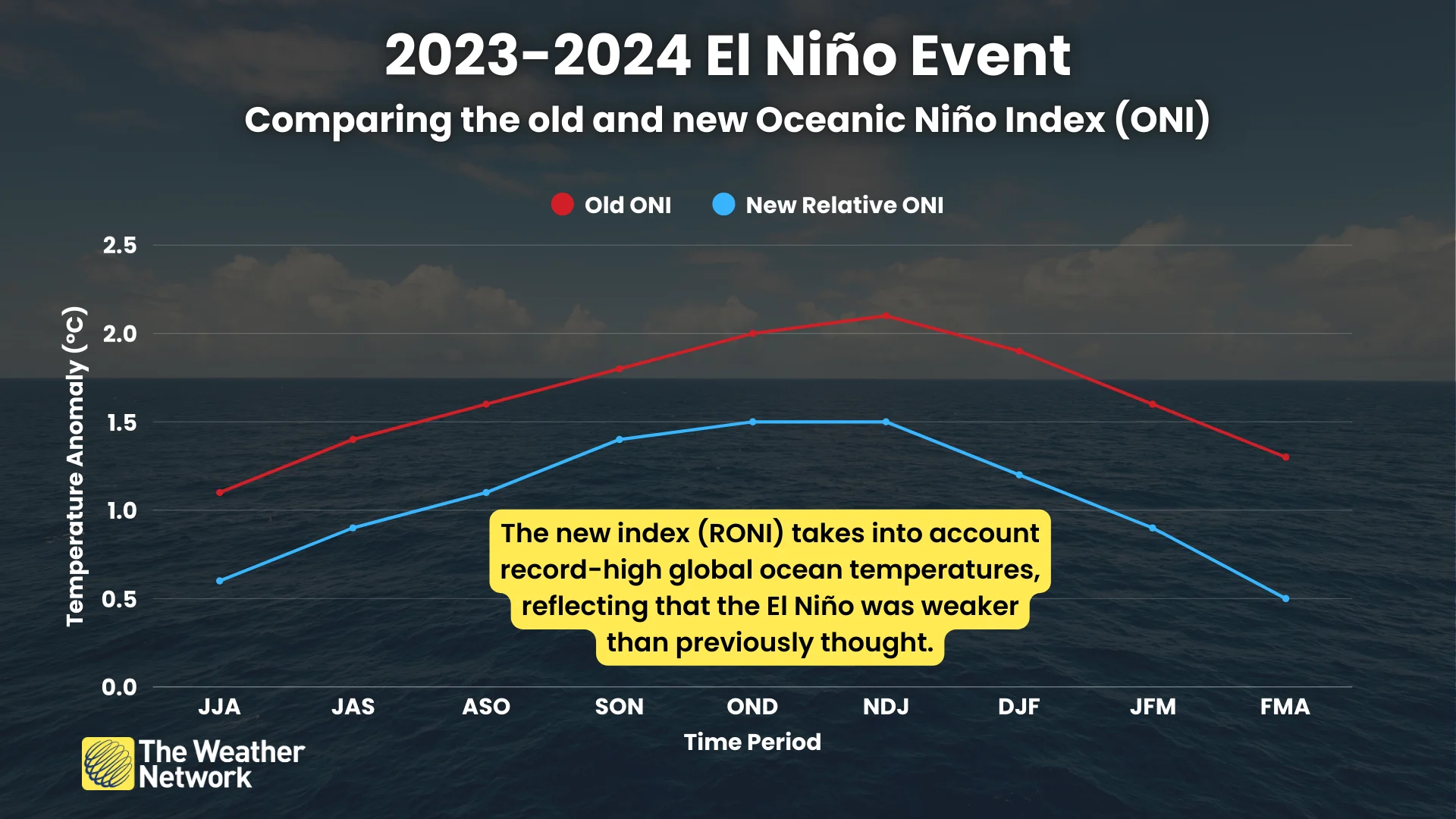
Using the old index, the event saw a maximum temperature anomaly of +2.1°C. The new index, which takes into account water temperature trends throughout the entire tropics, the maximum anomaly dropped down to just +1.5°C instead.
This switch won’t just account for the effects of climate change. “This helps to more clearly identify how the ocean and atmosphere interact to reinforce El Niño or La Niña states in a varying climate,” the Australian Bureau of Meteorology explained on its website.
Ultimately, this change will help forecasters better classify El Niño and La Niña events, improving our understanding and preparation for how these events can affect our seasonal weather patterns here at home.