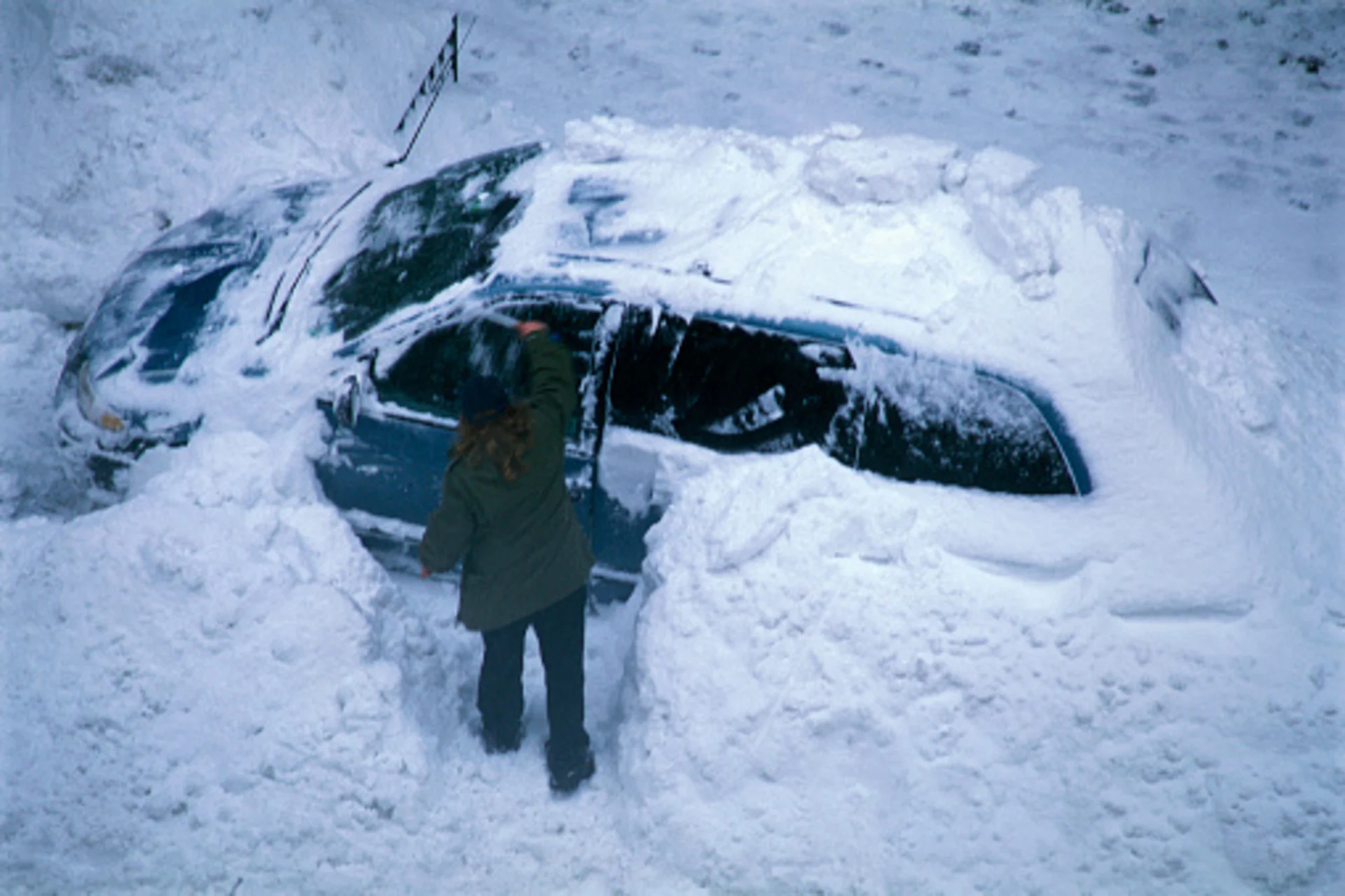
Car stuck in a snow pile? Proceed with caution

There's more than meets the eye when it comes to towering piles of snow.
Southern Ontario has seen its share of snow this winter, beginning with a January 15 storm that was enough to create widespread travel delays and school closures.
Now, another storm has hit. On Sunday morning, (January 25), snow started falling and it continued through the night. By the time all was said and done, an addtional 46 centimetres of snow had accumulated at Toronto Pearson Airport -- the most snow ever recorded there:

It goes without saying that today, Monday, several schools are closed and some people are having a hard time getting around. The fresh snow, combined the snow already on the ground, is creating some pretty impressive (and pretty dangerous) obstructions.
Ah, snow piles.
... Or snowbanks. Whatever you want to call them, if you've lived through a Canadian winter, you're quite accustomed to seeing them line the streets.
These two terms are more or less synonymous, referring to mounds of snow that accumulate due to a storm, plowing, and drifting -- although "banks" are most commonly used to refer to the mounds you see on the side of the road, whereas "piles" are the more generic term.
Here's a look at the current situation in many communities:
Given the size some of these snow piles, there’s a good chance you’ll be seeing them well into spring.
Snow banks and cars don't mix
In 2024, The Weather Network's Nathan Coleman spoke with Paul Beaton of Beaton's Towing in Halifax about what to do if your car gets stuck in a snow pile.
He said the best safety tip is to focus on prevention: Driving defensively with winter tires installed is the first step toward avoid a mishap.
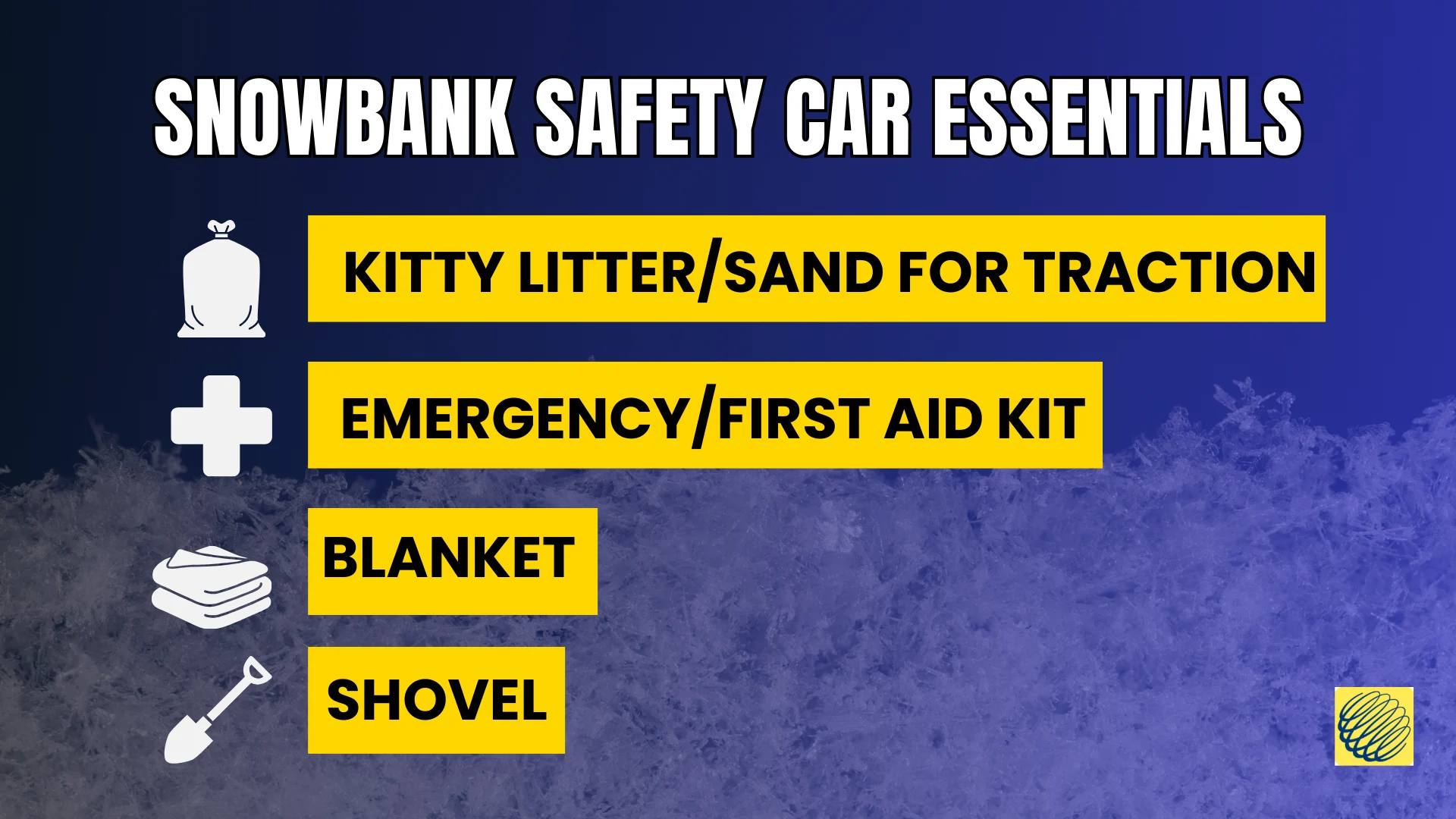
Packing your car with bags of sand or kitty litter to create traction, as well as a shovel, is also helpful. Keep a blanket in the car to stay warm in case you need to call for help and are stuck outside for a bit.
Last but not least, slow down. Your car is far more likely to spin out if you aren't driving according to the conditions.
If all else fails and you find yourself stuck, here are some safety tips, courtesy of the CAA:
Remove snow from around your car and tires. If it's safe to do so, exit your vehicle and try to determine how your car got stuck.
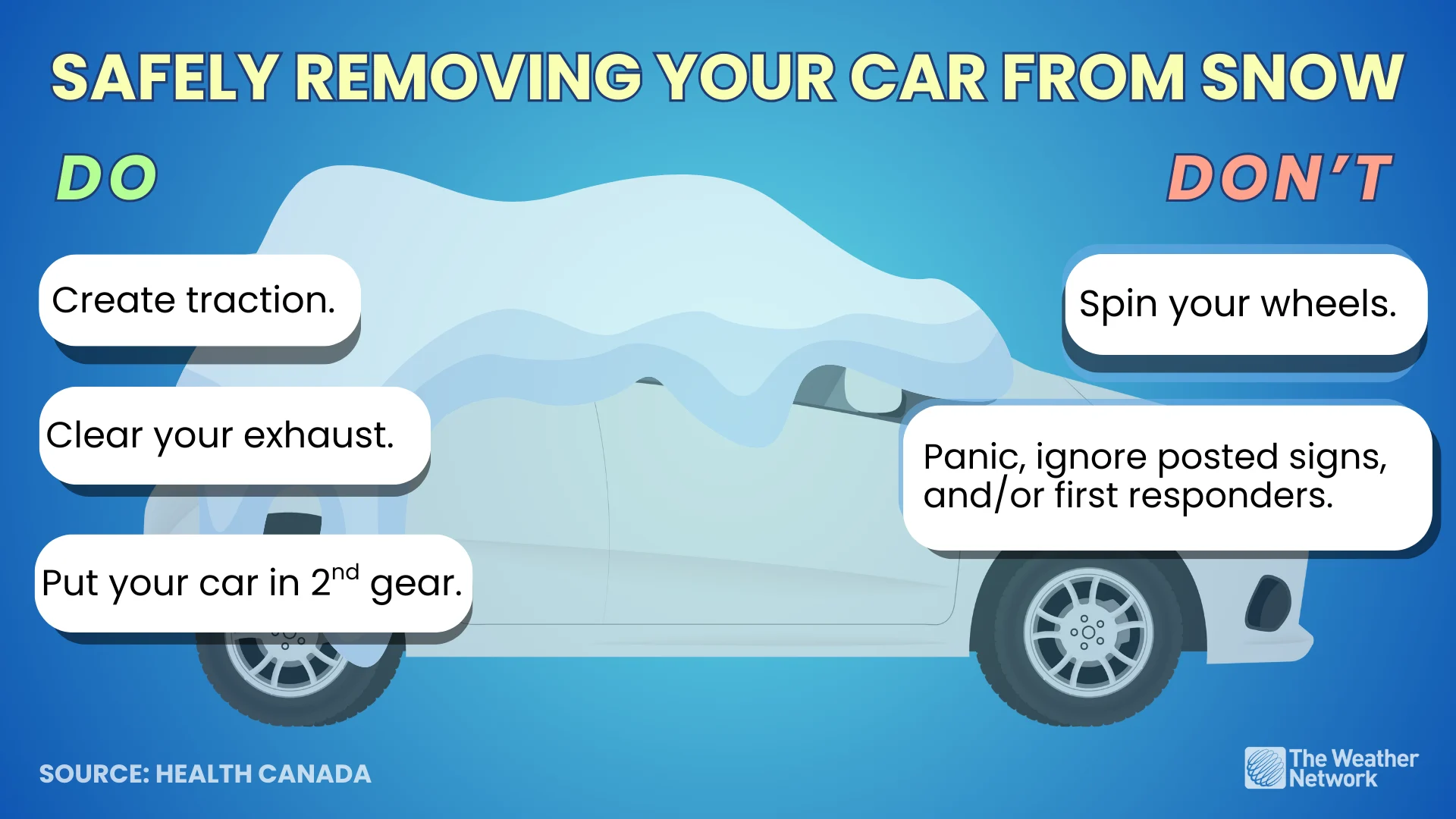
Don't spin your wheels. If you're on ice, spinning your wheels won't help. You'll need to create traction.
Create traction. Here's where the sand or kitty litter mentioned above comes in handy. Laying some down in front of your wheels may help get your car going. If you don't have any litter, try using a floor mat, or melt the snow and ice with salt.
Clear your exhaust. If your tailpipe is clogged with snow and debris, carbon monoxide-filled exhaust could filter into your car.
Put your car in second gear. CAA says this helps slow the wheels, creating a greater chance of picking up traction.
Carefully rock your car. While the CAA recommends cautiously rocking your car it doesn't come without risks. Rapid gear changes can use a lot of gas and overwhelm a car's transition. And this certainly isn't recommended if there's a chance your car was damaged before becoming stranded.
Call for help. If possible, it's best to let professionals manage the situation. If you're in a safe spot and armed with blankets to keep you warm, consider seeking help.
Acting recklessly in these situations doesn't just put your car at risk of potential harm. It can be dangerous for drivers and passengers as well: In 2021, a 62-year-old New Jersey man died after repeatedly revving the engine of his sport utility vehicle in an attempt to get out of a snowbank.
Officers asked the man to stop accelerating and told him a tow truck would be called. Reports suggest he silently continued to rev the engine, rocking the car back and forth to try and dislodge it. This caused the vehicle to become engulfed in flames -- early observations suggested the gas tank was punctured when the car passed over the parking divider.
In other words: It's ok to call help to handle the problem. Mistakes can be costly, or worse.
What are some other dangers hidden within these snow mounds, you ask? Let's take a look.
Snow piles can obstruct vision
Typically, they shouldn’t be higher than three metres in commercial zones and two metres in residential zones, but that’s enough to block the view of oncoming traffic or other pedestrians.
Not all snowbanks can support your weight
Snow piles may look like solid mountains, but they aren’t always as sturdy as they appear.
Just because something looks like it can support your weight doesn’t mean that it can. Some piles are propped up by air pockets or unstable snow, which could leave you susceptible to injury if you try to climb one.
Snow piles can make more work for first responders
When a big snowstorm hits, crews rush out to clear the roads, leaving piles behind that can obstruct the path to handicapped parking spots or entryways, or critical services like fire hydrants.
If you have a fire hydrant on your property, it’s your responsibility to ensure it remains accessible. First responders recommend clearing a 1-metre perimeter around the hydrant, and chipping away the ice as it forms.
Header image: File photo via Getty Images: Credit: Bo Zaunders. Creative #: 521745140.