
Speedy storm to bring swift 15 cm snow across Atlantic Canada

This could be one of those "sleep and you'll miss it" storms.
Meteorological spring is finally here, but it won't feel like it across Atlantic Canada this week as we're looking at a fast-moving storm that will sweep through the region late Tuesday, delivering a dump of widespread snow just in time for folks across the Maritime provinces to wake up and start their days. Folks in Newfoundland will have to wait until later Wednesday for their share of the spring snow.
DON'T MISS: Canada to feel magnified March madness in the month ahead
Folks across Atlantic Canada should expect to see travel delays during the morning or evening commutes, depending on whether you're in the Maritimes or Newfoundland, on Wednesday. The snow will also be difficult to move, as it will be wet and heavy, so we may even see some closures.

It is possible that we may see the storm's track shift slightly more north, in which case we could see some rain mix in with the snow and limit totals.
The snow is forecast to begin in the southern Maritimes by Tuesday night and continue into Wednesday morning. Nova Scotia is expected to see the heaviest of the snowfall early Wednesday morning, with a widespread 10-15 cm forecast. The snow will be wet, making it more difficult to clean off vehicles and driveways in the morning.

By Wednesday afternoon, however, we'll see a sharp warm-up behind the storm. Temperatures are forecast to soar to 5-8°C in the afternoon. As the snow melts in the spring temperatures, it will become even more wet and harder to clean up as it compacts.
SEE ALSO: Atlantic Canada braces for a 'typical' Spring with wintry punches at times
While the Maritimes spend the afternoon basking in the warmth and melting snow, the snowy system is forecast to reach Newfoundland, bringing heavy snow lasting into the evening hours.
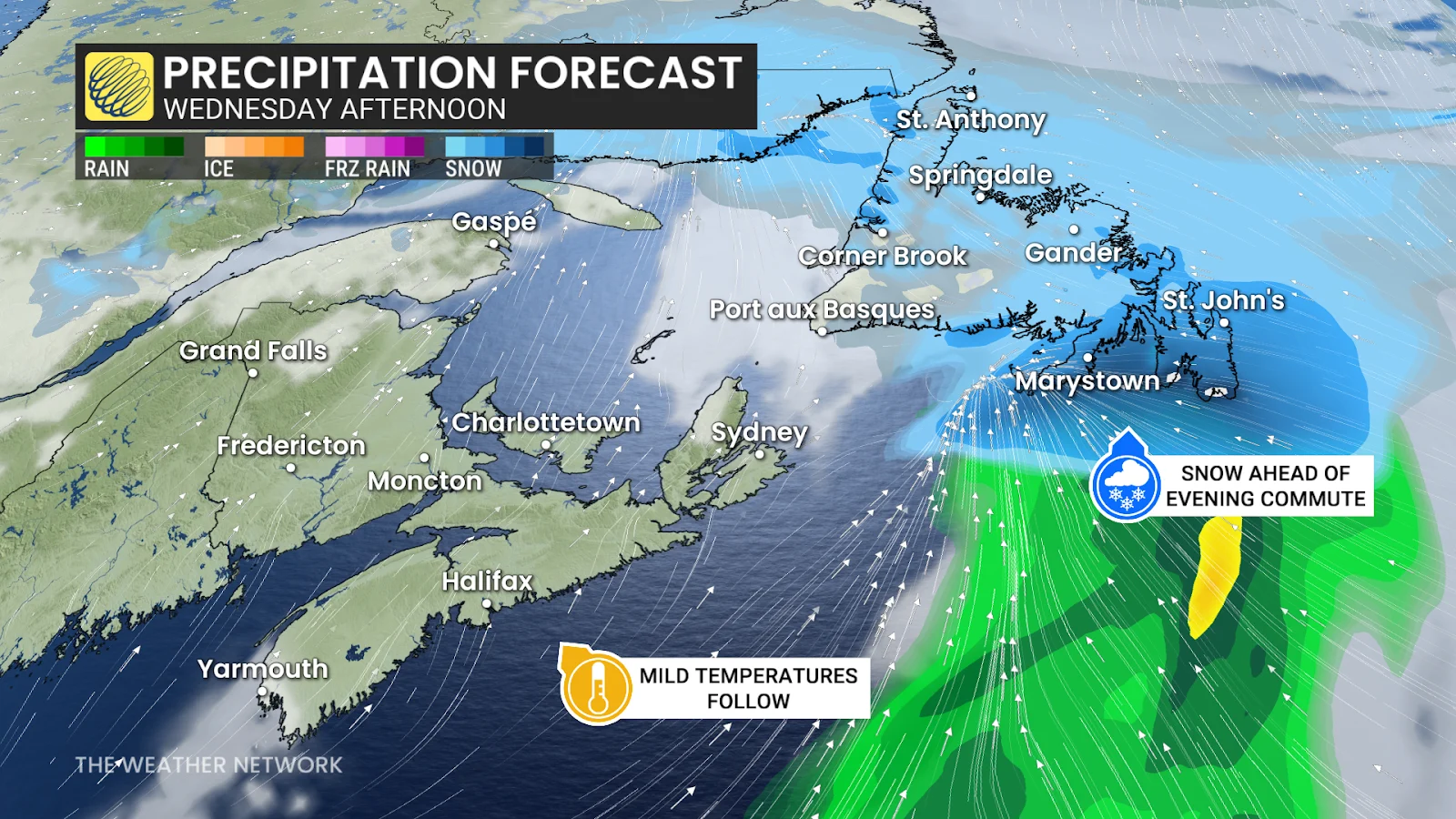
Snowfall rates are expected to reach 3 cm /h, bringing up to 30 cm to western parts of the province and up to 15 cm to the Avalon Peninsula.
Wind gusts will also pick up to 60-80 km/h over the Avalon and Burin Peninsulas, creating hazardous conditions with low visibility and slick roads. So if you're thinking of heading to St. John's to watch some curling, be sure to monitor the forecast and check road conditions before heading out.
Stay with The Weather Network for more information and updates on your weather across Atlantic Canada.