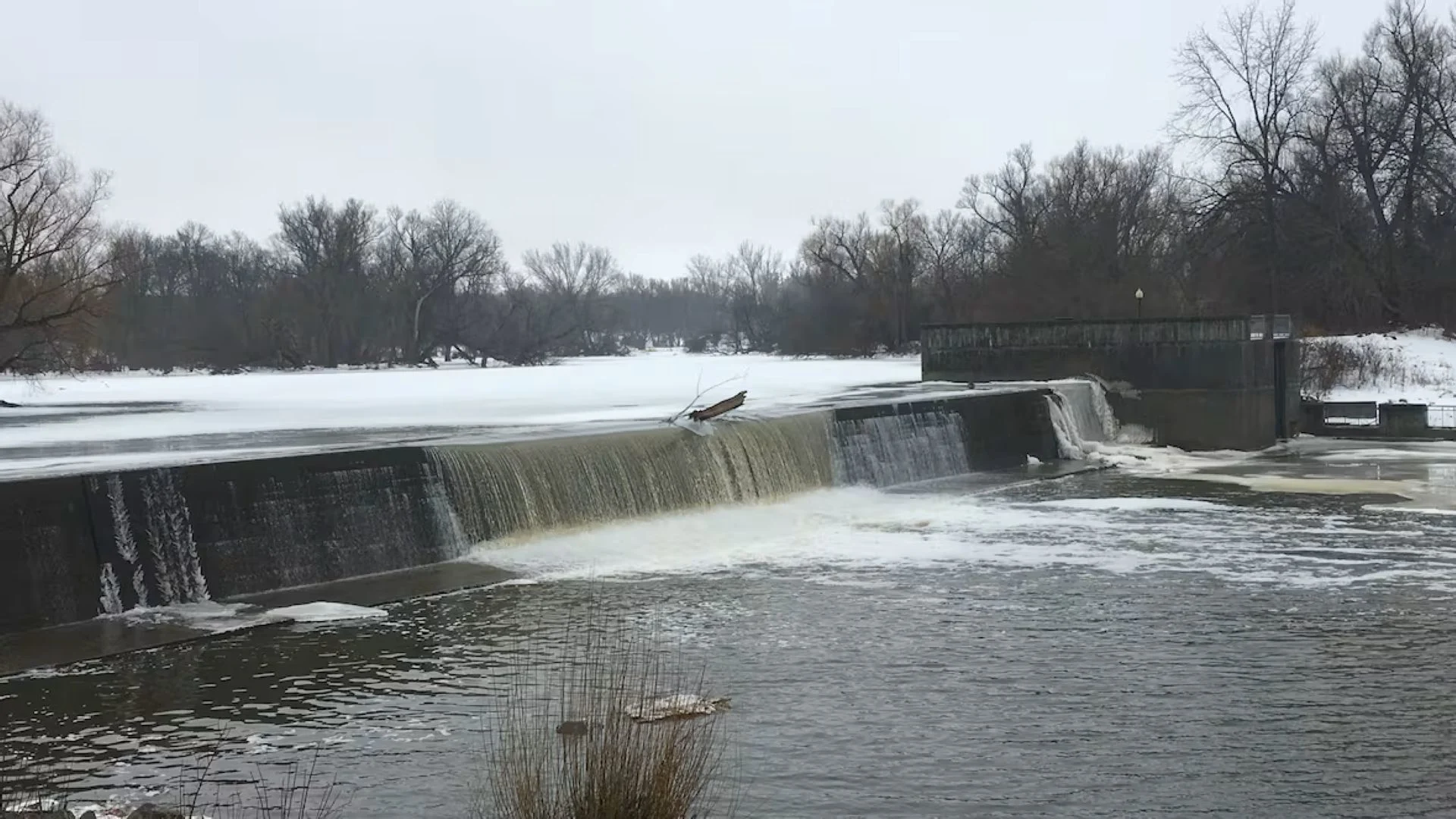
Snow, warmer temperatures in southern Ontario create river flood risk

People who live in areas prone to flooding are being warned to take precautions as milder temperatures are expected in the coming days.
The Grand River Conservation Authority (GRCA) has issued a watershed conditions statement that says there is a risk of flooding and ice jams in some areas over the next week.
The statement covers the whole of the watershed, which stretches up to Dundalk in the north down to Lake Erie and includes all of Waterloo region, Guelph and Wellington County.
The Environment and Climate Change forecast shows Waterloo region is expecting temperatures to rise above freezing starting on Saturday and into next week with some possibility for freezing drizzle, flurries and rain.
Sunday is expected to hit a high of 3 C in Kitchener, and Monday will be even warmer with a high expected of 5 C.
“These weather conditions are expected to result in increased river flows throughout the watershed and weakening or breaking up of river ice," the conservation authority said in the statement Friday.

"There is still uncertainty in both the timing and extent of the warm weather and precipitation, and how much precipitation will fall as rain or snow."
Snowpack is “higher than normal” across the watershed and while that will help absorb some rain, there will be some snow that melts.
“The risk of flooding increases if rainfall accompanies a rapid snowmelt event,” the authority said.
Ice jams possible
Ice conditions on local waterways are “less significant than they were in 2018 and 2019” when massive chunks of ice clogged the Grand River and there was flooding near Orangeville and Brantford but the authority noted most rivers right now are ice covered and ice jams could form.
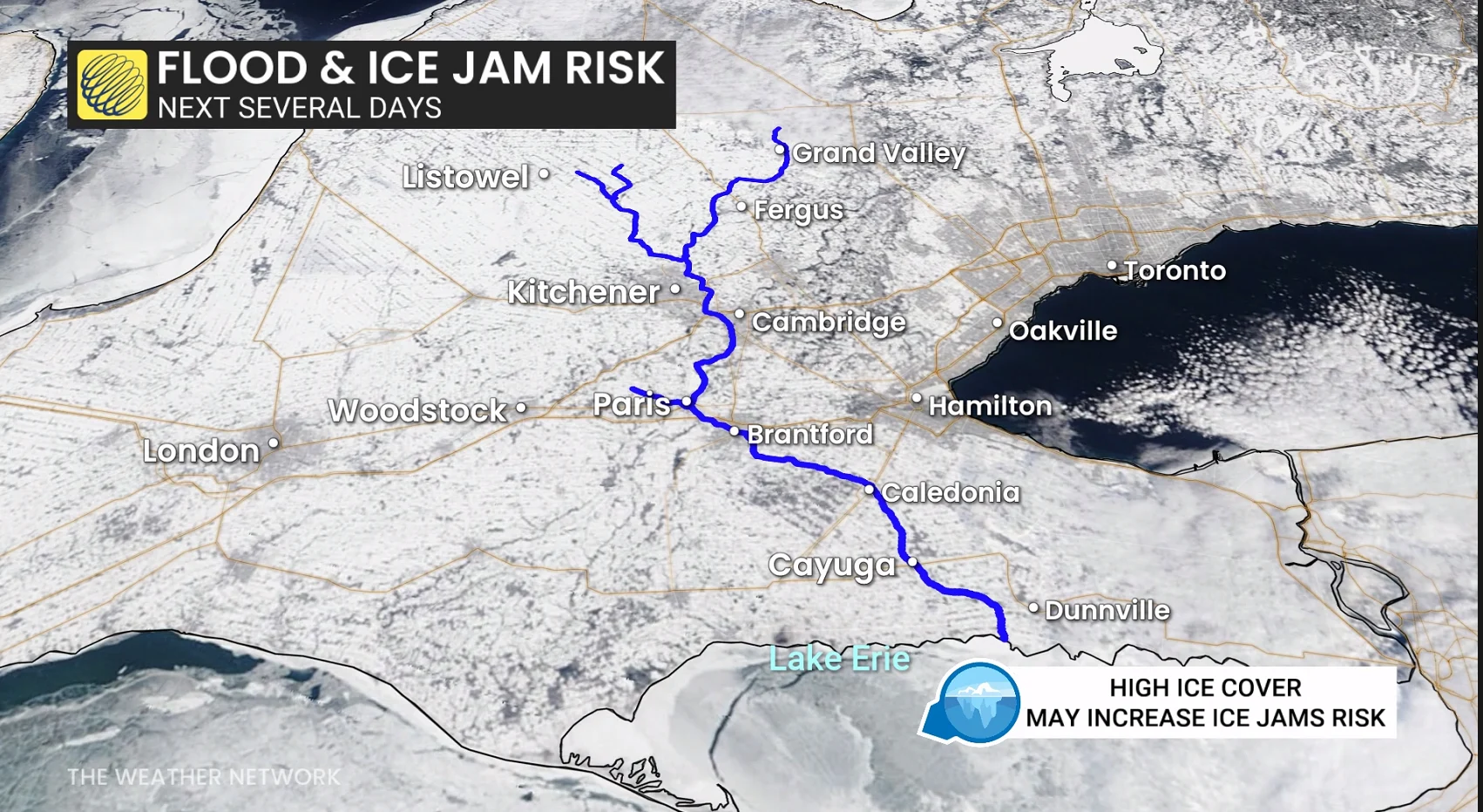
“As ice moves through the rivers, there is the risk of ice-jams in slow-moving reaches of watercourses, which may lead to localized flooding, particularly in areas that are prone to ice jams. Ice jams can form quickly and lead to sudden increases in water levels and flooding,” the statement said.
The GRCA also noted Lake Erie is mostly ice covered, which increases the risk of ice jams at the mouth of the Grand River.
Environment Canada notes on its website that ice coverage on the Great Lakes is above average this year and Lake Erie has more than 95 per cent ice coverage, the most since 2015. The last time Lake Erie reached 100 per cent ice coverage was in 1996.
Stay safe near water
With warmer weather and some sunshine expected over the long weekend, people are being warned to take precautions near water.
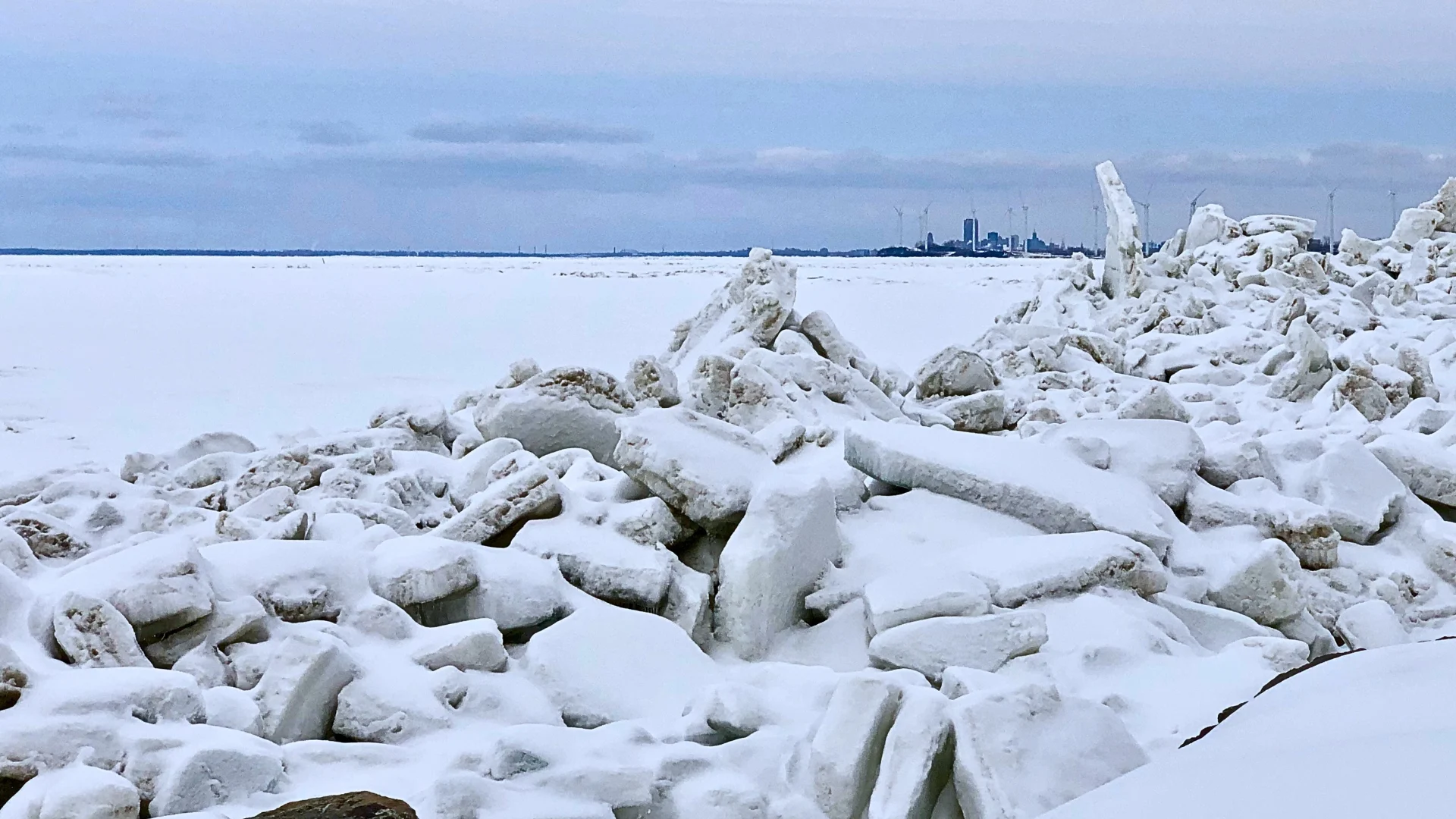
(CANVA)
“Banks adjacent to rivers and creeks are very slippery and, when combined with cold, fast-moving water, pose a serious hazard. Ice cover will be weakened and eroded due to thawing conditions and fluctuating water levels. Ice-covered waterbodies should always be considered unsafe,” the statement said.
Children and pets should be kept away from the edges of water and recreational users “should be aware of the current conditions and exercise additional caution.”
Thumbnail courtesy of Carmen Groleau/CBC.
The story was originally written by and published for CBC News.