
Storm threat, heavy rains continue into Friday for northwestern Ontario

A stalled low pressure system will continue to bring rains with embedded thunder to northwestern Ontario on Friday.
A large low pressure system sweeping across the Prairies is expected to trigger several days of thunderstorms. The storms kicked off late Thursday across parts of southern Manitoba and northwestern Ontario, and are forecast to continue in northwestern Ontario through Friday.
DON'T MISS: Summer Sneak Peek: El Niño may split Canada’s summer in two
Weather Highlights:
A stalling low will bring prolonged rounds of rain and embedded thunderstorms to northwestern Ontario through Friday
Thunder Bay and the surrounding area is under a flood watch as heavy rains continue to threaten the region
Rain continues Friday as low stalls
Thunderstorms swept across parts of northwestern Ontario late Thursday, with severe thunderstorm watches being issued across much of the Rainy River district and parts of the Kenora district. Luckily, none of the storms were able to reach severe criteria as temperatures cooled off for the night.
However, the low pressure system isn't done with the region yet. On Friday, the system will stall and bring ongoing unsettled weather to northwestern Ontario. Periods of heavy rainfall, accompanied by embedded thunderstorms, are expected throughout the day.
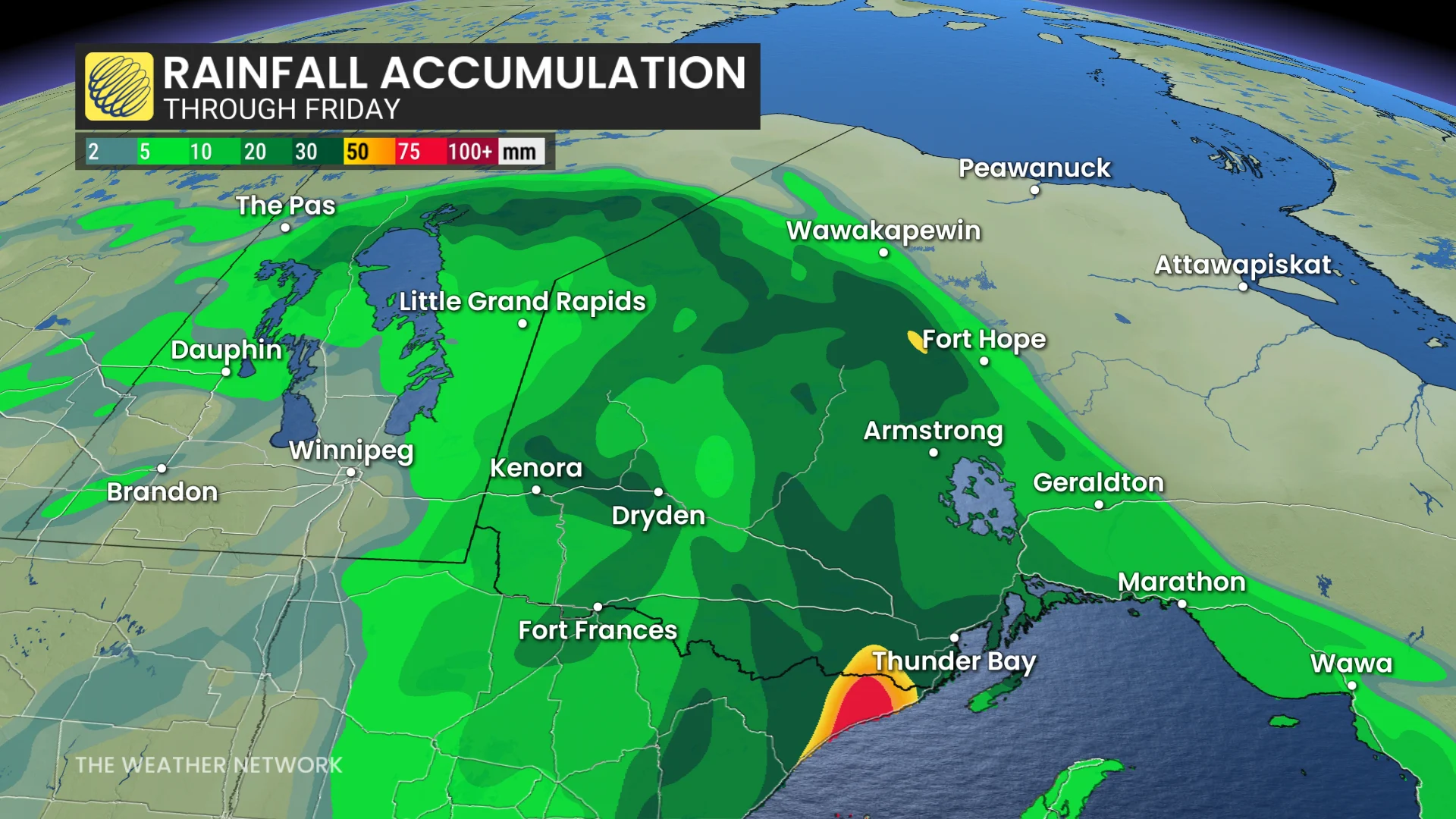
Rainfall totals could accumulate between 20-50 mm in localized areas.
Rainfall warnings were issued on Thursday for areas east of Atikokan, reaching Thunder Bay and Nipigon, as well as up to the Armstrong area.
Much of the ground is still frozen from this past winter, which limits its ability to absorb water from the heavy rains. The Ministry of Natural Resources has issued a flood watch for the Thunder Bay-Ignace district that will remain in effect until Saturday.
SEE ALSO: Blizzard warnings and 50+ cm of snow: Dangerous travel days on the Prairies
"There is a risk of high flows in low-lying areas as well as unstable ice and cold, fast flowing water," the agency notes in their bulletin.
While the rest of northwestern Ontario remains in the clear for now, the ministry does note that the Rainy River watershed, as well as the Lake Superior coast, are showing signs of increasing water levels.