
20-40+ cm: Massive winter storm blasts Atlantic Canada with heavy snow, winds

Expect heavy snow and reduced visibility as a long-duration snowstorm impacts Atlantic Canada through Tuesday
A major winter storm trekking across North America has made its final stop in Atlantic Canada with widespread heavy snowfall and gusty winds to begin the week.
Prepare for difficult to near-impossible travel at times as heavy, blowing snow reduces visibility to near zero. The rapid rate of accumulation will make it difficult for plows to keep up during the heavier bursts.
This will be a long-duration snowfall event for the region, as the system is moving slower than a typical winter storm. Closures and cancellations began to pile up early Monday.
DON’T MISS: US storm leaves 850,000 without power, forces 10,000 flight cancellations
Widespread heavy snowfall threatens travel into Tuesday
Frigid air spilling south out of the Arctic met up with ample moisture streaming in from the south to create a once-in-a-generation winter storm across the U.S. and Eastern Canada. This system’s snow and ice caused more than one million power outages stateside.
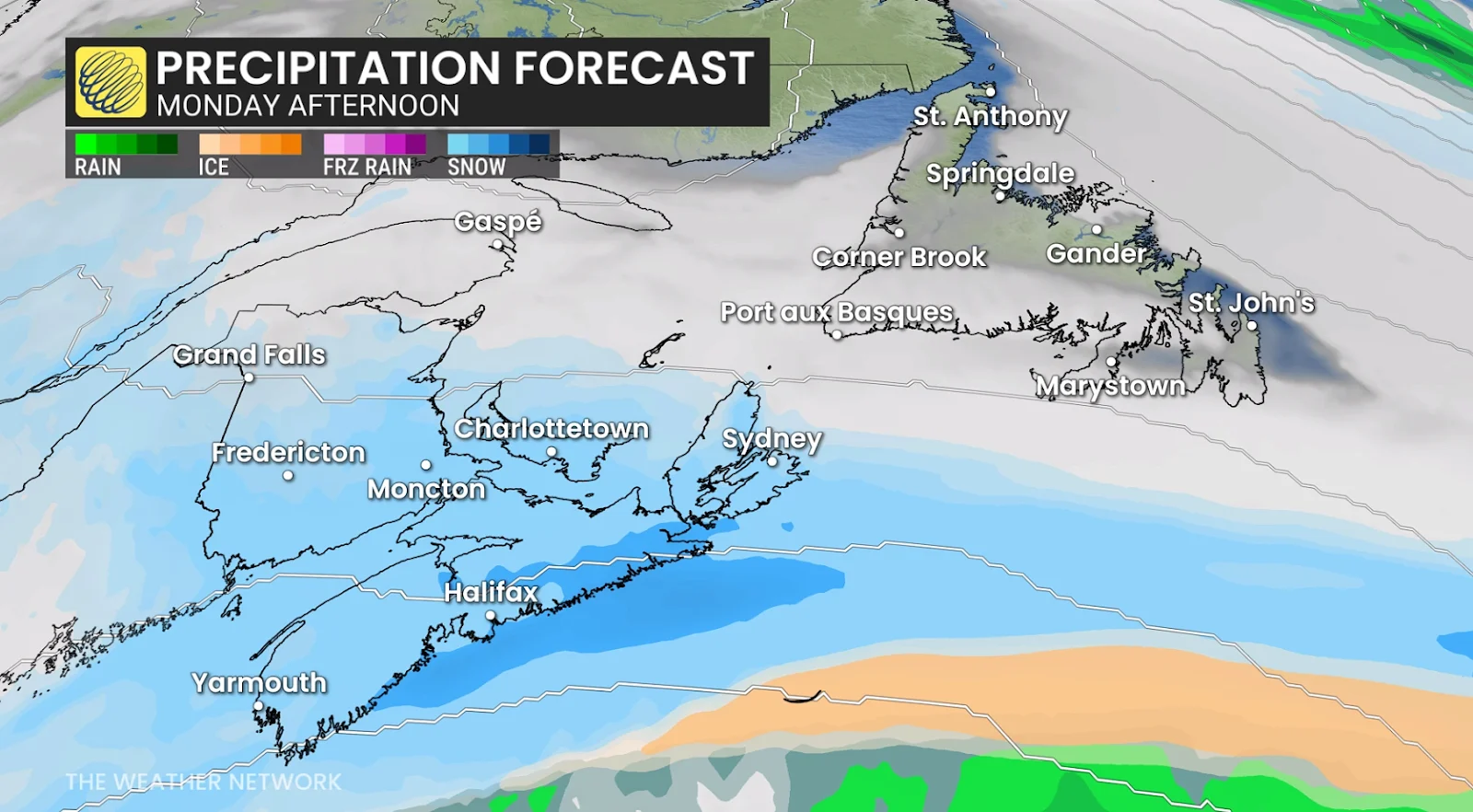
By Monday morning, the heaviest snow developed ahead of the warm front, impacting Halifax and southern parts of the region. All schools across the province closed first thing, with extremely difficult travel conditions reported.
Widespread snowfall totals of 20-40+ cm are likely through Tuesday. The heaviest accumulations are expected around the Bay of Fundy, as well as across Nova Scotia, including Cape Breton. Some areas could see more than 40 cm of snow from this event.

Newfoundland is on track for 15-25 cm of accumulation, with 10-20 cm totals expected on the Avalon Peninsula through Tuesday.
Folks on Prince Edward Island, as well as southern New Brunswick and communities bordering the Northumberland Strait, can expect snowfall totals of 20-30 cm by the end of the storm.

This will be a dry, fluffy snow that easily blows around in gusty winds. Winds are forecast to range between 50-60 km/h, with gusts reaching up to 80 km/h along coastal areas during the event.
Higher wind gusts are likely in southeastern Newfoundland, where the Avalon Peninsula may see gusts as high as 100 km/h at times. Blowing snow will pose a hazard throughout the day, creating challenging winter travel conditions, particularly by Tuesday evening.