
Potent winds and flash freeze follow major snowfall in Atlantic Canada

Atlantic Canada is bracing for another significant winter storm that is expected to deliver heavy snowfall, intense winds, and a rapid temperature drop. The combination of falling temperatures and lingering moisture increases the risk of black ice on roads and sidewalks
A rapidly intensifying low pressure system is set to bring strong winds and a surge of Arctic air to Atlantic Canada from Thursday night into Friday night. Following Wednesday's nor’easter, this system will track from the Gulf of St. Lawrence to Newfoundland and over the Atlantic, delivering impactful weather conditions.
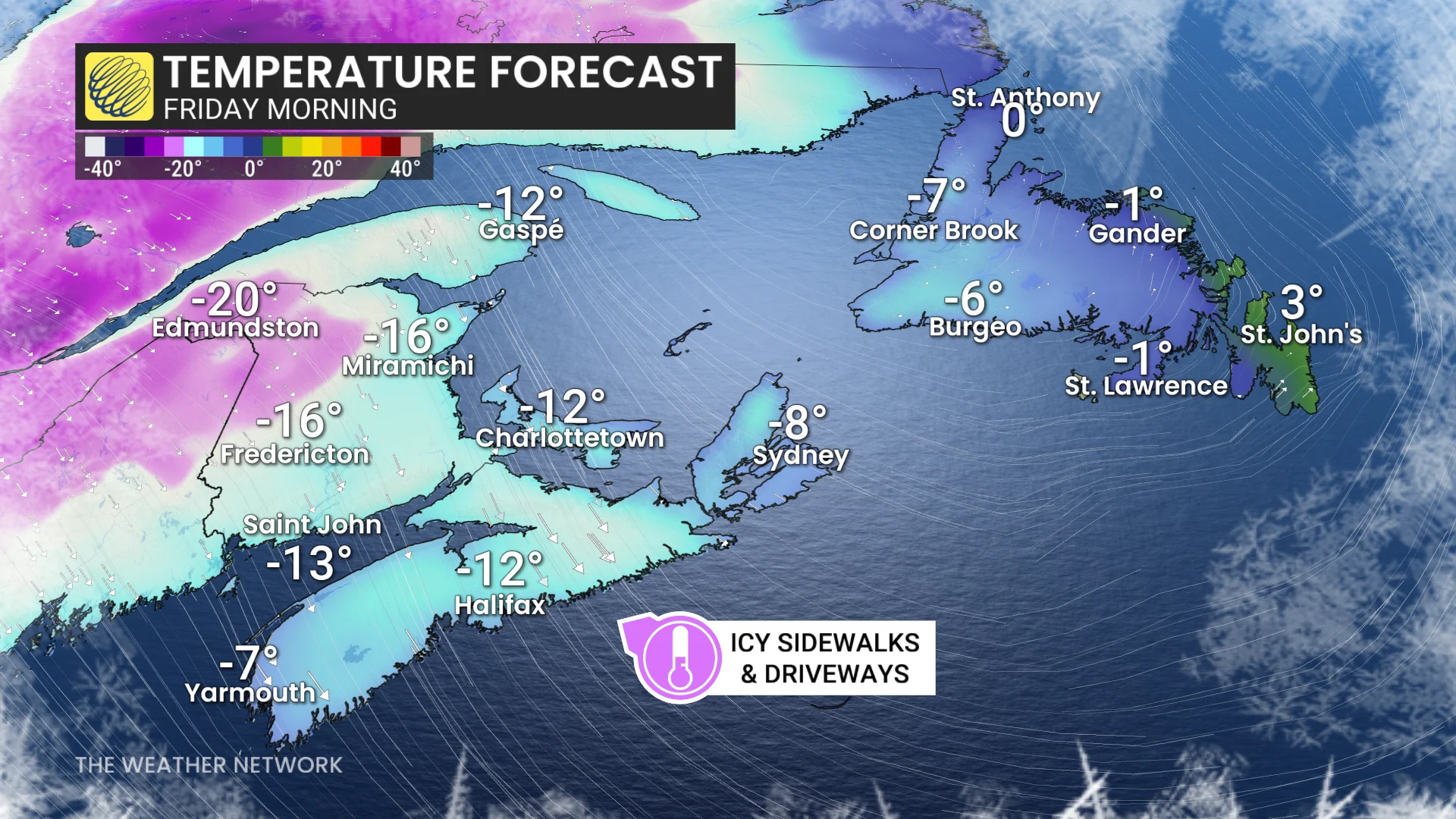
While this storm will produce less precipitation compared to the nor’easter, rain will transition to snow for central and southern parts of the Maritimes overnight Thursday. A significant drop in temperatures will lead to flash freeze conditions, as well, with values dipping into the minus double digits by Friday morning.
DON'T MISS: Arctic air on the loose: Who’s next in line for the freeze?
Newfoundland is expected to experience snow and sea-effect snow squalls, particularly in western and northern regions, where whiteout conditions may develop. The strong winds may result in power outages and potential wind-related damage.
Residents should monitor forecasts and prepare for rapidly changing conditions, including icy roads and reduced visibility.
Powerful winds and a flash freeze: Brace for difficult travel, outages through Friday
Following Wednesday's nor’easter, Atlantic Canada will see shifting weather patterns as a strong cold front brings Arctic air and high winds.
Late Thursday, rain showers transition to snow overnight as temperatures drop sharply. By Friday morning, gusty winds of 70-90 km/h are expected along coastal areas in eastern Nova Scotia, accompanied by sea-effect snow squalls.
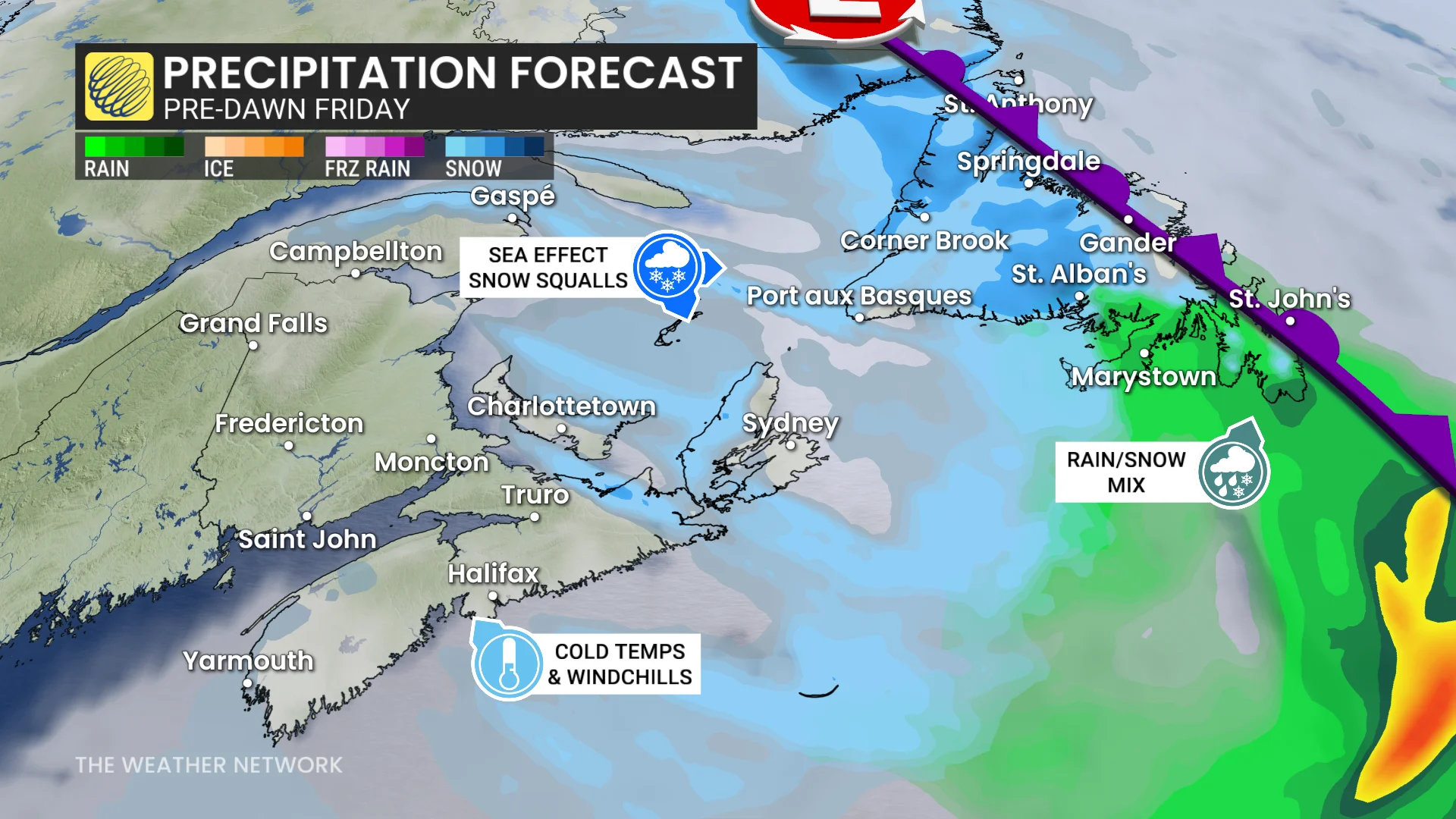
Friday will mark the season's coldest conditions so far, with temperatures plunging into the minus teens across the Maritimes.
WATCH: Temperatures are plumetting for Atlantic Canada, here's when
Wind chills will range between -10 and -20. Standing water from precipitation earlier in the week could freeze, leading to potential black ice and slippery conditions for the Friday morning commute.
In Newfoundland, stronger wind gusts of 90-120 km/h late Friday may cause localized power outages, particularly across the Avalon and Burin Peninsulas. Snow begins in western Newfoundland Thursday evening, spreading east by early Friday.

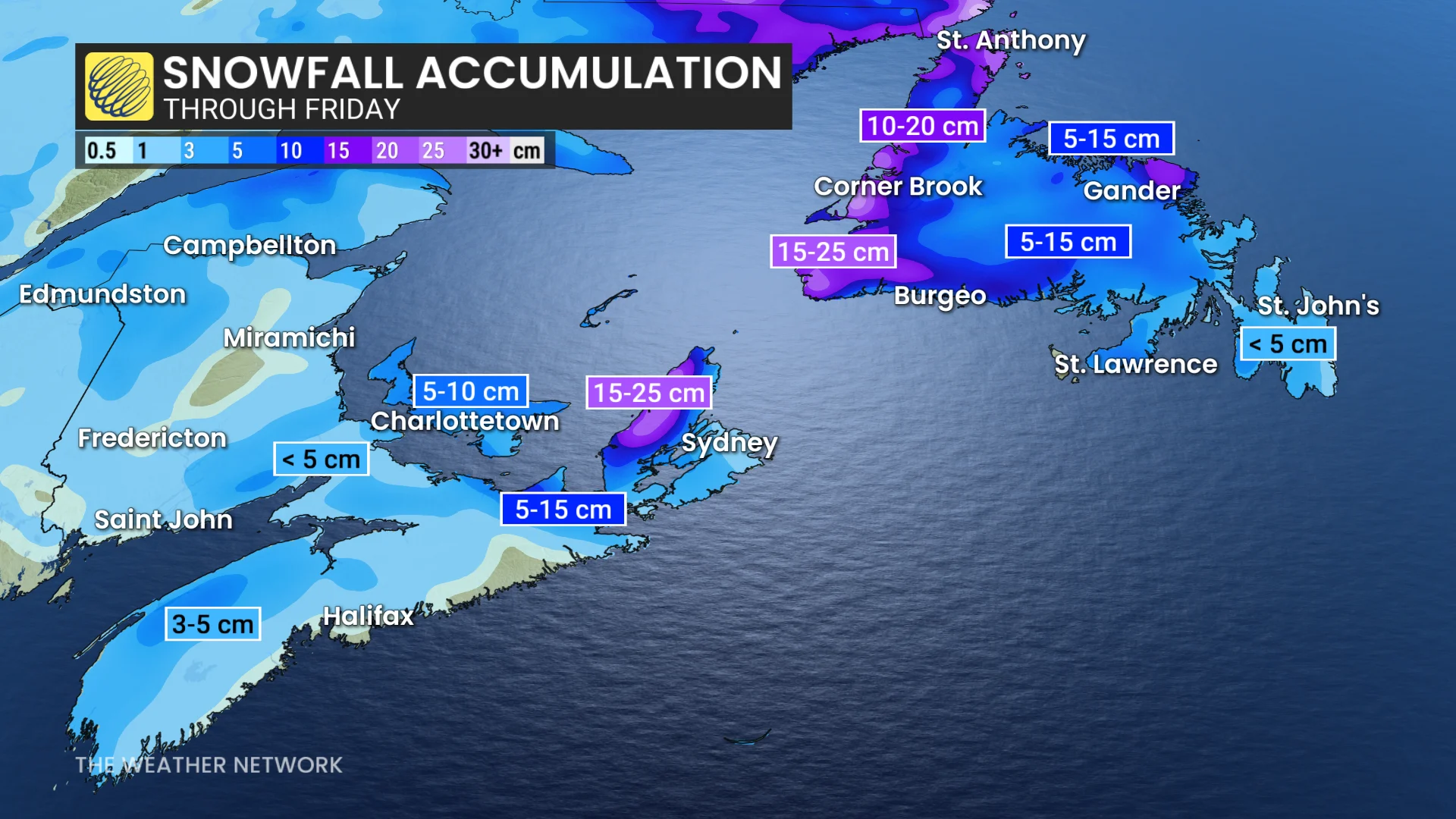
Western regions could see 15-25 cm of snow with sea-effect squalls lingering into Friday.
RELATED: Canada’s December outlook holds a strong, cold start to winter
Central and northern coasts are expected to receive 5-15 cm of snow, while the Avalon is forecast to experience primarily rain and high winds.
The intense cold will relax heading into the weekend, though still remaining colder than normal As mid-December approaches, temperatures will largely depend on the path of upcoming storm systems, but colder conditions are anticipated to dominate overall.
WATCH: What is a flash freeze, and why is it so dangerous?
Be sure to check back for the latest weather updates across Atlantic Canada