
280 km/h: Meet Super Typhoon Sinlaku, world's strongest storm in 2026 so far

Follow the track of Super Typhoon Sinlaku, a massive storm in the Pacific Ocean with sustained winds of 280 km/h. We detail its projected path towards the Northern Mariana Islands and the threat of severe flooding from extreme rainfall
On Sunday, Typhoon Sinlaku intensified into a super typhoon with maximum, sustained winds of 280 km/h as it tracked northeast towards Guam in the Western Pacific.
It’s the first typhoon in the Pacific for the season, with a few tropical storms developing over the past few months.
With a maximum, sustained wind speed of 280 km/h and a barometric pressure of 902 hPa, this storm is the strongest so far on the planet in 2026.
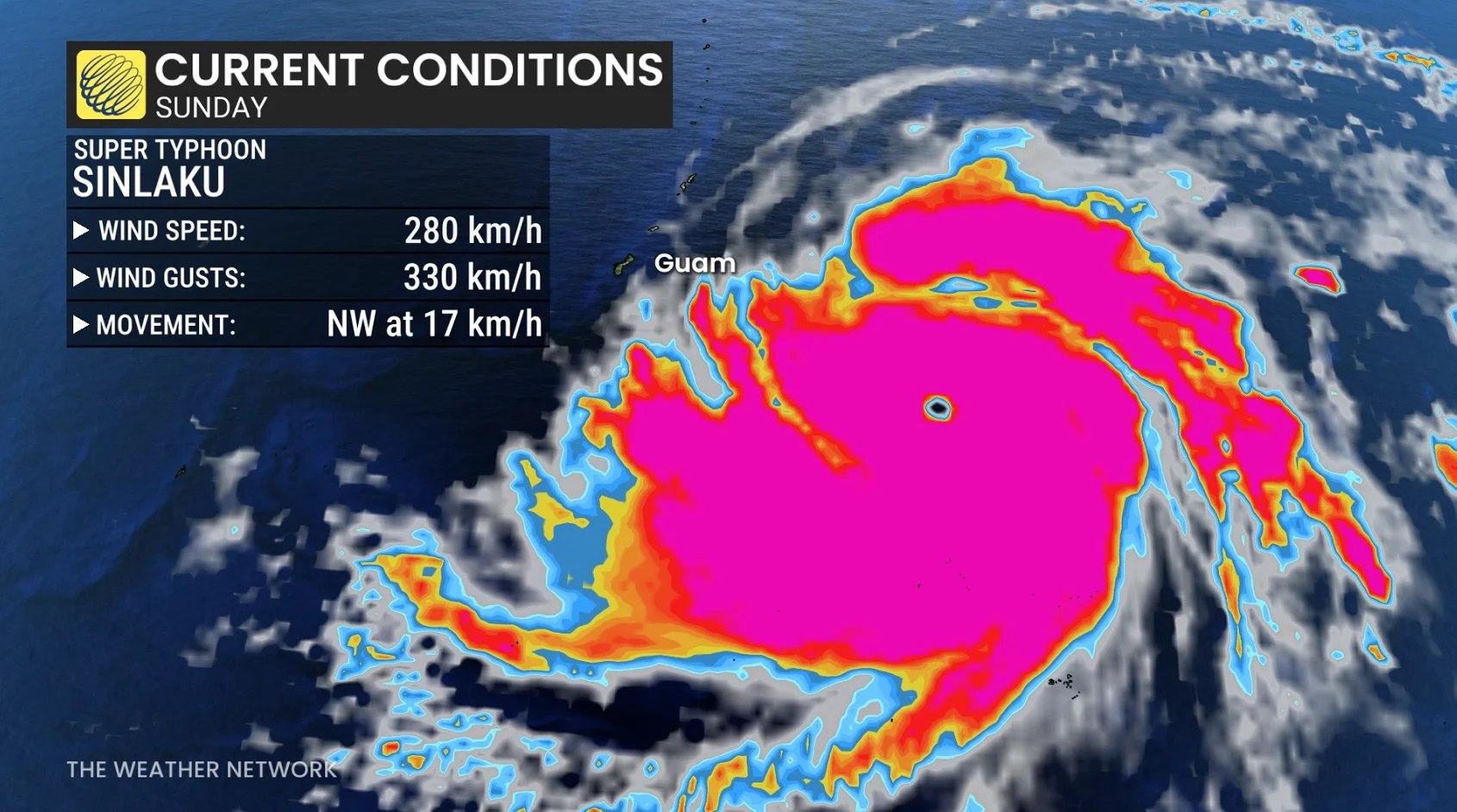
Storm statistics
Barometric pressure: 902 hPa
Super Typhoon Sinlaku is the eighth tropical cyclone worldwide in 2026 to attain at least a Category 3 intensity
April Typhoons are relatively rare, with the last being Typhoon Malakas in 2022.
Q: How does this storm rank with 2025’s strongest storm?
A: Still well shy of Hurricane Melisa in the North Atlantic basin. A storm that drops below 900 hPa is extraordinarily rare, especially in the Atlantic basin, alongside some of the strongest storms ever observed.
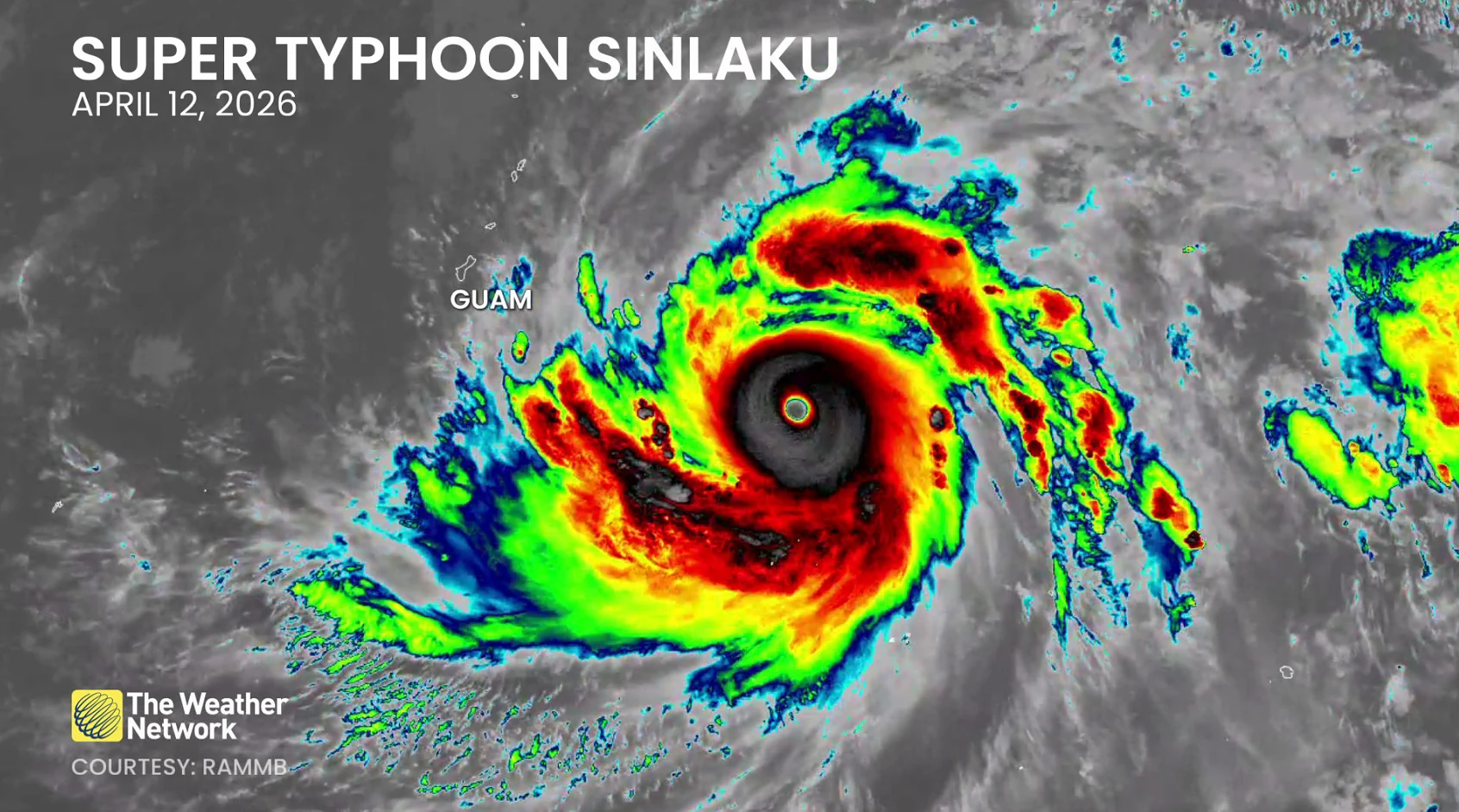
Satellite imagery of Sinlaku. (RAMMB)
Q: Is this the strongest "first" typhoon ever recorded?
A: No. That title belongs to Super Typhoon Surigae, which attained 305 km/h maximum, sustained winds with a barometric pressure of 895 hPa in April 2021.
Other noteworthy storms
Cyclone Narelle: An unusual, long-lived storm that made multiple landfalls in Australia during the second half of March. Peak, one-minute, sustained winds: 240 km/h (928 hPa). Four landfalls across Australia were recorded.
Cyclone Maila: On April 7, the storm achieved one-minute, maximum, sustained winds winds of more than 230 km/h as it swirled east of Papua New Guinea.
Forecast track
Super Typhoon Sinlaku will continue on a track that will bring it within 150 kilometres of Guam as it passes to the northeast of the island late Monday.
The storm won’t make a direct landfall in Guam, a region that hasn’t had a category 4 storm landfall since Typhoon Pamela in 1976.
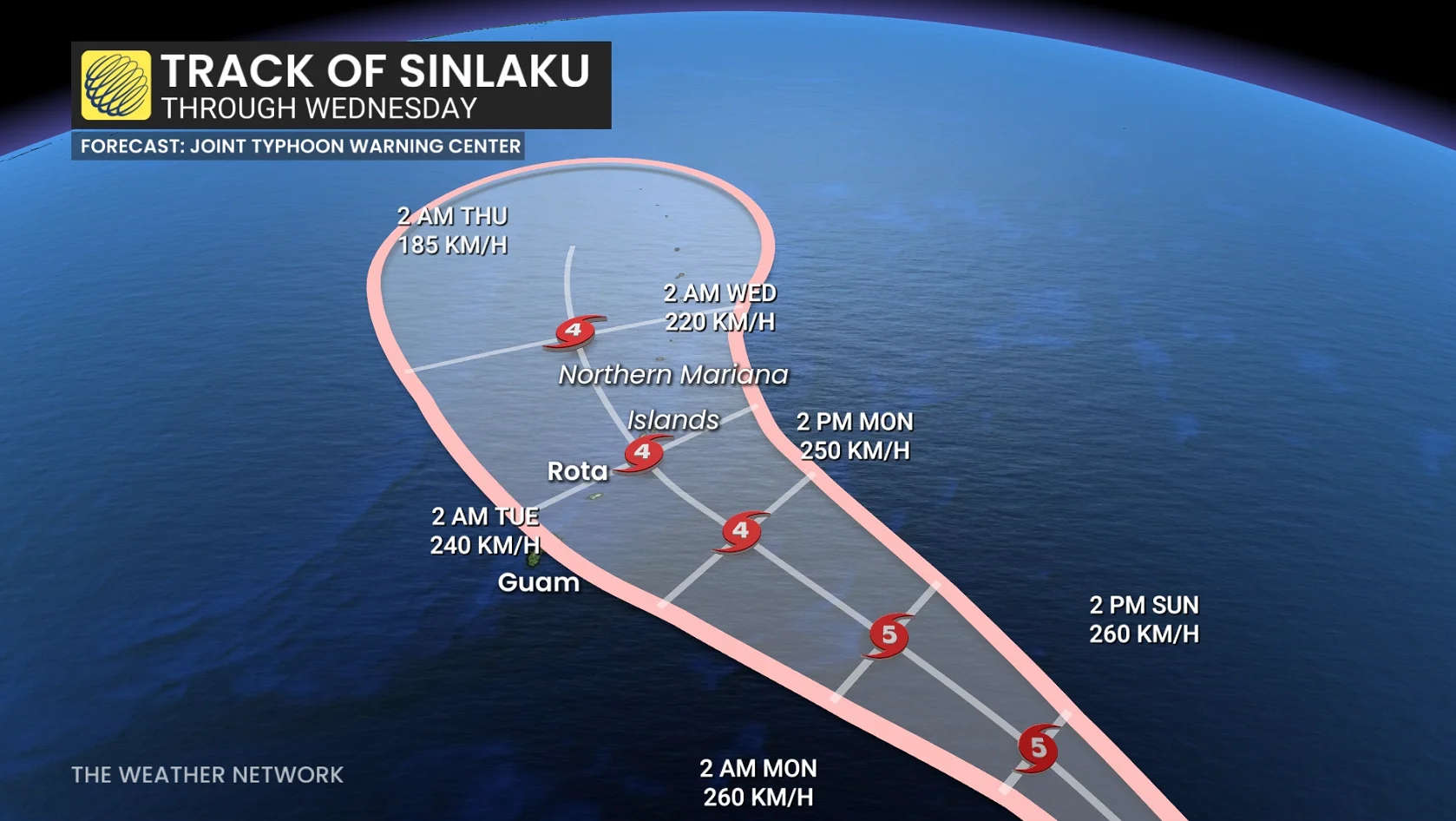
The Northern Mariana Islands will be directly impacted, including the tiny island of Rota.
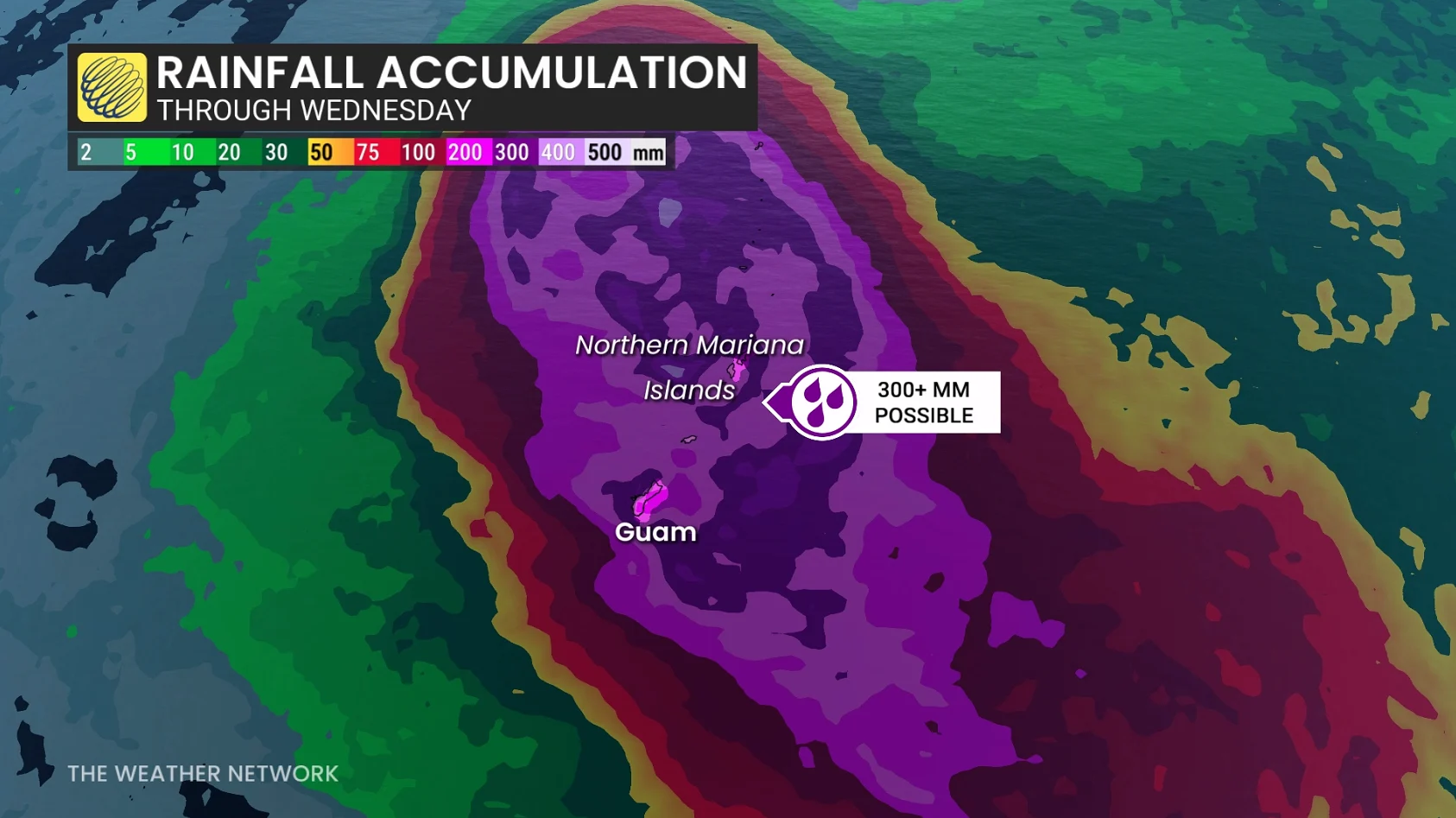
Hazards include destructive winds, storm surge, and intense tropical rainfall across the island chain.
Thumbnail courtesy of RAMMB.