Highway closures across B.C., Alberta as avalanche danger rises

Widespread avalanche danger grows in British Columbia and Alberta amid a prolonged atmospheric river
Highway closures are mounting across Western Canada as parts of British Columbia and Alberta face an increasing avalanche danger.
This is “the biggest natural avalanche cycle of the season” according to Avalanche Canada, referring to the ongoing period of natural avalanche activity.
Drivers are urged to use extreme caution while travelling through mountainous areas, and folks should avoid regions where avalanches are known to occur.
AVALANCHE SEASON: What causes snow slopes to collapse and tips for surviving
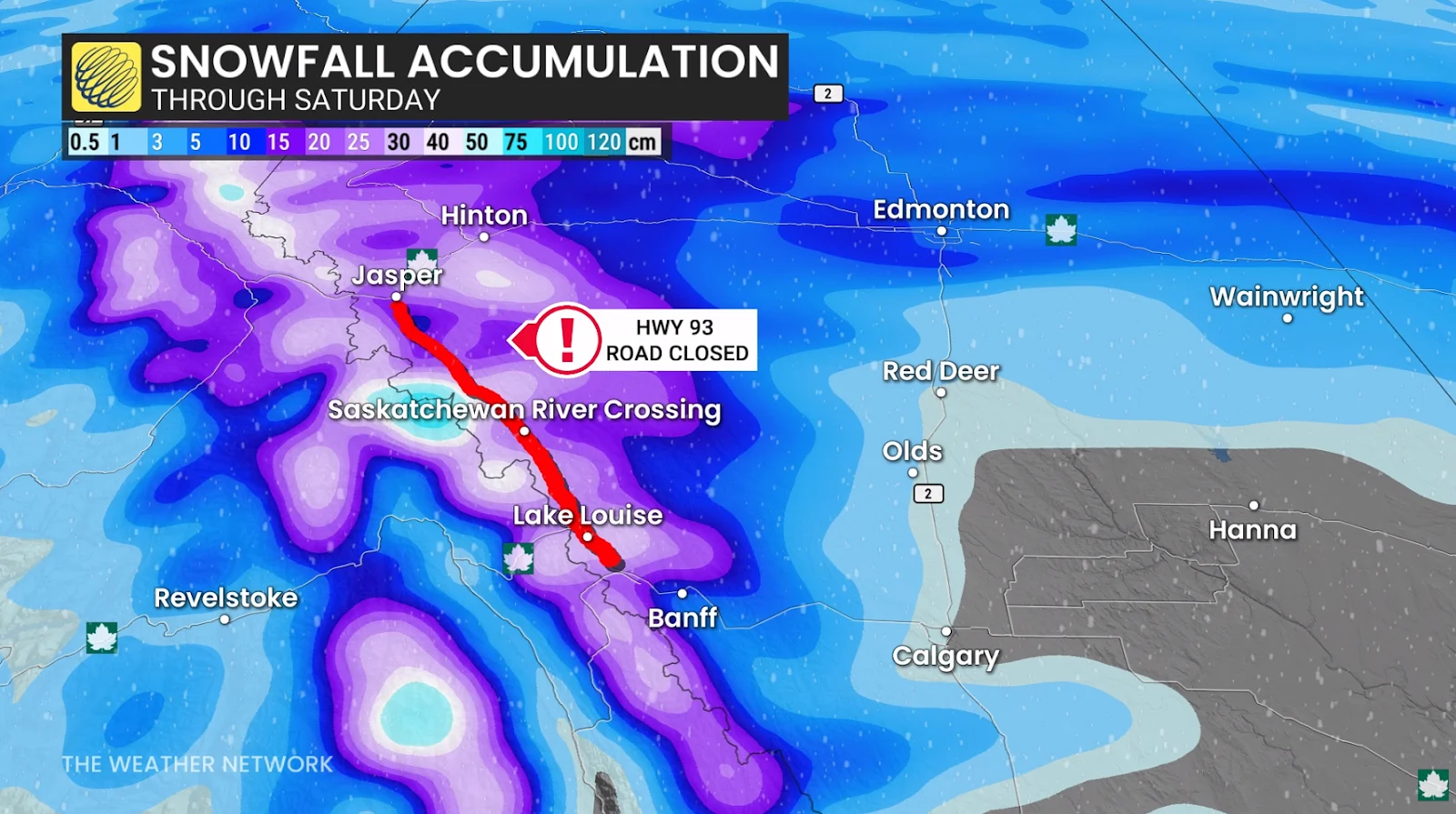
We’ve seen roughly 50-100 cm of fresh snow since this wave of moisture began earlier in the week, with an additional 20-40+ cm of snow on the way through the remainder of the week.
Strong winds redistributing this fresh snow has resulted in extreme destabilized snowpacks across the two provinces. Unstable and dangerous snowpack will continue as the additional snow combines with winds of 20-40+ km/h throughout the region.
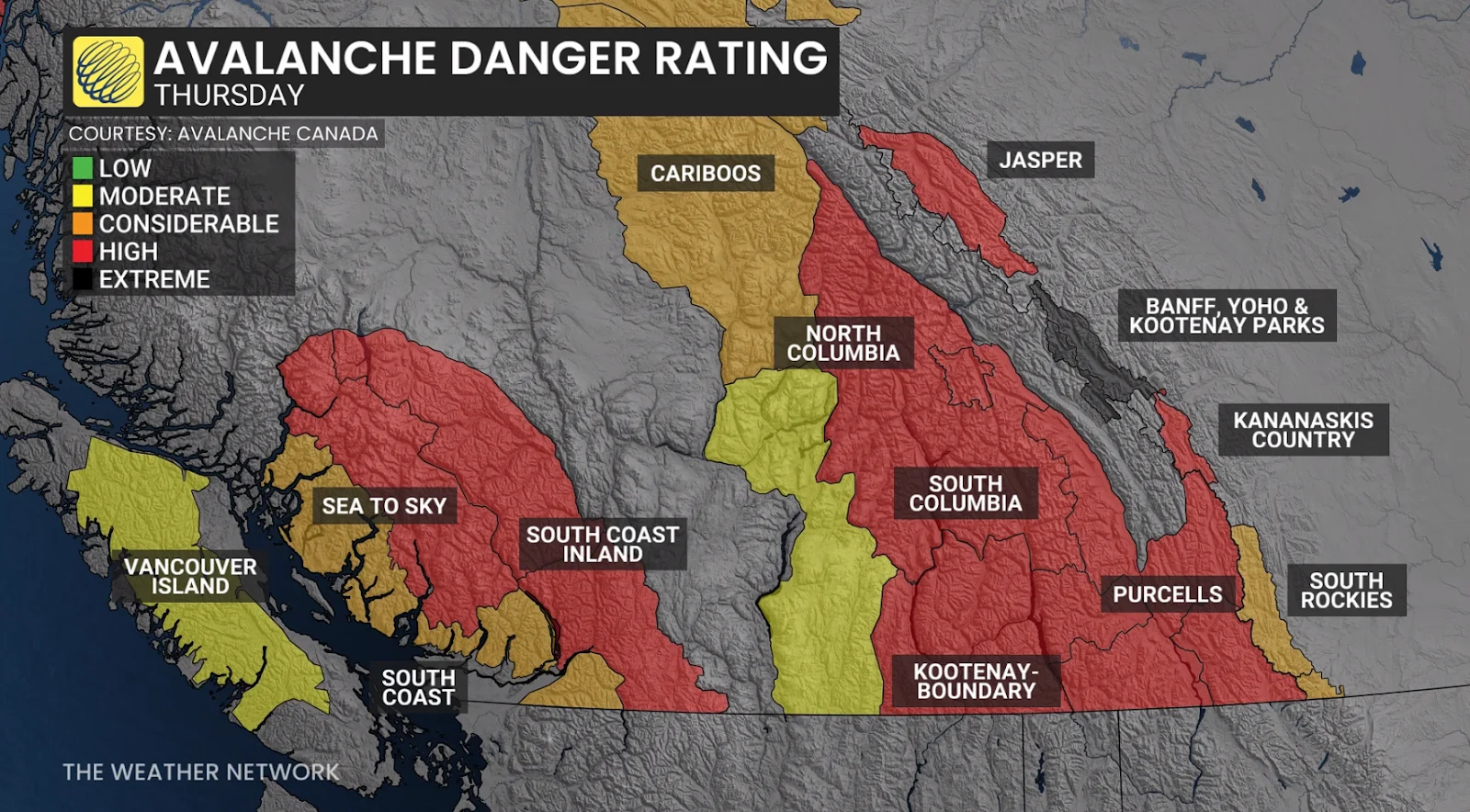
The current avalanche danger rating is at extreme for the Banff region, with authorities recommending that people stay out of the backcountry.
The avalanche danger rating is at high for many other areas across the Rockies and Coast Mountain range, with high ratings in place from the alpine through the treeline and below.
Widespread highway closures are in effect as a result of the widespread avalanche risks. Large portions of Glacier National Park are closed for avalanche control with explosives.
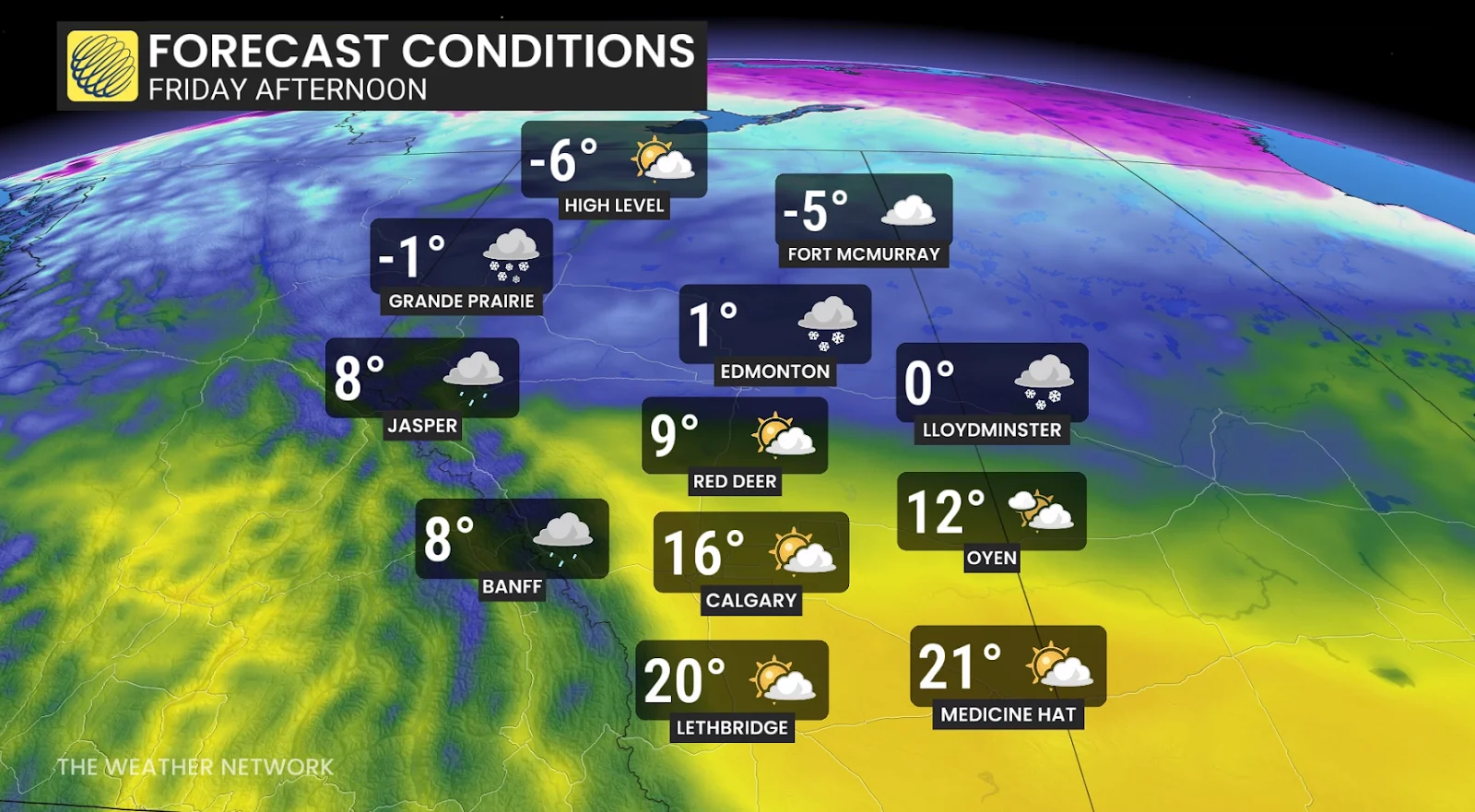
It's worth noting that, while danger lies within the mountains, many areas are reaping the benefits of this mild surge of air.
Spring warmth is in the forecast for many through the valleys of B.C., including the Okanagan, as well as central and southern Alberta, with temperatures climbing into the upper 10s and lower 20s.
Stay with The Weather Network for all the latest on conditions across the region.