Has the snowpack in B.C. and Alberta reached a dangerous tipping point?

The avalanche danger throughout Western Canada will be a big topic of conversation as we head into March's warmer temperatures and sunny days.
If you're thinking about heading out to the mountains to explore and enjoy the sunshine, perhaps you should think again.
This has not been a typical winter across British Columbia and Alberta. A prolonged snow drought across the South Coast and frequent freeze-thaw cycles at higher elevations, in addition to some recent heavy alpine snow, have created a dangerous snowpack filled with weak layers that could collapse into a deadly avalanche.
RELATED: Going backcountry skiing? Watch this first
If you do plan on heading out into the mountains in the coming weeks, please check the avalanche forecast before going--it could save your life and the lives of others.
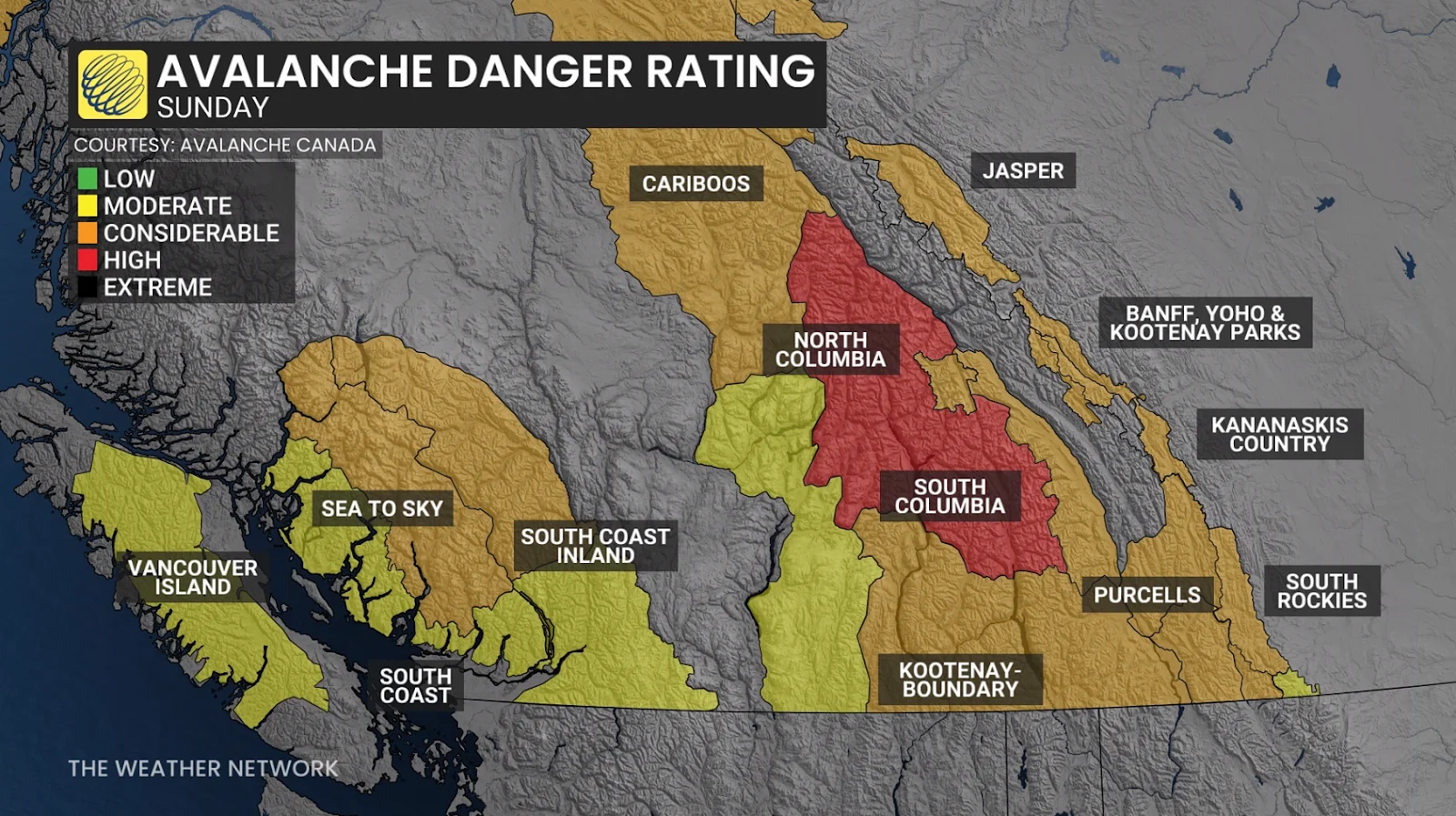
Tragically, the danger was underscored on Friday, Feb. 27, near Nakiska, where a 15-year-old boy from Calgary passed away after being buried in an avalanche. The avalanche caught two other skiers, but they were able to dig themselves out before emergency crews arrived to the scene.
Slab avalanche danger on the rise
A slab avalanche happens when a fresh, cohesive layer of snow (the slab) sits on top of a much weaker layer of snow that is buried below. As soon as the weak layer buckles and collapses under the weight of the slab above, the entire slab itself can then fracture and slide down the mountain.
Imagine a dinner plate sitting on top of a pile of loose sugar. As soon as you add more weight on top of the dinner plate, the sugar may shift under the plate, moving the whole thing.
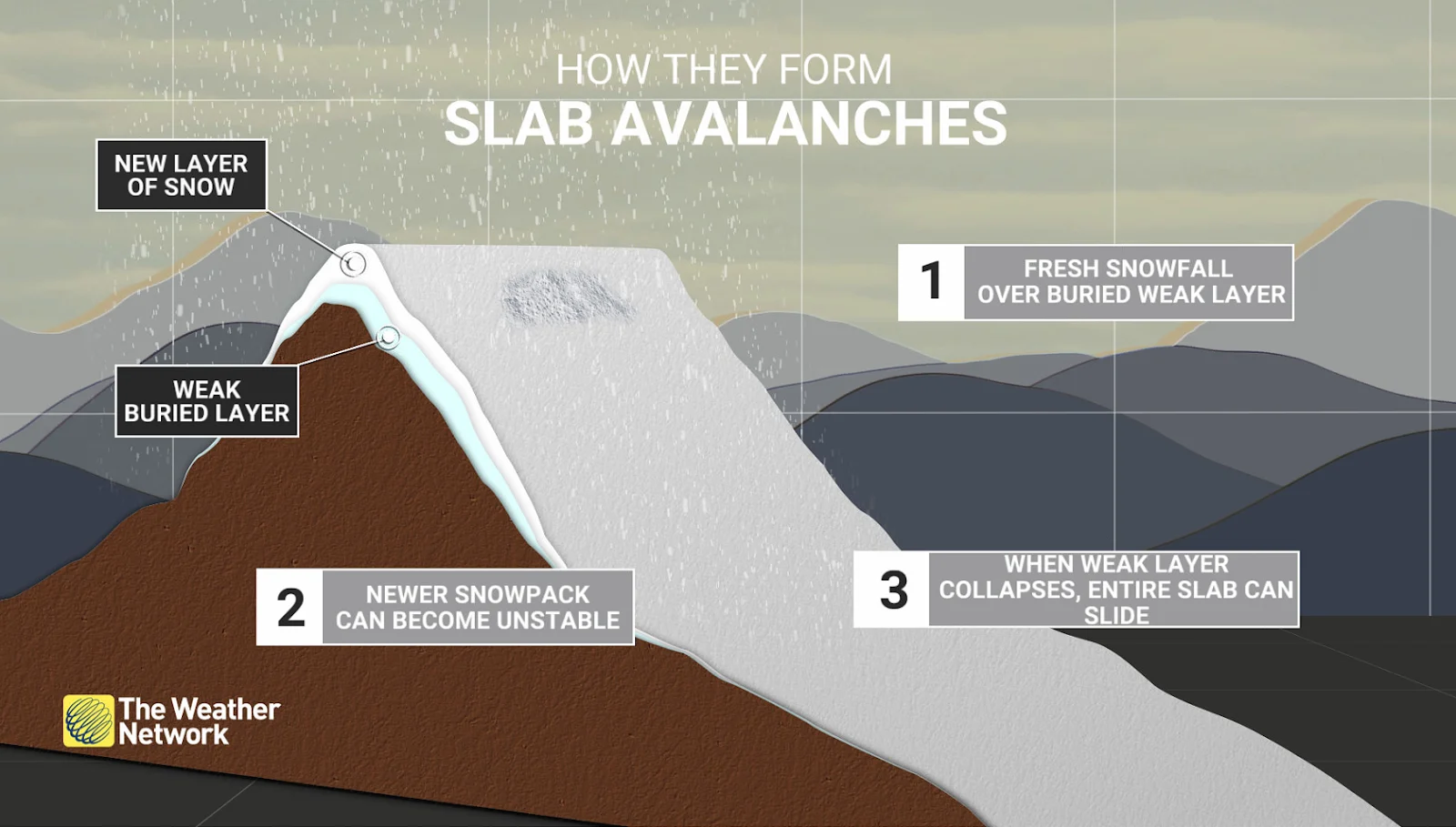
A barrage of winds across recent frontal systems through the province, combined with a warming trend, is further weakening layers beneath the slab. This is also weakening the slab itself. The result? An increased likelihood of triggering avalanches in the coming days.
The new month will be bringing in its own set of alarming factors that could increase the chances of an avalanche, too. March is the month we tend to see air temperatures rising and the sun staying in the sky longer, signalling spring's arrival.
DON'T MISS: How Whistler Blackcomb paves the way for avalanche safety
March is, historically, the month most likely to see fatal avalanches. Over the past twenty years, there have been 64 fatalities reported in Canada from avalanches in March--that's over one-quarter of avalanche deaths happening in March alone.
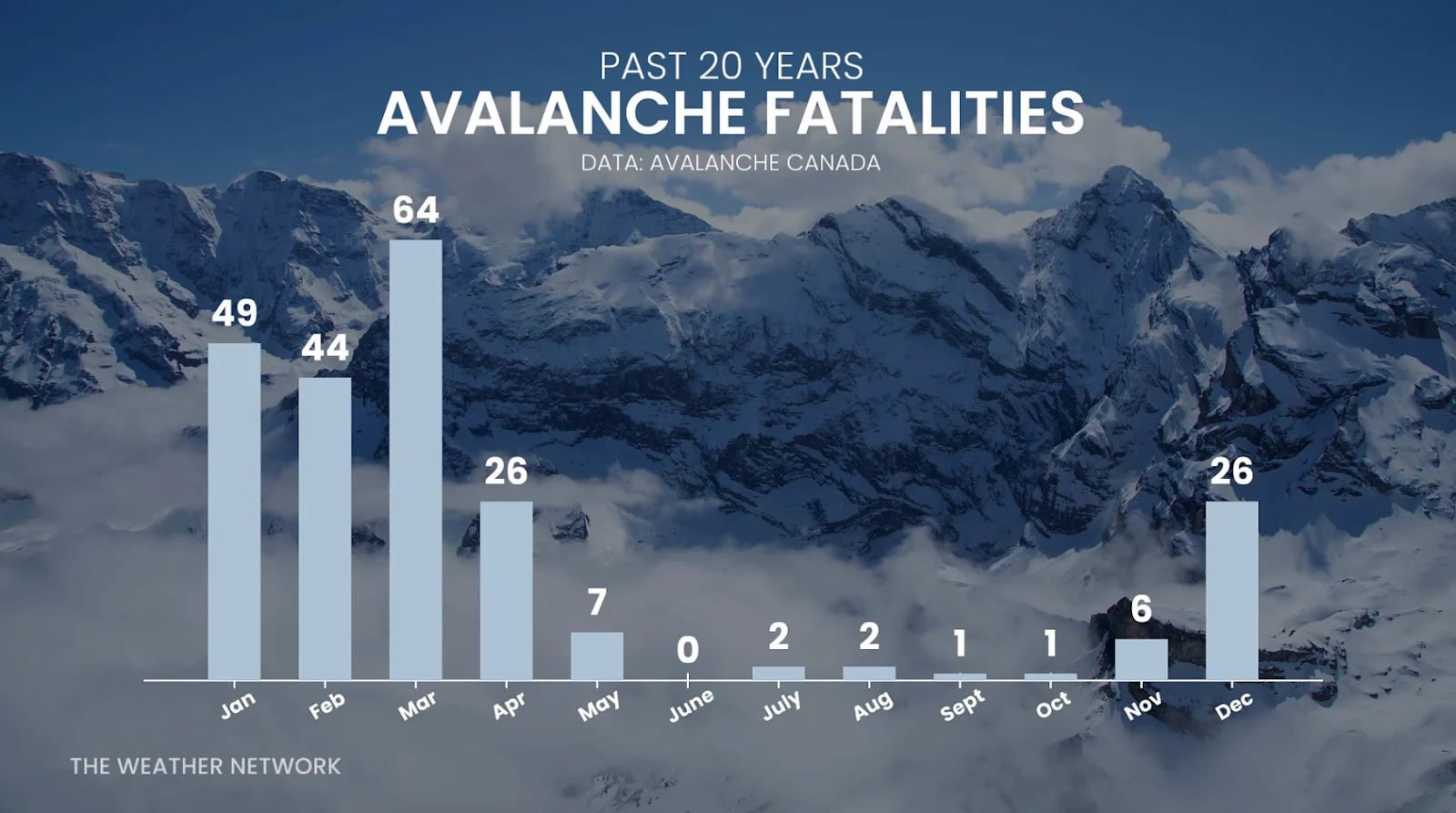
Sun-exposed slopes are a huge danger in March because the heat radiating from the sun will begin to melt and weaken the snowpack. While wet, loose avalanches are often smaller, they could trigger a larger, more destructive slab avalanche further down the slope. Remember: if the surface looks wet or slushy, that's a red flag to stay away.
Tips to reduce your risk of getting caught in an avalanche
Avoid open slopes steeper than 30 degrees, and keep an eye on the terrain above you.
Limit time spent under steep slopes and be cautious near rounded slope crests and convex rollovers.
Watch for red flags: recent avalanches, cracking, or "whumpfing" (the sound of snow layer collapsing), rapid warming, or wet, mushy surface snow.
Favour slopes in the shade and out of direct sunlight.
Always carry a beacon, shovel, and probe (and know how to use them).
Avoid terrain during peak afternoon warming, when the snowpack is most stressed.
Always check the avalanche forecast before heading out.
A complex snowpack and increased sunshine create a high-risk scenario for mountain hikers. Using extra caution and more conservative terrain choices will be needed in the coming days and weeks to stay safe.