
February’s significant daylight comeback is here, Canada

We discuss the significant increase in daylight hours across Canada during February. Discover how much extra sun cities from Toronto to Yellowknife will see, and learn about the growing power of the sun as we move away from the winter solstice.
Find out why February delivers one of Canada’s biggest daylight comebacks of the entire year.
The first 6 p.m. sunset: The return of our evenings
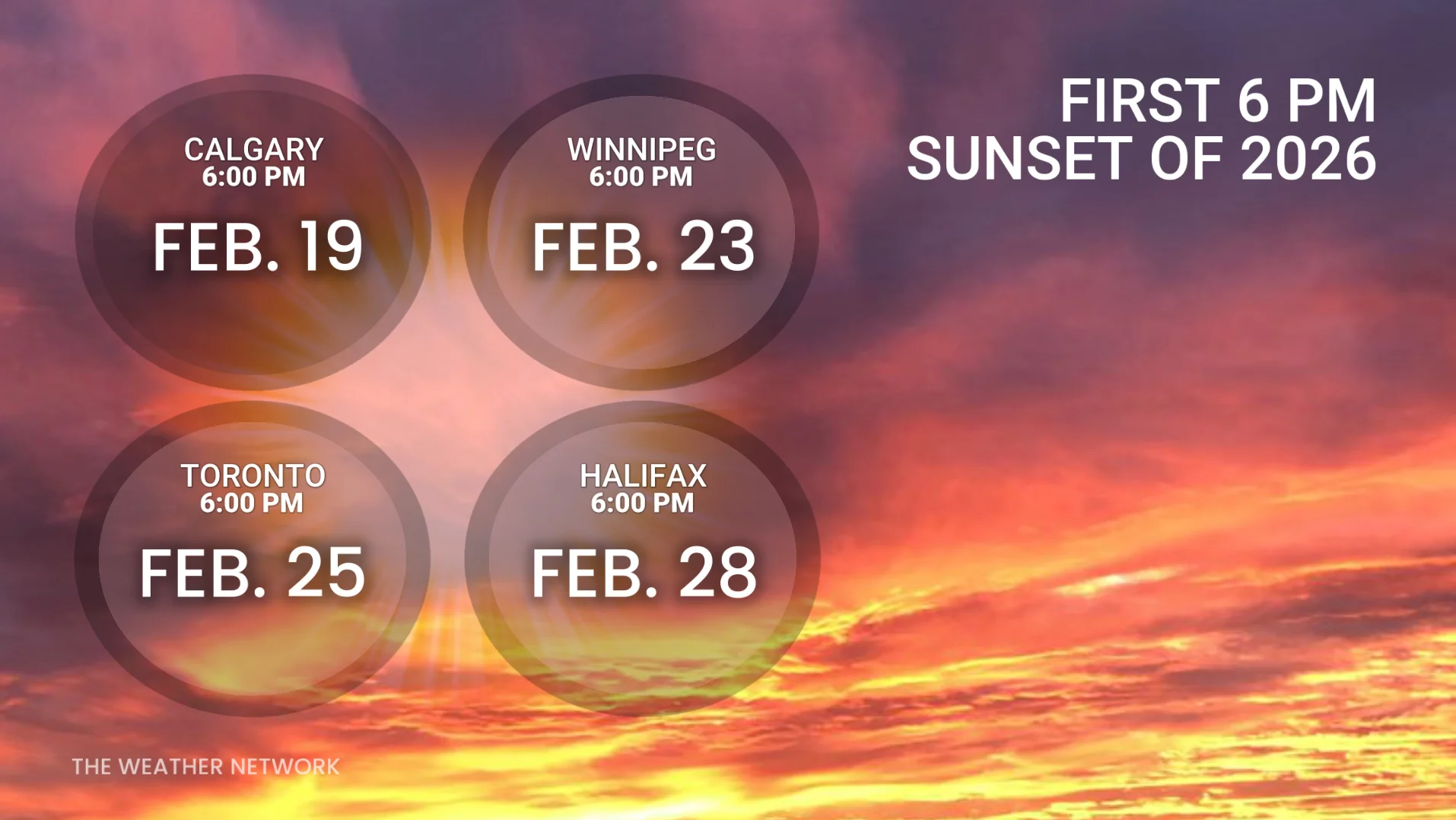
February is the month when daylight rapidly accelerates, and several Canadian cities notch their first 6 p.m. sunset of 2026.
Calgary: Feb. 19
Winnipeg: Feb. 23
Toronto: Feb. 25
Halifax: Feb. 28
Bonus daylight
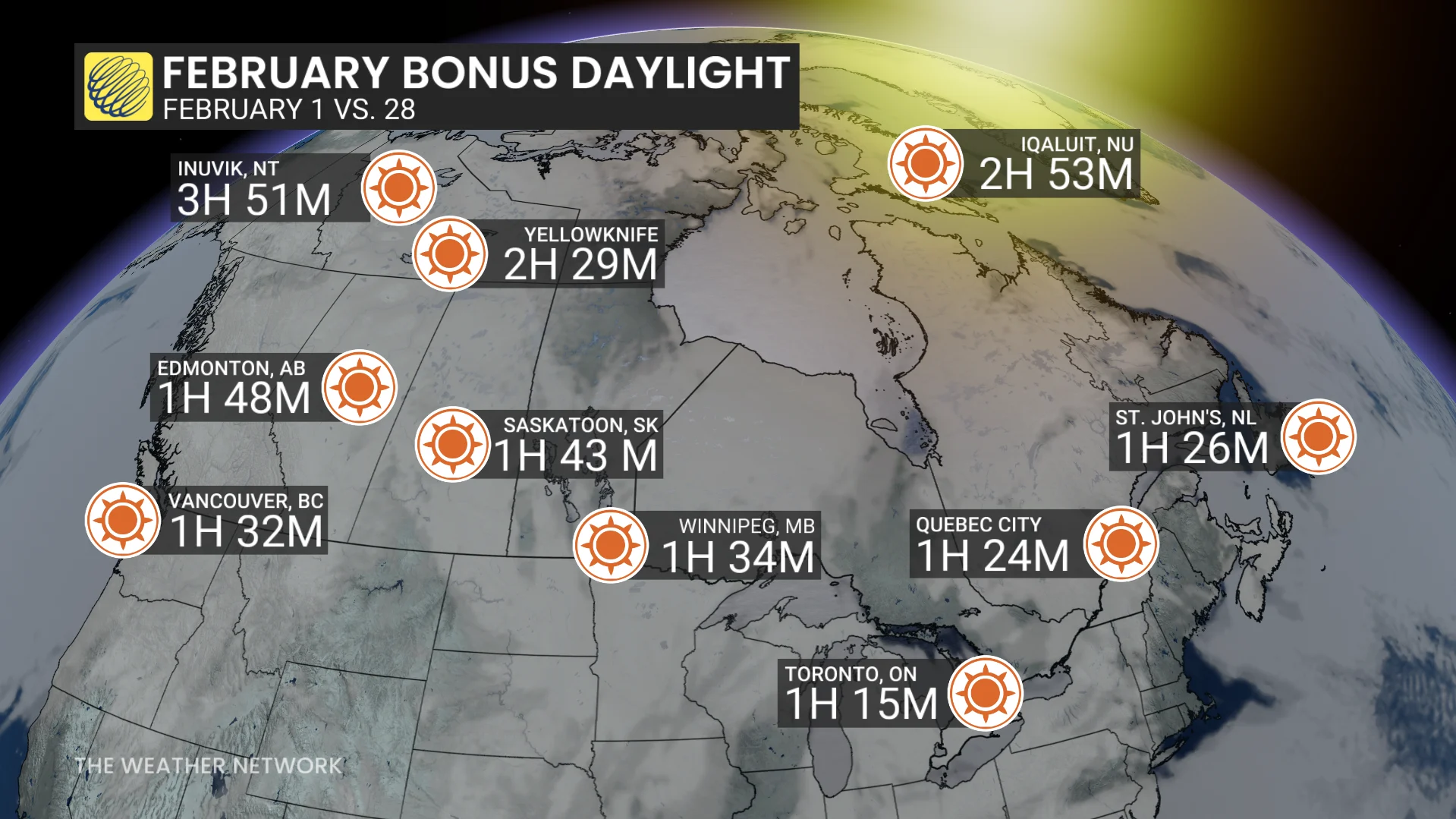
Daylight is ramping up fast as we approach the spring equinox, and February captures this steep uptick:
Inuvik: +3h 51 minutes
Iqaluit: +2h 53 minutes
Yellowknife: +2h 29 minutes
Edmonton: +1h 48 minutes
Vancouver: +1h 32 minutes
Saskatoon: +1h 43 minutes
Winnipeg: +1h 34 minutes
St. John’s: +1h 26 minutes
Quebec City: +1h 24 minutes
Toronto: +1h 15 minutes
Remarkably, some Canadians’ days are up to four hours longer than they were at the start of February.
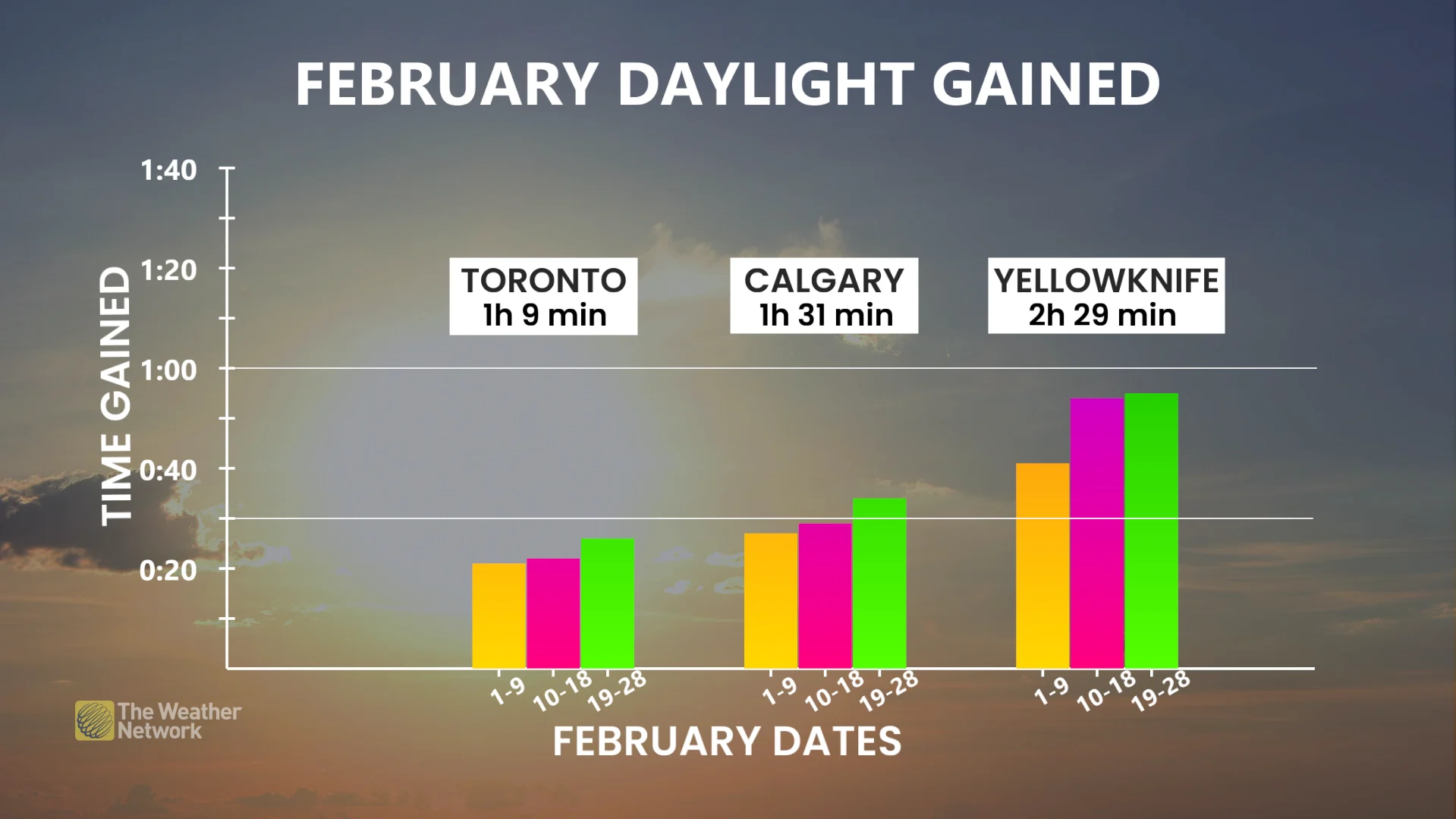
Daylight acceleration
It’s not a constant change, as daylight speeds up through the month. Each week in February adds more daylight than the one before.
The sun is getting stronger
Have you noticed your car getting warmer in the sun? Or, the warmer feeling on your face? It’s actually real.
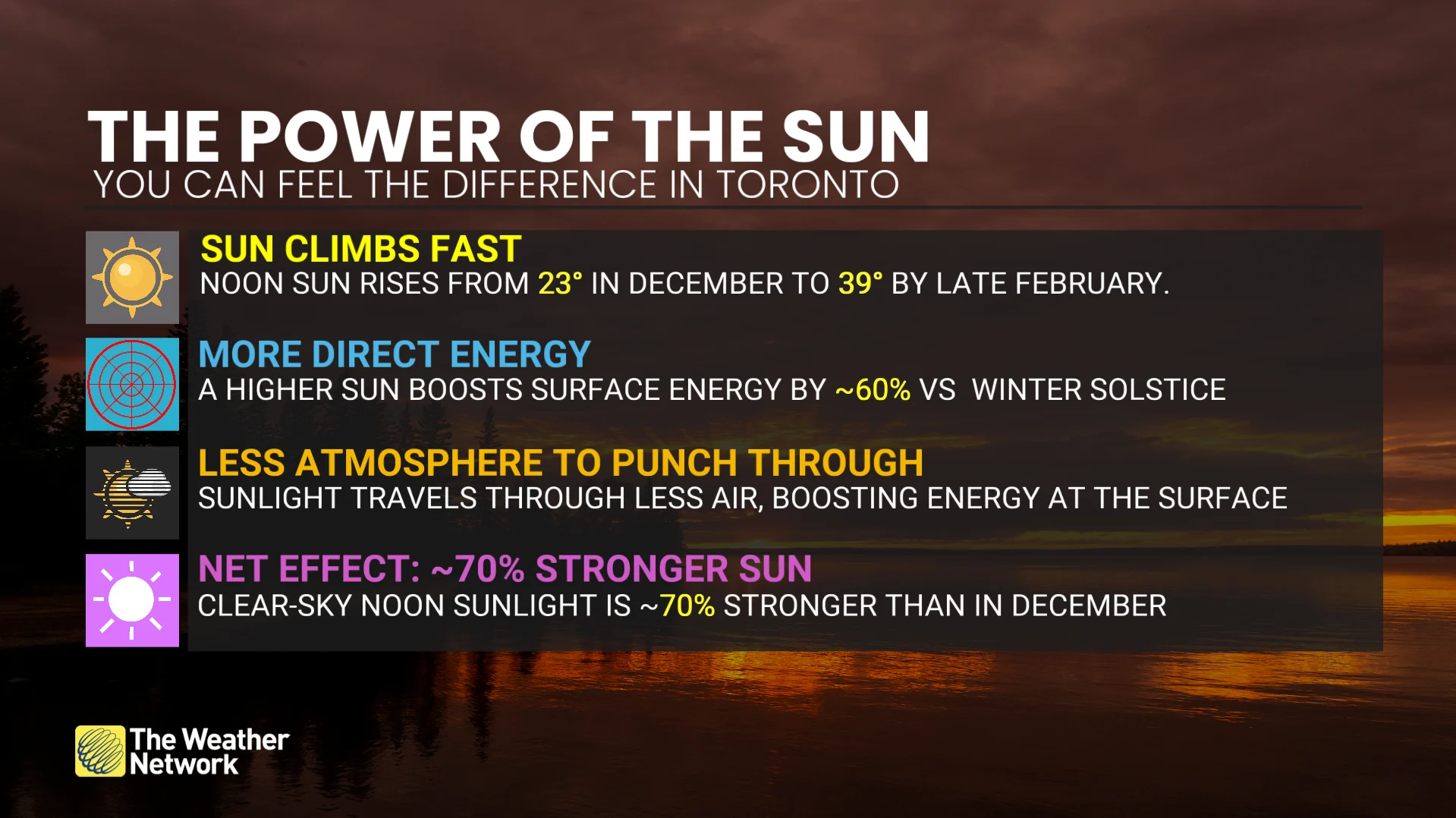
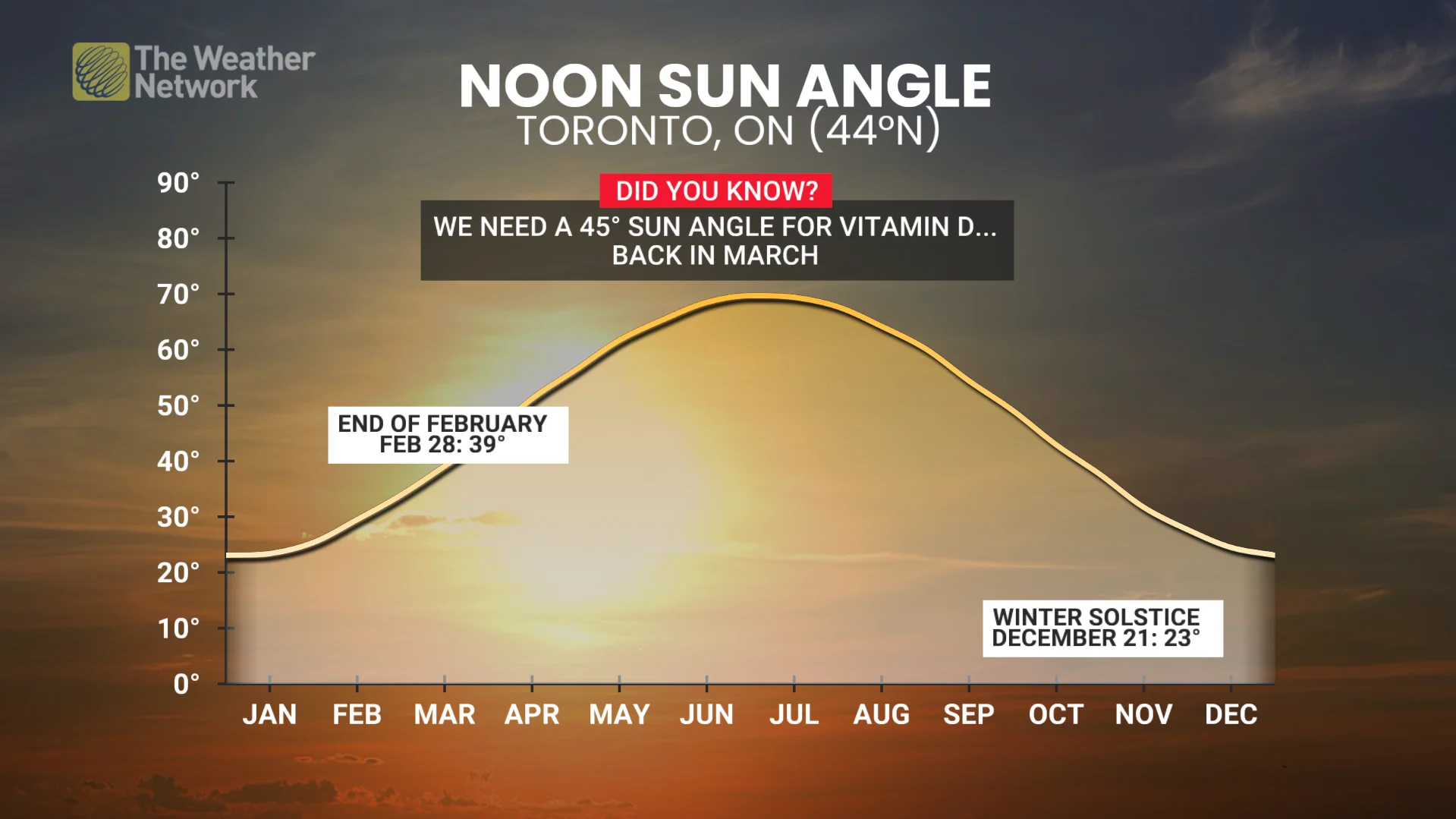
In Toronto, the noon sun climbs from 23 degrees in December to 39 degrees by late February, delivering about 60 per cent more surface energy.
With less atmosphere to travel through, the sun at noon is nearly 70 per cent stronger than at the winter solstice.
Did You Know? We need about a 45-degree sun angle to make vitamin D, and Southern Canada doesn’t meet that threshold until later in March.
So, this is the month your evenings return, and the sun feels warmer. It’s a reminder that spring is just around the corner.