
Closely eyeing a potential nor'easter with big impacts across Atlantic Canada

Canada's East Coast could be seeing another nor'easter to impact the region for the end of this weekend and into early next week, with forecasters keeping a close eye on the threat of significant snowfall totals
While parts of Atlantic Canada are still reeling from its early-week winter storm, forecasters are already looking to the next storm, a potential nor'easter that could track in at the end of this weekend. This storm may also meet weather bomb criteria.
The exact track and impacts are still highly uncertain, but there is a high-end potential with this storm.
DON’T MISS: US storm leaves 850,000 without power, forces 10,000 flight cancellations
A swath of 20-30+ cm of snow is possible in the hardest-hit areas, alongside strong winds, extensive blowing and drifting snow, and the potential for blizzard conditions.Here's what we know so far, along with what's coming for Newfoundland on Wednesday and Thursday.
Lingering sea-effect snow in Newfoundland
A lingering trough will prompt a southwesterly flow into Newfoundland, bringing more snow on Wednesday into Thursday with sea-effect bands adding to heavier snow totals.
Northern Newfoundland could see 15-25 cm of snow by Thursday, with the Avalon Peninsula seeing 10-15 cm.
Winds are expected to be gusting to 50-75 km/h, with the strongest winds over the Avalon. Expect difficult travel with poor visibility.
Brace for more snow ahead
Looking ahead to the long-range forecast, meteorologists will be closely monitoring yet another storm system, a nor’easter, that could track up the U.S. Eastern Seaboard on Sunday and Monday, potentially impacting parts of Atlantic Canada once again with heavy snow.
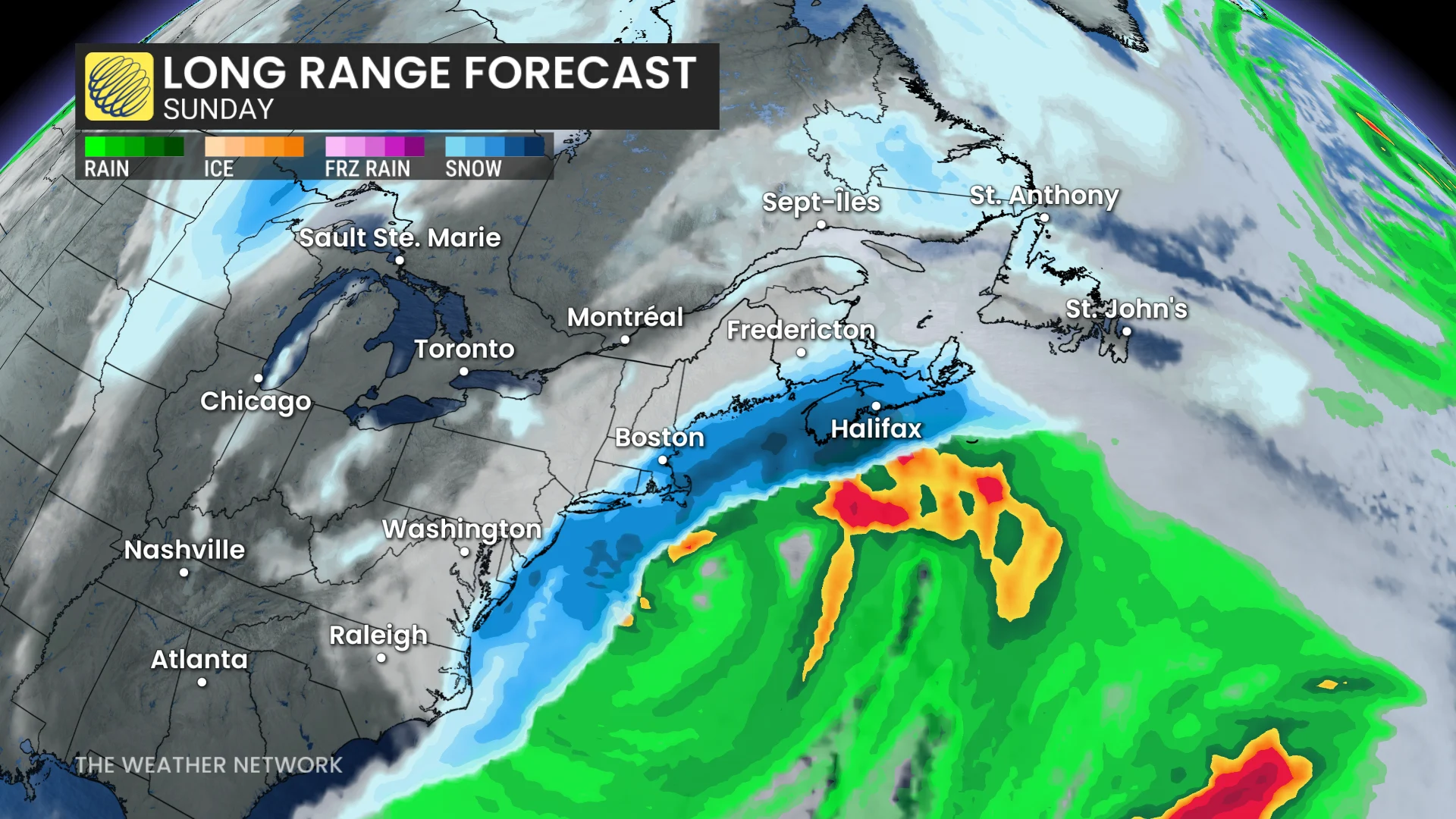
While the atmospheric pattern supports an active storm track remaining across the East, it’s too early to determine the exact storm track and snowfall totals of this system.
Two scenarios are possible: Track 1, closer to the coast, could bring heavier snow, stronger winds, and potential blizzard conditions, with 20-30+ cm or more possible. Exact areas most affected remain uncertain.

Track 2, further offshore, would result in lighter snow and winds, with the highest impacts staying offshore.
Residents in Atlantic Canada are encouraged to check the forecast often as weather model guidance provides more insight to forecasters ahead of next week.
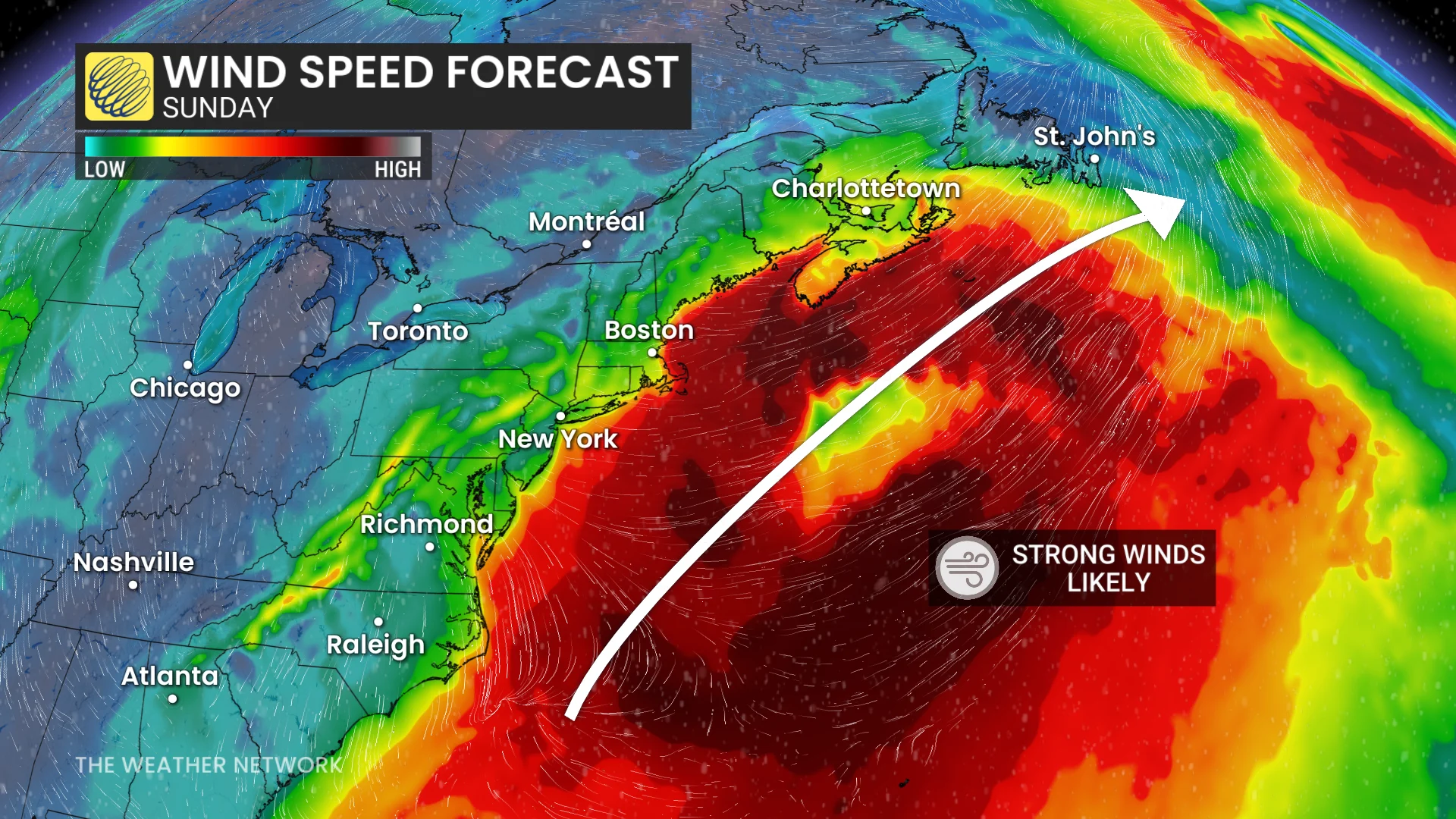
What we know about the set-up
An upper-level trough digs south into the Gulf of Mexico.
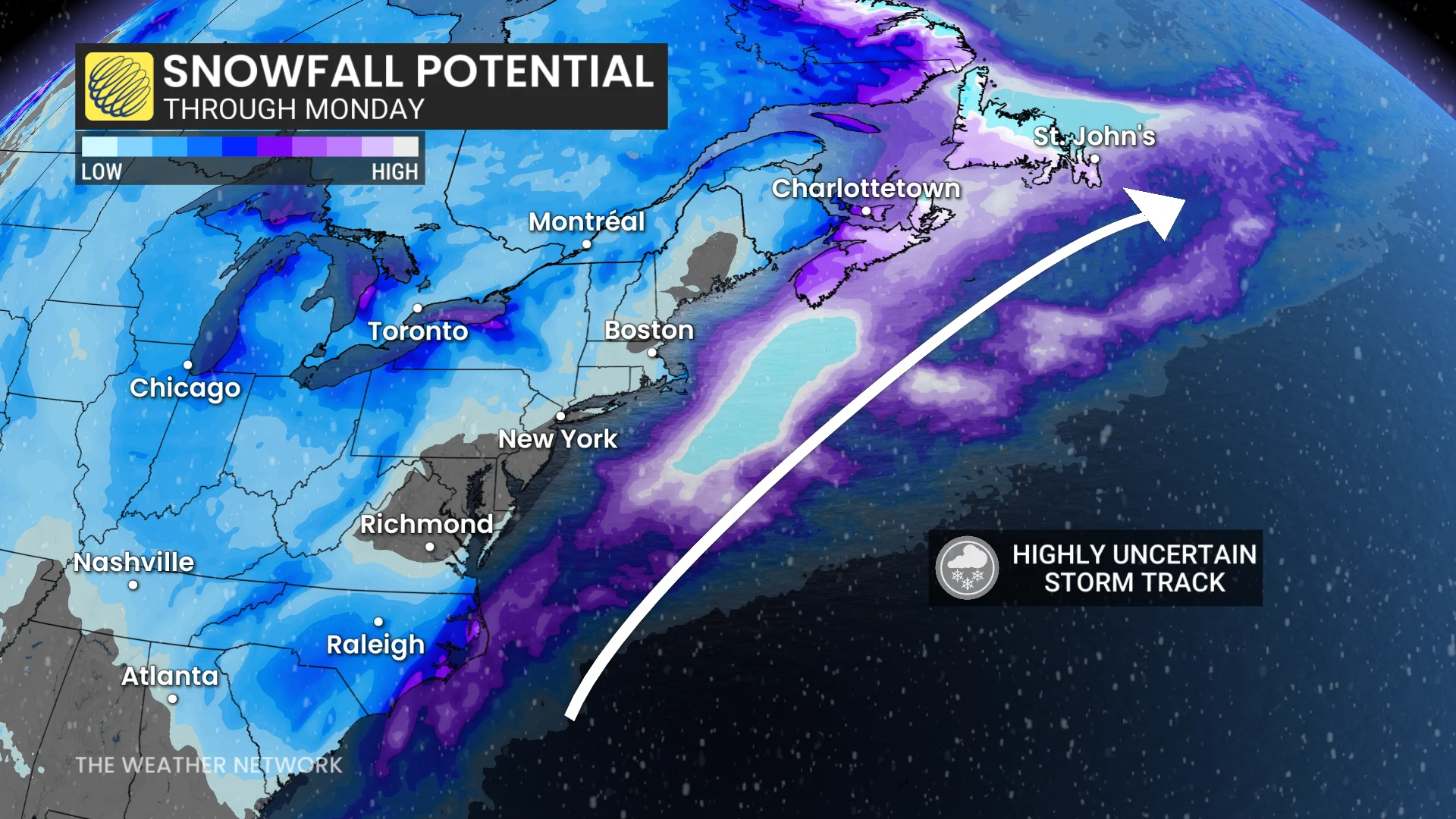
Cold Arctic air will be locked in place for the weekend across Eastern Canada, and a system tracking up the Eastern Seaboard would bring Gulf moisture with it.
The storm's proximity to Atlantic Canada will determine precipitation type and wind strength. It is still too early to specify snow amounts.