
Cyclone Maila is a very unusual storm set to rapidly intensify

This is the region’s strongest storm since at least the 1950s
Cyclone Maila is strengthening in a region of the world that doesn’t see many powerful storms.
The system spent the weekend crawling through the Solomon Sea, meandering off the coast of Papua New Guinea about 1,200 kilometres northeast of the Australian city of Cairns.
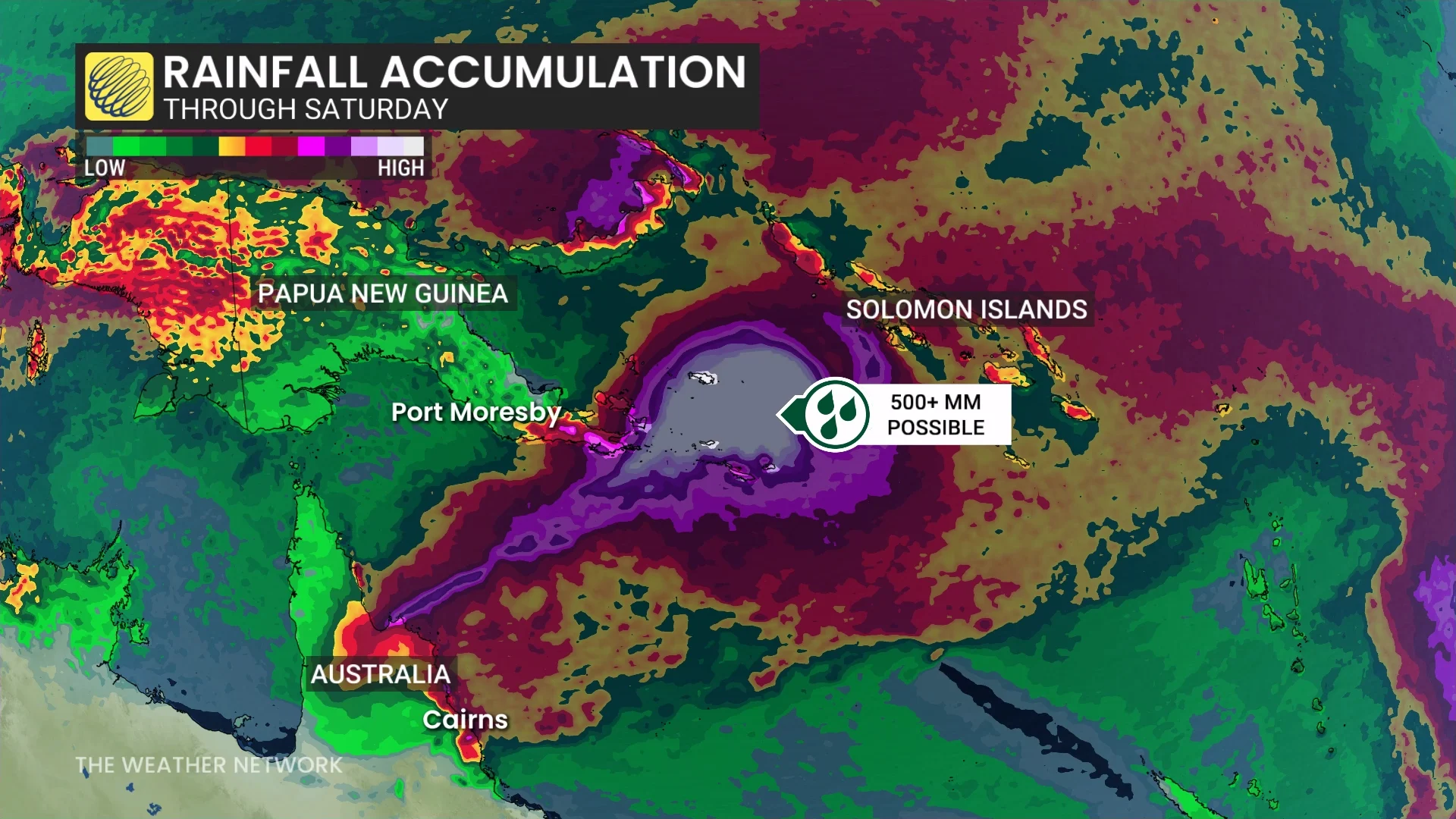
Extreme rainfall totals could produce flash flooding and landslides on islands across the region.
DON'T MISS: What’s the difference between hurricanes, typhoons, and cyclones?
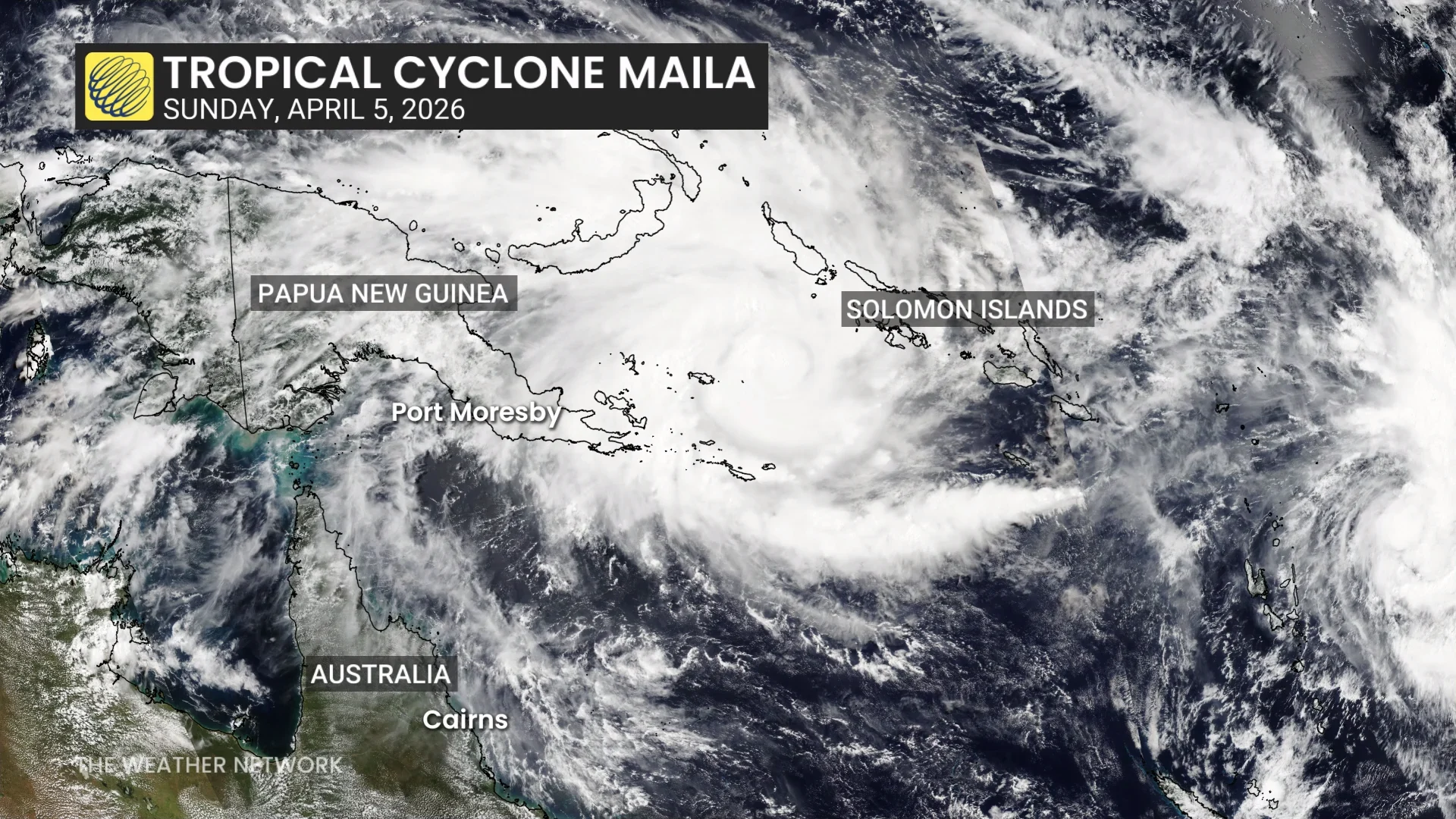
The Joint Typhoon Warning Center (JTWC) found that Cyclone Maila had maximum sustained winds of about 140 km/h at 1:00 a.m. local time Monday. The region is 14 hours ahead of Toronto and 11 hours ahead of Vancouver.
Cyclone Maila was centred at 9.3°S, 154.6°E, which is a very unusual position for such a strong tropical cyclone.
RELATED: Why no hurricane has ever crossed the equator
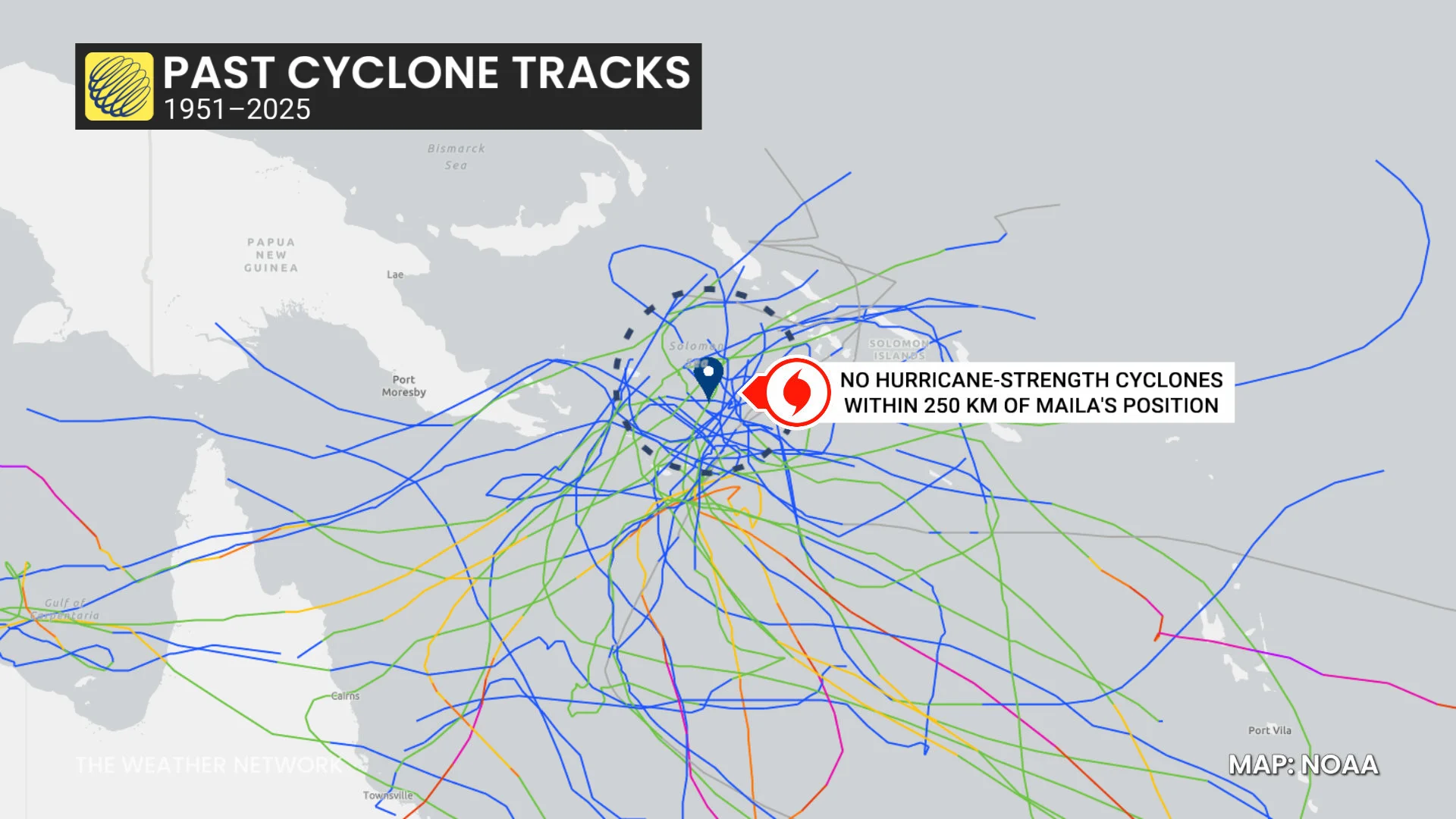
No hurricane-strength cyclones have been recorded in this section of the Solomon Sea since records began back in 1951. Despite very warm sea surface temperatures, the atmosphere in this region is usually unfavourable to robust tropical cyclone development.
Forecasters with the JTWC expect Maila to rapidly intensify over the next day or two at it gradually drifts toward the southwest. The system’s maximum sustained winds could exceed 200 km/h in 36 hours, which would make it the equivalent strength of a major hurricane.
RELATED: A stalled hurricane can produce catastrophic flash flooding
Regardless of its strength, islands across the region will experience drenching rains from this slow-moving cyclone. Many areas will see more than 500 mm of rainfall over the next week, which will cause widespread flash flooding and landslides.
Current computer guidance suggests that the system could begin drifting southwest toward the Australian state of Queensland, where cleanup continues from Tropical Cyclone Narelle.