
B.C. snowpack reveals sharp divide ahead of the spring melt

We break down the April snowpack levels in British Columbia, highlighting a significant divide across the province. While some regions are near normal, others face serious deficits, raising concerns about future water levels and the summer wildfire risk.
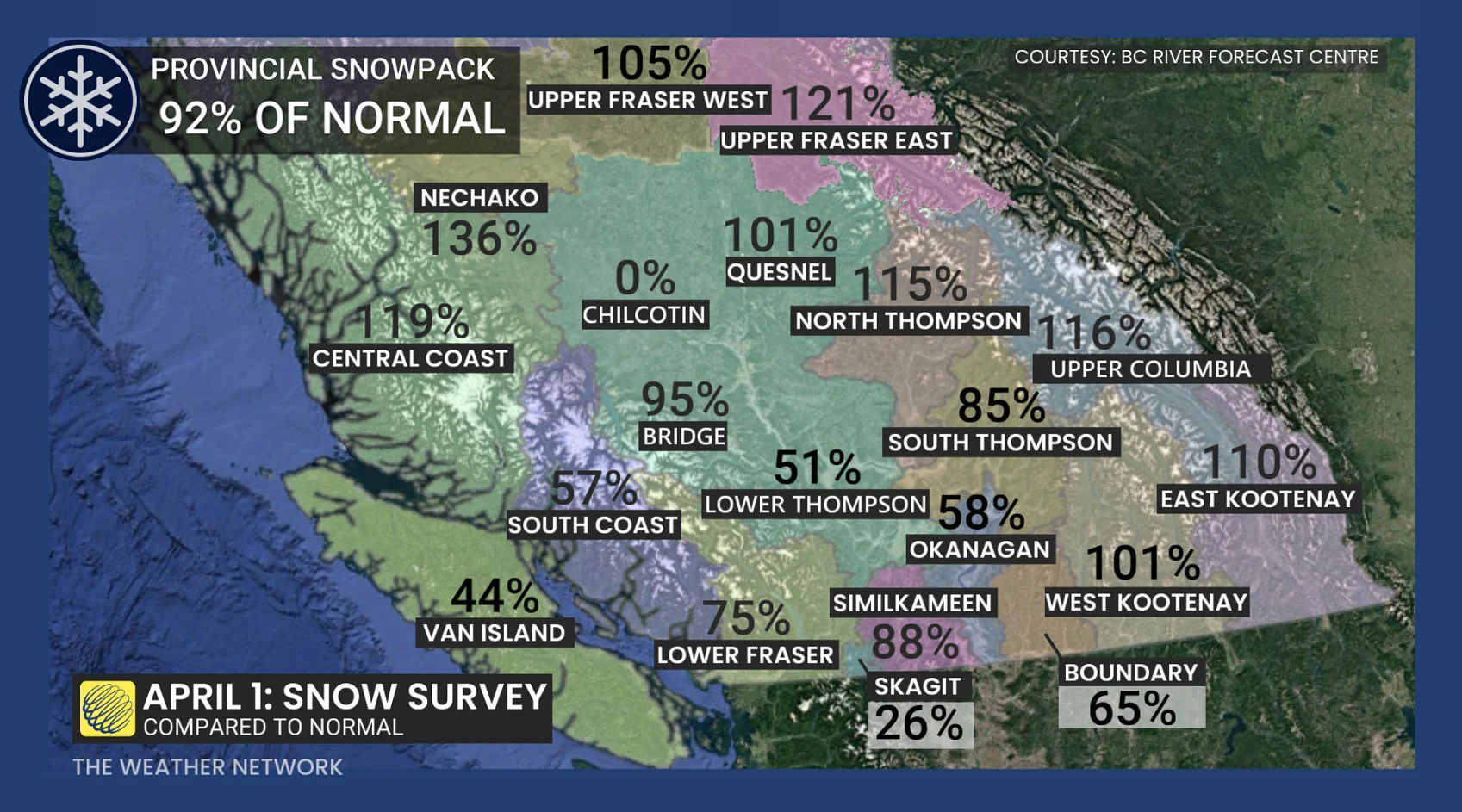
The British Columbia April 1 snowpack data has been released, and it’s 92 per cent of normal--a strong increase compared to the 79 per cent measured in April 2025.
But an average can be misleading.
The snowpack is dangerously uneven across B.C., and the average data is masking a major divide building across the province.
Keep up with the latest wildfire news and information at The Weather Network’s wildfires hub.
B.C. snowpack close to normal?
Provincial snowpack sits at 92 per cent
Strong increase compared to 79 per cent April 2025
April 1--the critical provincial snow survey is complete
Considered the most important snowpack benchmark of the season, with roughly 97 per cent of B.C.’s annual mountain snow accumulated on average.
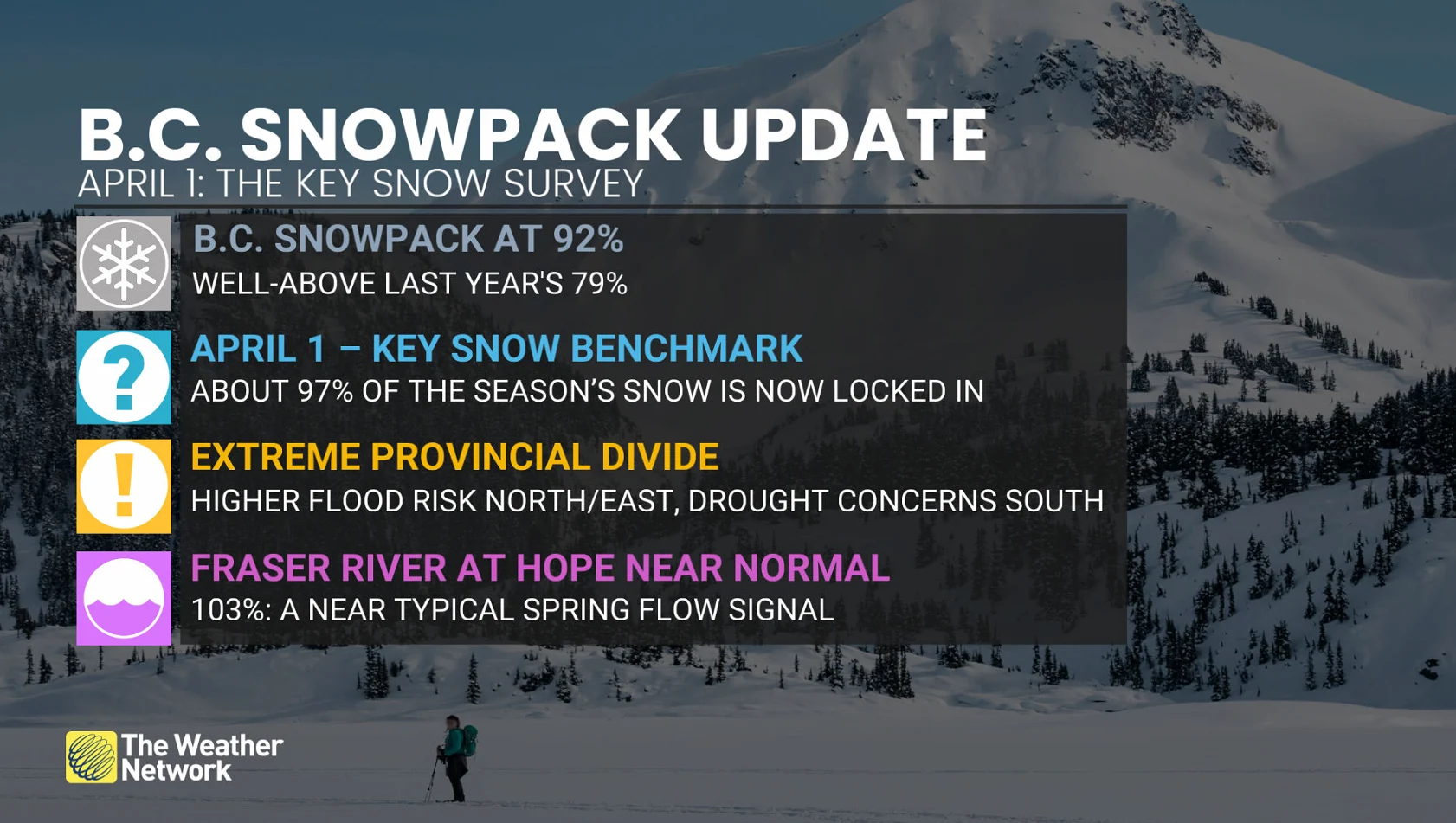
During this time, it provides the clearest signal yet for spring runoff and summer drought risk.
An extreme snow divide
The healthiest snowpack is clearly focused across the northern and eastern Interior regions, where several basins are above normal.
Peace: 136 per cent
Nechako: 136 per cent
Northwest: 123 per cent
Upper Fraser East: 121 per cent
Central Coast: 119 per cent
The most dire snowpacks across the province are clustered in southern B.C. and the South Coast.
Skagit: 26 per cent
Vancouver Island: 44 per cent
Lower Thompson: 51 per cent
South Coast: 57 per cent
Okanagan: 58 per cent
Lower Fraser River
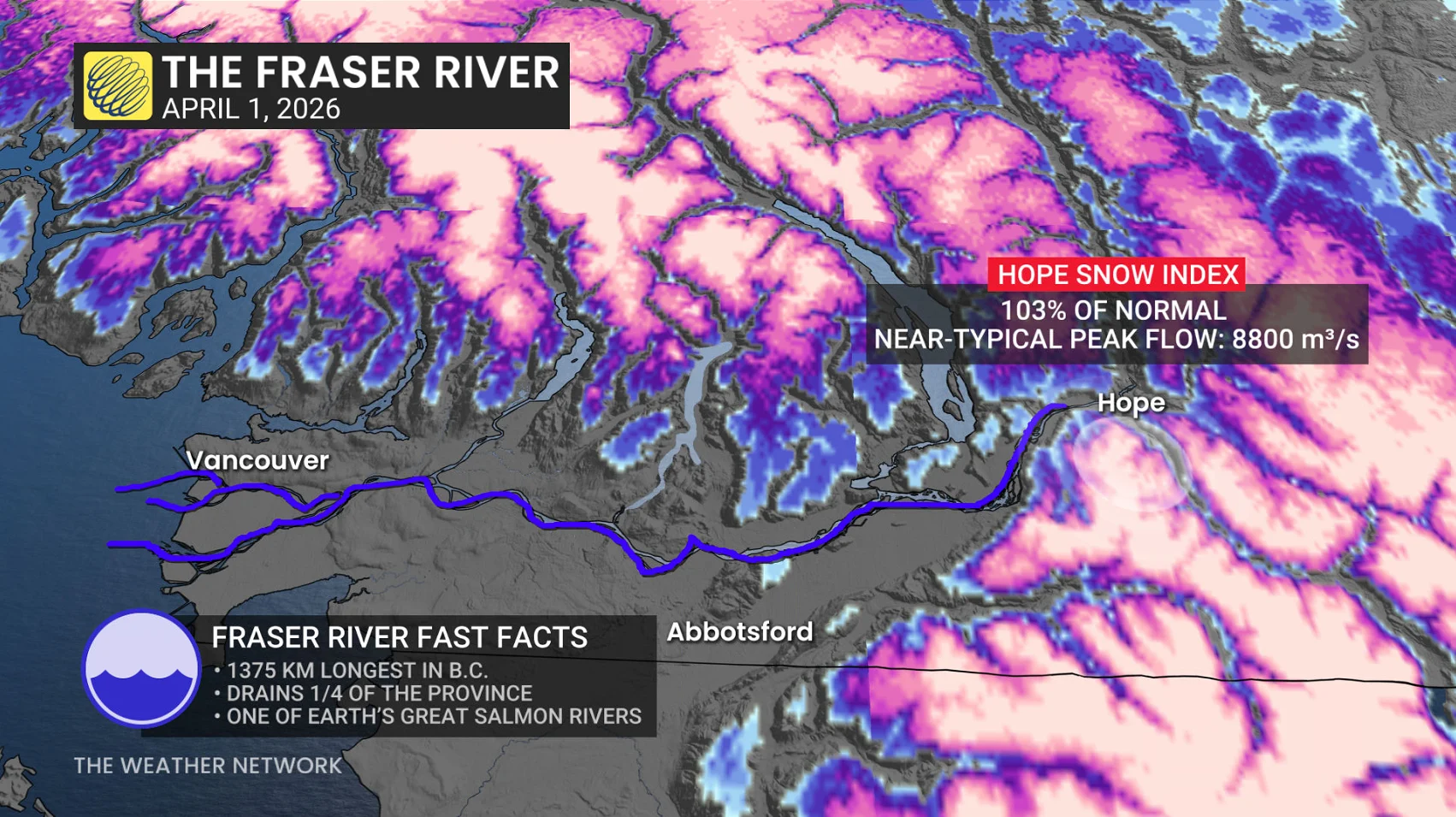
Some good news for the Lower Fraser River. The Hope snow index is hovering near normal at 103 per cent (2025: 79 per cent).
This data indicates a typical flow for the region. The crude estimate of peak flow sits at 8800 m3 /s with large amounts of variability determined by weather conditions and the speed of snowmelt.
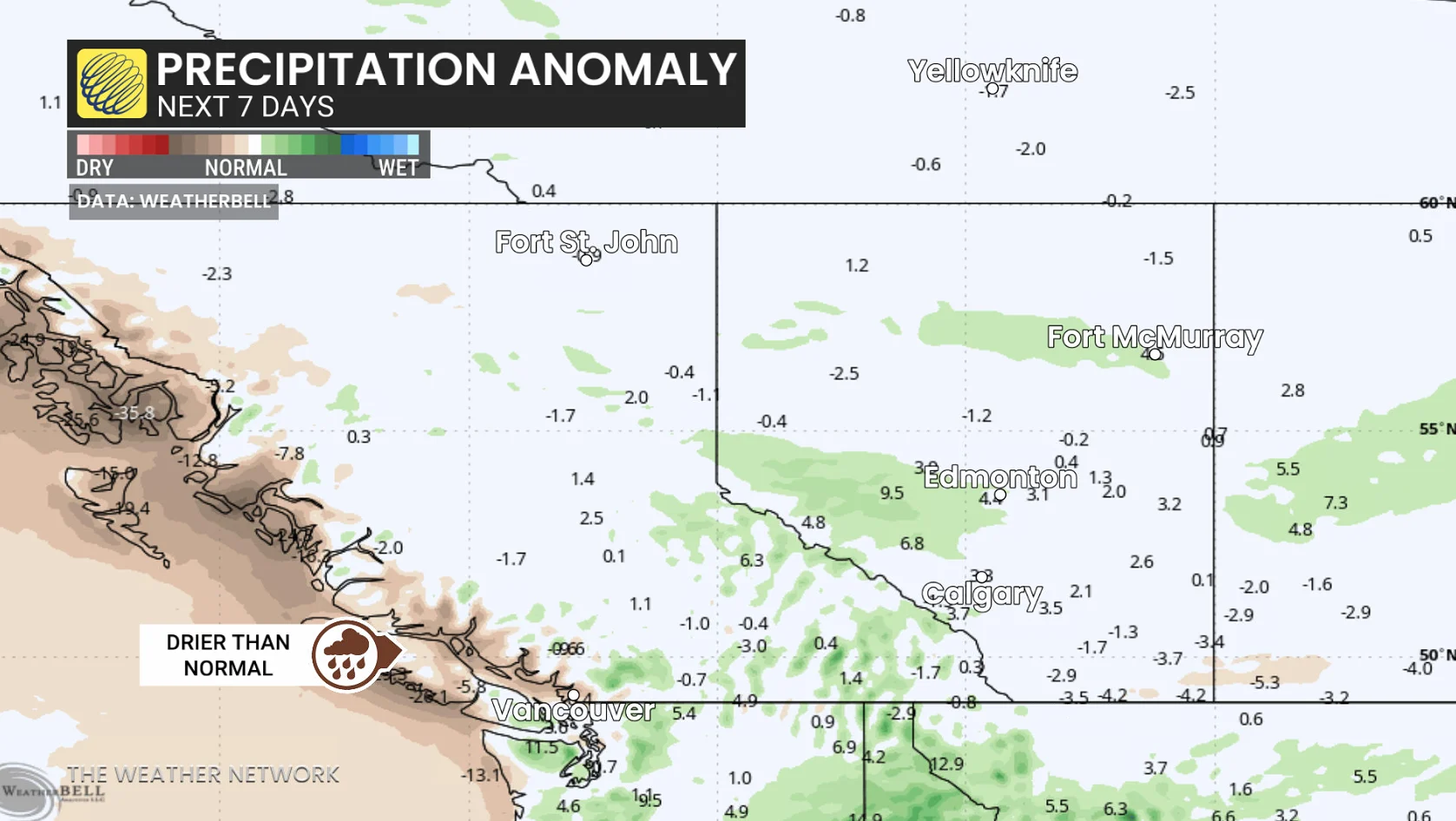
May can be a crucial month to aid in building moisture ahead of the main portion of the summer wildfire season.
We’ll continue to watch the lower summer water supply risk for the southern basins in the months to come--a critical detail masked by the provincewide average.
Stay with The Weather Network for all the latest heading into wildfire season.