
Avalanche danger rises in B.C. after fatality, with more snow this weekend

The unstable mountain snowpack across Vancouver Island, along an incoming shot of snow, has prompted a high risk for avalanches this weekend
After a skier died in an avalanche east of Revelstoke, B.C., on Thursday, the threat of additional avalanches remains high this weekend.
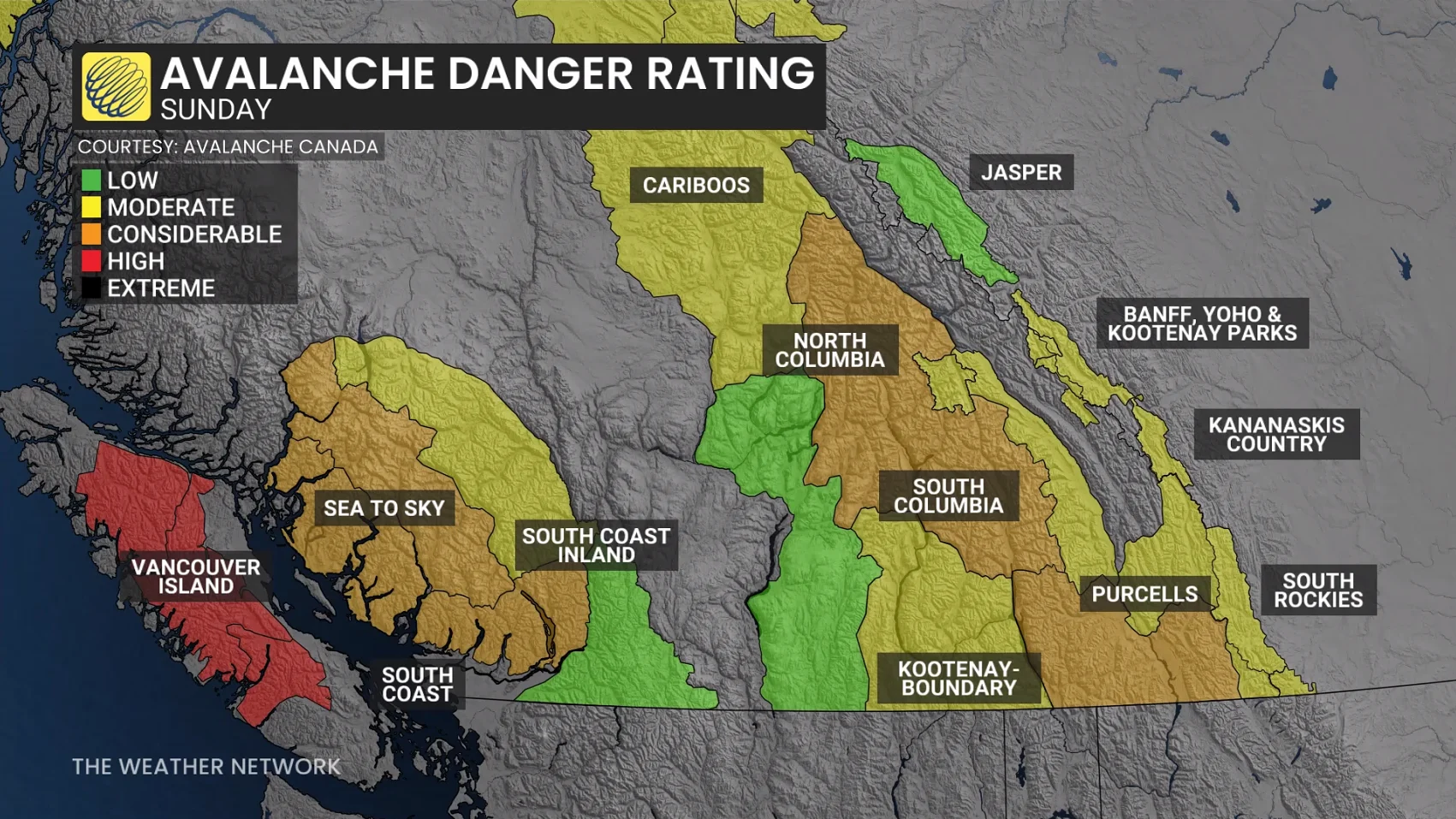
The mountain snowpack remains unstable, and with some alpine areas expected to see 30-60 cm of snow this weekend, that has elevated the avalanche threat to considerable and high on Vancouver Island mountain ranges, according to Avalanche Canada.
RELATED: Skier dies in avalanche during guided trip near Revelstoke
Avalanche risk heightened with more snow this weekend
Two individual systems are will bring rounds of moisture across the B.C. coastline this weekend.
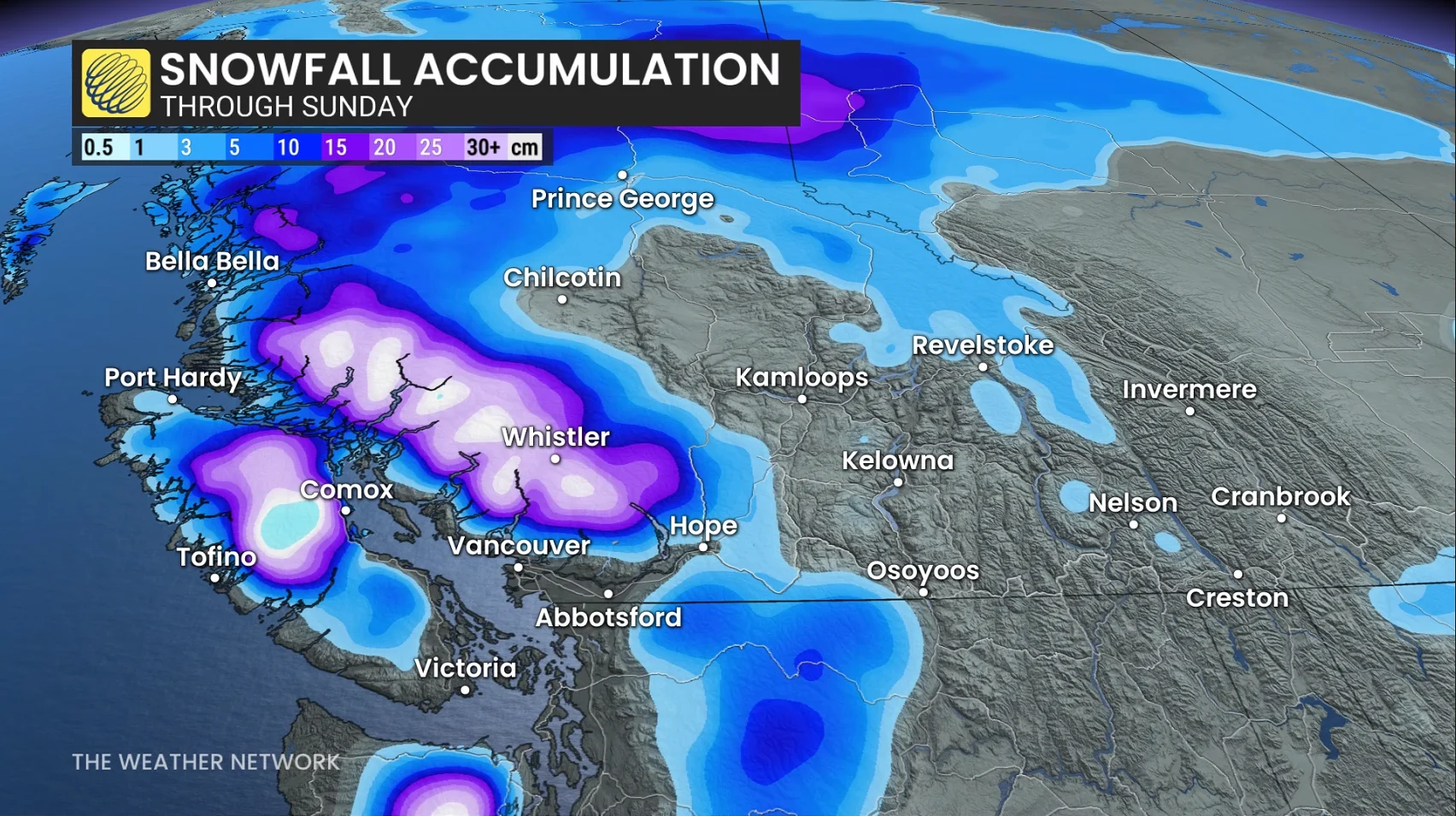
With the freezing levels dropping, that will bring heavy snowfall across the Vancouver Island Ranges and the North Shore Mountains into Monday.
The highest peaks of the Sea to Sky can expect up to 30 cm through the weekend. The North Shore Mountains can expect to see up to 60 cm while the Vancouver Island Range can expect 25-50 cm.
Through Saturday, the snow across the mountains transitions to rainfall through the evening into the overnight period on Vancouver Island.
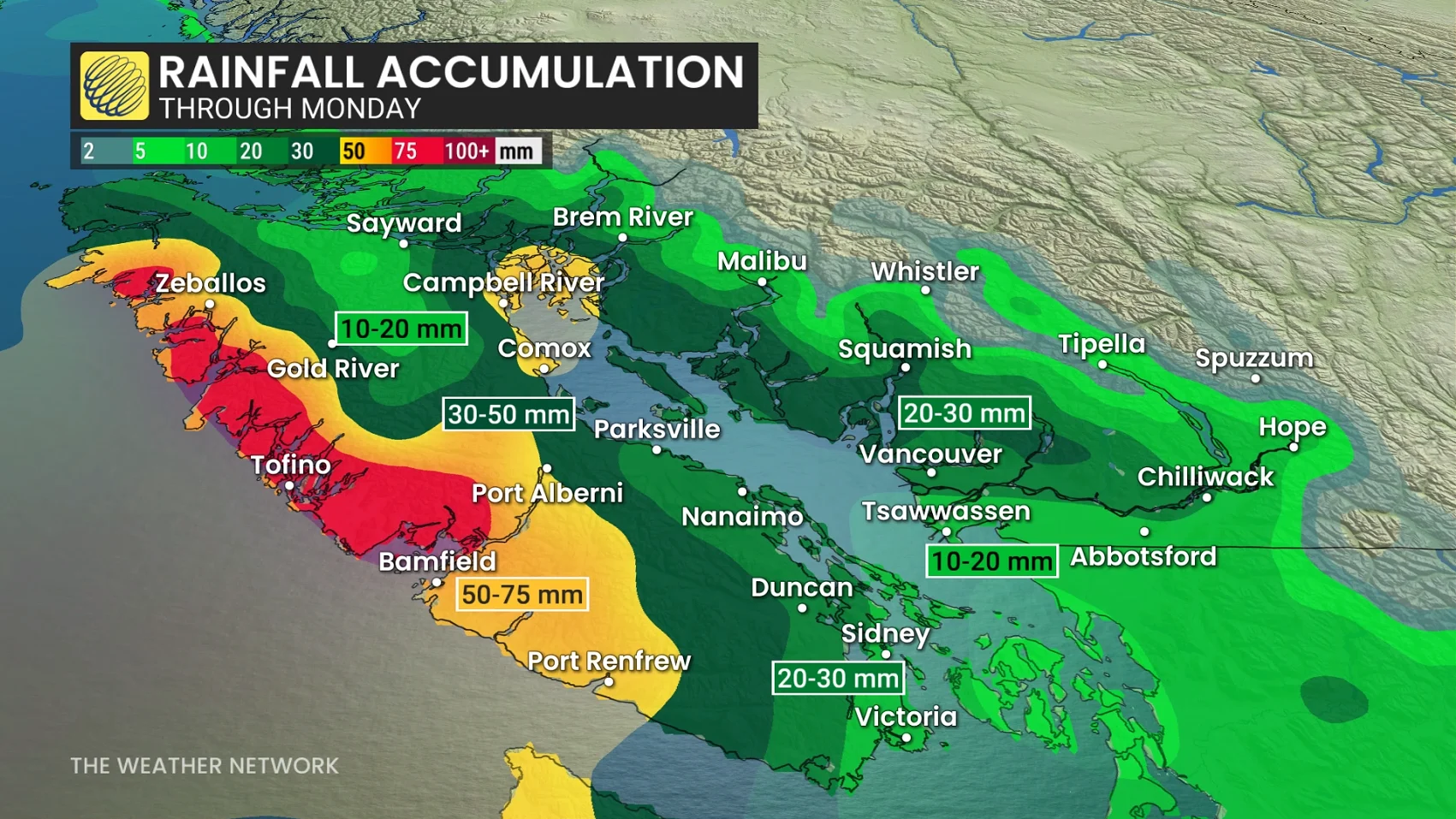
The North Shore Mountains will remain in snow until Sunday evening when they transition into rainfall. Light showers will continue across the Lower Mainland and the Fraser Valley into Monday.
The new snowfall leaves the snow layer rather unstable, promoting a high or considerable risk for avalanches. Additionally, with how cold it has been through this last week, the snow will further struggle to bond between the snow layer--adding to the risk.
On Thursday, the coldest temperatures of the season were reported for the Lower Mainland and Vancouver Island, with Vancouver dropping to 3.4°C.
Interestingly enough, Vancouver has not recorded temperature below 0°C so far this winter season as a daytime high.
The last time Vancouver did not report a daytime high below 0°C during a winter season was the winter of 2014-15 on Nov. 30, with a daytime high of -0.2°C. But beyond that date, it did not record a anything at or below 0 for a daytime high.
Beyond, southern B.C. will become colder late week with changeable temperatures into early March. But the region will continue to escape the frigid conditions.
Stay tuned to The Weather Network for the latest forecast updates for B.C.