Mark your calendars! The Blood Worm Moon will soon shine across Canada

Set a reminder — in your phone, on your calendar, whatever it takes — so that you don't miss out on the next Total Lunar Eclipse!
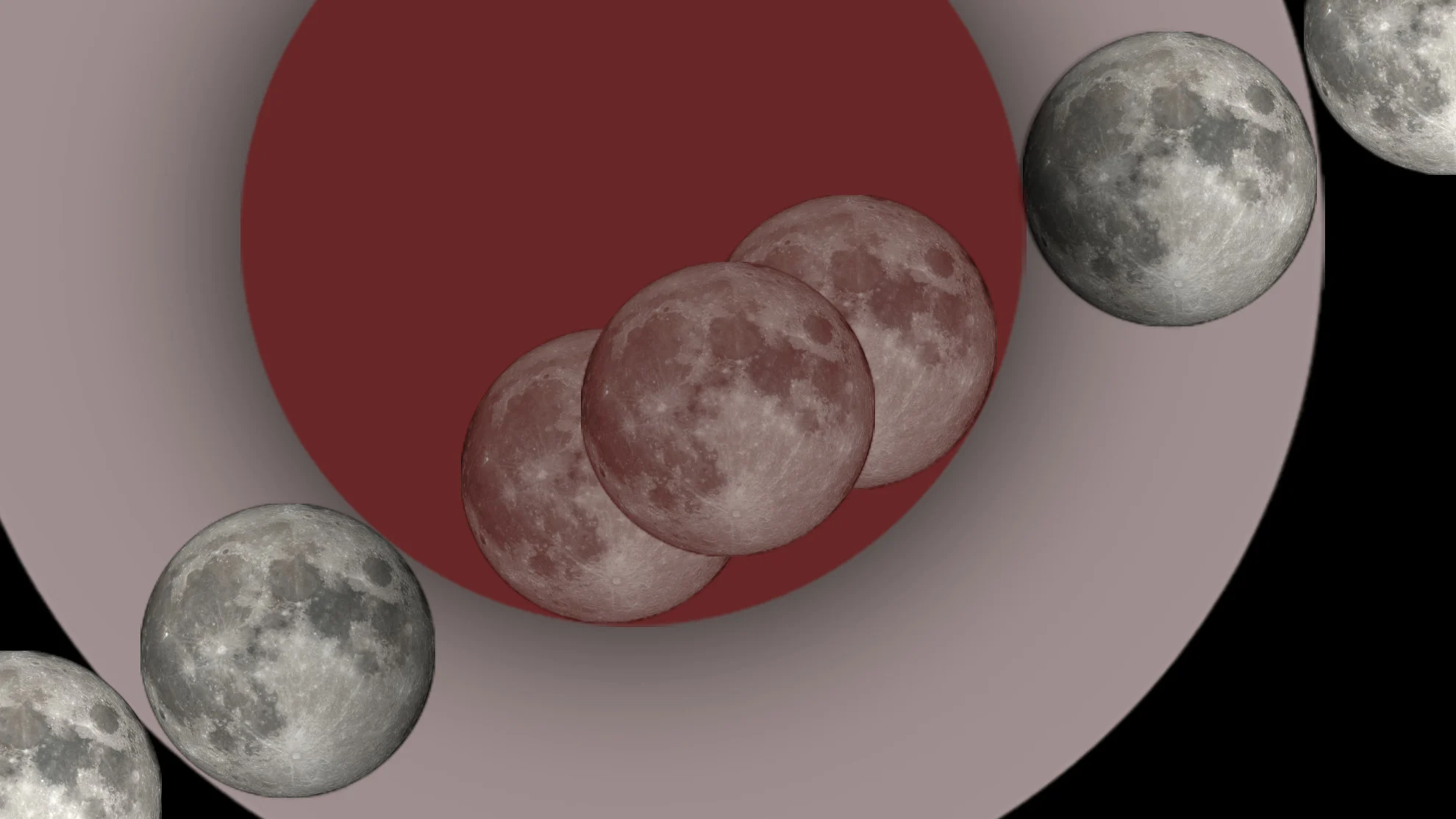
Early in the morning on March 3, 2026, the Full Moon will align perfectly with the Sun and Earth, to pass directly through the deepest part of Earth's shadow.
For up to an hour or more (depending on where you are watching from), all of Earth's sunrises and sunsets will turn the Full Moon from grey to dusky red as we witness a total lunar eclipse.
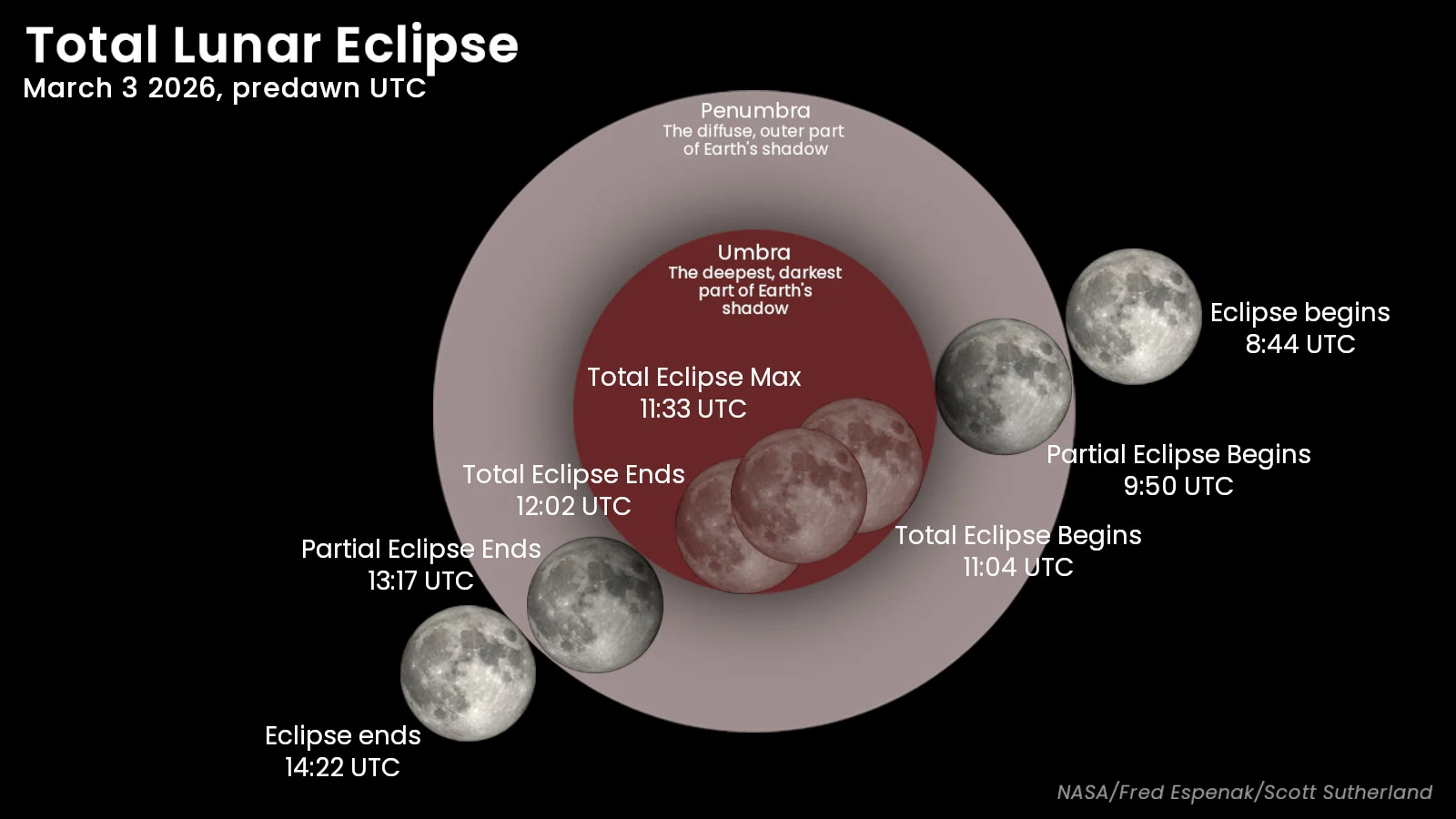
The path of the Full Moon through Earth's shadow on the morning of Tuesday, March 3, 2026. All times are in Universal Coordinated Time (UTC). (Scott Sutherland/NASA SVS)
During this rare celestial alignment, we can all be outside, looking up at the exact same moment as the event unfolds in the sky above. This is in contrast to other astronomical events, such as meteor showers, which become visible in the sky at the same relative time of the night, due to the rotation of the Earth relative to the stars.
That means observers will need to adjust the timing of the eclipse to account for their specific timezone.

READ MORE: Eyes to the winter sky for meteor showers, a supermoon and a total lunar eclipse
For those in Atlantic Canada, this will mean going out to watch before dawn, just before the Moon sets. Farther west from there, the eclipse begins earlier, by the clock. However, it also ends later, as the event starts while the Moon is higher above the horizon, thus giving more time to see it play out.
In Atlantic Canada, only the initial penumbral phase, and some portion of the partial phase, may be visible before the Moon sets.
From Quebec to British Columbia, though, everyone could see at least the start of the 'Blood Moon' total phase of the eclipse before moonset.
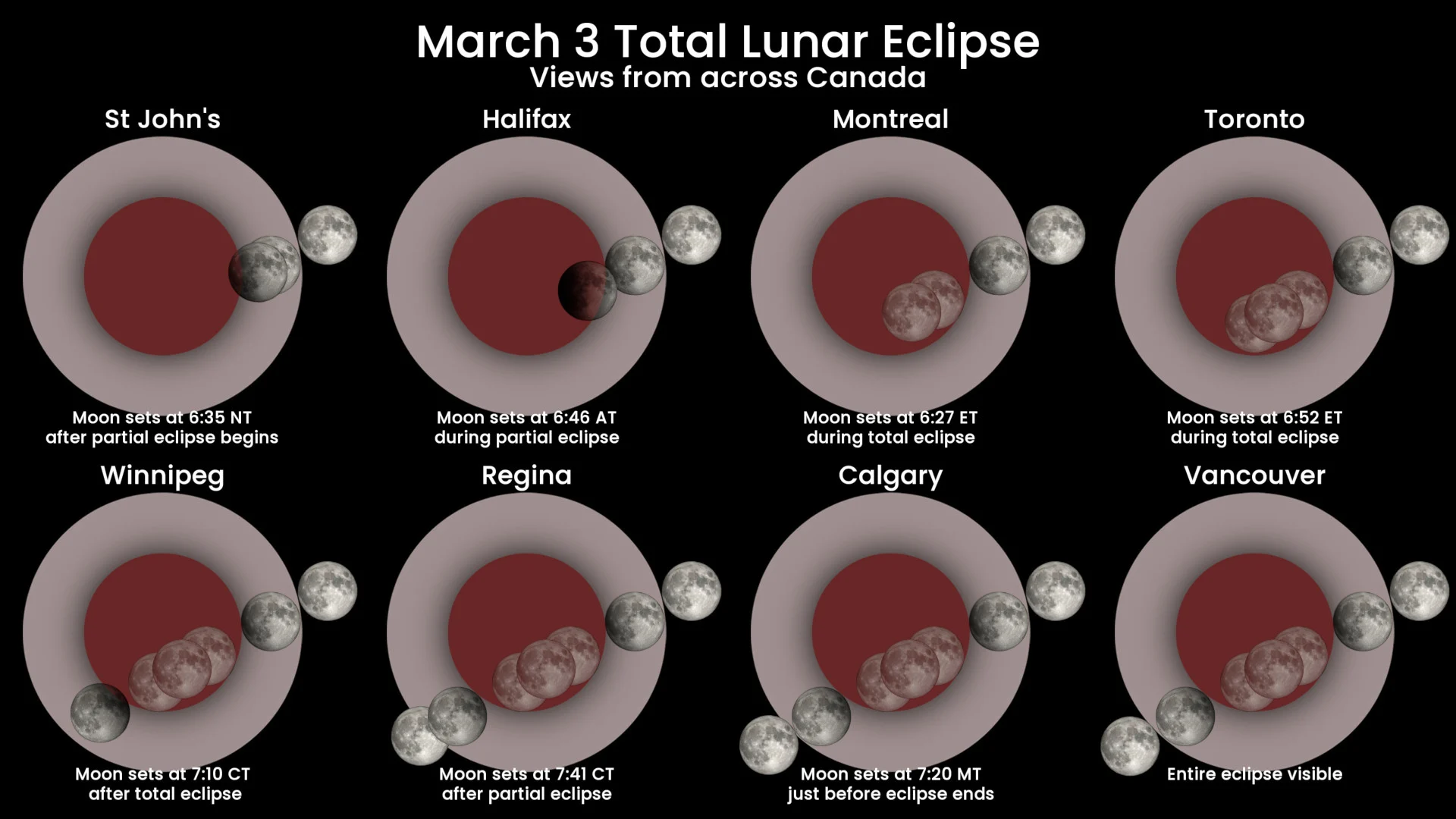
This graphical representation of the eclipse shows how much of the eclipse each location will see, based on the timing. The time the Moon sets during the eclipse is shown for all locations except Vancouver, where it slips below the horizon just after the eclipse ends. (Scott Sutherland/NASA SVS)
DON'T MISS: January sees Jupiter and Saturn shine amoung the bright winter constellations
What is a "Blood Worm Moon"?
Despite the name, this event has nothing to do with blood worms.
"Blood Worm Moon" is actually the combination of two other names — Worm Moon and Blood Moon.
Worm Moon is the popular name for the first Full Moon that occurs in the month of March.
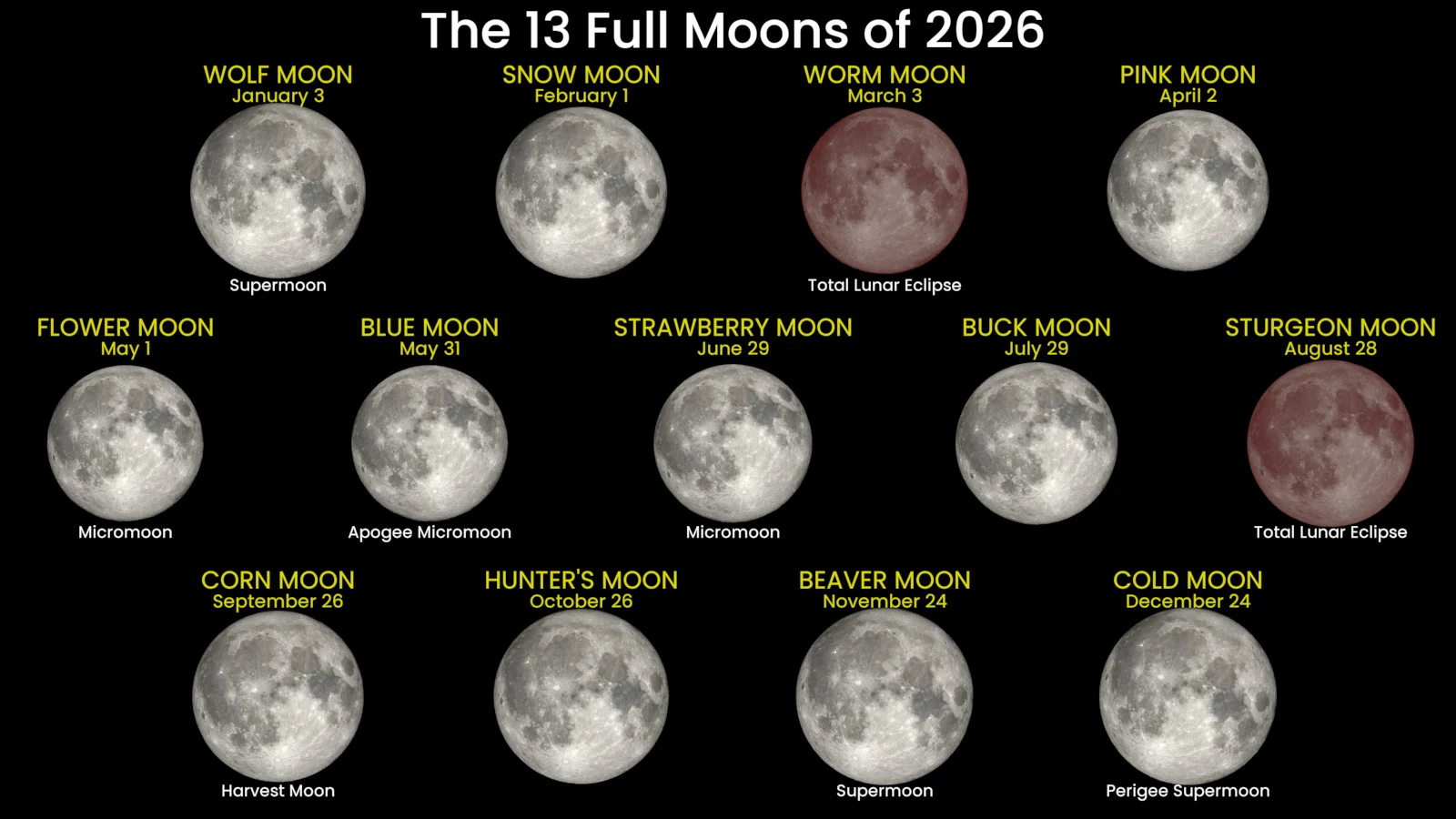
It was named this by the Indigenous peoples of what is now the U.S. Northeast and the Great Lakes, due to the beetle larvae that would begin to emerge from under winter cover during that time of year.
A Blood Moon is another name for a total lunar eclipse, due to the dusky red colour the Moon turns as it passes through the dark core of Earth's shadow.
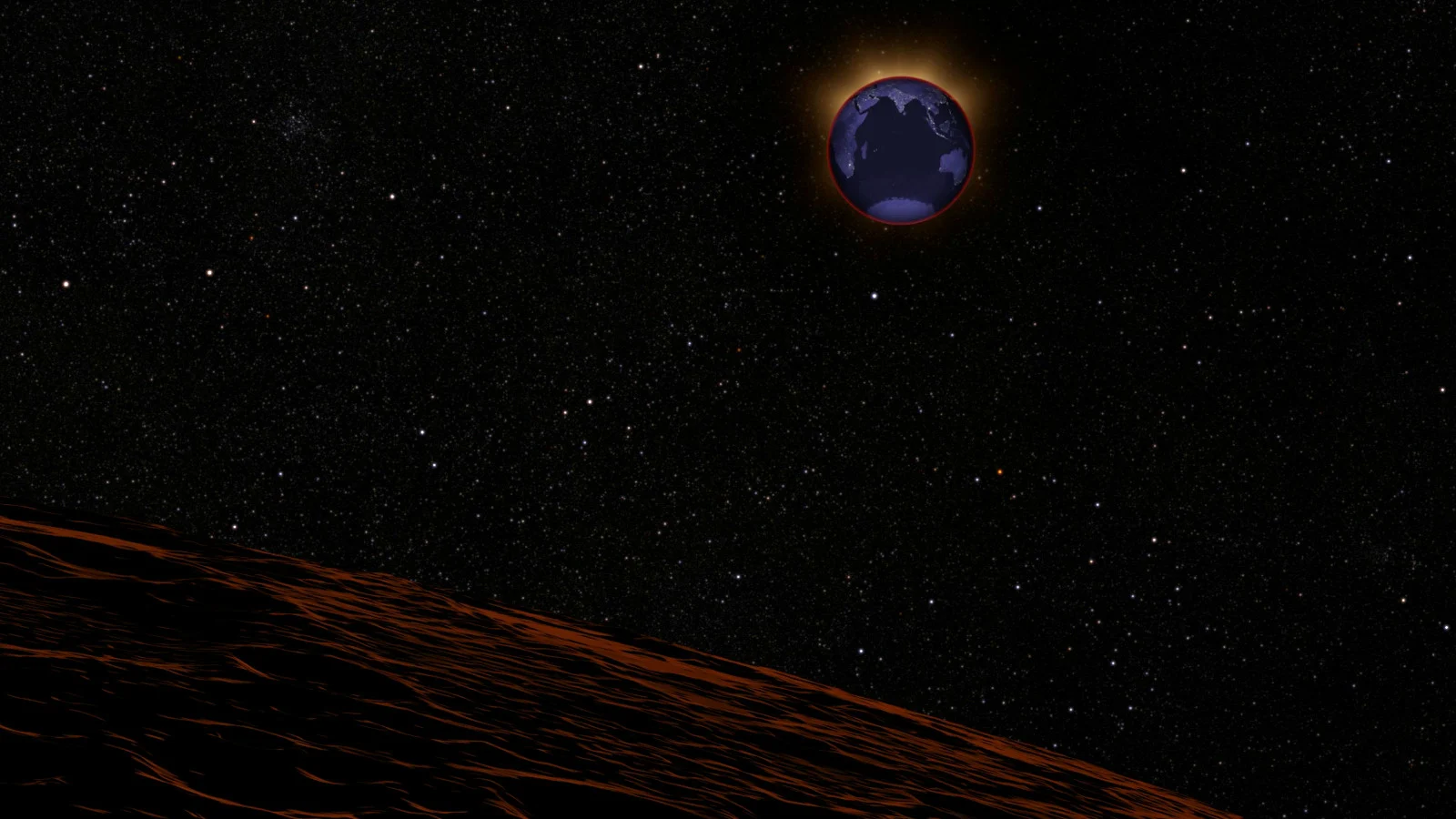
The view from lunar orbit of a total lunar eclipse, as the Earth blocks all sunlight from reaching the Moon's surface, except that which filters through the atmosphere, leaving only orange and red light to fall onto the lunar surface. (NASA SVS)
This colour is the result of filtered sunlight being refracted through Earth's atmosphere and into the centre of the planet's shadow. It is literally all of Earth's sunrises and sunsets at the time, shining directly onto the lunar surface.
Will the skies cooperate?
Regardless of where across Canada we are, whether we can see this eclipse or not will depend greatly on the weather conditions at the time.
Now, a month and a half out from the date of the event, no forecast is going to accurately capture what will be going on in the sky on the morning of March 3.
Unfortunately, looking back into history, that time of year is not known for its predominantly clear skies. In fact, it has been mainly cloudy through overcast between 50 and 70 per cent of the time.
In the case that the weather does not cooperate, we may still get to see this lunar eclipse, but we will need to turn to the internet for help.
Watch below: Griffith Observatory's March 2025 1-minute Total Lunar Eclipse timelapse
As shown in the embedded video, above, Griffith Observatory, in Los Angeles, California, is well-known for its eclipse livestreams. While there is no link, yet, for a March 3 stream, they may host one for this event.
Check back for updates.