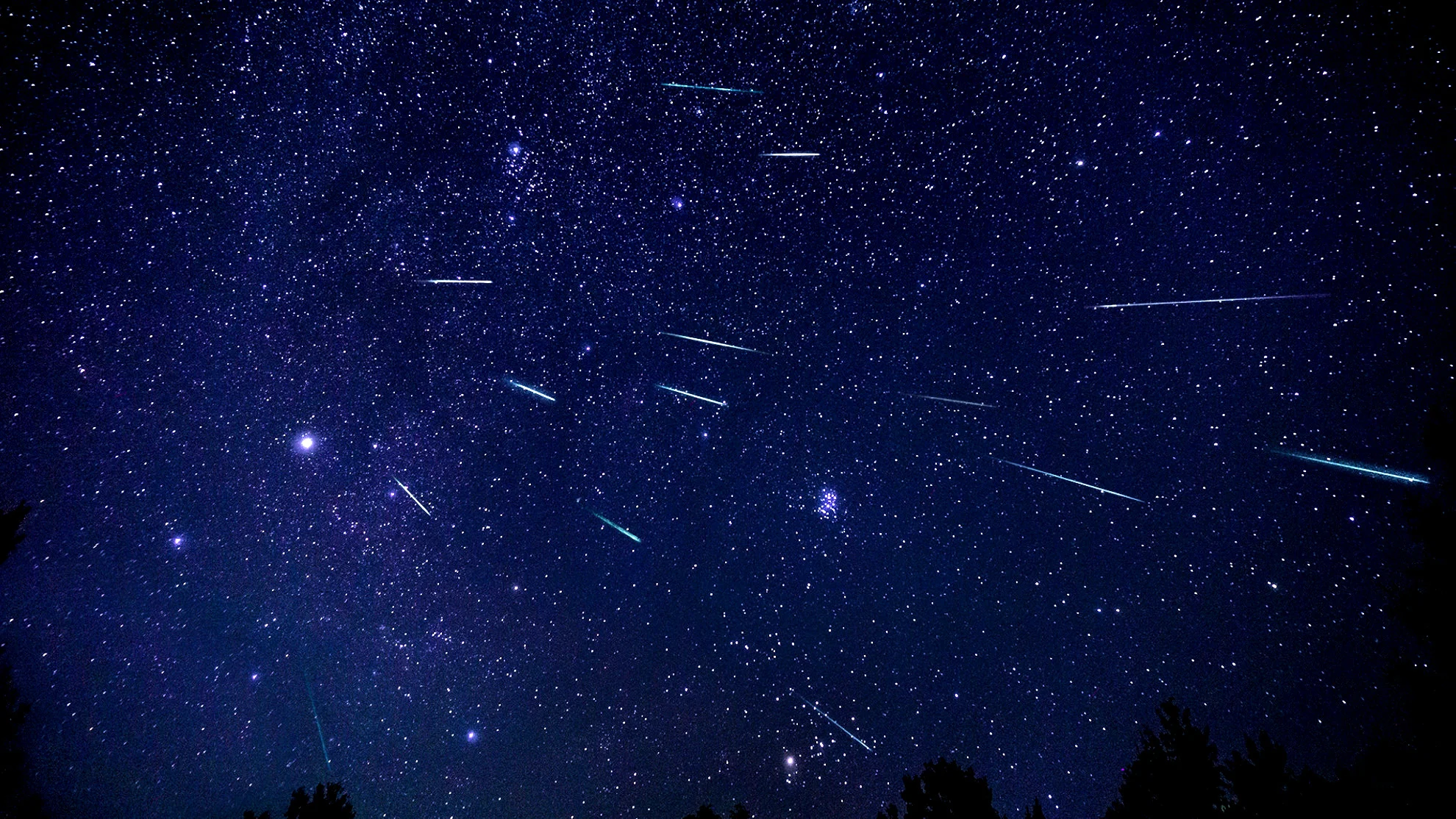
Planets shine and two meteor showers crisscross the night sky in July 2026

Look to the west to catch Venus and Jupiter shining bright, with Saturn and Mars visible in the east for early risers, and keep an eye out for meteors throughout the latter half of the month!
Keep your eyes to the night skies throughout July, to spot planets on both horizons, two meteor showers crisscrossing the constellations, and a bright Full Moon to finish out the month.
Here are the astronomical events for July 2026:
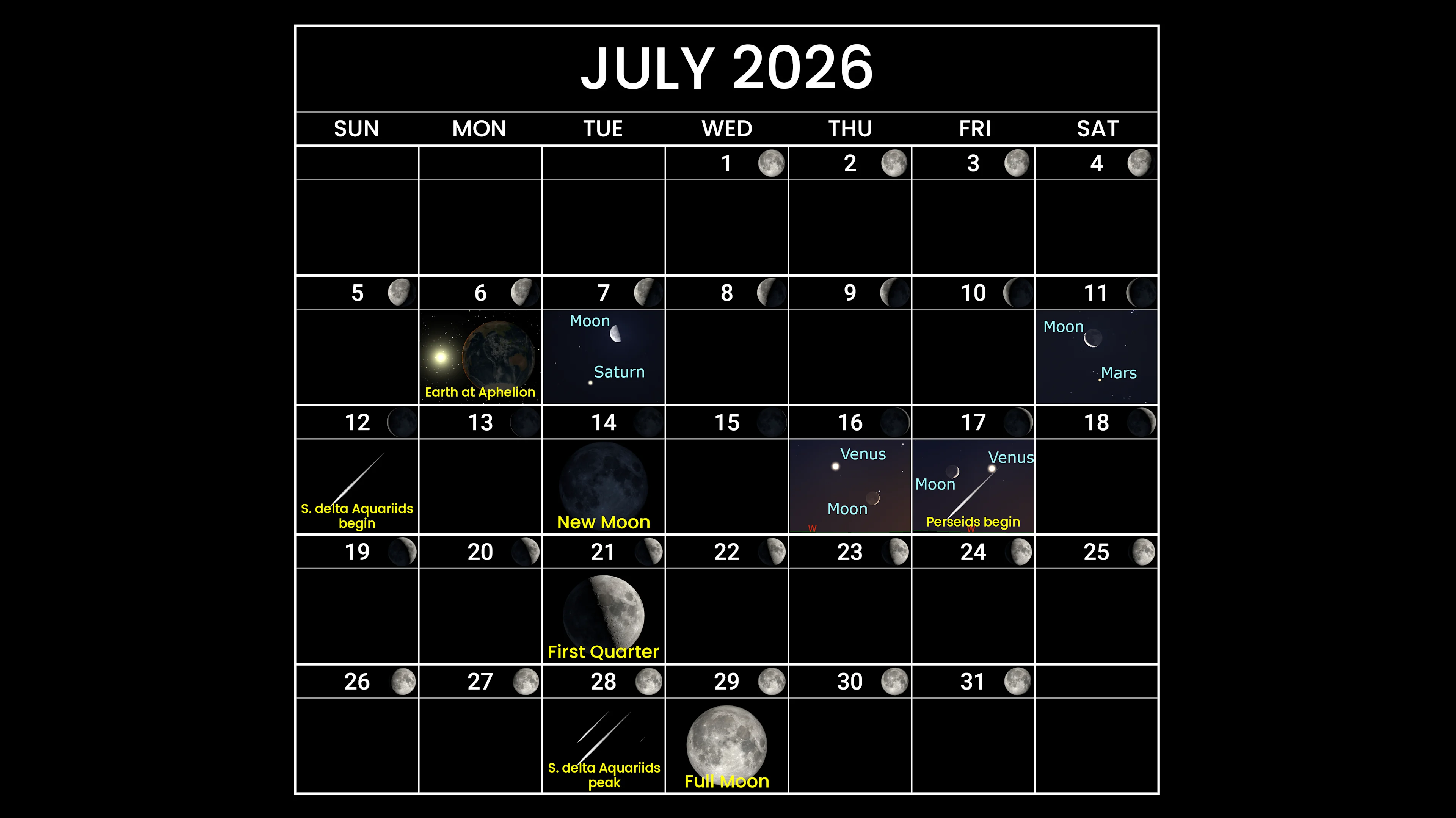
(Scott Sutherland/NASA's Scientific Visualization Studio/Stellarium/Celestia)
Click here for a zoomable version of the above calendar.
Visit our Complete Guide to Summer 2026 for an in-depth look at the Spring Seasonal Forecast, tips to plan for it, and much more!
The Moon
With the first Full Moon of summer crossing the night sky in the final days of June, a Waxing Gibbous Moon will greet us each night, as it rises later and later, until the Last Quarter Moon rises at midnight on the night of July 7.
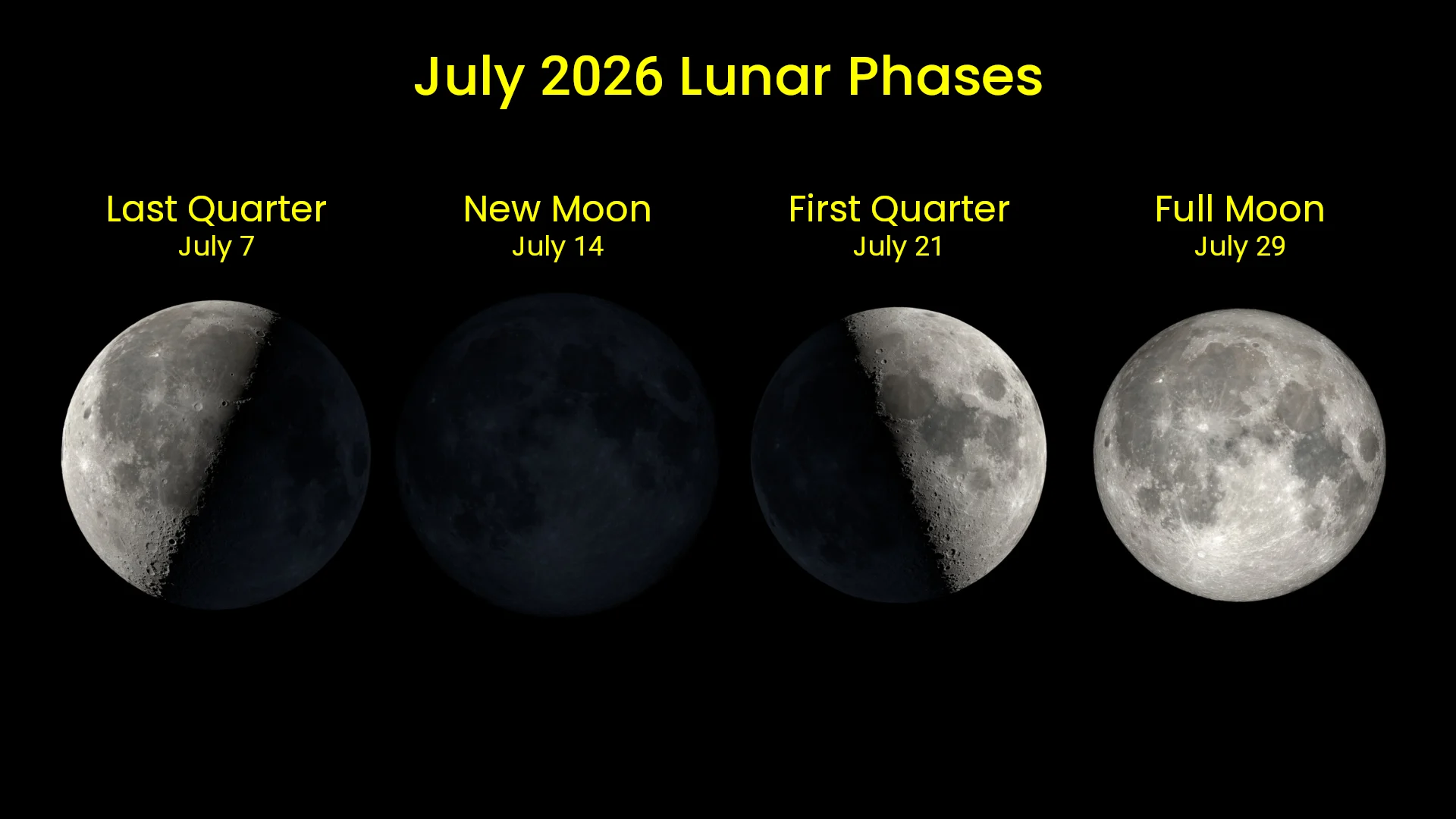
The primary lunar phases for July 2026. (NASA's Scientific Visualization Studio/Scott Sutherland)
From there, a Waning Crescent Moon will be seen in the hours between midnight and dawn, becoming thinner and thinner, and rising closer to sunrise, each morning, from the 8th to the 13th.
The New Moon is on the 14th, making that the best night of the month to go out stargazing.
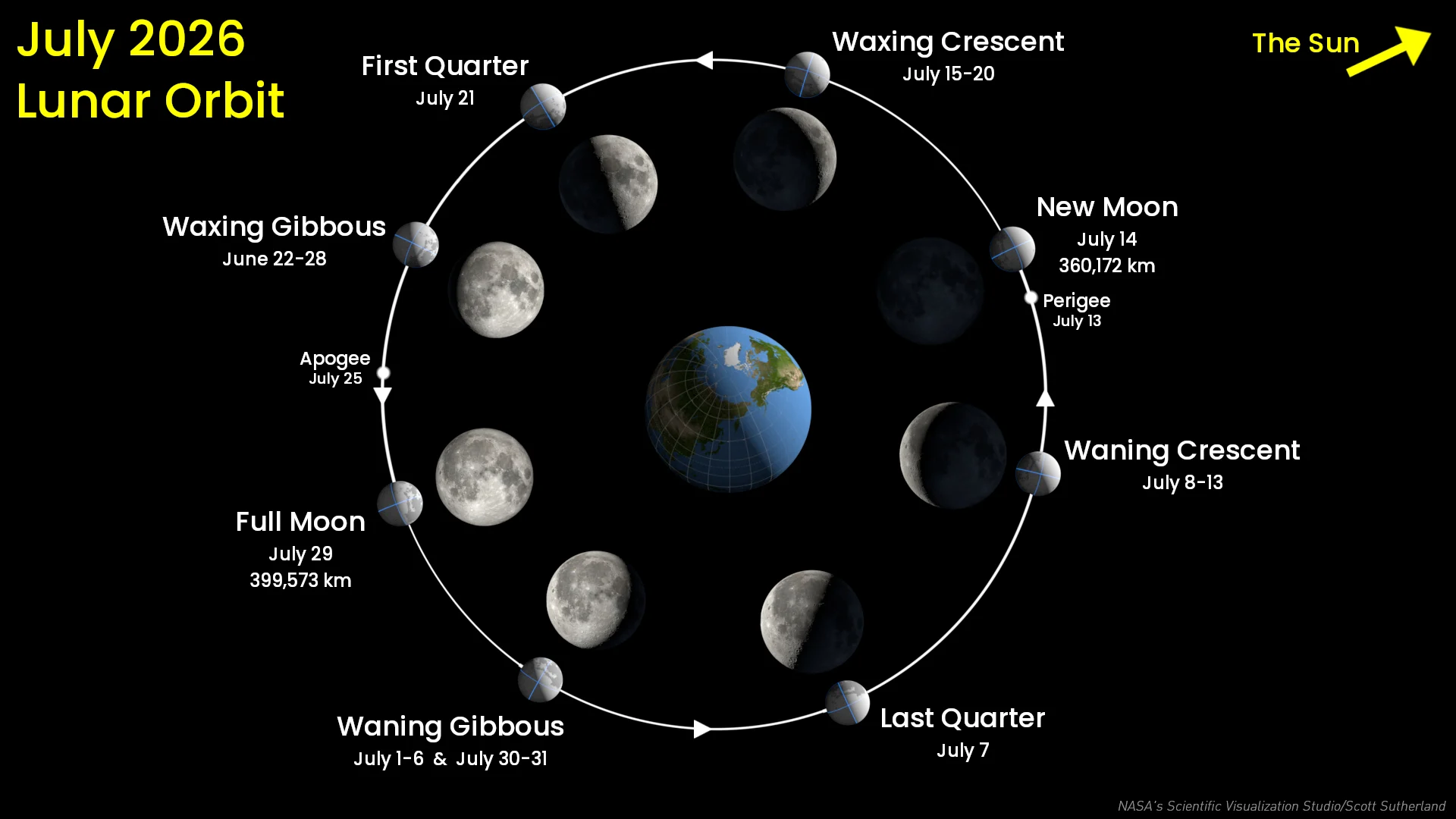
The Moon's orbit in July of 2026. (NASA's Scientific Visualization Studio/Scott Sutherland)
DON'T MISS: NASA is now planning a permanent Moon Base at the lunar south pole
A Waxing Crescent Moon will be visible between the 15th and the 20th. You may spot it in the afternoon sky, if you're looking in the right place, but it will be especially noticeable just after sunset, as it becomes wider and wider each night, until the First Quarter Moon on the 21st.
Then, we'll have a Waxing Gibbous Moon from the 22nd through the 28th, and the Full Buck Moon on the night of the 28th to 29th.
The Planets
For those who have been keeping track of the planetary lineup in the western sky after sunset, Mercury will vanish in the glare of the Sun by the start of this month. However, we can still see Jupiter and Venus, just after sunset, to start off the month of July.
Then, each night, Jupiter will be closer to the horizon by the time it emerges from twilight. We should be able to see it for at least a week or so, before it follows Mercury into the Sun's glare, disappearing from our sky until the pair reemerges before dawn in August.
Meanwhile Venus will also track closer to the horizon each evening. However, it will do so at a much slower pace, while shifting farther to the southwest each night, as well.
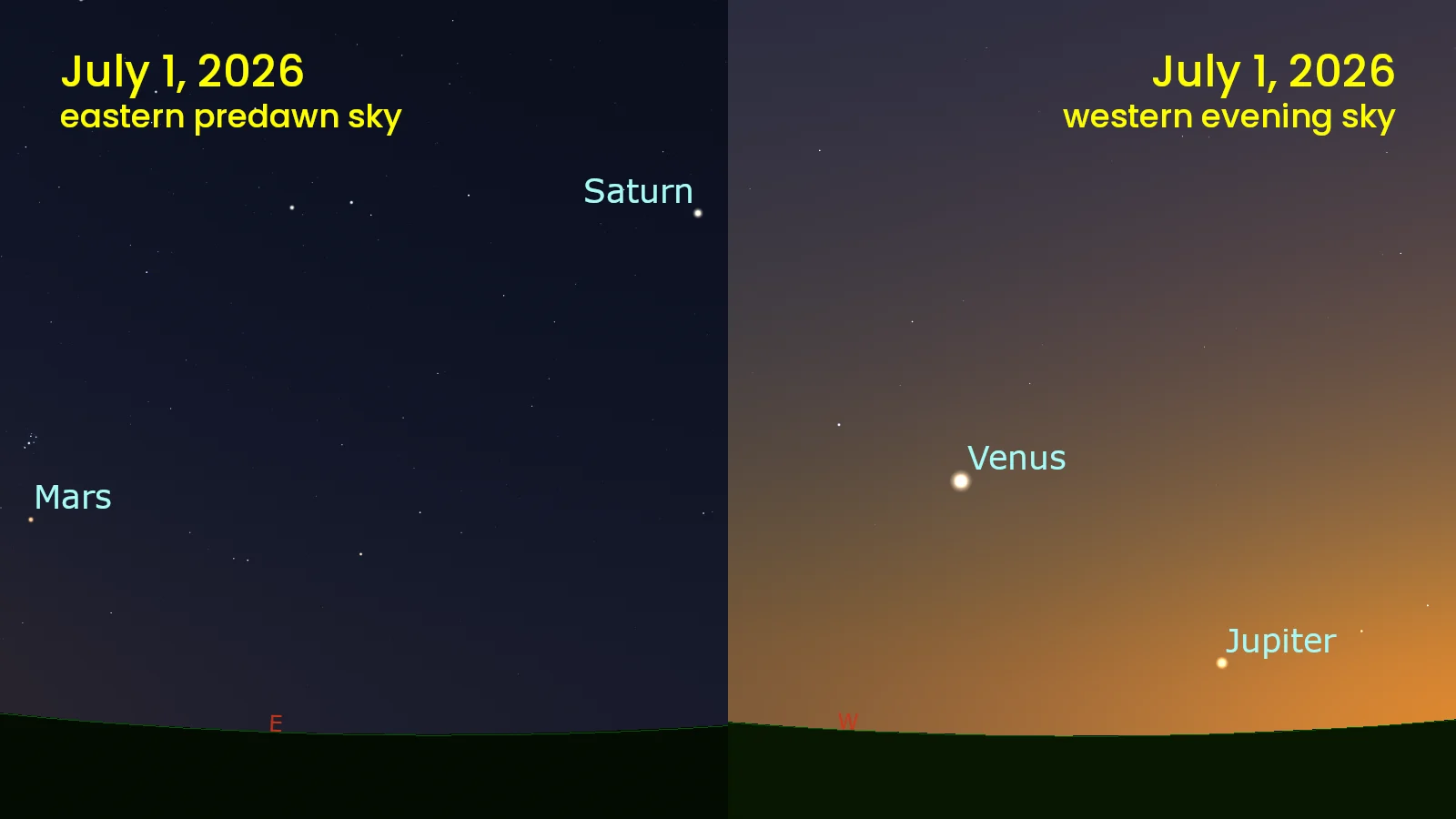
The 'starting positions' of the planets for the month of July 2026. (Stellarium/Scott Sutherland)
DON'T MISS: Two eclipses and a meteor shower are the 'don't miss' sky events for Summer 2026
In the eastern, predawn sky, Saturn and Mars will be visible each morning.
Saturn will lead the way, rising a little after 1 a.m. to start, and then cresting the horizon earlier and earlier each night, until we can spot it before midnight during the last week of the month.
Mars will rise around 3:30 a.m., local time, at the beginning of the month, and then earlier and earlier each morning, until it rises a little after 2:30 a.m. by the end of July.
Look for the Last Quarter Moon to appear near Saturn on the night of July 7, with the Waning Crescent Moon near Mars on the morning of the 11th. We can also see the Waxing Crescent Moon pass by Venus on the nights of July 16 and 17.
Earth at Aphelion
As Earth travels around the Sun, it does not trace out a perfect circle. It's close. However, our planet's orbit is slightly elliptical. That means we don't orbit around the exact centre of the Sun, but instead a point inside the Sun that is slightly offset from centre.
As a result, each year, in early January, we reach our closest distance to the Sun, known as perihelion. Then, in early July, we swing through our farthest distance from the Sun, which is called aphelion.
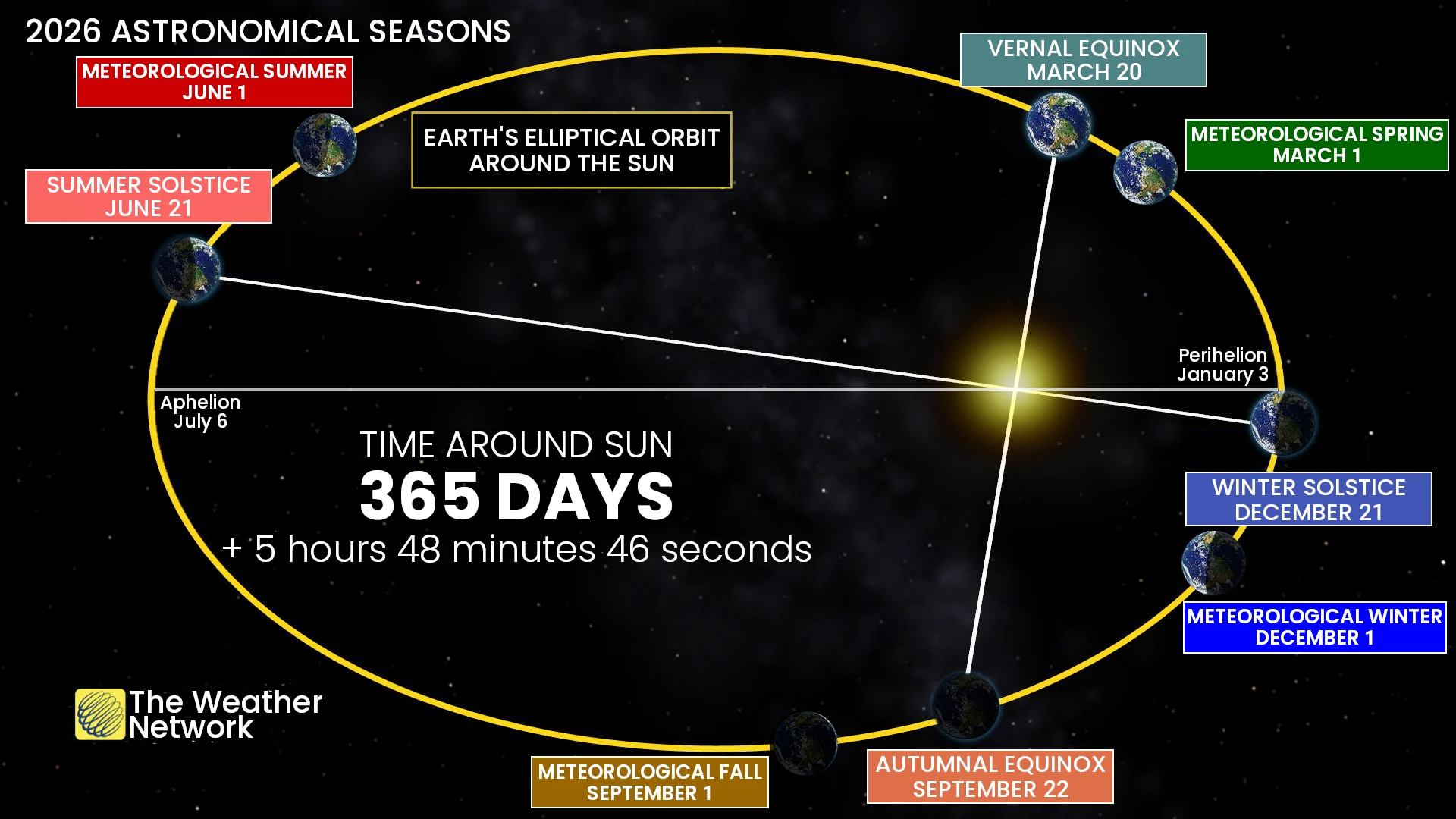
Earth's elliptical orbit is highly exaggerated in this diagram, for emphasis.
FROM SPACE: Alien comet 3I/ATLAS may be the oldest thing ever seen in our solar system
Due to the influence of the Moon's gravity (mainly), the exact day and time of perihelion and aphelion changes from year to year. However, perihelion always happens sometime between the 2nd and 5th of January 2, and aphelion occurs between the 3rd and 7th of July.
Earth's distance from the Sun at those two points also varies from year to year. Perihelion distance ranges between 147,083,346 km (closest closest) and 147,112,452 km (farthest closest), while aphelion distance is between 152,083,061 km (closest farthest) and 152,112,126 km (farthest farthest).
For 2026, aphelion occurs on July 6, at 1:31 p.m. EDT, and we will be roughly 152,087,777 km away from the Sun at that time.
Two meteor showers
During the month of July, two separate meteor showers begin — the Southern delta Aquariids on the 12th, and the Perseids on the 17th.
The Southern delta Aquariids are a yearly meteor shower that occurs in July and August, originating from a point in the sky within the constellation Aquarius.
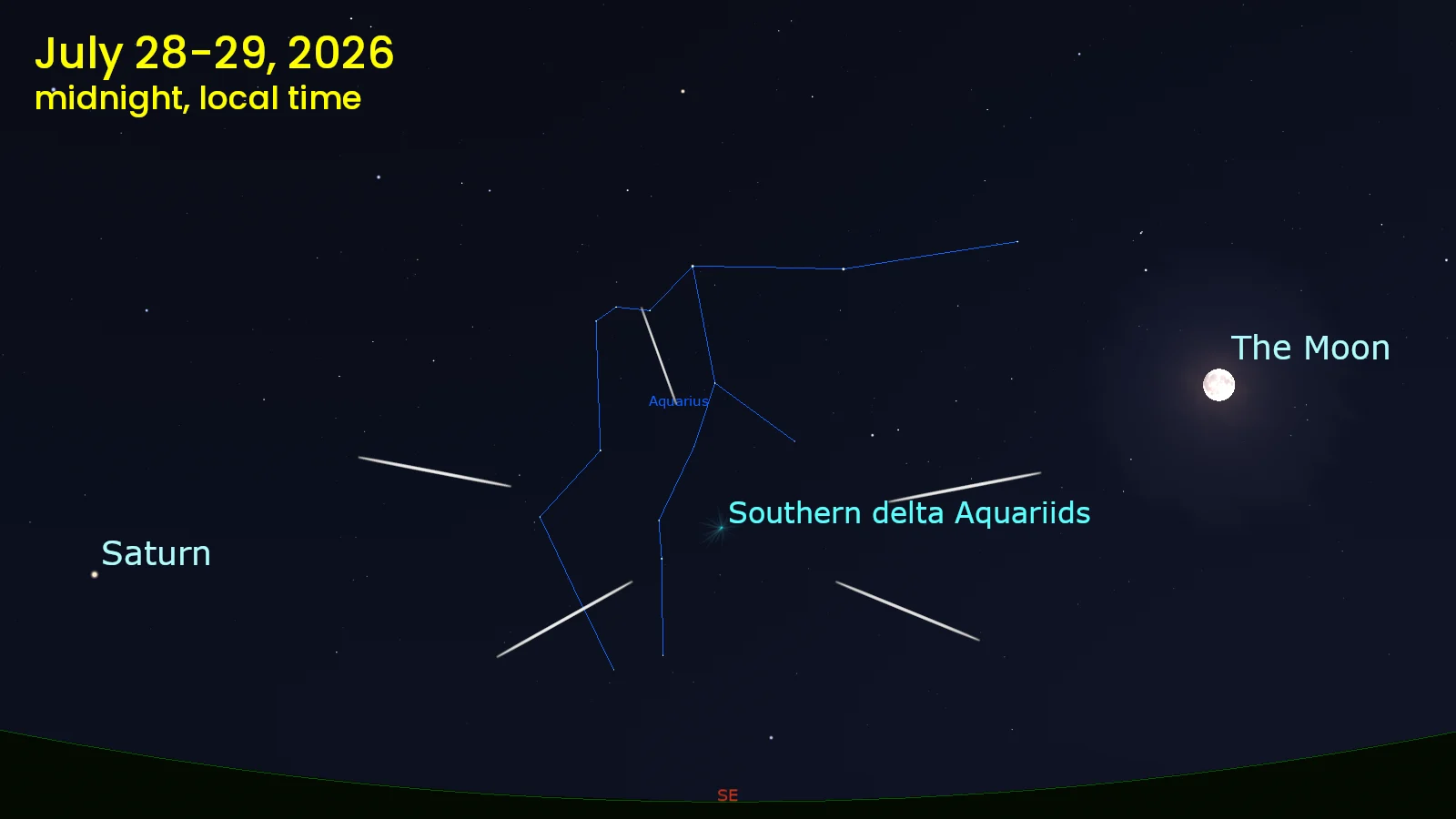
The radiant of the Southern delta Aquariids meteor shower during its peak on the night of July 28-29, 2026. (Stellarium/Scott Sutherland)
This isn't a very strong shower. During the first week of the shower, from July 12-16, we may catch a few meteors streaking out of the southern sky.
Then, a few more may crisscross with them from the northeast, as the Perseid meteor shower starts on the 17th.
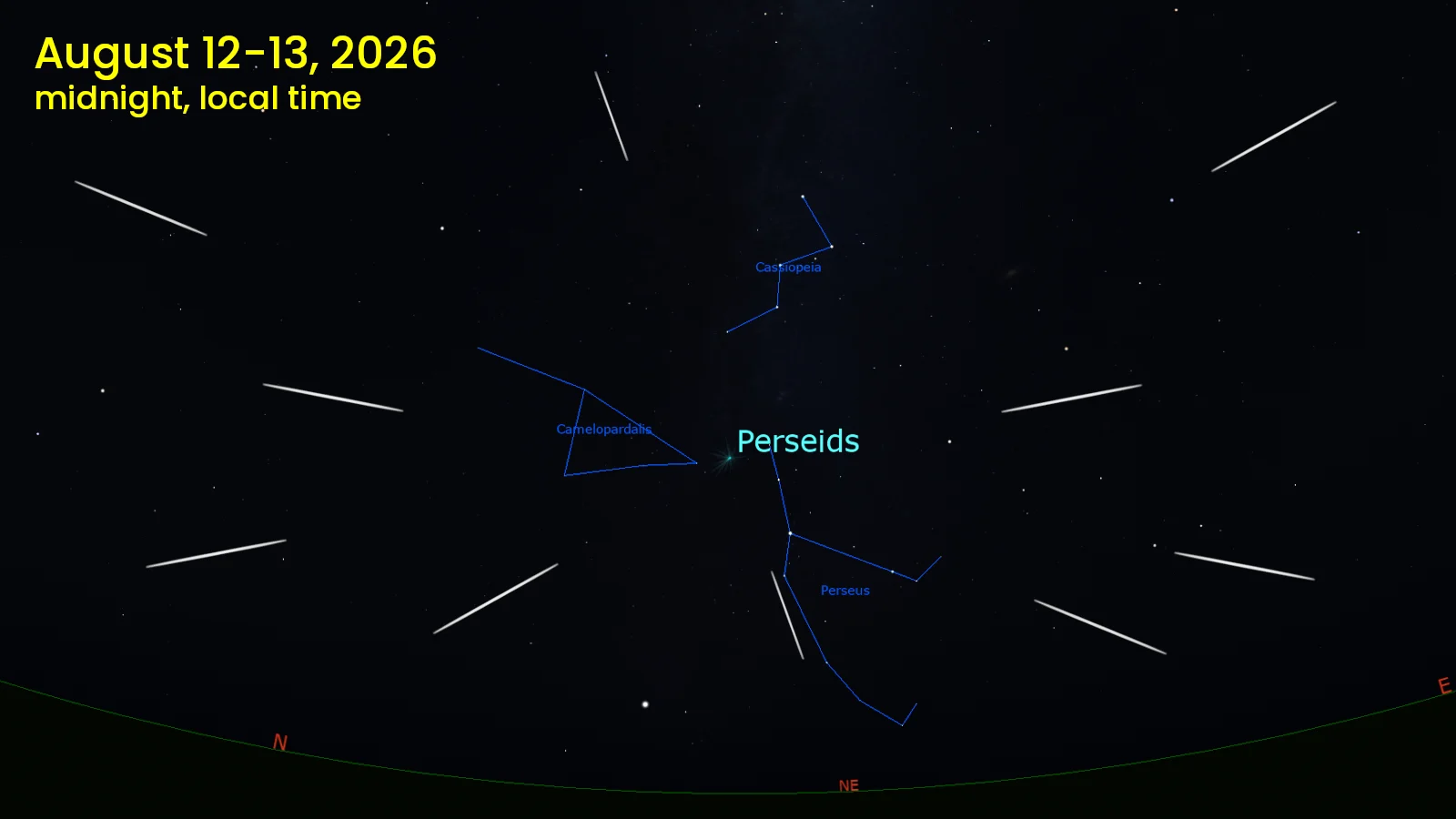
The radiant of the Perseid meteor shower during its peak on the night of August 12-13, 2026. (Stellarium/Scott Sutherland)
Meteors from both these showers will cross paths, from mid-July through until the second half of August.
However, with the Moon growing brighter through late July, leading up to the Full Moon on the night of the 28th-29th — the exact same night the Southern delta Aquariids peak — we may not see very many meteors through the last week or so of the month.
Hopefully, the Perseids will deliver a few well-timed fireballs, to liven up the night sky.
READ MORE: Loud boom near Boston may have been an exploding meteor
The Galactic Core
Summer is an excellent time of the year to spot the bright core of our home galaxy!
"This is the time of year when the Milky Way is visible as a faint band of hazy light arching across the sky all night," says NASA. "You just need to be under dark skies away from bright city lights to see it."
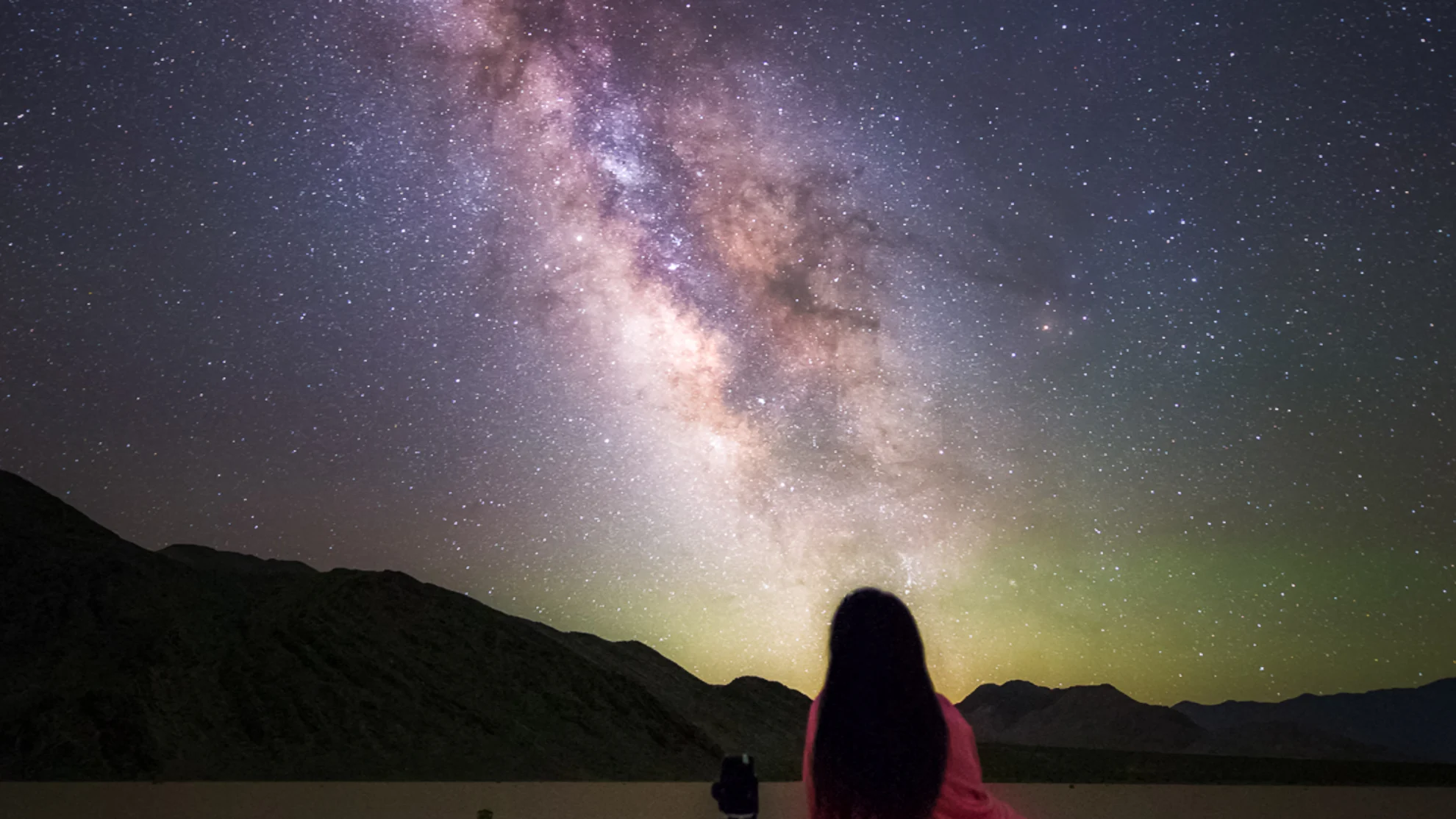
The central core of our Milky Way galaxy is a mixture of bright stars and dark bands of dust in this photo captured from one of the best dark-sky locations on Earth. (Kerry-Ann Lecky Hepburn, used with permission)
DON'T MISS: How to get the most out of meteor showers, auroras, and other night sky events
"What you're looking at is the bright central core of our home galaxy, seen edge-on, from our position within the galaxy's disk," NASA explained.
The galactic core is visible in our skies throughout much of summer. You don't need to travel to the Atacama Desert in northern Chile to experience it, though. A trip out of the city, to get out from under urban light pollution, and a bit of time to let your eyes adjust to the dark, might be all you need. Also, look up your local chapter of the Royal Astronomical Society of Canada (RASC), and check out any star parties they have on their calendar of events.
With files from The Weather Network.