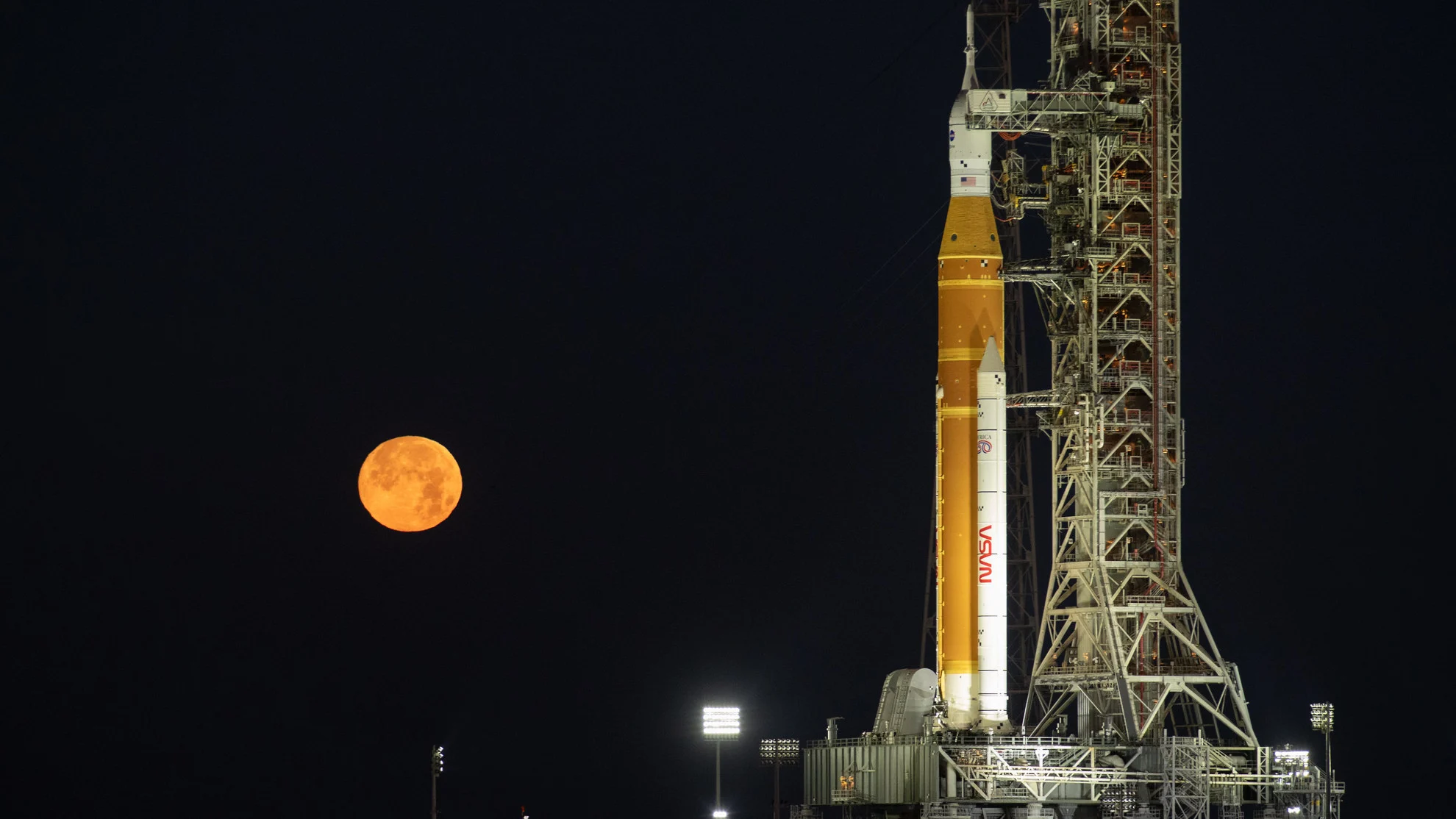
Artemis 2 now on track for early March liftoff after successful fuel test

Artemis 2 may launch as early as March 6, putting the four-person crew on the path to break a 55-year-old space record.
After NASA's successful fuel test of the Space Launch System, the Artemis 2 crew is once again entering quarantine, putting the mission on track for liftoff as early as March 6.
For much of the day on Thursday, February 19, ground crews at NASA's Kennedy Space Center conducted a new 'wet dress rehearsal' of the Artemis 2 rocket. This was the second such preflight test, designed to run the booster rocket and spacecraft through every stage of the launch procedures, stopping short before they reached engine ignition for liftoff. This included filling the rocket's fuel tanks with over 2.6 million litres of liquid oxygen and liquid hydrogen.
During their previous attempt, on February 2, this is where they encountered problems, as they found hydrogen leaking from the fuel system that exceeded safety regulations for the mission.
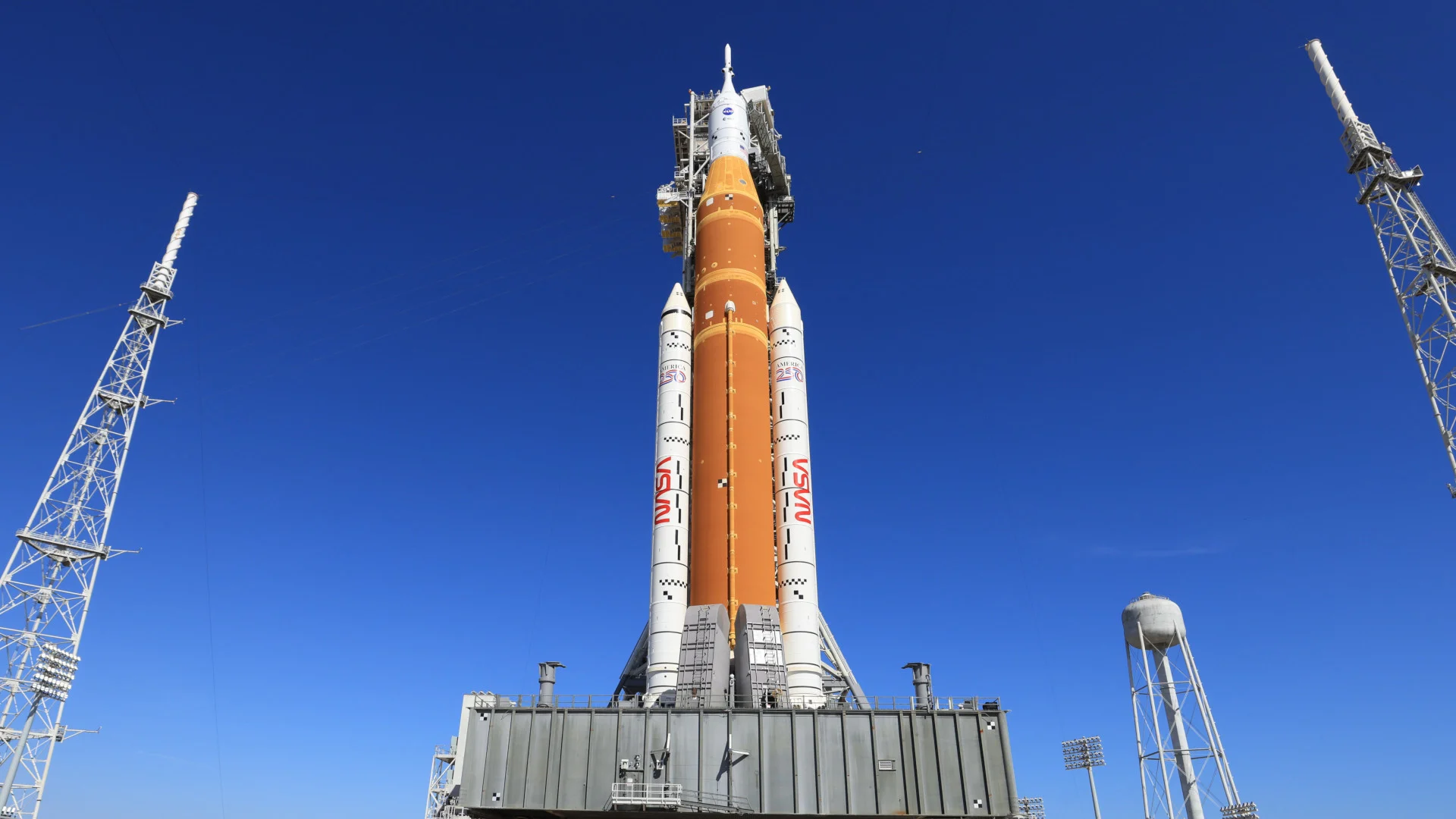
The Artemis 2 Space Launch System stands at Kennedy Space Center's Launch Complex 39B on February 10, 2026. (NASA/Ben Smegelsky)
During Thursday's rehearsal, which began at 3 a.m. EST and concluded at 10:16 p.m. EST, ground crews at Launch Complex 39B encountered the same loss of ground communication issues that had occurred previously. However, they apparently did not see any significant hydrogen fuel leaks during the 18+ hour test.
"Hydrogen gas concentrations remained under allowable limits, giving engineers confidence in new seals installed in an interface used to route fuel to the rocket," NASA stated in the latest mission update.
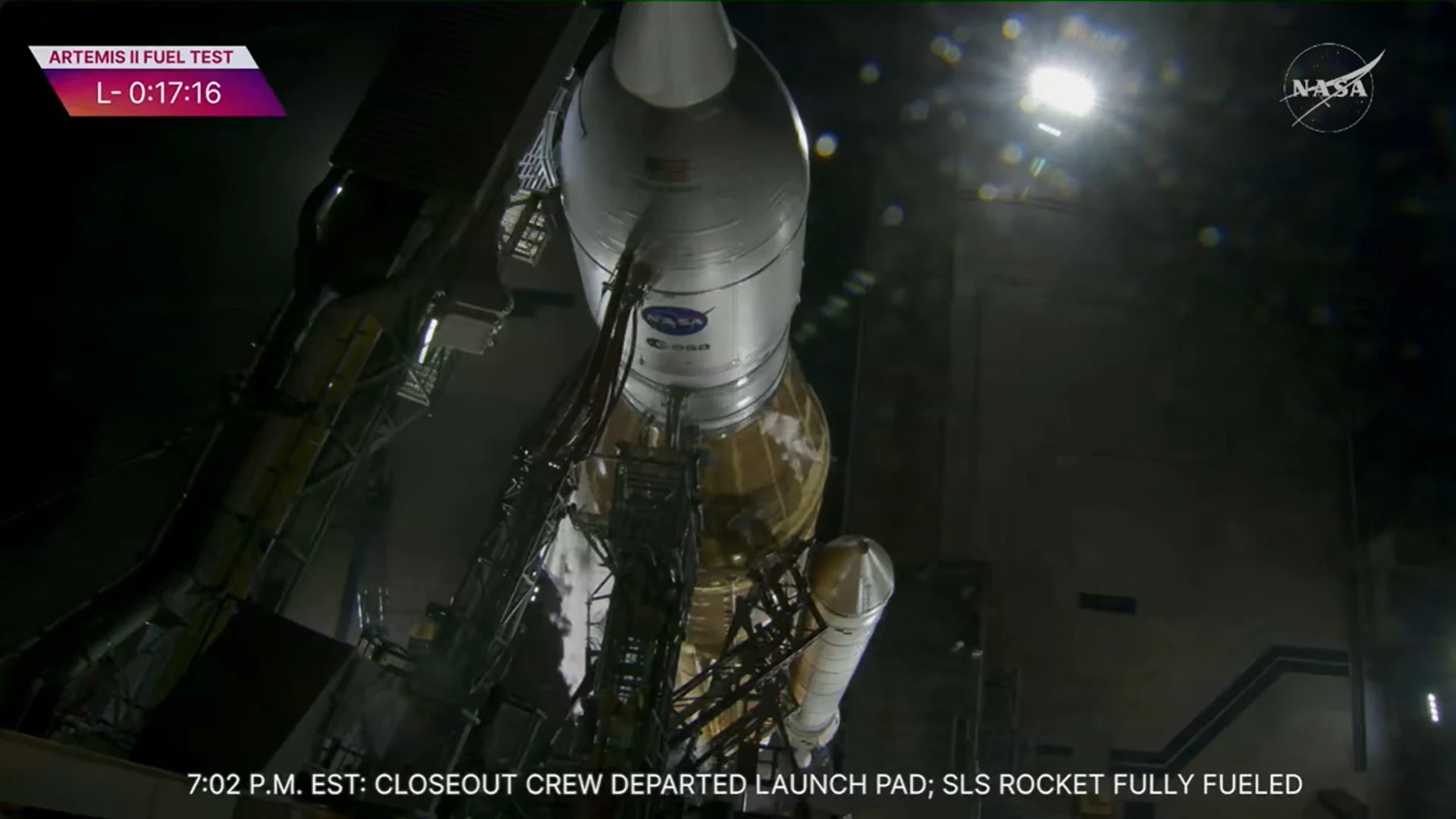
A screenshot from the Artemis 2 Wet Dress Rehearsal on Feb. 19, 2026 shows the rocket view from the top of the launch tower, at countdown L-17:16. (NASA TV)
READ MORE: Artemis 2 may launch soon, shattering a 55-year-old spaceflight record
While no official launch date has yet been set, with this successful test, the Artemis 2 crew — Reid Wiseman, Victor Glover, and Christina Koch of NASA, and Jeremy Hansen from the Canadian Space Agency — are entering quarantine late on Friday, February 20.
This marks exactly two weeks from the first potential launch date in March. Thus, if there are no other delays or technical issues, the next launch window should open at 8:29 p.m. EST, on Friday, March 6.
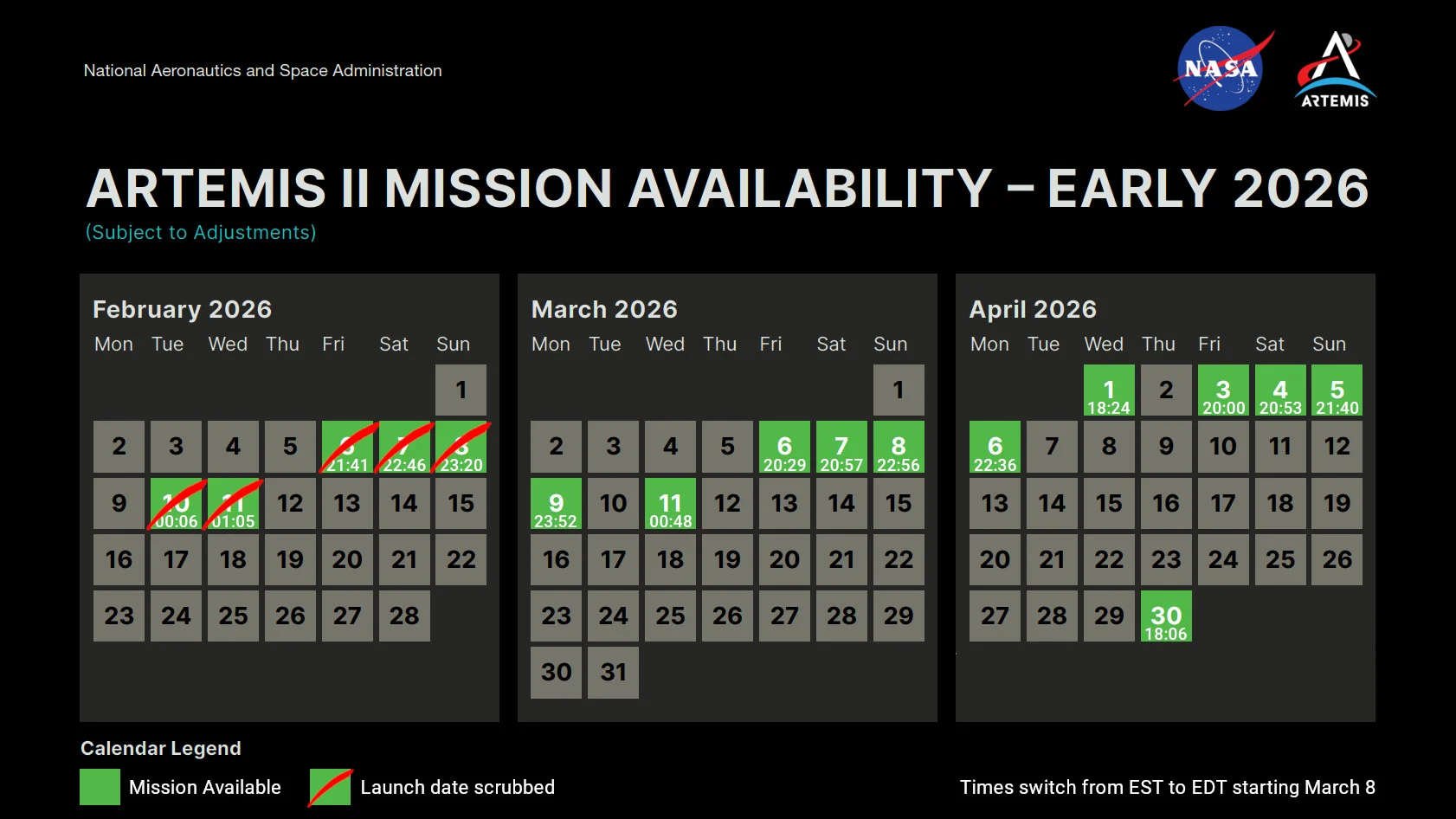
The potential launch windows for Artemis 2 (highlighted in green), in early-2026. All February launch dates were officially scrubbed following the failed wet dress rehearsal on Feb. 2. (NASA)
If the crew lifts off on March 6, or even on the followup dates from March 7-9, their flight should be timed perfectly for them to make history.
Not only will this be the first time humans have flown to the Moon since 1972, but the mission also includes the first person of colour, the first woman, and the first Canadian to fly around the Moon and back. Additionally, they will also set a new record for the farthest distance any crewed mission has flown from Earth.
The previous record, which has stood for over 55 years, was set by the Apollo 13 crew, on April 14, 1970.

A comparison of the Artemis 2 mission to Apollo 13, with the Artemis 2 lunar flyby timed for March 11, 2026, roughly five days after launch, noting the differences in distance between the Earth and the Moon, and the Moon and the spacecraft, as each passed around the far side of the Moon. (Scott Sutherland/NASA SVS)
During their 10-day flight, the Artemis 2 crew will test out the spacecraft's systems, conduct science and medical experiments, and observe the Moon from the closest vantage point anyone has had in over 53 years! One thing they will not do is land on the Moon's surface. That step in the program should take place in the next few years, by the future Artemis 3 crew.