
2025 in Review: The best Space and Astronomy stories of the year

Of all the amazing space and astronomy stories from 2025, these five (plus a bonus) stood out among the rest!
From amazing celestial displays in our night sky, to incredible news from Mars, and even an extremely rare visitor from beyond the confines of our solar system, there were plenty of spectacular stories that developed over the past year.
Here are the top five space and astronomy stories for 2025.
The Pi Day Total Lunar Eclipse
March 14 is known as Pi Day, as the numerical way of writing that day — 3-14 — matches the first three digits of the mathematical constant "Pi". As one of the most important mathematical constants used in physics (especially in meteorological modelling and computing astronomical events), people around the world celebrate, typically by eating pie.
In 2025, though, the universe gifted us an extremely rare event to celebrate the day, in the form of the Pi Day Total Lunar Eclipse! While we have March 14 every year, and there are an average of nine total lunar eclipses that occur each decade, having those two things at the same time is surprisingly rare. The last March 14 total lunar eclipse occurred back in 1653, while the next one won't be until 2351!
And for those with clear skies, this event did not disappoint!
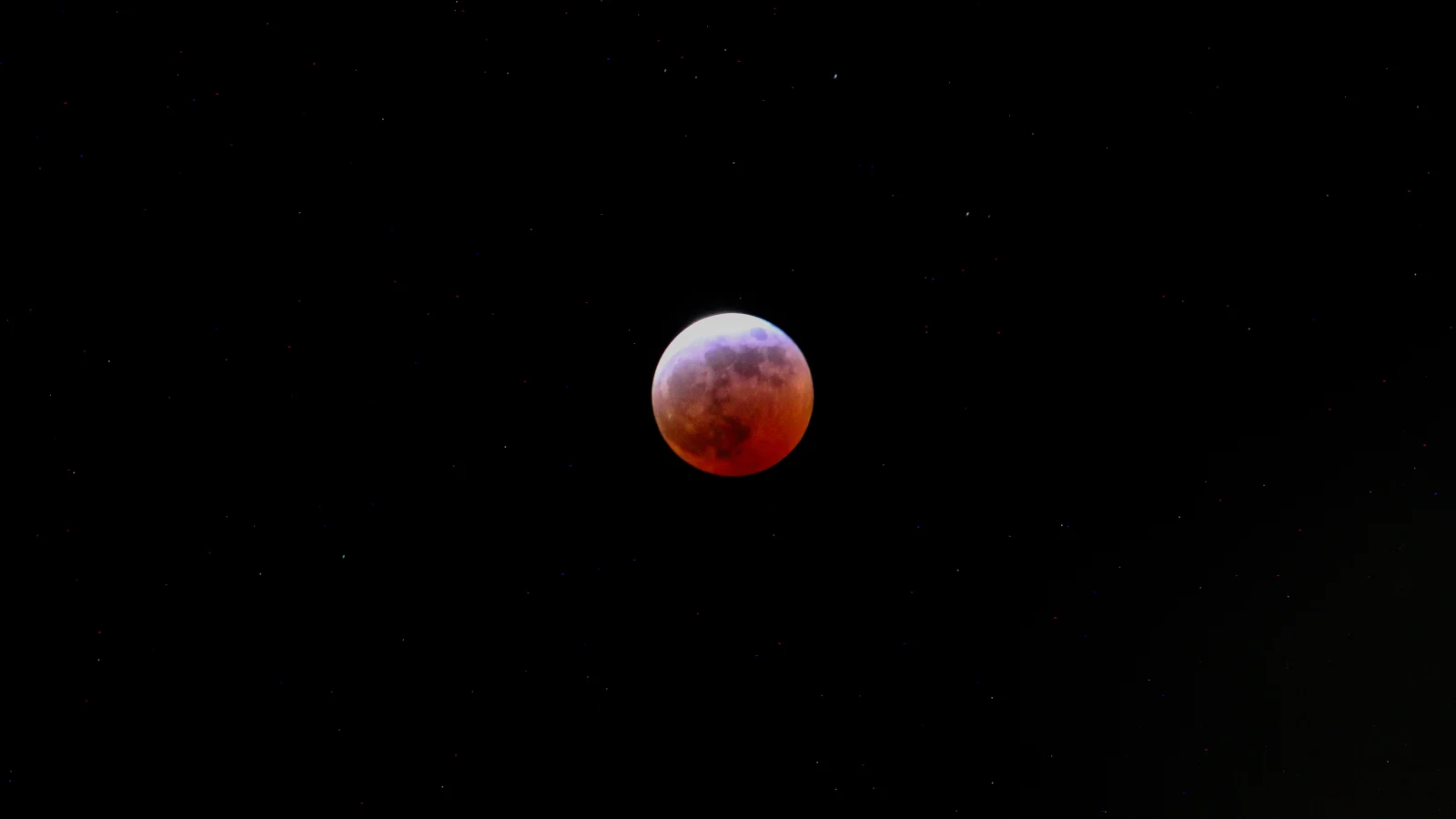
The Pi Day lunar eclipse, as seen from Delta B.C. (Miah Hamon, submitted)
Read More:
First Light from the Rubin Observatory
In late June, astronomers excitedly released the very first images taken by the 3.2 gigapixel Large Synoptic Survey Telescope (LSST), the largest digital camera on Earth, located at the nearly completed Rubin Observatory, which sits atop a remote Chilean mountain.

A small section of the Virgo cluster of galaxies, representing just a tiny portion of the Rubin Observatory's total view of this corner of the universe. (RubinObs/NOIRLab/SLAC/NSF/DOE/AURA)
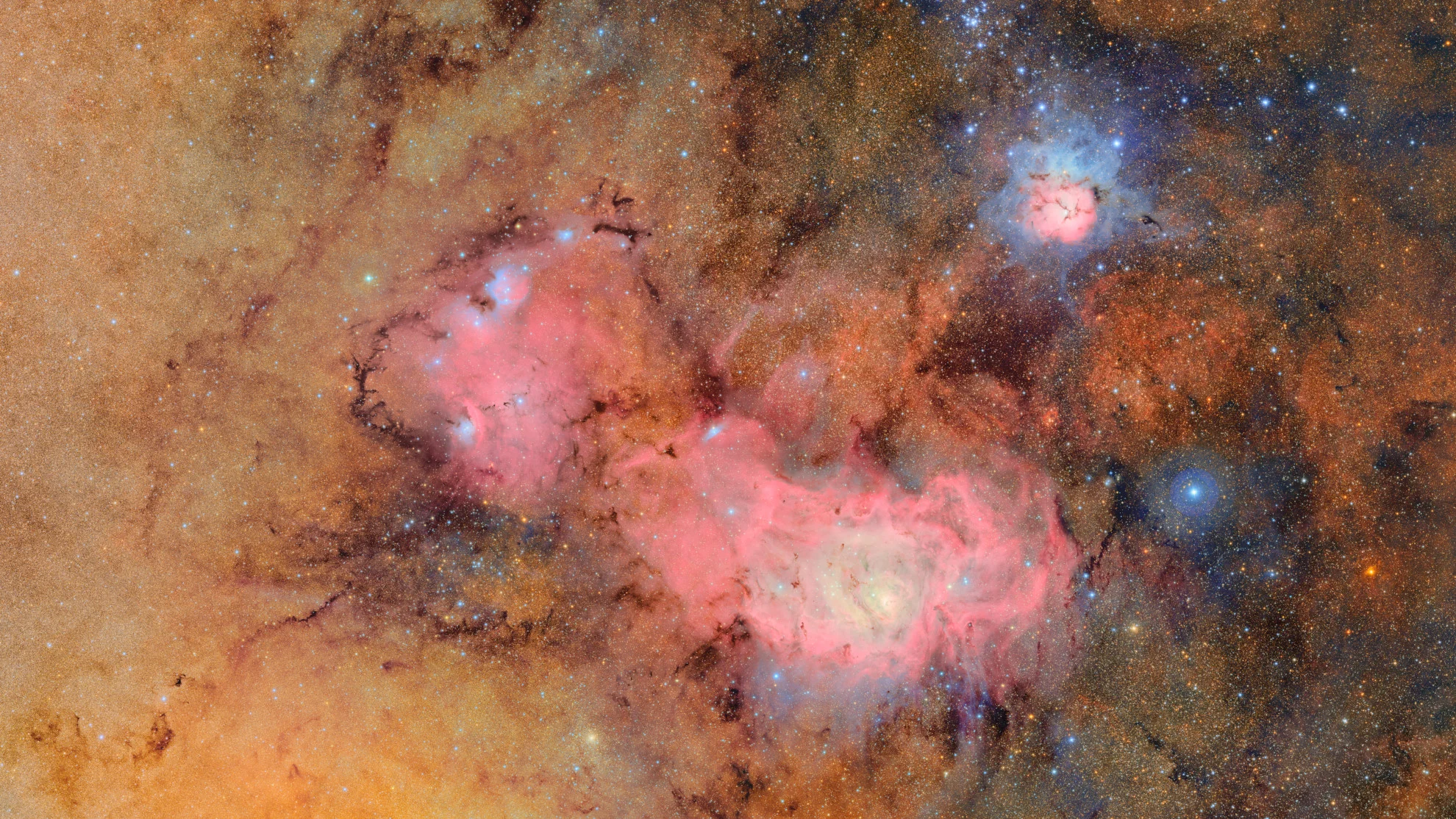
A composite of 678 separate images from the LSST reveal stunning details of the Trifid and Lagoon Nebulas. (RubinObs/NOIRLab/SLAC/NSF/DOE/AURA)
Remarkably, the LSST captured these views of the universe in hours, compared to the days of sustained or repeated observations that other telescopes would require to achieve the same results.
Astronomers intend to use the LSST to survey the entire southern hemisphere night sky, which will only take three or four nights to accomplish. After that, they will start over again, allowing them to rapidly find anything that changes from the previous survey. This ability will make the Rubin Observatory incredibly valuable for discovering phenomena such as supernovae and pulsating stars.
Additionally, it will be nearly unmatched in finding objects moving through our own solar system, such as comets and asteroids. In fact, over just seven nights of observations, LSST detected close to 4,000 asteroids in a narrow section of space. This included over 2,100 newly discovered space rocks, 7 of which were near-Earth asteroids.
Read More: Largest camera on Earth reveals astounding new cosmic views
Interstellar comet 3I/ATLAS
On July 1, we received amazing news. The Asteroid Terrestrial-impact Last Alert System (ATLAS) survey telescope had spotted a brand new object passing through our solar system. While the label 'brand new' is sometimes applied to any object in space that simply hadn't been spotted before, this was different.
This object, now named 3I/ATLAS, was travelling through the inner solar system at an incredible speed of 60 kilometres per second, or 216,000 kilometres per hour. At that velocity, there was no way that it could possibly be something local, as it was travelling far too fast to be gravitationally bound to our Sun.
This was an interstellar comet passing through our solar system, likely after being ejected from its home star system, billions of years ago!
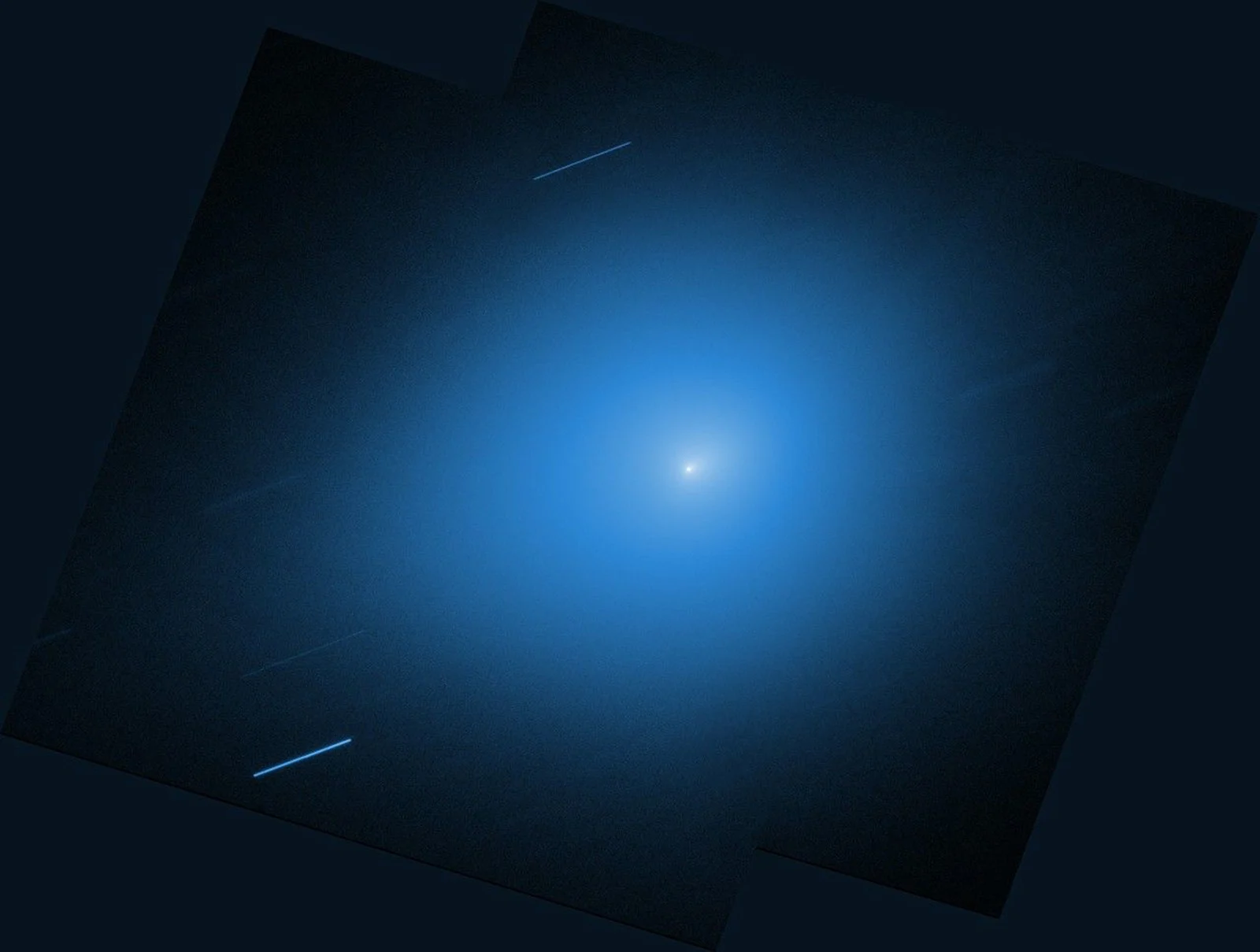
Hubble's view of 3I/ATLAS captured on November 20, 2025. (NASA/ESA/Hubble)
In the months since its discovery, astronomers and space agencies have been snapping images of this visitor, using every resource we have. NASA and the ESA even used spacecraft, both in orbit around Mars and travelling through space towards their destinations, to snap pictures of 3I/ATLAS.
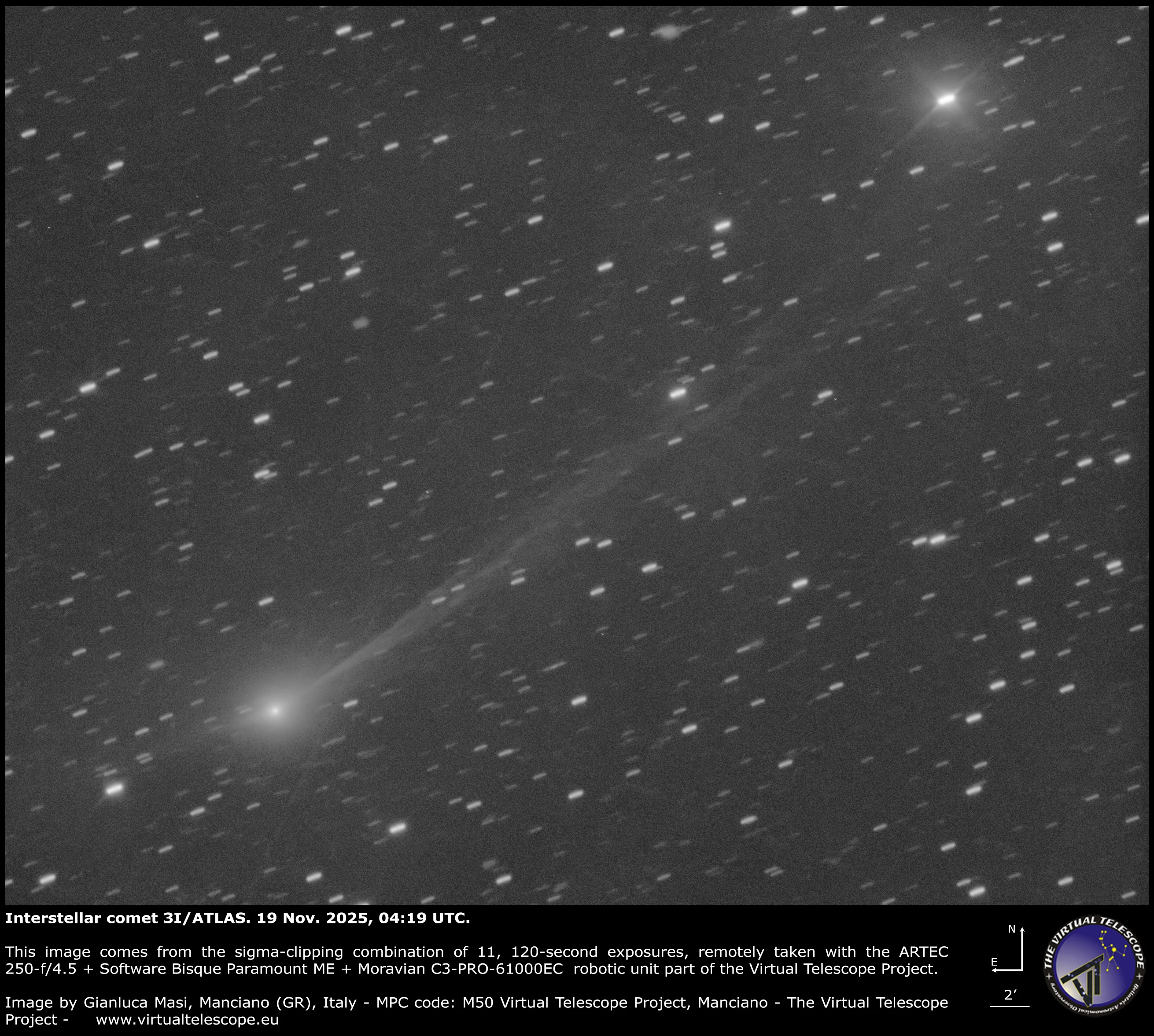
3I/ATLAS as imaged on November 19, 2025, from a telescope on Earth. While the close-up view by Hubble focused on the nucleus and coma, this image reveals its long, wispy tail and a short, dim anti-tail. (Gianluca Masi, Virtual Telescope Project)
All of this is, essentially, a massive collective effort to understand as much as we can about 3I/ATLAS before it leaves us again, forever.
This story isn't over yet, though. Although the comet just passed through its closest distance to Earth, and is now heading away from us, it will pass close enough to Jupiter in March for NASA's Juno spacecraft to get one last look at it before the comet heads back out into the universe.
Read More:
An alien comet is now passing through our solar system. Here's what we know
Alien comet 3I/ATLAS just passed the Sun. When will it return to our skies?
Latest images of alien comet 3I/ATLAS reveal stunning tail, views from space
November Northern Lights
The Sun has been very active over the past two years or so, as it reached the peak of its 11-year cycle of sunspots and solar flares.
Powerful flares and solar storms raise concerns about impacts to our technologies, such as satellites in space and power grids here on the ground. However, they also result in hauntingly beautiful displays, as our night skies become lit up by the Aurora Borealis.
Throughout 2025, there have been several chances to spot the Northern Lights across Canada. The best of all these opportunities, though, occurred in the first half of November. Thanks to repeated eruptions from the Sun, geomagnetic storms were sparked on the night of the 5th, and then again on the nights of the 11th and 12th.
The first of those ranked between a G2 (moderate) or G3 (strong) level storm, and produced auroras that were seen brightly in the sky overhead from places such as Winnipeg.
The second, on the 11th, was much stronger, reaching G4 (severe) levels and possibly even G5 (extreme) for brief periods throughout that night. As a result, bright Northern Lights displays filled the skies over Canada and the United States, pushing as far south as the Texas Panhandle. Geomagnetic activity persisted, at G3 (strong) levels, the following night, on the 12th.

Northern Lights seen from Lac La Biche, Alta, on November 12, 2025 (Jason Caine, submitted)

Northern Lights seen from Lac La Biche, Alta, on November 12, 2025 (Jason Caine, submitted)
Read More:
In Photos: Northern Lights dazzle over Winnipeg as solar storm hits Earth
Northern Lights put on a show across Canada, U.S., and parts of Europe
Geomagnetic storms: When should we look up and when should we worry?
Sparks of lightning on Mars!
Here on Earth, lightning strikes an average of 100 times every second, all around the world. We've also spotted bolts of lightning among the cloud bands of Jupiter.
On both planets, these flashes happen in roughly the same way: friction between ice crystals and snow pellets (or 'mushballs' on Jupiter) results in regions of powerful positive and negative charge within thunderstorm clouds, which are suddenly balanced when cosmic rays from space provide a path of least resistance for an arc of electricity to join the two regions.
This can't happen in the thin atmosphere of Mars, though, where the clouds we see are all thin cirrus, and any snowfall is a rarity reserved for the frigid polar regions.
However, Mars does have a lot of dry dust, which is often lofted into the air in the form of dust devils, and the occasional widespread dust storm. We've seen lightning from dust storms here on Earth. This is known as the triboelectric effect, and it results from friction between dust particles.
So, scientists have long speculated that we could see lightning on Mars. In fact, due to its much thinner atmosphere (around 1/100th the density of Earth's), it would be even easier for sparks of triboelectric lightning to occur on Mars.

*Two images snapped by Perseverance on September 6, 2025 (Sol 1,616) have been combined here to show a large passing dust devil in the wider context of Jezero Crater's terrain. (NASA/JPL-Caltech)
They now have the proof that lightning does occur on Mars, thanks to the tiny SuperCam microphone on NASA's Perseverance rover.
By reviewing the days and days of recordings gathered by the instrument, a team was able to isolate distinct static pops and crackles at tiny sparks of lightning discharged between the rover and a passing dust devil.
These discharges are miniscule compared to the bolts of lightning we experience here on Earth. A good comparison would be the spark of static electricity generated between your hand and a metal doorknob after walking across a carpet on a dry winter day.
While that's too weak to cause any issues with rovers and landers, so far, this will be something for future mission designers to keep in mind, especially as instrument sensitivity increases. Also, it could provide researchers with new insights into the composition of Mars' atmosphere and surface dust, and could potentially explain why methane detected there vanishes so quickly.
Read More: NASA rover hears tiny crackles of thunder and lightning on Mars
Bonus! Mars potential biosignature confirmed!
Back in July of 2024, the Perseverance rover spotted a strange Martian rock. Closer inspection of its layers and the minerals found in them revealed evidence that it had definitely formed when water was present on the surface, millions to billions of years ago. However, it was the odd-looking 'leopard spots' scattered throughout the core layer of the rock that caused a ripple of excitement through the scientific community.
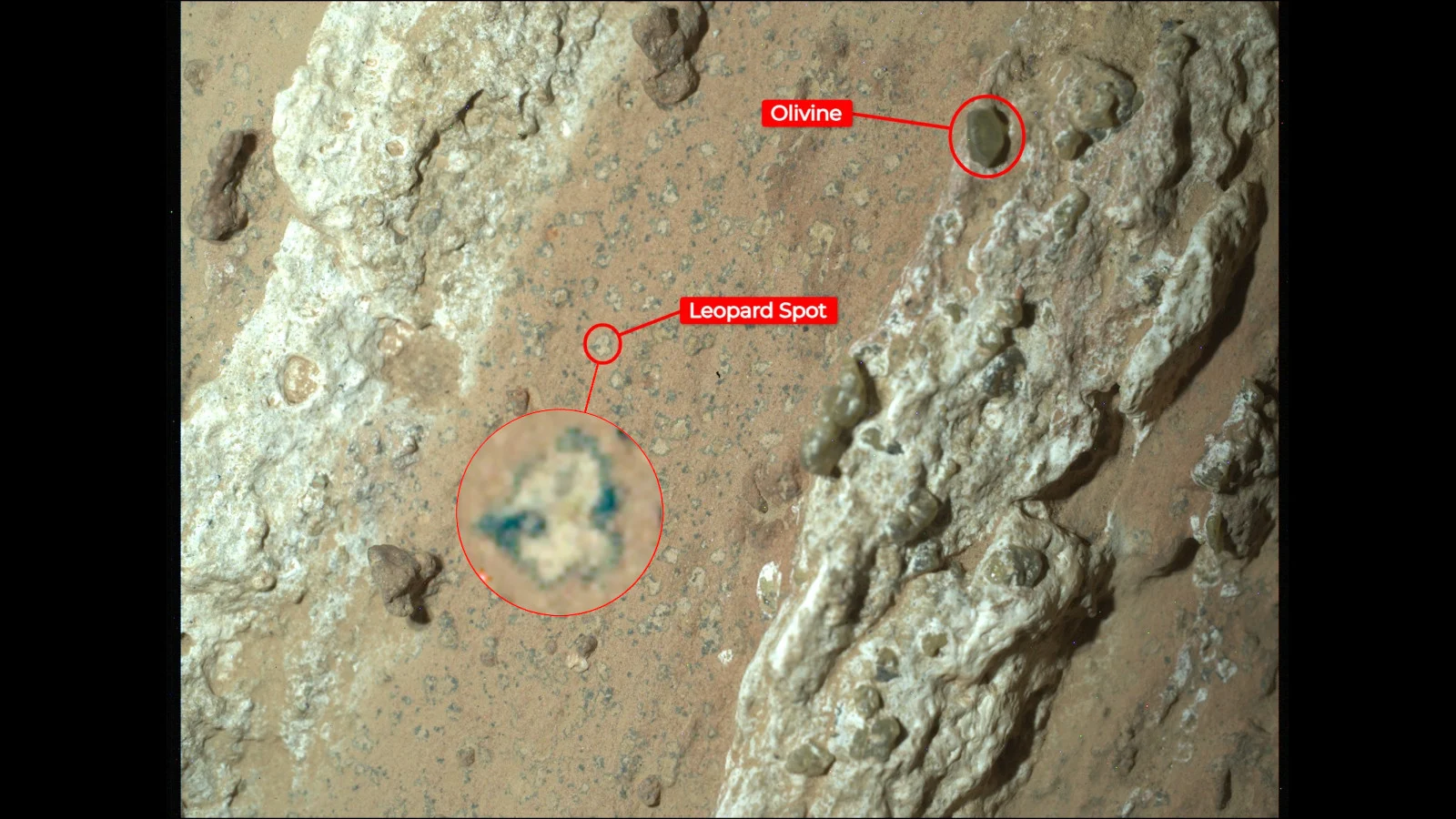
The 'Cheyava Falls' rock on Mars, as imaged by Perseverance, with its 'leopard spots' of iron and phosphate minerals. (NASA/JPL-Caltech/MSSS/Scott Sutherland)
Shortly after the rock was discovered, researchers were speculating that these leopard spots in the rock could have been caused by microbial life. We see similar formations here on Earth where microbes use chemical reactions to break down minerals to release energy, similar to how microbes and plants use photosynthesis to produce energy to live.
Over a year later, in September 2025, new research was published that verifies these patterns as a potential biosignature.
Now, 'potential' biosignature means that the researchers could not state with 100 per cent confidence that these patterns were left behind by biological life. While it is far less likely that they were caused by some geological, non-biological process, that possibility simply can't be completely ruled out at this time.
So, it remains the strongest evidence of past life on Mars that's ever been found!
Read More:
Potential signs of ancient life found in Mars rock sampled by Perseverance
'Leopard-spotted' rock may be a sign of ancient life on Mars