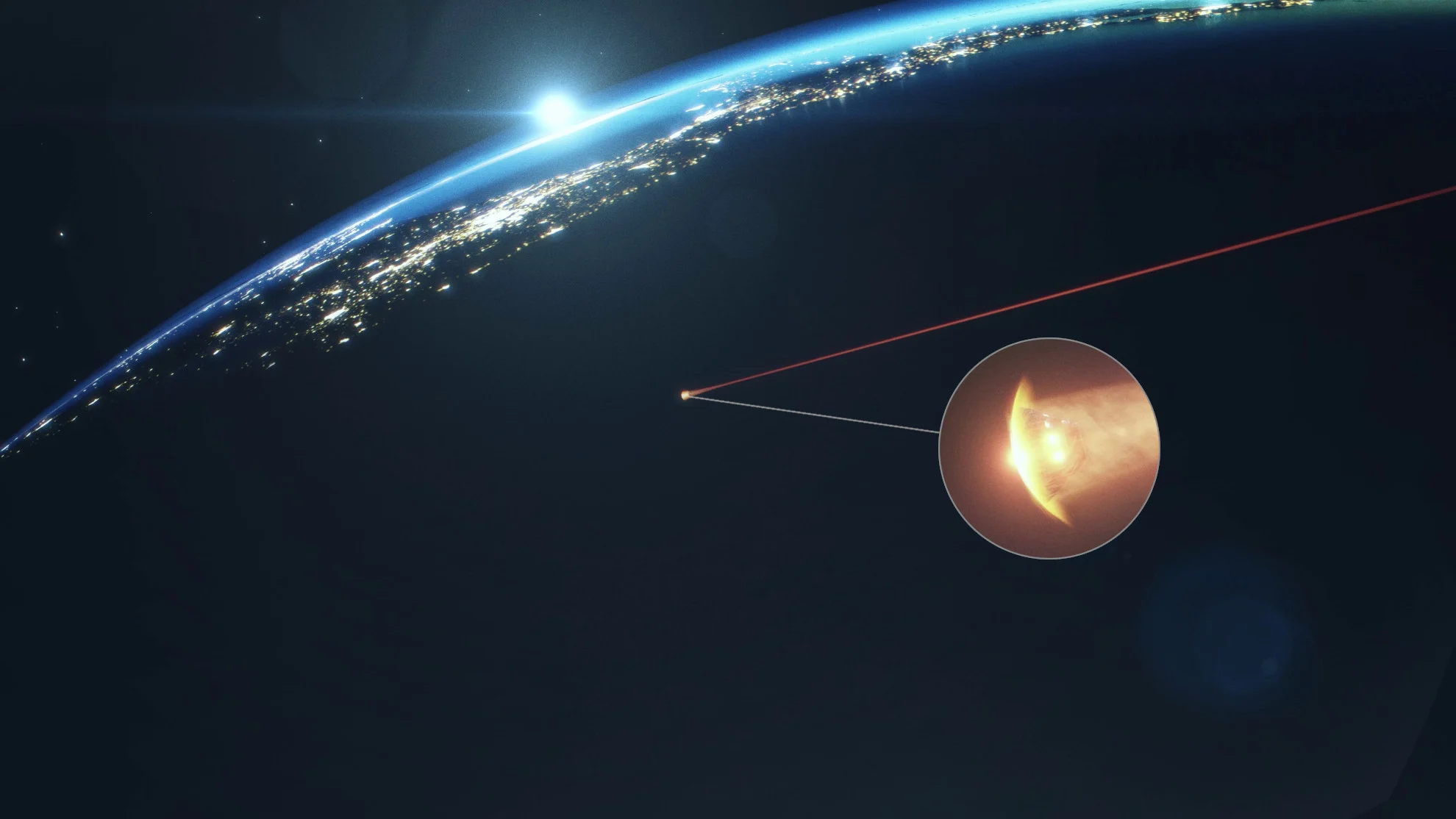
Artemis 2 Splashdown: Fiery plunge was the riskiest stage of Orion's flight

Friday was splashdown day for the Artemis 2 crew. We provided live updates throughout the afternoon!
Artemis 2 returned home from their 10-day trip around the Moon, Friday. Although their fiery plunge through Earth's atmosphere was the riskiest part of this entire mission, NASA reported a textbook return for splashdown.
After launching into orbit on April 1, the Artemis 2 crew spent one day circling Earth, testing out the capabilities of their Orion spacecraft, which they named Integrity.
Once that shakedown was complete, they then set off for a four-day journey out to the Moon, taking a day to pass around the far side, while they explored its geology from space, capturing incredible imagery along the way.
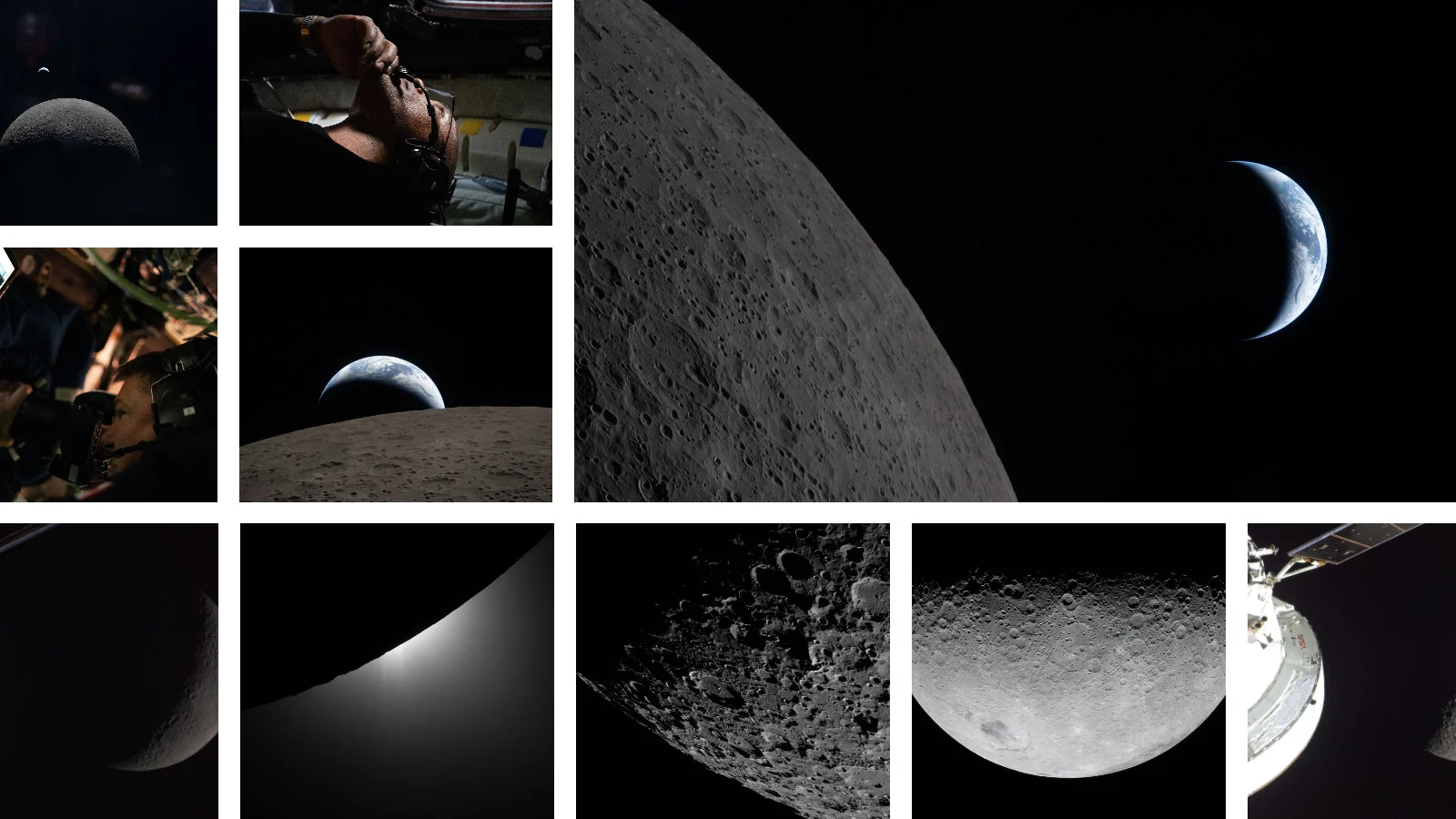
The Artemis 2 image gallery 'frontpage'. (NASA)
RELATED: 'He gave her the Moon': Artemis 2 crew names crater after commander's late wife
In the days since, Integrity had fallen back towards Earth, bringing the crew closer and closer to home again.
As of Friday morning, with only hours left in their journey, anticipation was growing.
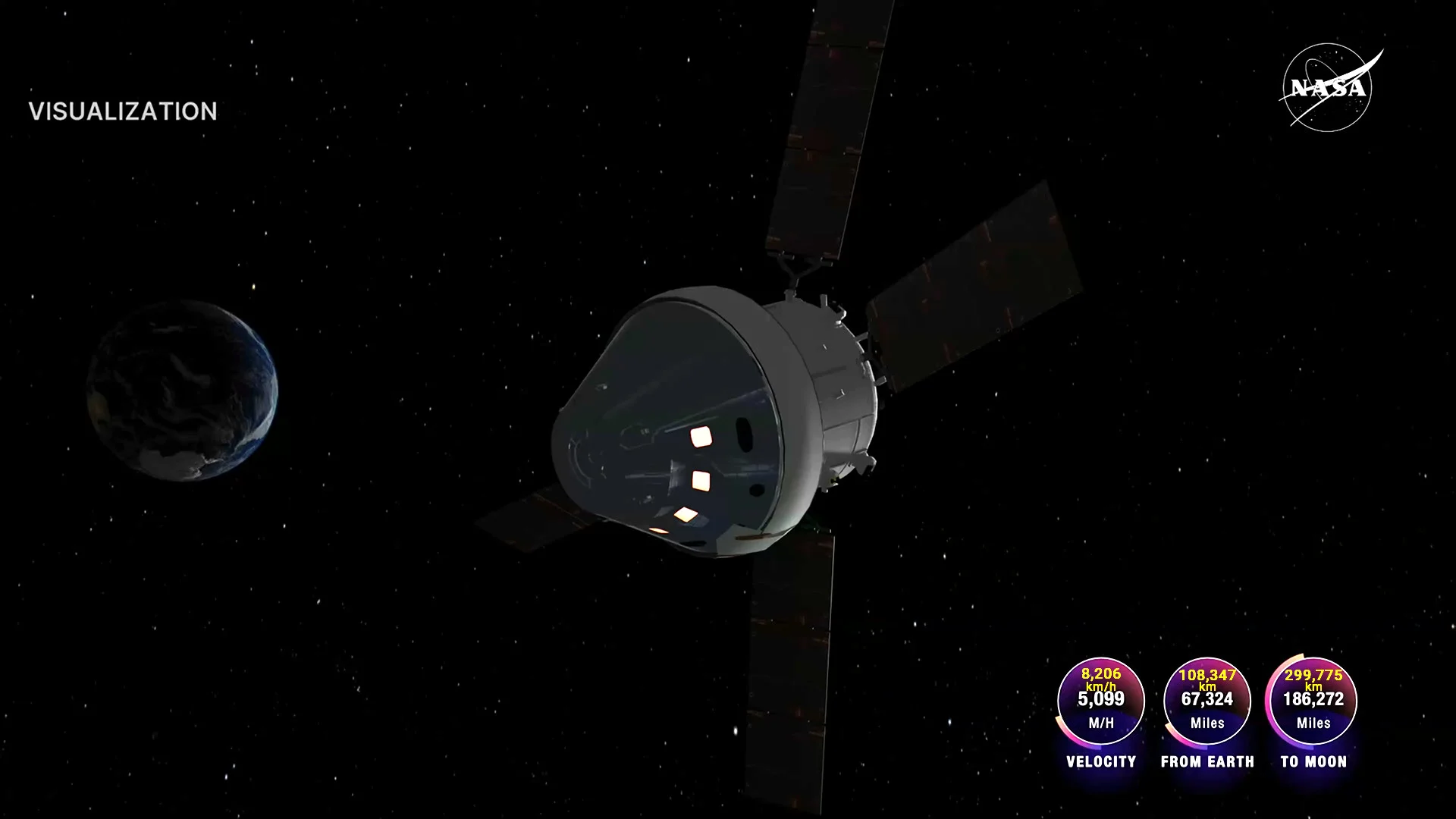
Orion's orientation, speed, and distance from Earth and the Moon are shown in this computer visualization of the spacecraft as of around 10:30 a.m. EDT, on Friday, April 10, 2026. (NASA TV)
By noon, Eastern Time, the crew had crossed the 100,000-kilometre-distance from Earth, as they remained on track for reentry starting around 7:30 p.m. EDT, with a splashdown expected off the coast of California by 8:07 p.m. EDT.
Live updates from this risky final stage of the mission were provided, below.
NASA's coverage of Artemis 2's return home began at 6:30 p.m. EDT.
10:00 p.m. EDT
The Artemis 2 crew is now safely on board the USS John P. Murtha, all healthy and happy after their 1,117,659 km trip around the Moon and back.
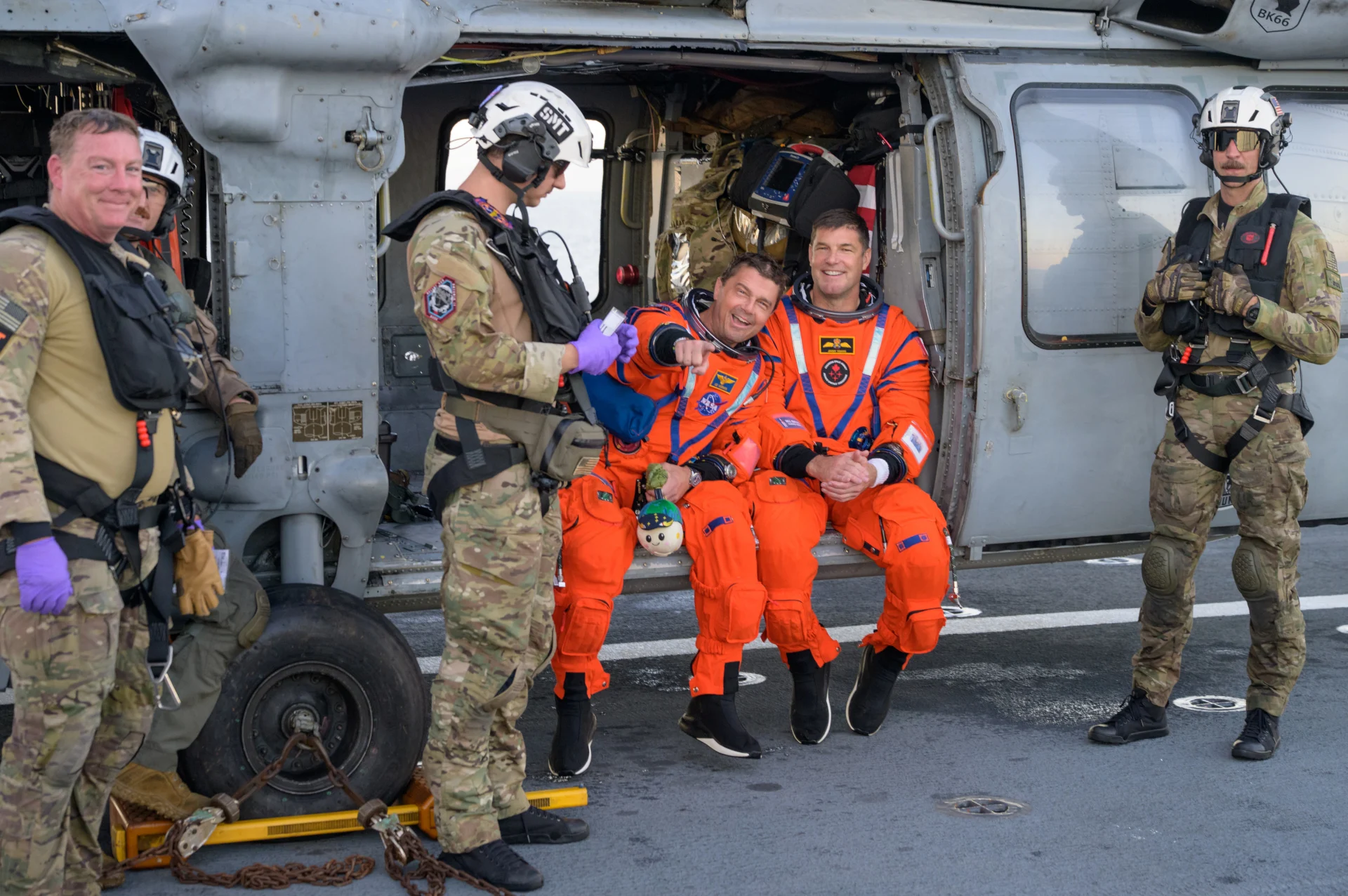
Reid Wiseman and Jeremy Hansen sit on a Navy MH-60 Seahawk on the flight deck of USS John P. Murtha after they were extracted from their Orion spacecraft after splashdown, Friday, April 10, 2026 (NASA/Bill Ingalls)
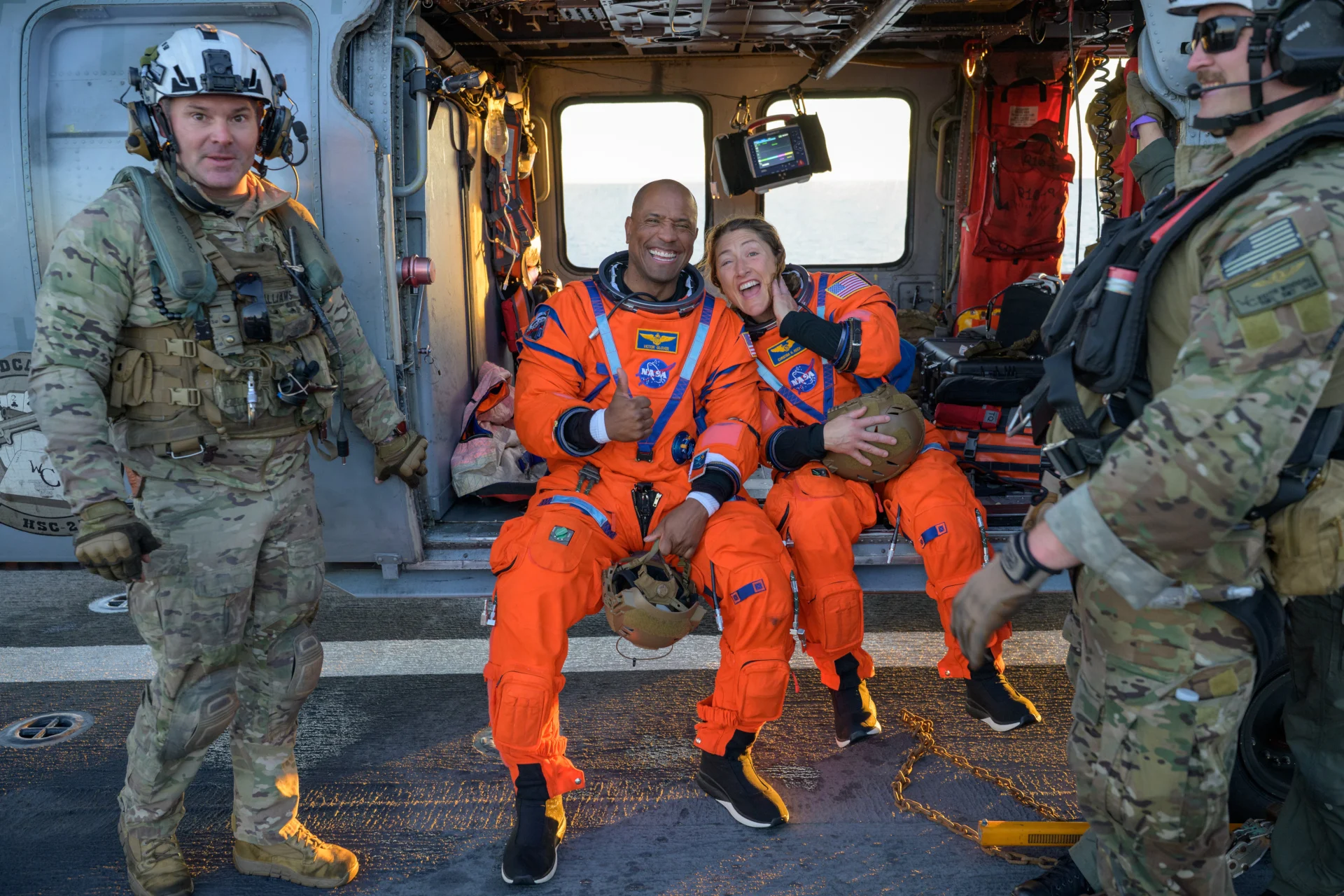
Victor Glover and Christina Koch sit on another Navy MH-60 Seahawk on the flight deck of USS John P. Murtha after they were extracted from Integrity after splashdown. (NASA/Bill Ingalls)
"Reid, Victor, Christina, and Jeremy, welcome home, and congratulations on a truly historic achievement." NASA Administrator Jared Isaacman said in a press release. "Artemis II demonstrated extraordinary skill, courage, and dedication as the crew pushed Orion, SLS, and human exploration farther than ever before."
"As the first astronauts to fly this rocket and spacecraft, the crew accepted significant risk in service of the knowledge gained and the future we are determined to build," Isaacman added. "NASA also acknowledges the contributions of the entire NASA workforce, along with our international partners, whose expertise and commitment were essential to this mission’s success. With Artemis II complete, focus now turns confidently toward assembling Artemis III and preparing to return to the lunar surface, build the base, and never give up the Moon again."
The astronauts will now undergo brief medical evaluations, just to be certain they have no health concerns after their trip and the rigors of reentry and splashdown. After that, they will be flown to California, where they will board a NASA aircraft and make the flight to Johnson Space Center in Houston.
Meanwhile, over the next several hours, the Landing and Recovery Team will work towards securing Integrity, and bringing it into the well deck of the USS John P. Murtha.
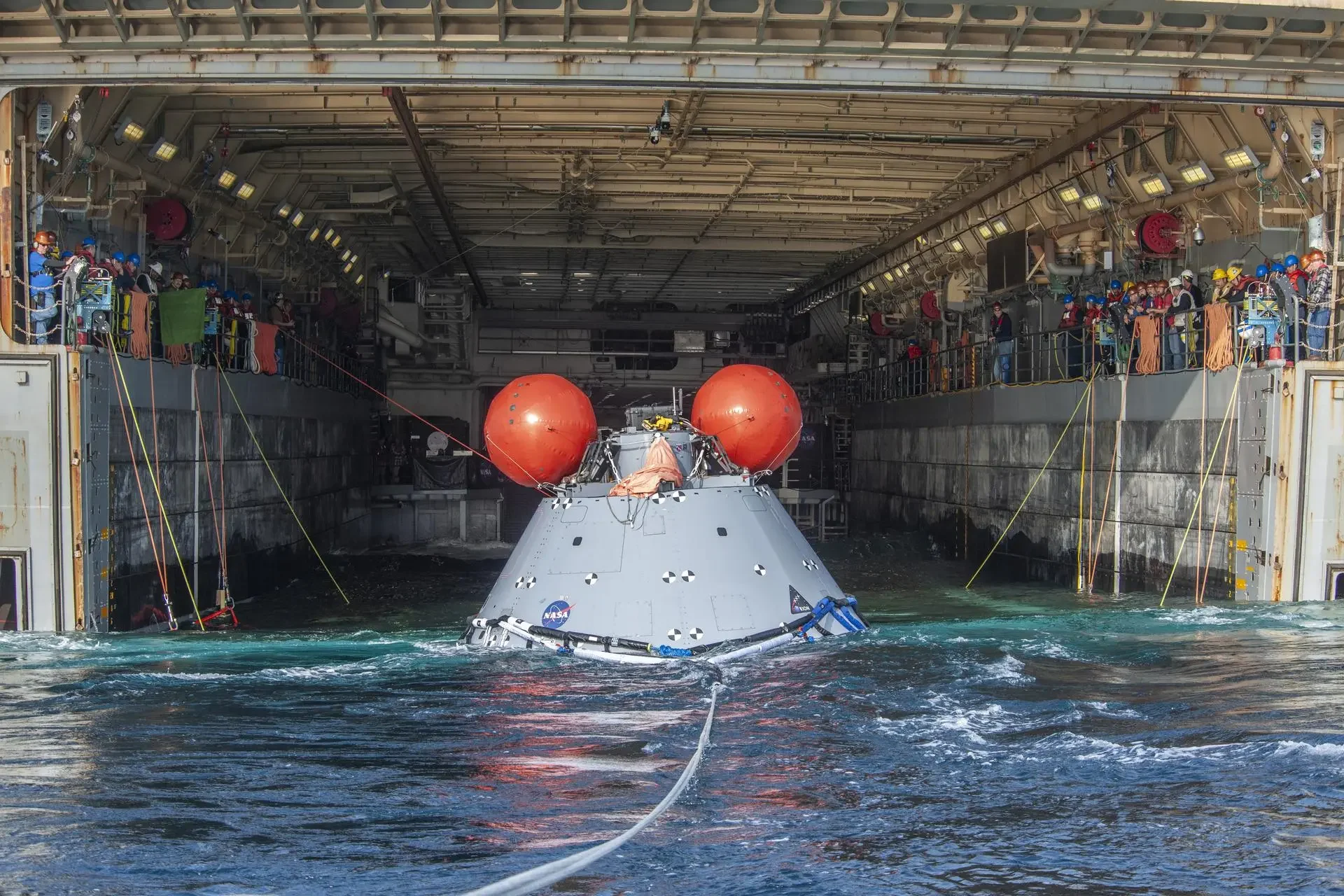
Days ahead of the December 12, 2022, splashdown of the Artemis I mission, NASA's Landing and Recovery Team practices bringing a mock Orion capsule into the well deck of the USS Portland. (NASA)
The ship's well deck is an area under the flight deck, which can be flooded with seawater to allow smaller vessels to exit and enter. This perfect for recovering the Orion spacecraft, as well, as the team can float the capsule in and then pump out the water, bringing it to a gentle rest on the deck.
9:38 p.m. EDT
All four astronauts have now exited Integrity, onto the Front Porch.
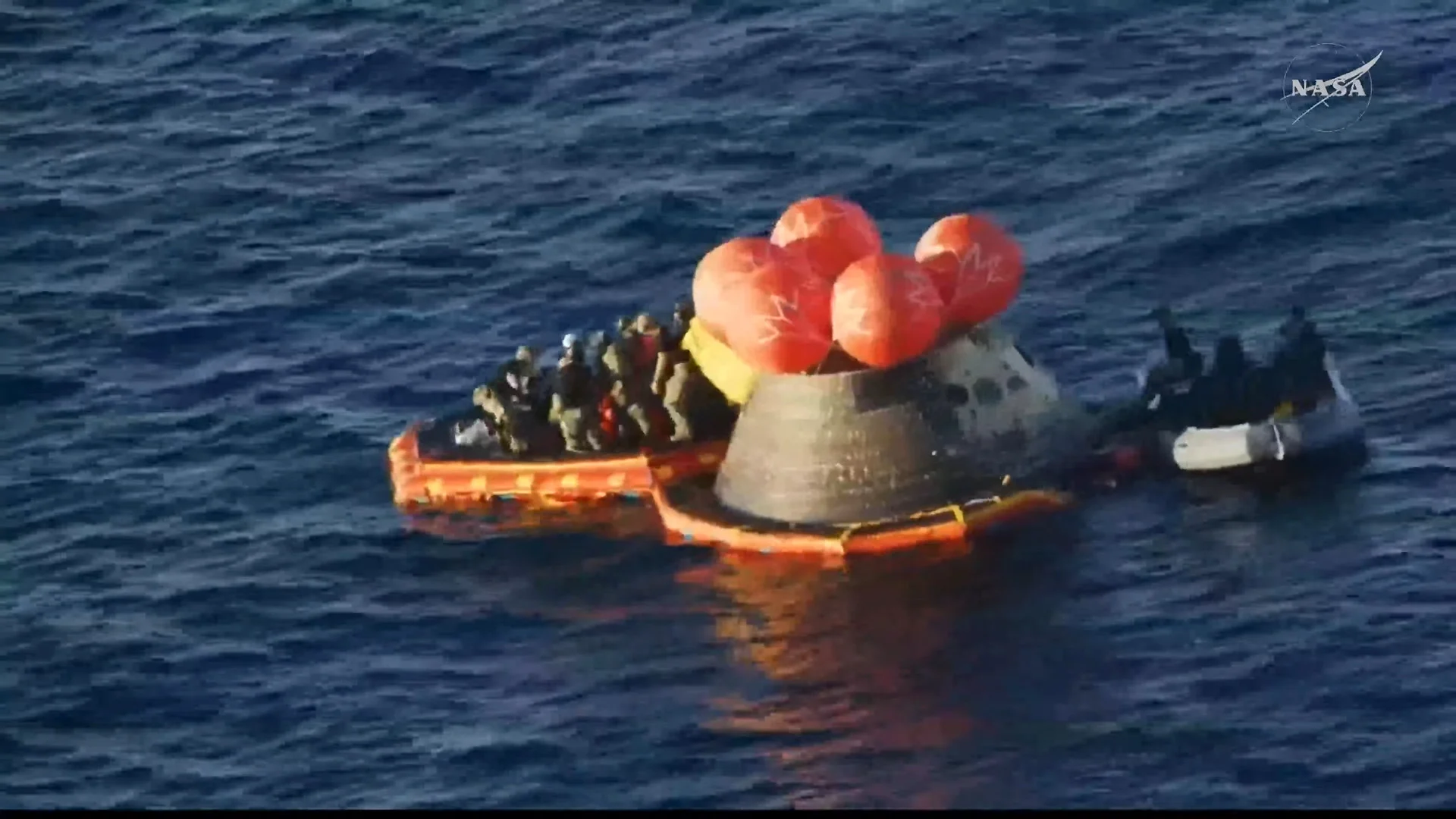
The Artemis 2 crew, in their orange space suits, are visible among the recovery crew, who are all dressed in black shirts. (NASA TV)
They will now be hoisted up onto waiting Navy helicopters, for transport to the deck of the USS John P. Murtha.
8:55 p.m. EDT
Preparations for extracting the four astronauts continue, as the Integrity capsule bobs on the relatively calm waters of the Pacific Ocean.
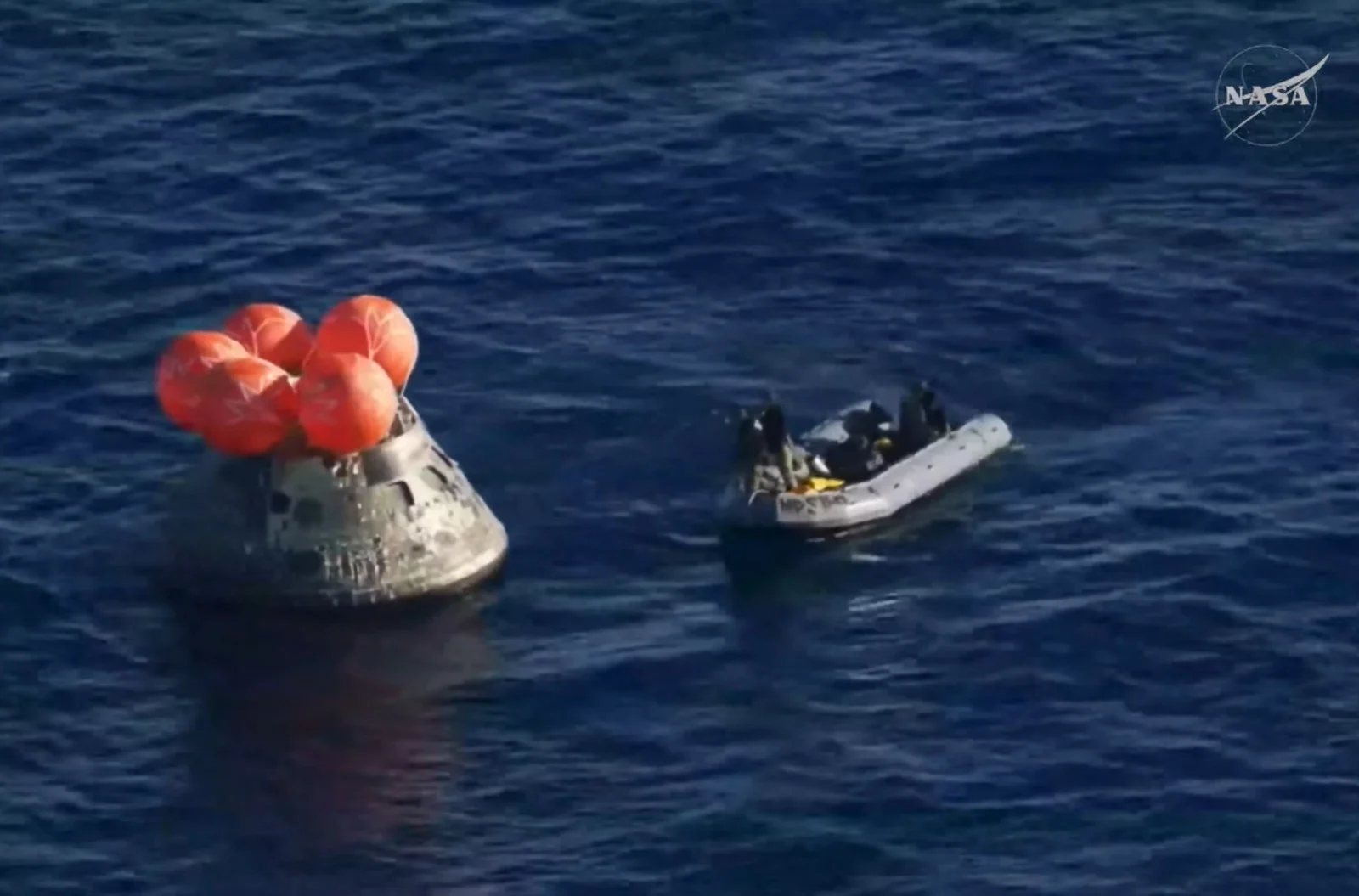
(NASA TV)
8:07 p.m. EDT
Splashdown!!
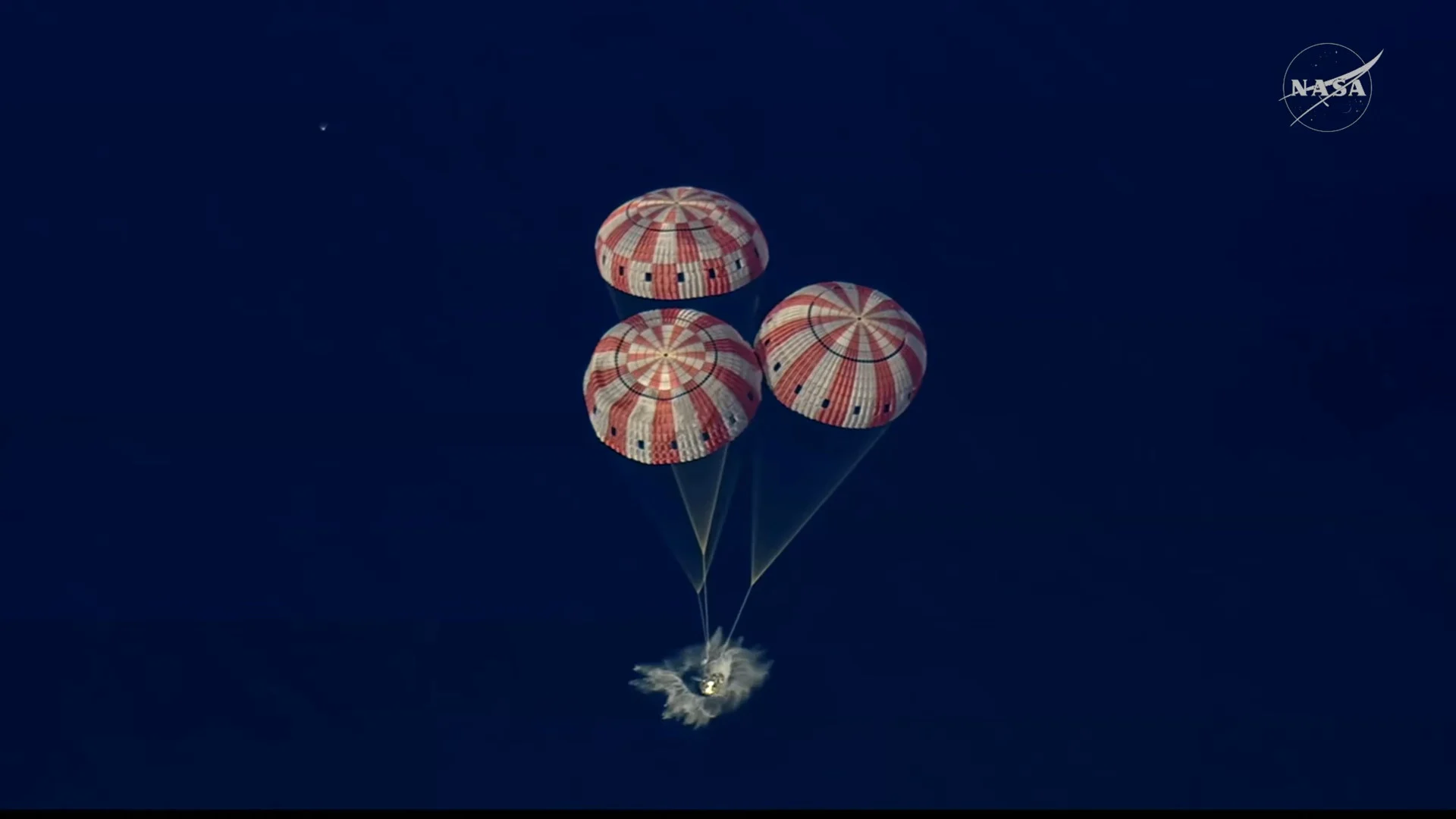
(NASA TV)
The crew is well, the atmospheric entry, chute deployment, and splashdown of Integrity all went just as expected!
Welcome home, Integrity!
8:04 p.m. EDT
Chute deployments!!
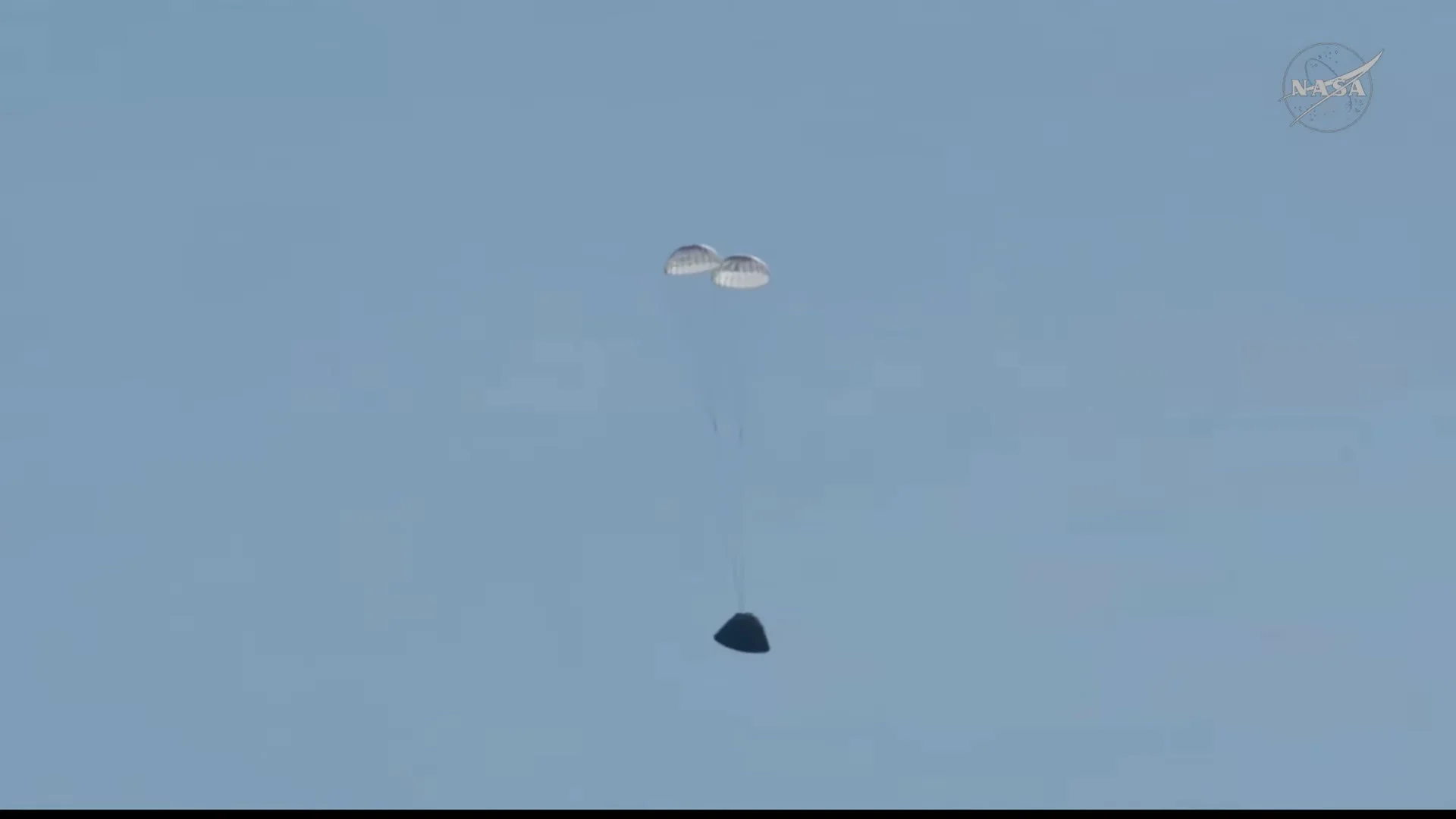
(NASA TV)
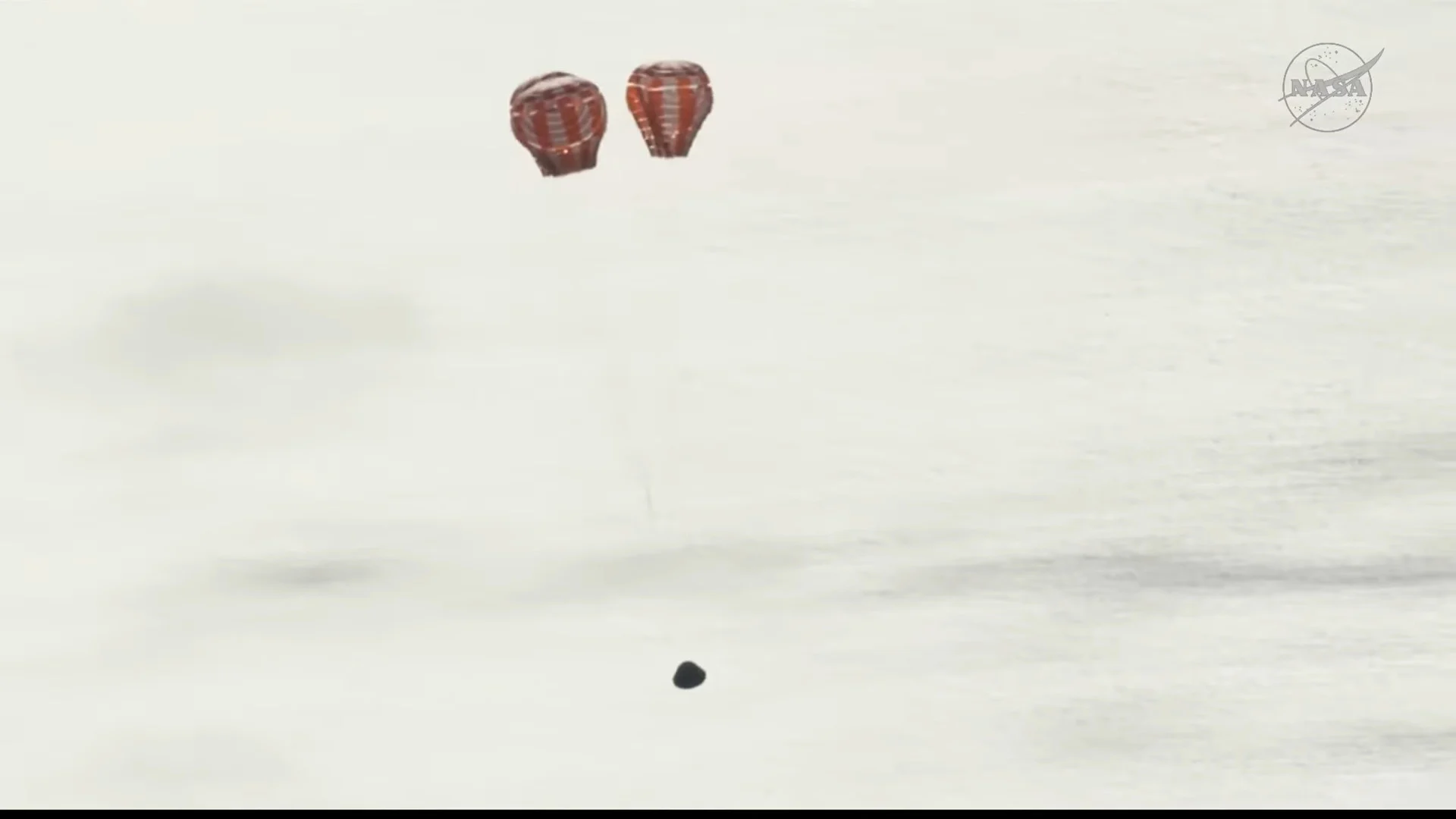
(NASA TV)
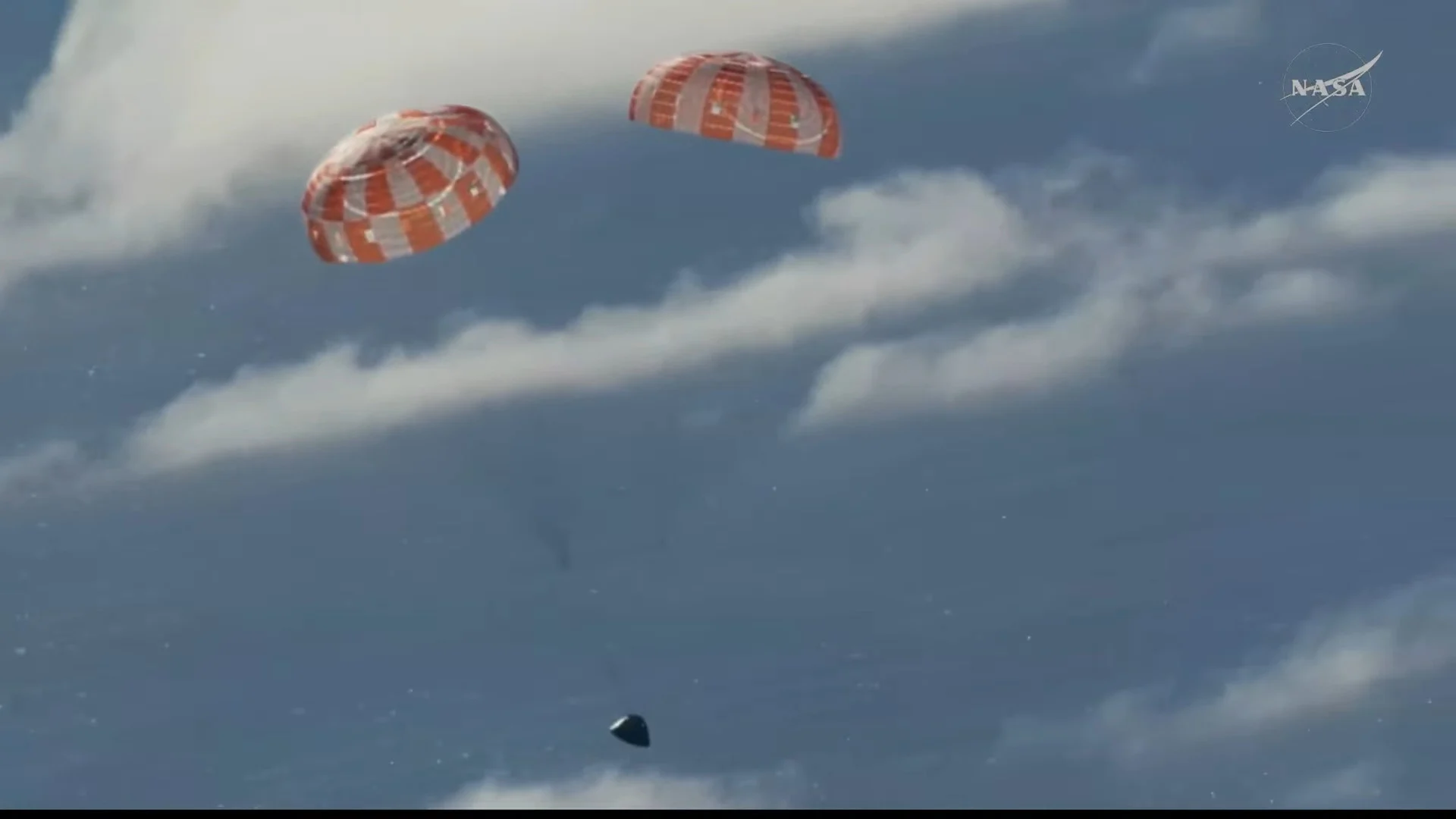
(NASA TV)
8:01 p.m. EDT
Integrity has now emerged from the communications blackout. Multiple NASA and military assets had visual confirmation of the spacecraft's reentry into the atmosphere during that time.
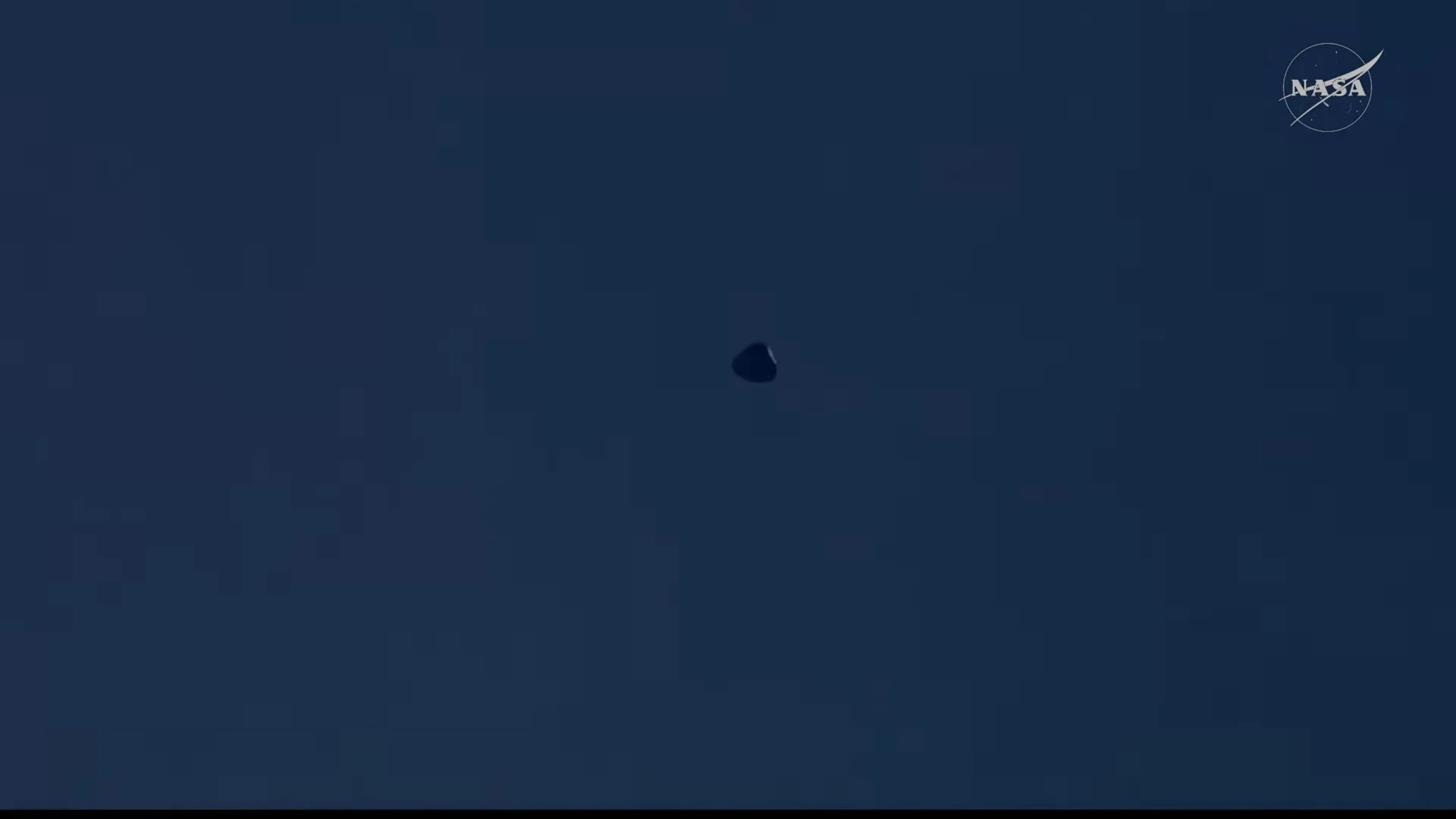
The Integrity capsule flies through the air prior to chute deployment. (NASA TV)
We are just minutes away from splashdown!
7:54 p.m. EDT
Integrity has reached atmospheric interface, at 122 km up, and the spacecraft has entered the 6 minute communication blackout.
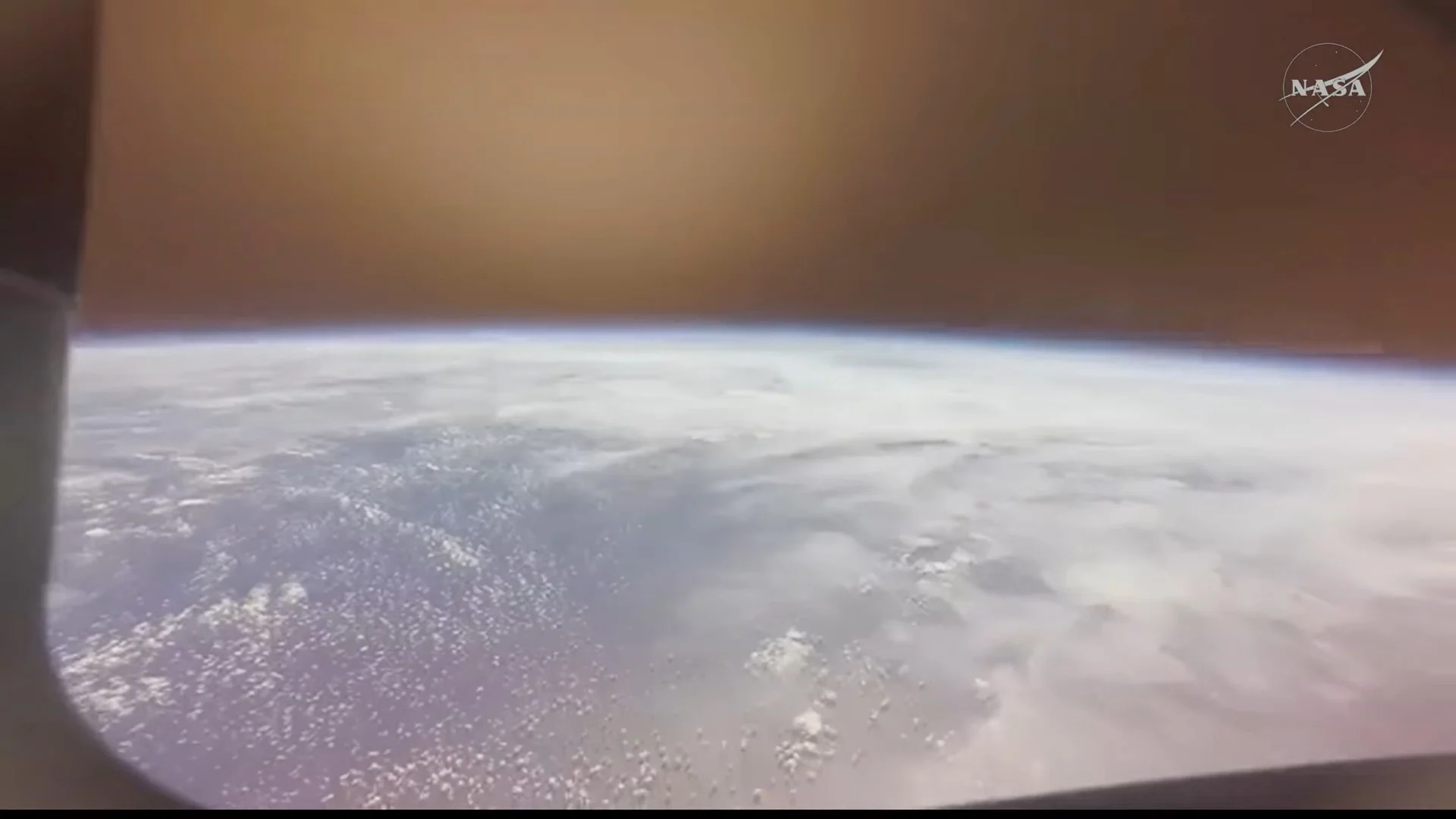
(NASA TV)
The glow of plasma from the heat shield is now visible in the viewport.
7:50 p.m. EDT
We are now roughly 18 minutes until splashdown, and everything is going as planned.
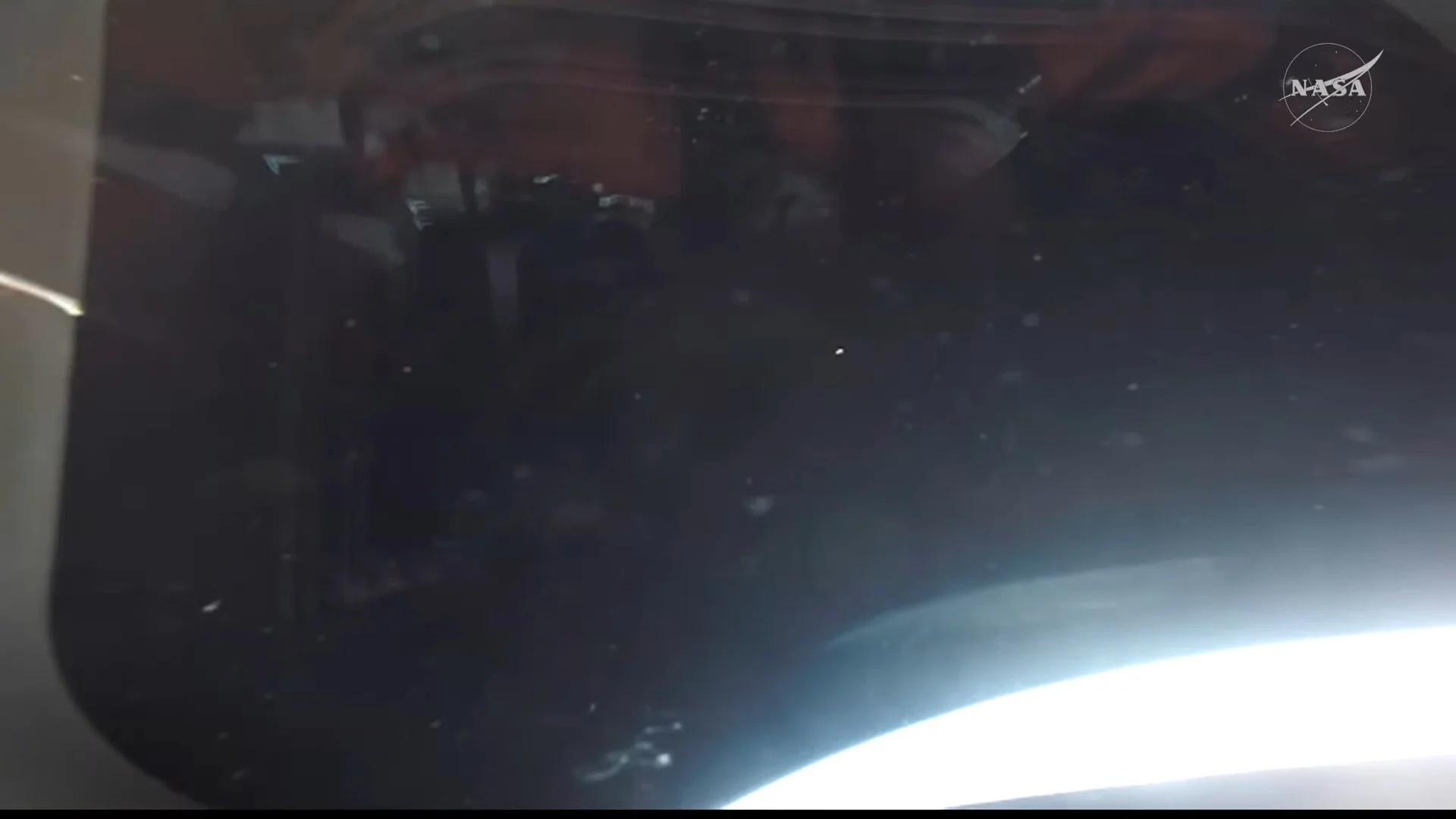
A view out of Integrity's viewport at the curvature of Earth. (NASA TV)
Integrity will enter communications blackout at 7:53 p.m. EDT, which will last for around 6 minutes.
7:37 p.m. EDT
Integrity has now completed a 19-second raise burn to angle the capsule back slightly, putting them on their final flight path for splashdown.
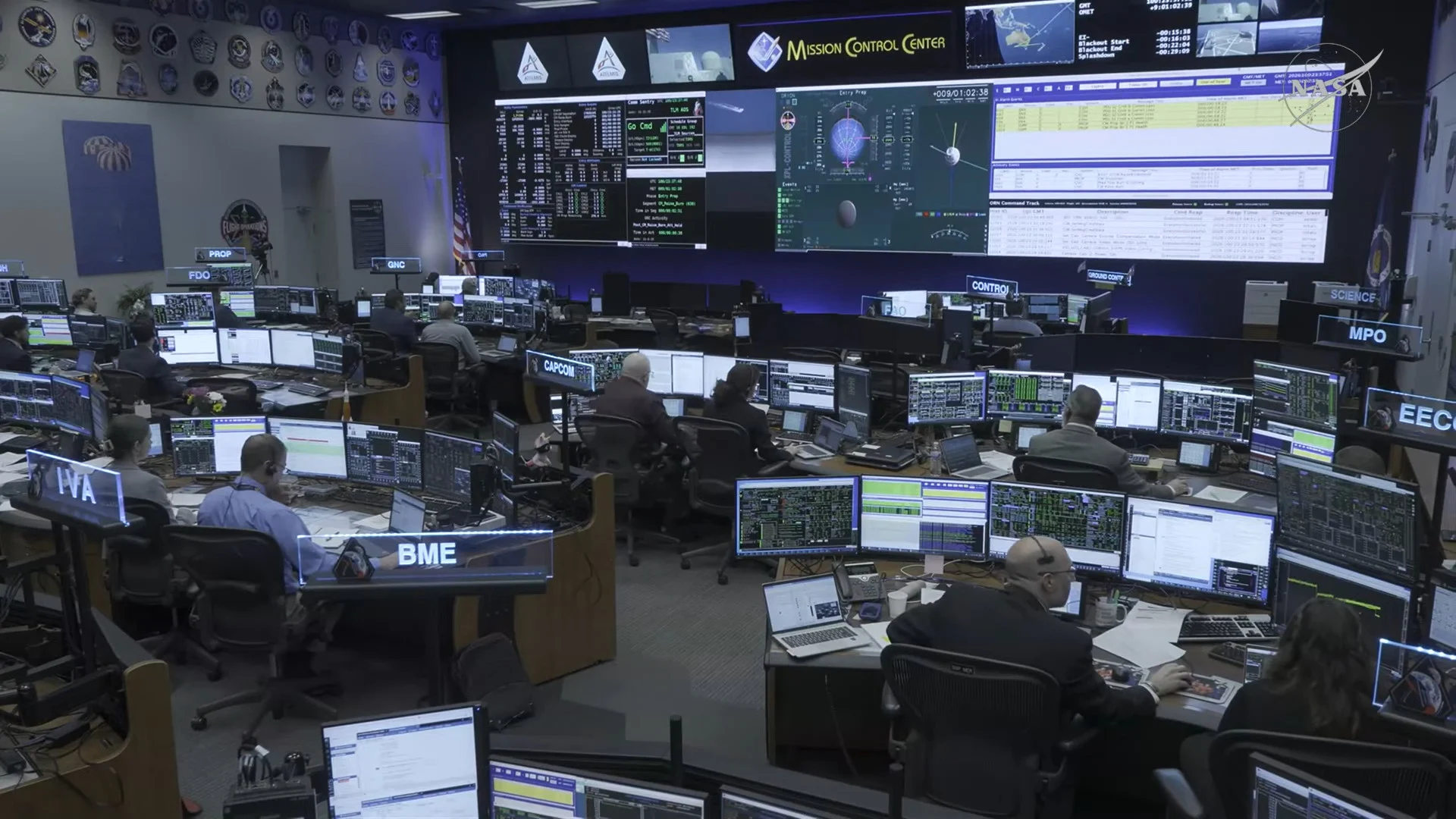
A view of Mission Control, during Integrity's raise burn. (NASA TV)
Everything is going well.
7:33 p.m. EDT
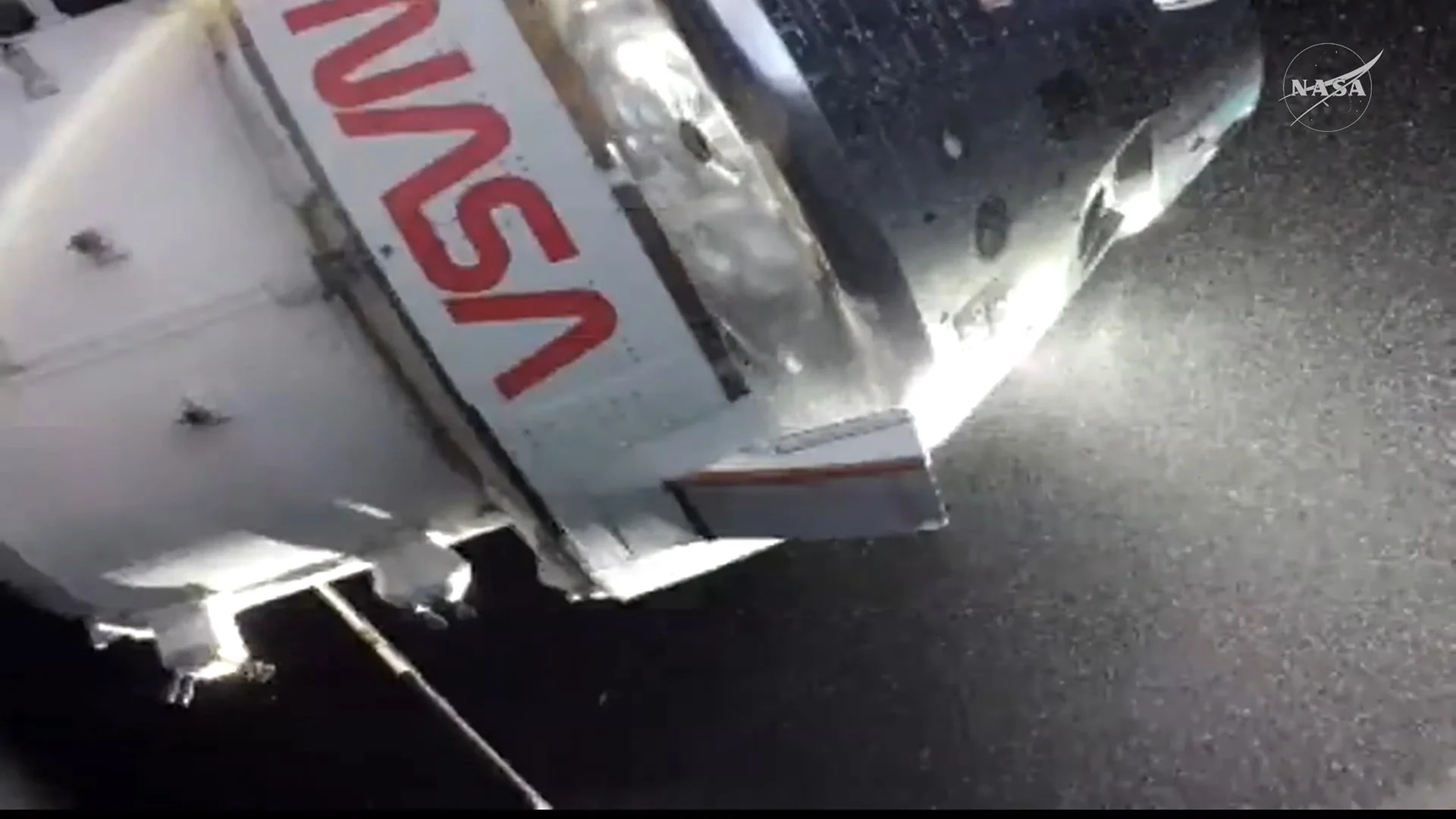
Integrity and European Service Module have now separated.
The ESM will now take its own separate path into the atmosphere, to burn up and splash down in a remote section of the Pacific Ocean.
(NASA TV)
Integrity remains on track for its atmospheric interface, at around 122 kilometres above the surface, roughly 3,200 kilometres out from the coast of southern California.
Updates from here, on, will be coming in fast, ahead of splashdown at 8:07 p.m. EDT.
7:05 p.m. EDT
We are just a little over 1 hour from expected splashdown of the Artemis 2 mission.
Once the capsule is down, it can end up settling into one of two orientations: either floating with the heat shield down, which is the ideal situation, or with the heat shield facing up, putting the capsule upside down in the water. In either situation, five airbags will inflate at the top of the capsule. This will either right the capsule, or simply keep it upright.
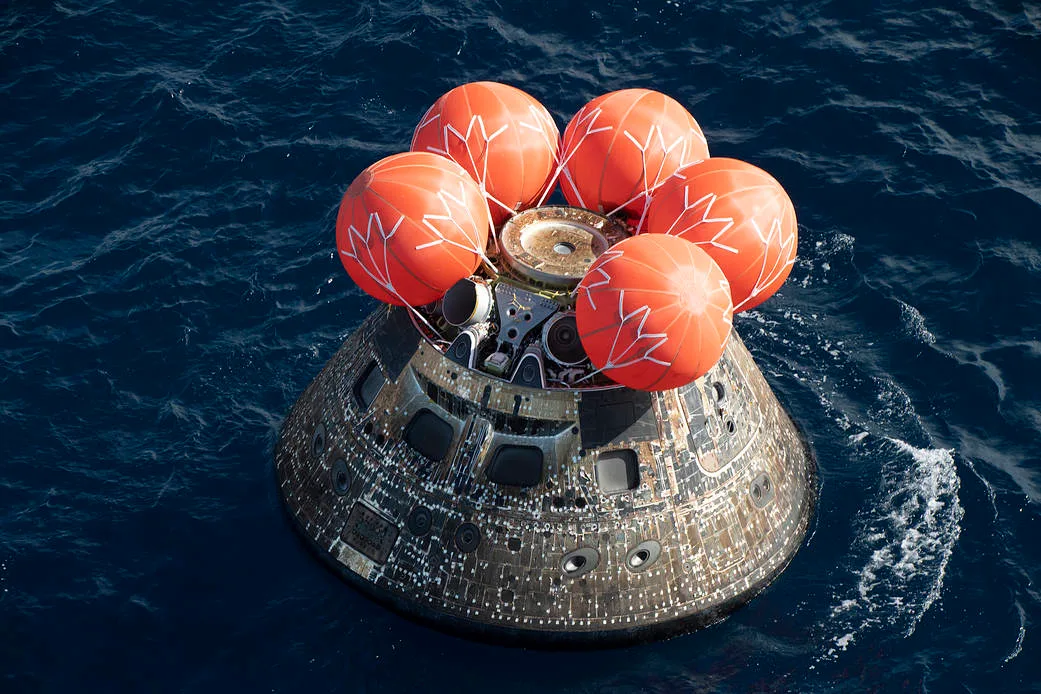
The Artemis 1 Orion capsule is pictured here, from after splashdown in 2022, with its five airbags inflated. (NASA)
Roughly 1 hour after splashdown, recovery crew will approach, inflating a large raft known as The Front Porch, which they will position next to the capsule, to extract the crew. They need to wait so long to approach due to the potential for the spacecraft to be leaking toxic gases — either the hydrazine the Orion capsule uses for fuel, ammonia from the coolant system, or possibly both.
Once they open Integrity's hatch, Christina Koch will be the first out, followed by Victor Glover. Then, Jeremy Hansen will be next, and finally Reid Wiseman will disembark last.
Once the four astronauts are gathered on the Front Porch, they will then be air lifted by two helicopters to the USS John P. Murtha, with Koch and Glover in one, and Hansen and Wiseman in the other.
6:45 p.m. EDT
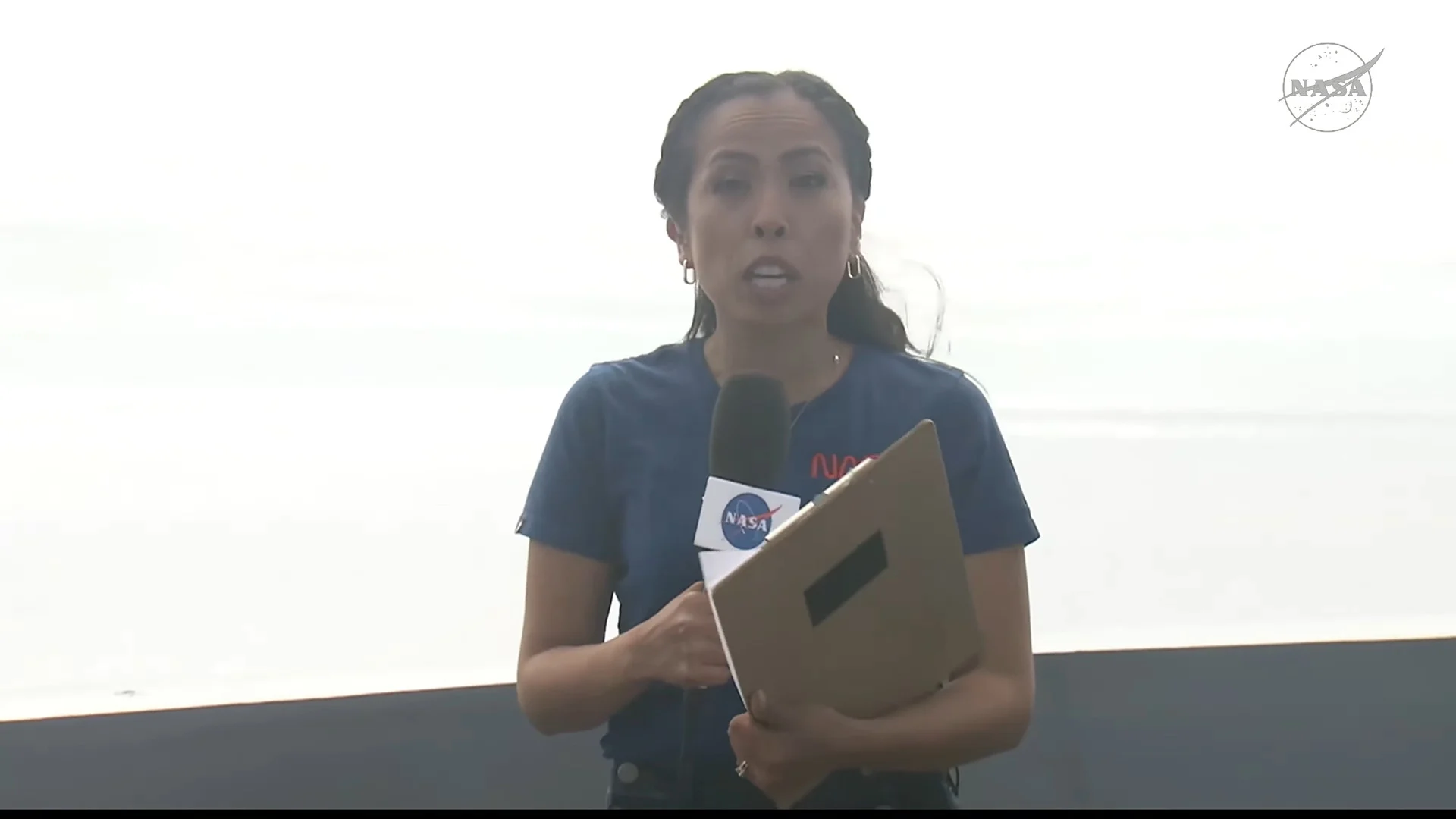
Megan Cruz, from Kennedy Space Center, is reporting from the deck of the USS John P. Murtha, in the Pacific Ocean off the coast of southern California.
(NASA TV)
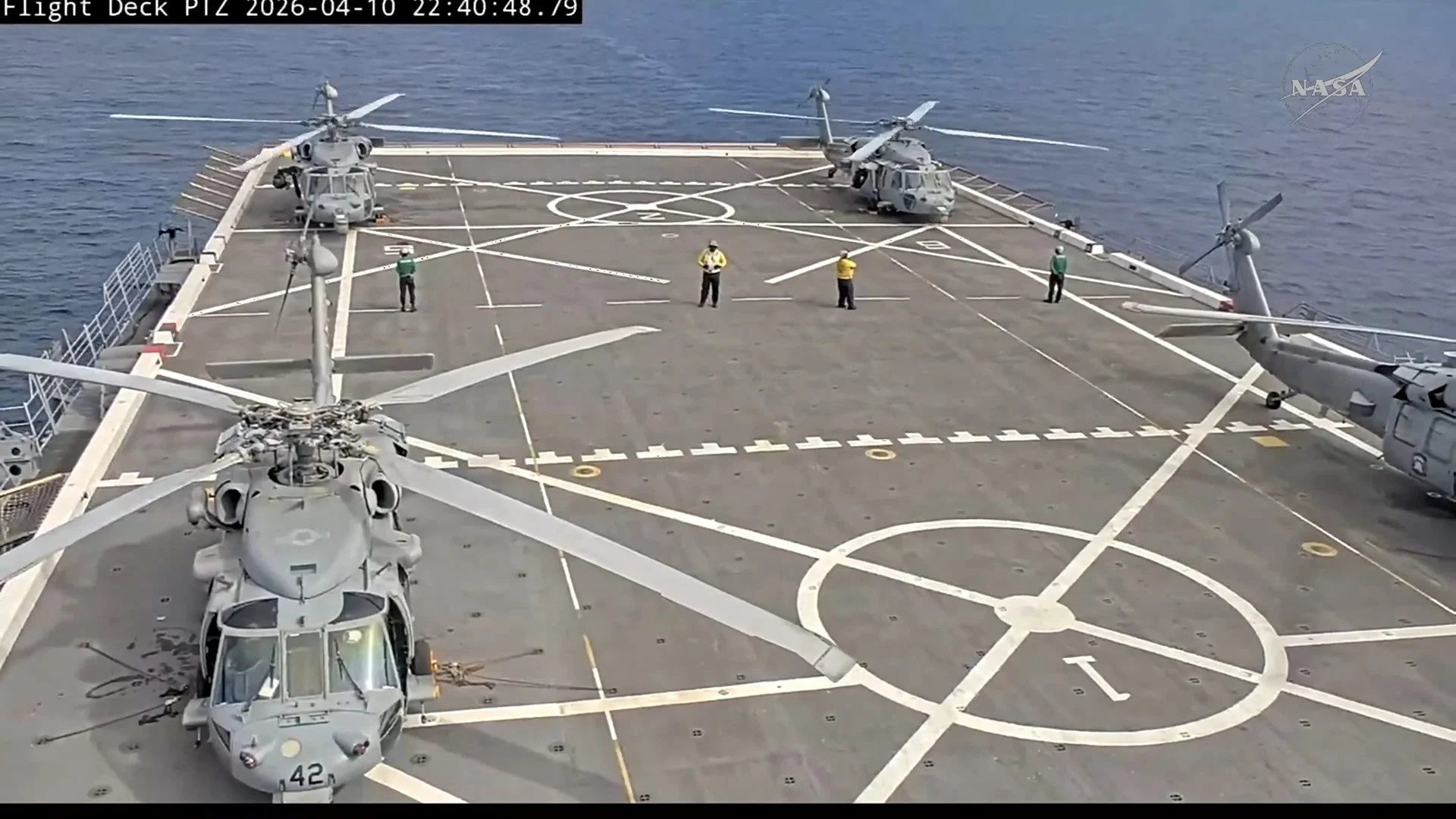
Several cameras are on board the John P. Murtha, ready to observe the Orion capsule as it descends, but also to present views of the ship's deck.
(NASA TV)
Two helicopters, at the far end of the flight deck in the screen capture, above, are standing by to retrieve the Orion crew after splashdown. Two more helicopters stand by as backup.
6:30 p.m. EDT
NASA's live coverage of the Artemis 2 reentry, descent, and splashdown has now begun.
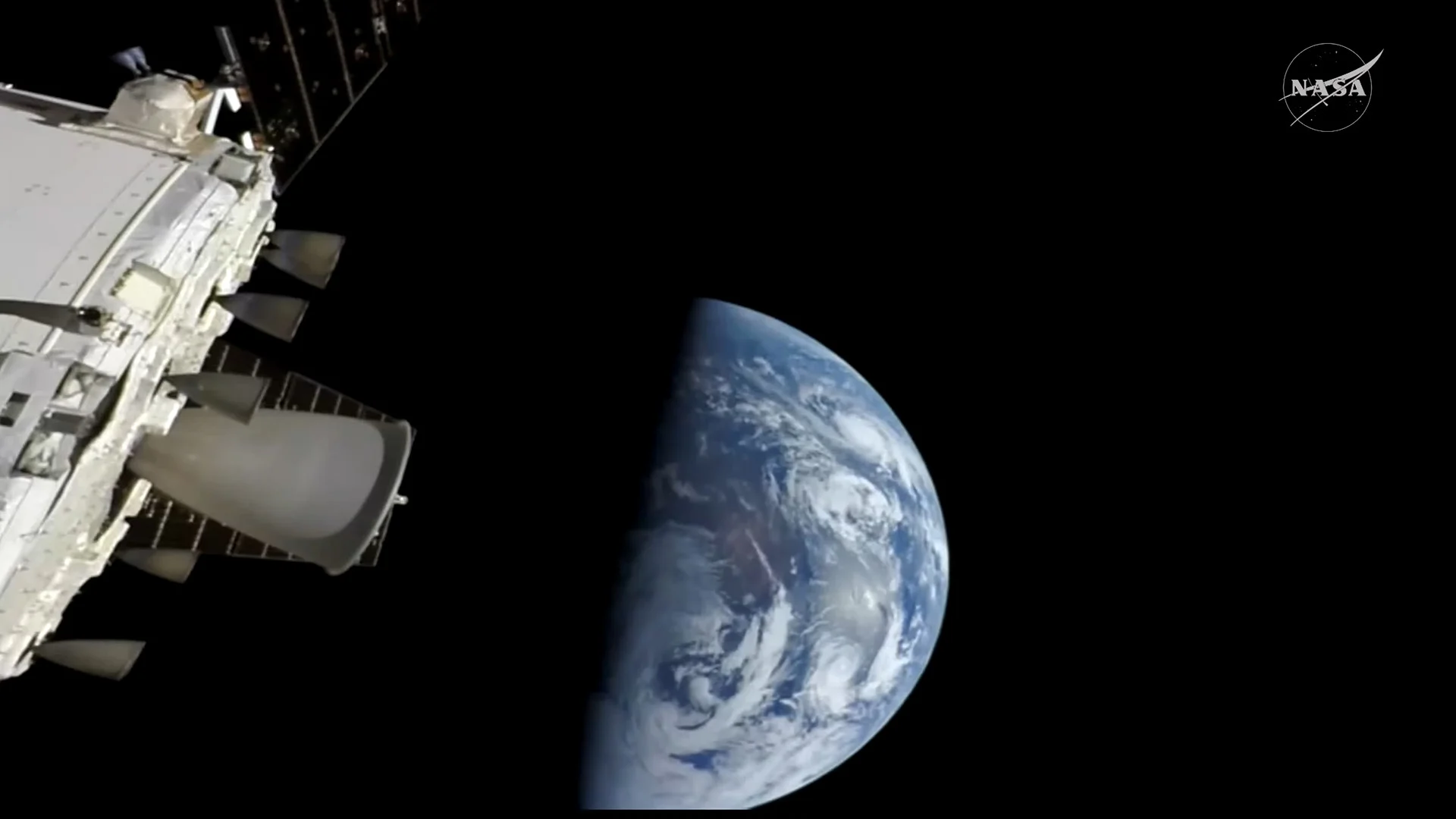
The view from one of Orion's solar panel cameras, just before 6:30 p.m. EDT, on April 10, 2026. (NASA TV)
The crew is on-track for a splashdown at 8 seconds after 8:07 p.m. EDT.
5:45 p.m. EDT
Mission Control has confirmed an unofficial estimate of Orion's maximum speed as it reenters Earth's atmosphere.
At 7:54 p.m. EDT, during the communications blackout between the capsule and Mission Control, Orion should achieve a speed of 39,688.37 kilometres per hour.
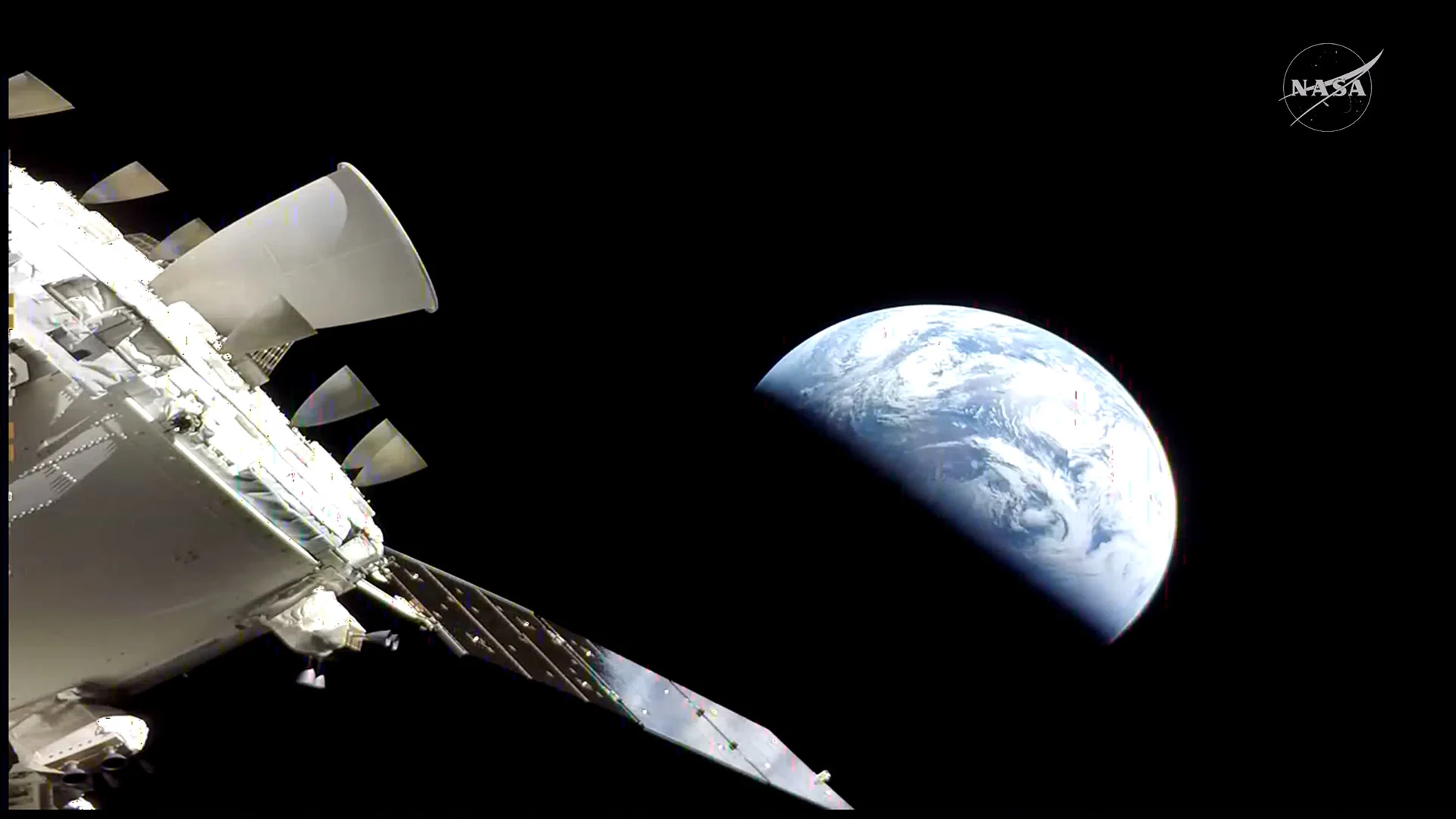
(NASA TV)
According to NASA, this is about 210 kilometres per hour short of the fastest speed ever achieved by a crewed spacecraft, which was set back in 1969 by Apollo 10.
4:58 p.m. EDT
In an exchange with CAPCOM Jacki Mahaffey, Reid Wiseman addressed a discrepancy between the calculations the spacecraft's computer made regarding the upcoming raise burn.
The crew on Orion expected the raise burn to last only 19 seconds, by the schedule. However, the computer was returning a time of 44 seconds, total, which was way out of bounds.
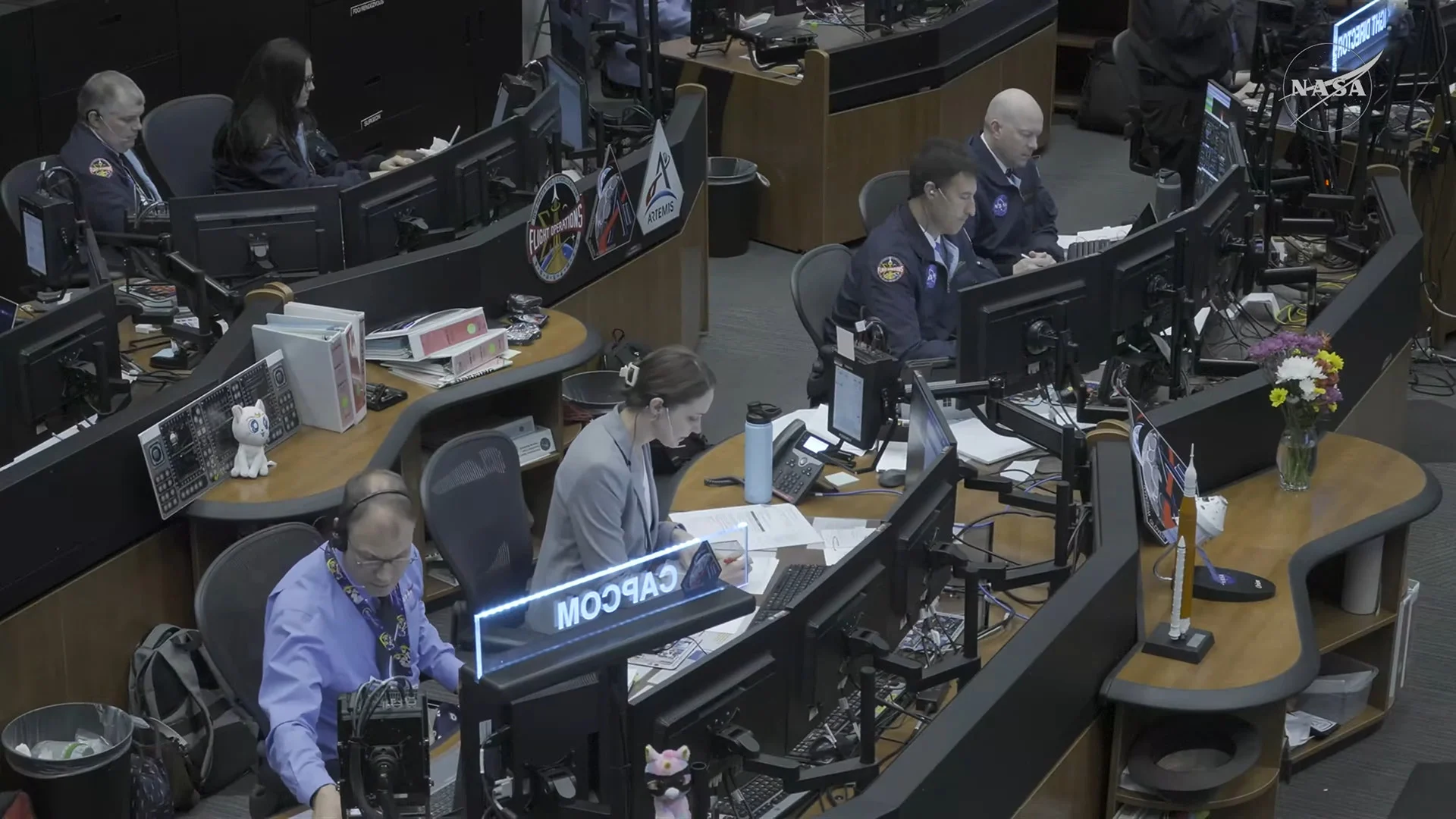
CAPCOM Jacki Mahaffey sits at her station, answering the crew's questions as they prepare to return to Earth. (NASA TV)
CAPCOM explained that the error was expected, as the computer on Orion is currently taking into account that it is still connected to the European Service Module. The discrepancy was due to the extra mass of the SM, and once it was ejected, the calculations would work out.
"I remember that class in November 2023, in building 5, on the third floor. Thank you, very much," Wiseman replied.
4:35 p.m. EDT
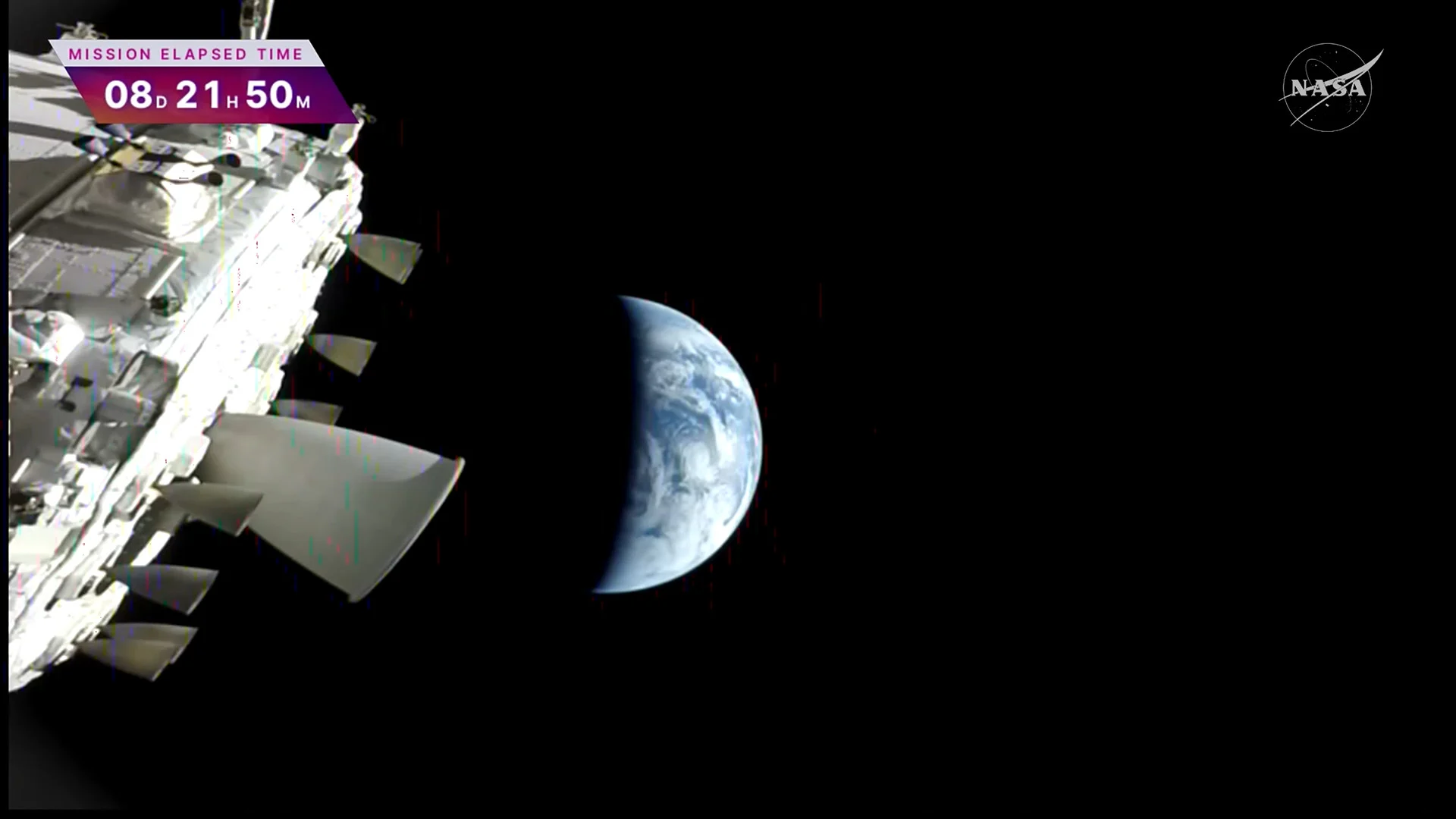
Likely due to skipping a few steps as they secured their capsule for re-entry (as those steps were unnecessary), the crew requested to start the pre-entry checklist 30 minutes earlier than originally planned. This includes breaking out their entry suits, which they will don and conduct leak checks.
(NASA TV)
The crew is currently on track for the separation of the European Service Module as 7:33 p.m. EDT. A 19 second firing of Integrity's thrusters will follow, about 4 minutes later, to angle the capsule back slightly, in final preparation for plunging into Earth's atmosphere.
2:50 p.m. EDT
What makes this part of the mission the riskiest is the temperatures that the crew capsule will experience during reentry, and how the Orion heat shield is designed to handle those temperatures.
During the Artemis 1 mission, in late 2022, the heat shield performed well. The capsule made it to splashdown intact, and it was determined that any crew on board, if it had been a crewed mission, would have been completely safe.
However, there were some concerns about this, as the heat shield had cracked and degraded far more than expected.

Artemis 1's Orion heat shield after reentry. (NASA)
During re-entry, the heat shield functions by becoming charred, with pieces flaking off of it to carry away some of the heat. So, although pieces of the surface layer of the shield had been torn away during the capsule's return to Earth, this was expected.
It was the extent of this damage to the shield that was the unexpected part.
This new Orion spacecraft has the same type of heat shield, and it will work in the same way. To ensure the crew remains safe, though, the entry, descent, and splashdown team has altered their path. As a result, they will make a steeper initial dive through the upper atmosphere than the Artemis 1 Orion spacecraft made, plunging from over 120 kilometres up to down around 60 kilometres in just 2 minutes.
The intention is to minimize the amount of time the heat shield is subjected to extreme temperatures. Along with the 'skip' maneuver they will perform afterward, this should reduce the stress on the shield and the risk to the crew.
__DON'T MISS: Four astronauts made history as they flew around the Moon on Monday!
2:25 p.m. EDT
Pilot Victor Glover and CAPCOM Jacki Mahaffey just concluded an exchange, finalizing the settings of a correction burn for the Orion spacecraft, to put them on the correct path for reentry.
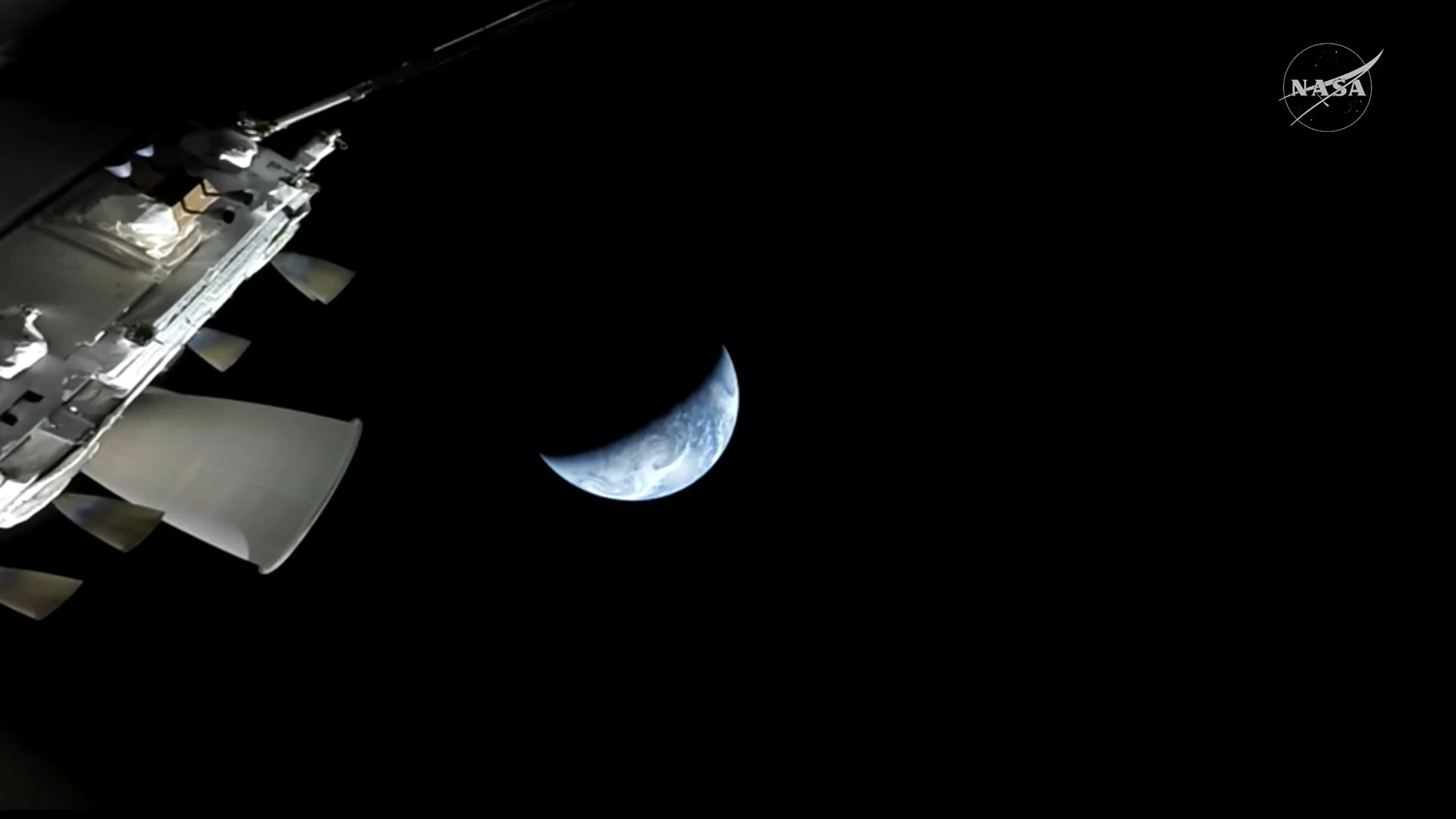
The crescent of Earth grows larger in Orion's solar panel camera views, at around 2 p.m. EDT, on April 10, 2026. (NASA TV)
According to Flight Director Rick Henfling, at Mission Control in Houston, this burn will take place at 2:52 p.m. EDT.
Henfling added that this correction burn, as well as the final raise burn before reentry, are designed to minimize the temperatures experienced by Orion's heat shield as it enters the atmosphere.
Additionally, weather conditions at the splashdown zone, off the coast of San Diego, appear to be ideal. There are broken clouds in the area, winds are only 10 knots, or 18 kph, and wave heights are only around 4 feet, or just over 1 metre.
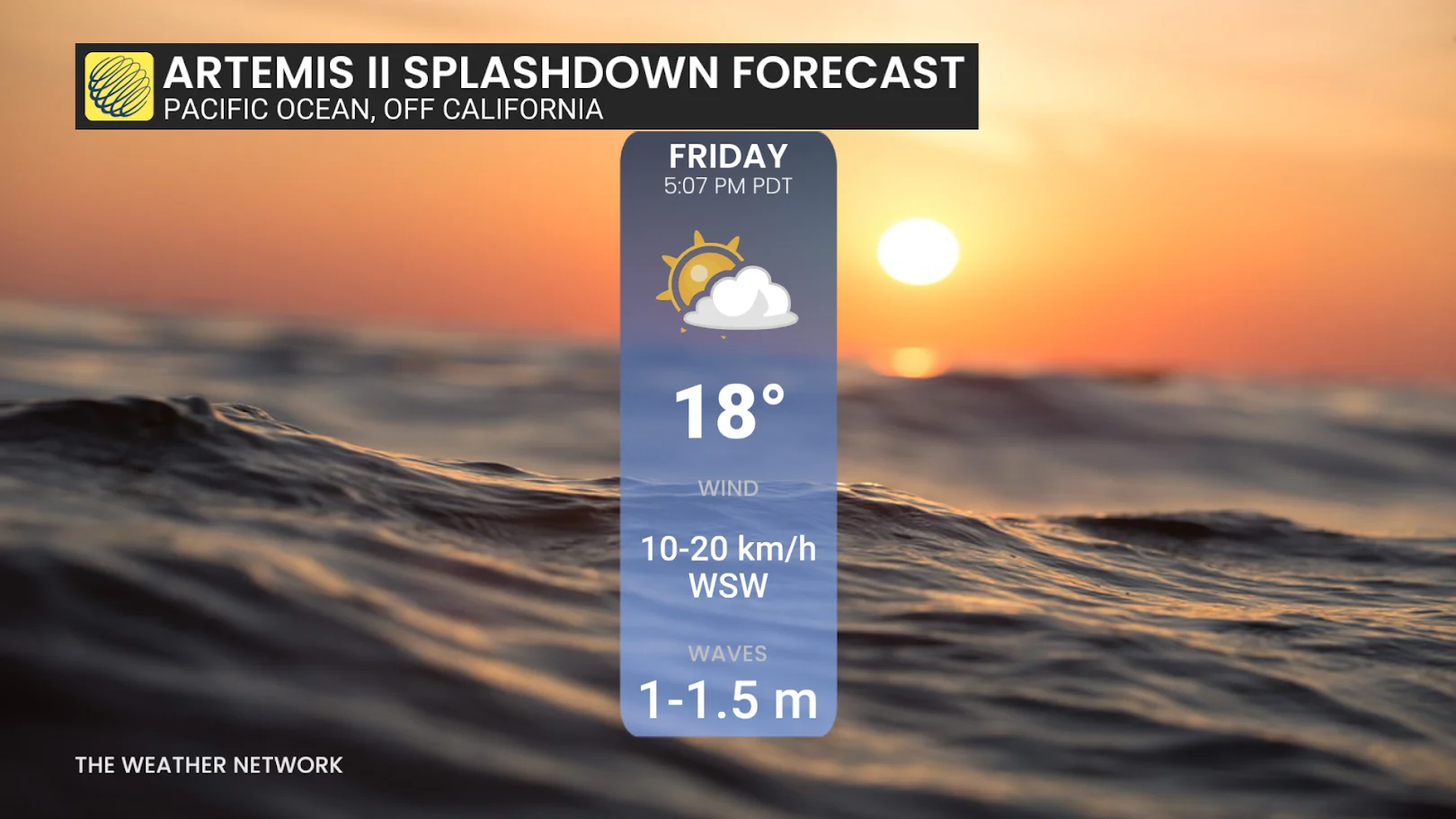
1:00 p.m. EDT
NASA's timeline for the entry, descent, and splashdown of the Artemis 2 mission begins at just before 3 p.m. EDT, as the spacecraft will make any final trajectory correction needed to bring the astronauts home.
The crew will then don their spacesuits and being working through their checklist to prepare for re-entry.
The most critical, and dangerous, portion of today's event takes place over the course of just over 30 minutes:
7:33 p.m. EDT: Orion's crew module will separate from the European Service Module. This will exposing the capsule's heat shield for the return through Earth's atmosphere.
7:37 p.m. EDT: Orion will perform an 18 second crew module raise burn, to set up their proper entry angle and align the heat shield for atmospheric interface.
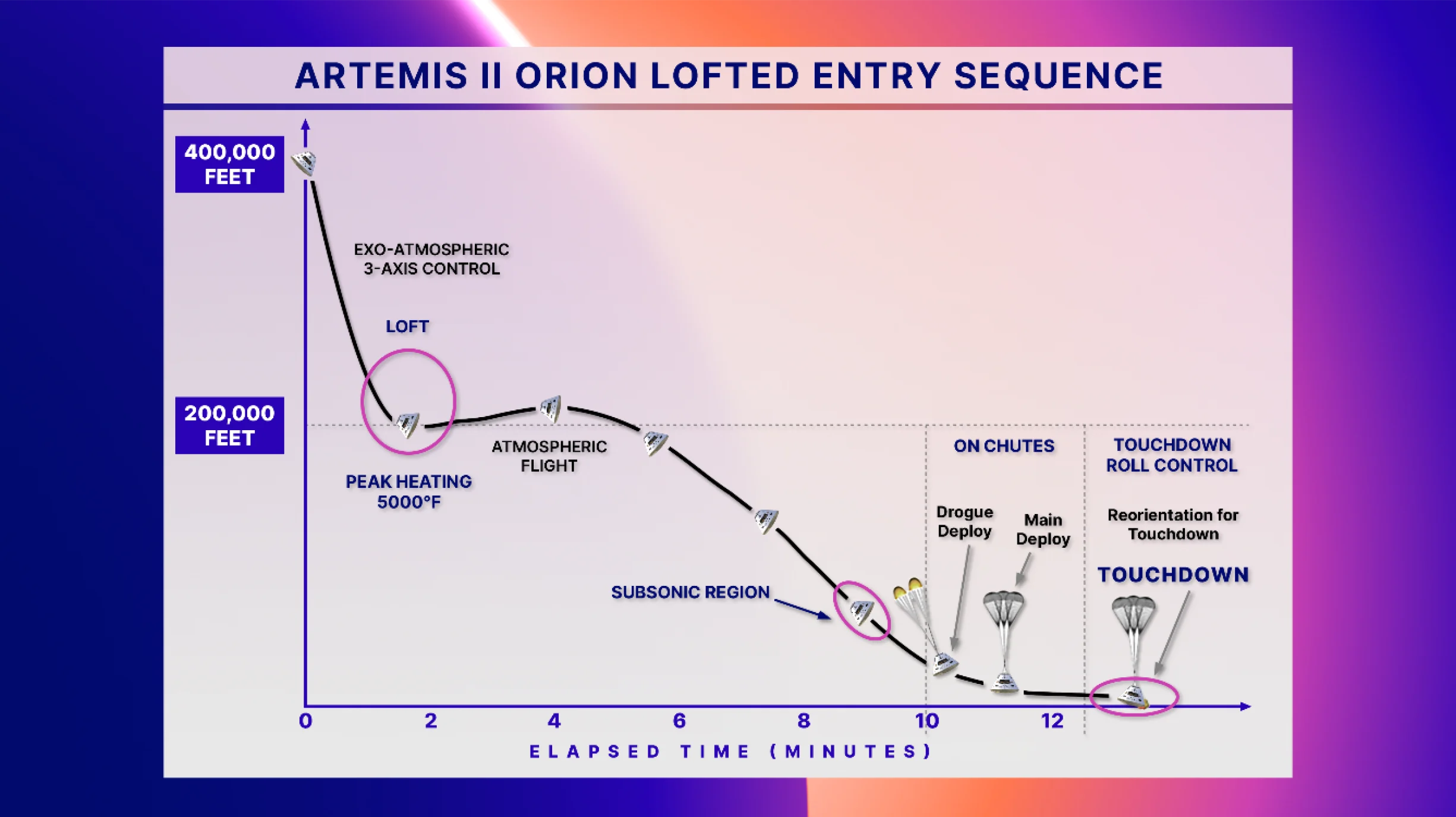
Artemis 2's reentry sequence. (NASA)
7:53 p.m. EDT: Orion reaches around 122 kilometres above Earth's surface, travelling at around 35 times the speed of sound. This is the spacecraft's first contact with the upper atmosphere. The crew is expected to experience up to 3.9 Gs as the atmosphere slows their capsule, and this will begin a planned six-minute communications blackout due to the plasma build-up around the capsule. During its descent, the capsule will roll from side to side, to shift the position of peak heating on the heat shield, allowing the most extreme heat to bleed off into the surrounding thin air.
7:55 p.m. EDT: At roughly 61 km above the surface, the heat shield will reach peak heating, at an estimated 2,760°C, and the spacecraft will perform a brief 'skip', taking on atmospheric flight to take the pressure off the heat shield, before resuming its plunge roughly 2 minutes later.
7:59 p.m. EDT: The planned communications blackout will end, and NASA will attempt to re-establish comms with the crew.
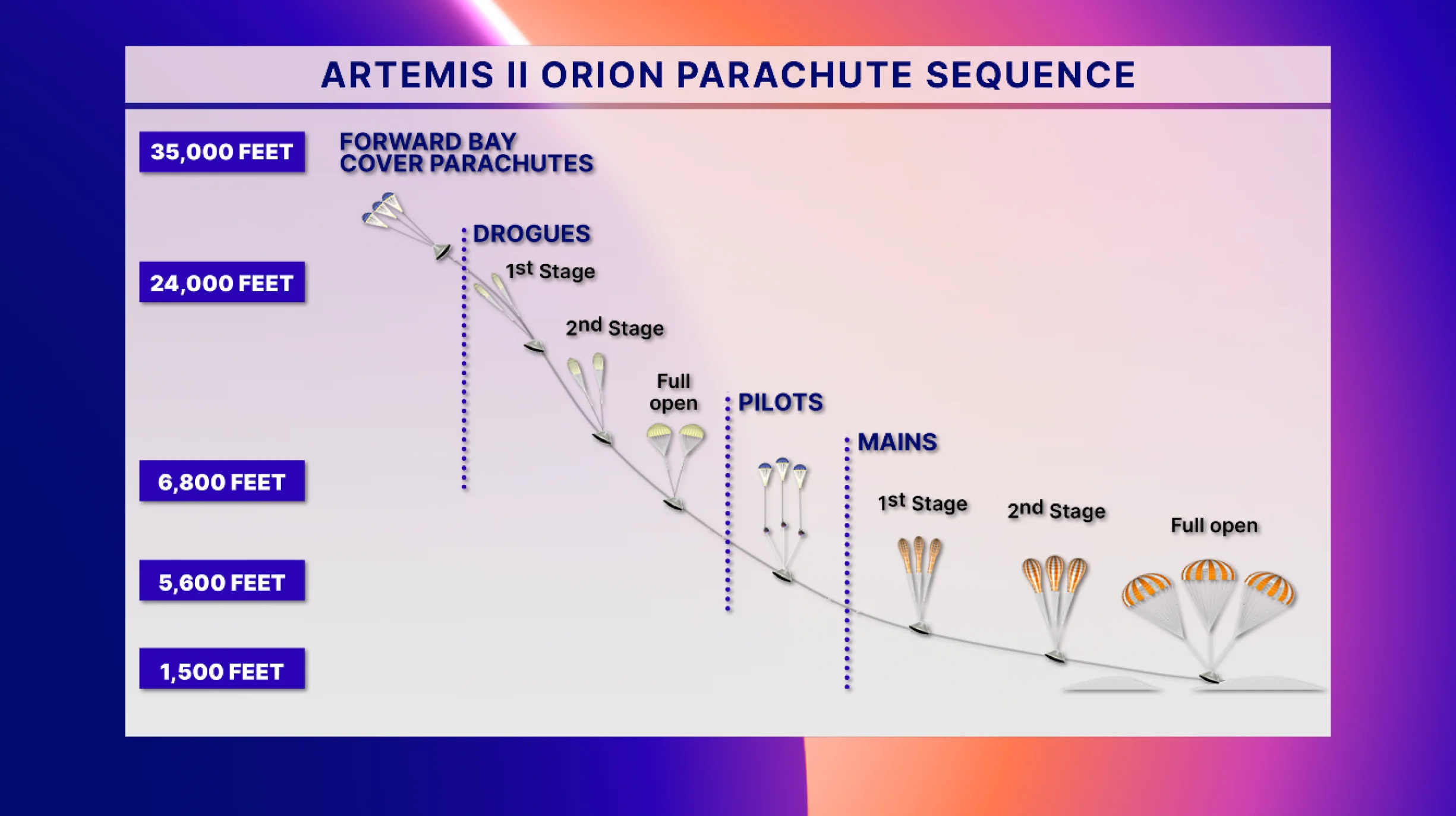
The parachute deployment sequence for Artemis 2. (NASA)
8:02 p.m. EDT: At this time, the Orion capsule will be sub-sonic, and now travelling slow enough for the deployment of parachutes.
8:03 p.m. EDT: Around 6.7 km up, the first of three sets of parachutes will deploy. These drogue parachutes will slow and stabilize the capsule as Orion nears splashdown.
8:04 p.m. EDT: At around 1.8 km, the drogues will be released, followed by three pilot chutes deploying, which will guide the three main parachutes in their deployment. As the main chutes inflate, it will reduced Orion's speed to around 40 kilometres per hour.
8:07 p.m. EDT: Slowing to just 6 kph with the main parachutes, Orion will splash down in the Pacific Ocean off the coast of San Diego.
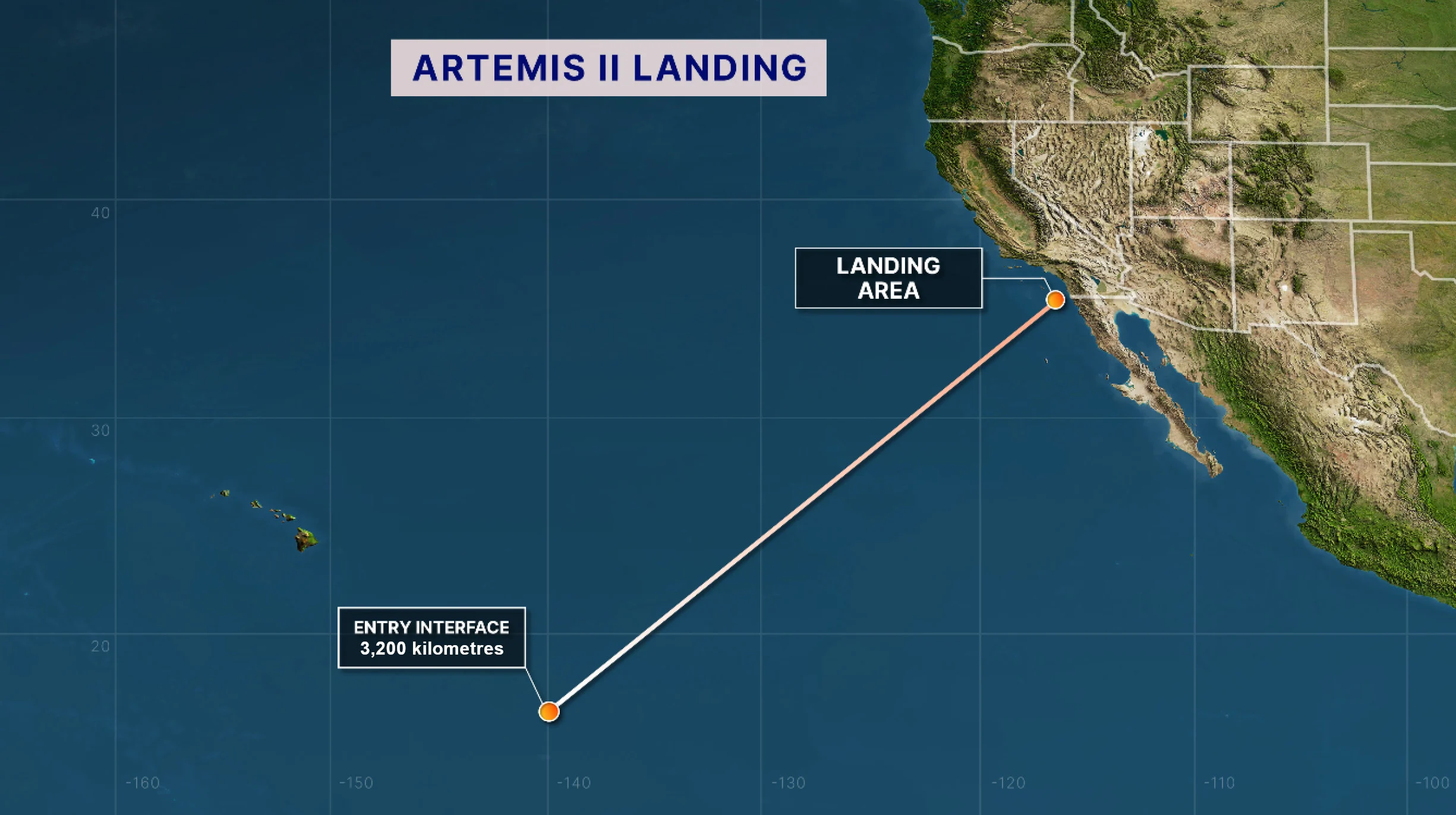
The flight path ground track of the Orion capsule for the splashdown of the Artemis 2 mission. (NASA)
Editor's note: a previous version of this article misreported the pairings of astronauts on the helicopters from the Orion capsule to the USS John P. Murtha. This has been corrected, and we apologize for any confusion.
(Thumbnail image, courtesy NASA, depicts a computer simulation of the Orion capsule entering Earth's atmosphere from space, passing over a dark region of ocean water, towards splashdown. An inset image shows a closeup view of the capsule and the plume of plasma enveloping it during this stage of re-entry.)