Solar storm impact may spark bright auroras across Canada tonight

Check for clear skies in tonight's forecast, for a chance to see the Northern Lights!
A massive eruption from the Sun over the weekend is fast approaching Earth, and will likely spark displays of the Aurora Borealis across Canada when it arrives, Monday night.
On the afternoon of Saturday, December 6, a strong solar flare exploded from the Sun. Originating from sunspot 4299, which was aimed directly at Earth at the time, it also caused the eruption of a coronal mass ejection out into space, which is currently speeding towards us.

The M8-class flare captured at 20:39 UTC (3:39 p.m. ET) on Dec. 6, 2025, is shown in extreme ultraviolet light by NASA's Solar Dynamics Observatory (left). The CME that erupted due to this flare (three panels, right), captured by the Solar and Heliospheric Observatory at 3-hour intervals after its eruption. (NASA, NASA/ESA)
Although the brightest portion of the cloud appears to expand away from the eastern limb of the Sun (shown on the right, above), this eruption actually formed a 'halo CME', as it expanded away in all directions. This indicates that the resulting solar storm is aimed more or less directly at Earth.
Computer forecast models from NOAA's Space Weather Prediction Center also show this, along with revealing more details about the structure of the solar storm when it arrives here.
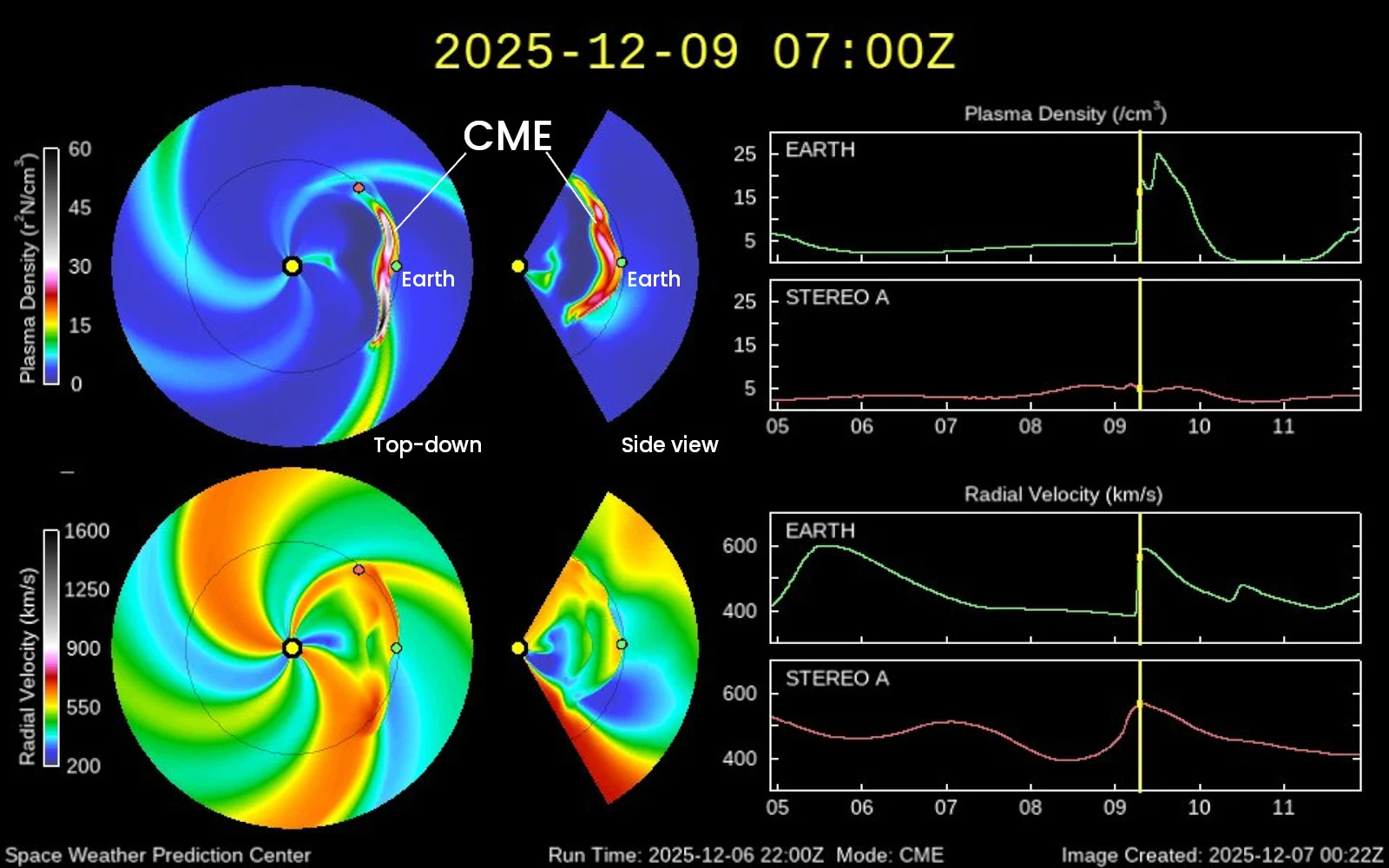
This model run shows the CME arriving early on December 9 (UTC time), formed into a long, stretched-out ribbon at the time. It appears as though the portion that is immediately Earth-effective is lower density than the rest. (NOAA SWPC)
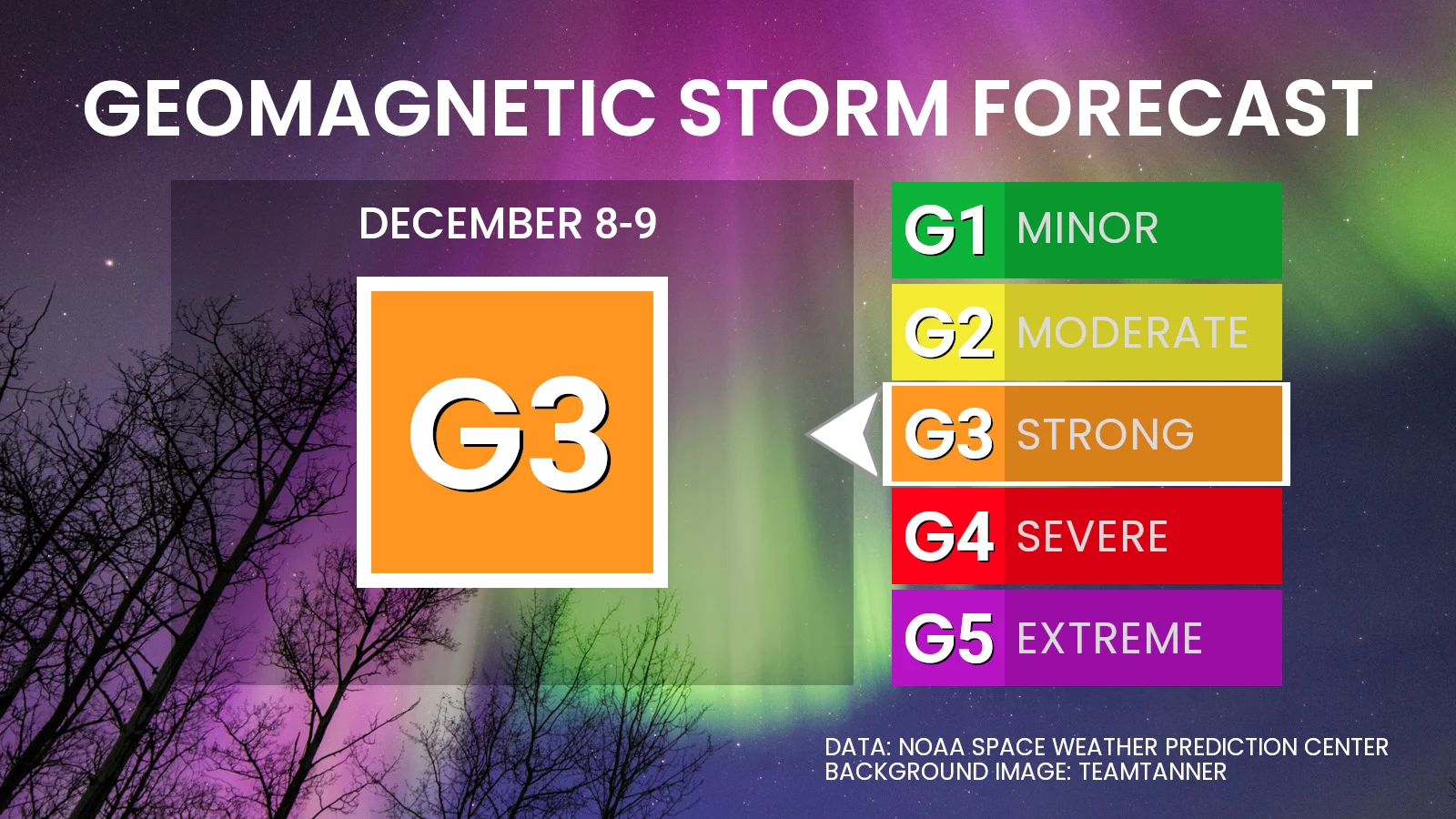
Based on the apparent density of the solar storm, the speed it is travelling, and likely amount of energy the cloud absorbed from the M8-class flare, SWPC forecasters have issued a G3 (strong) geomagnetic storm watch for overnight on Monday, December 8, through Tuesday, December 9.
As of their Monday AM forecast, they are anticipating G1 (minor) geomagnetic storm levels to start off on Monday night. Levels could then ramp up to G2 (moderate) from 03-06 UTC (10 p.m. - 1 a.m. EST), G3 (strong) from 06-09 UTC (1-4 a.m. EST), and may persist at G2 to G3 strength from 09-15 UTC (4-10 a.m. EST).
From the Canadian Space Weather Forecast Centre, geomagnetic activity is expected to be very low throughout the first half of the night, tonight. Then, starting at 6 UTC (1 a.m. EST), it could ramp up to Active with Stormy Intervals, which would peak at around 9 UTC (4 a.m. EST/2 a.m. MST), and then slowly ramp down again for the rest of the night.
Who will see auroras?
With the timing of this event, it seems that auroras could be active right across Canada throughout the night.
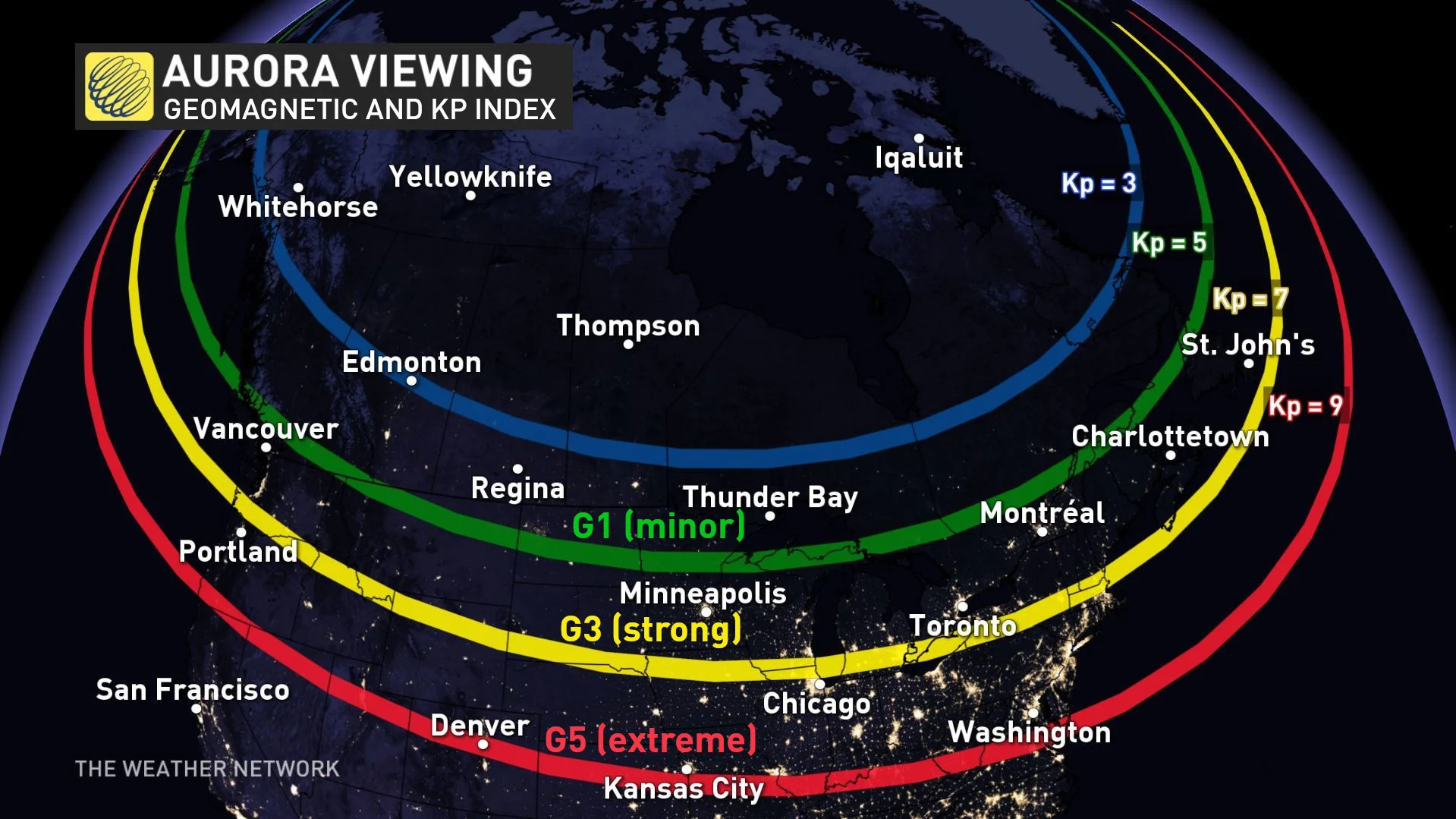
The G2 levels forecast by SWPC, to start, would push the aurora oval down over Atlantic Canada in the hours around midnight (AST/NST, although it may miss eastern Newfoundland (including St. John's) and parts of Nova Scotia. Auroras may be visible in Quebec, north of the St. Lawrence, as well as eastern and northern Ontario around that same time (11p-1a, EST).
By the time the G3 levels start, auroras may push farther down into Atlantic Canada, but this will also favour western Quebec through Manitoba, with auororas potentially reaching down to be visible even in southwestern Ontario. As the most light-polluted region of the country, observers in SW Ont are advised to get as far away from city lights as possible for the best chance to see anything.
For the rest of the night, the Prairie Provinces will likely get the best show, as G2 and G3 level auroras can appear directly overhead.
READ MORE: How to get the most out of auroras and other night sky events
However, sky conditions will limit what can be seen.
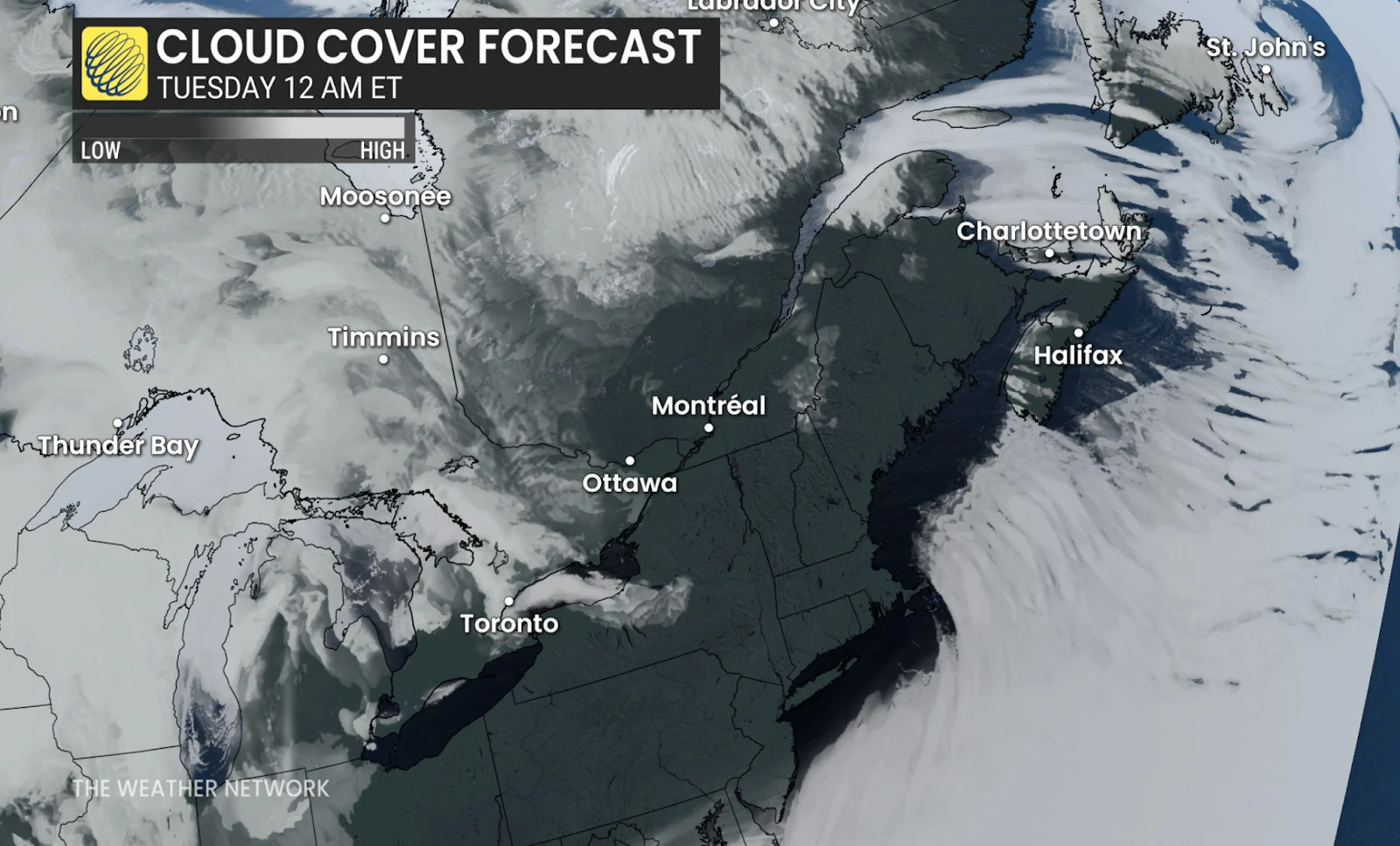
From the cloud forecast, it appears as though clear skies will dominate from the Ottawa Valley, through Quebec and New Brunswick, and across most of Nova Scotia. A mix of clear and cloudy conditions is expected through eastern Ontario, central Ontario, and west of Lake Huron. Southwestern Ontario should have clear skies closer to Lake Erie.
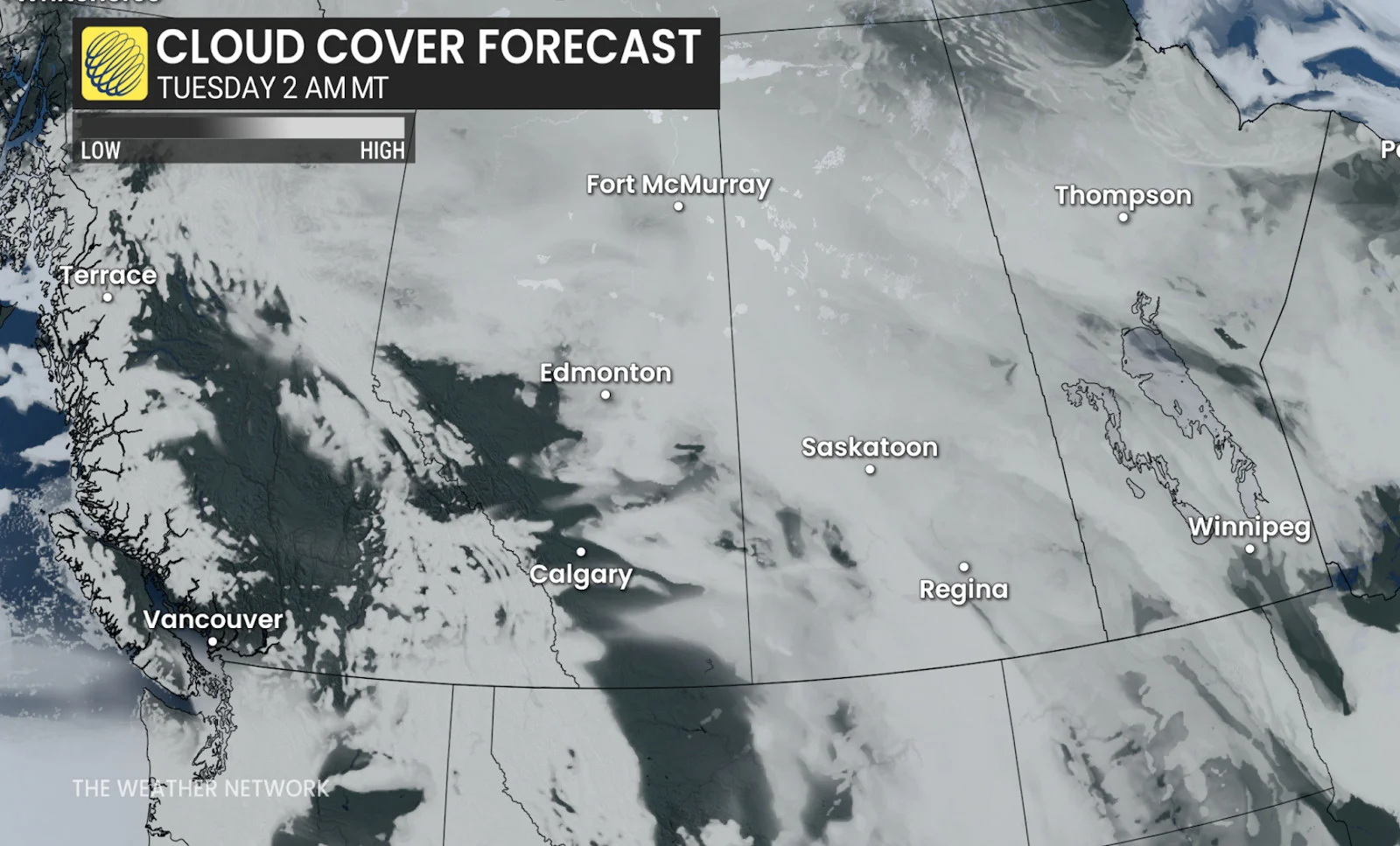
For the western half of the country, the southern half of Alberta and the B.C. interior appear to have the best chance of clear skies. However, the best viewing in Alberta looks to be closer to the leeside of the mountains, with cloud filling in farther east.
There still appears to be some small clear breaks, especially in southern Manitoba and southwestern Saskatchewan. So, that may offer opportunities to spot the auroras throughout the night.
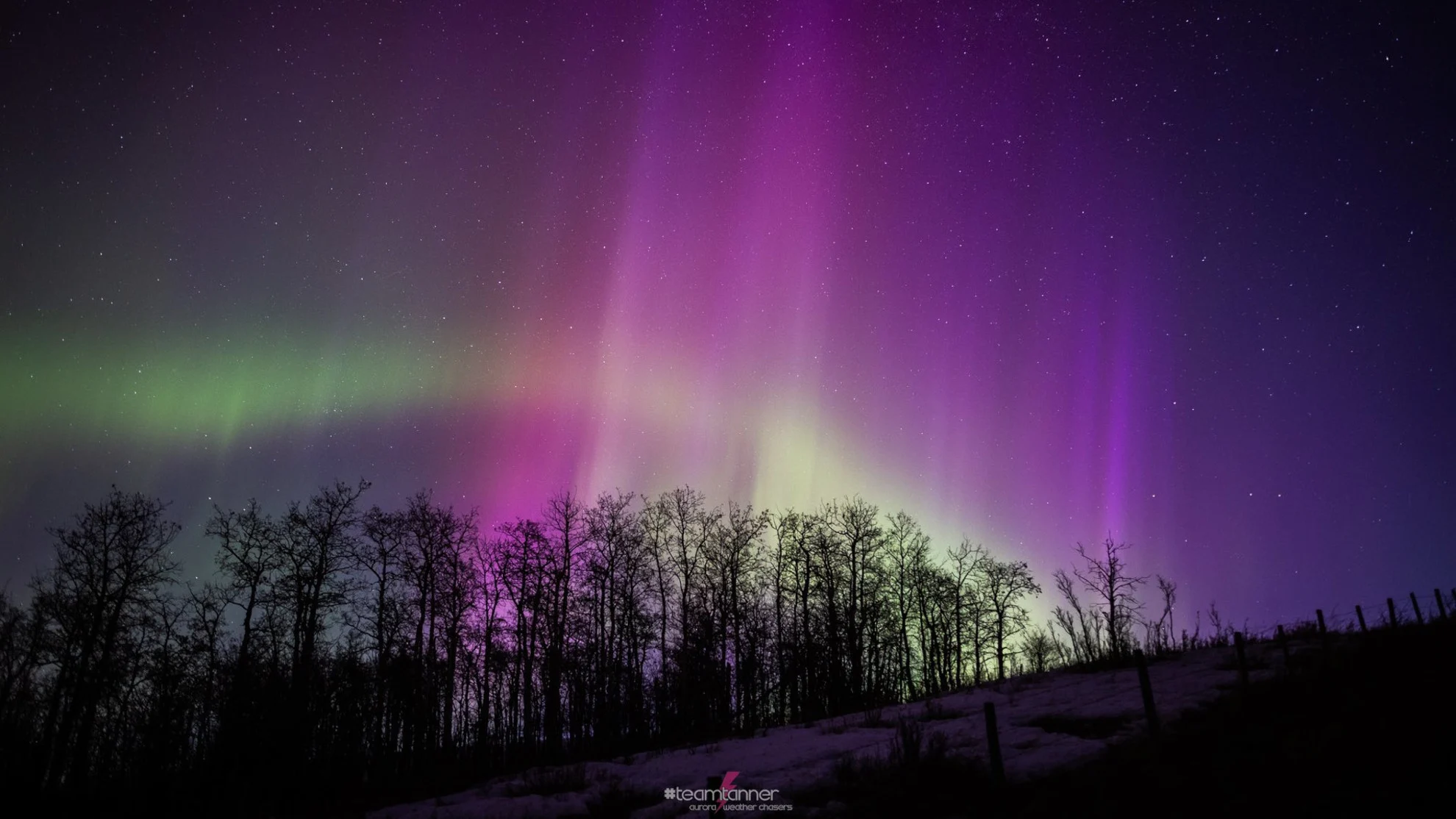
(Thumbnail image is a bright display of the Northern Lights captured from central Alberta by aurora and storm chasers Tree and Dar Tanner, on March 23, 2023.)