
Artemis 2 live updates: The first crewed Moon mission since 1972 to launch today

Four astronauts are about to blast off on a historic new flight around the Moon and back.
Commander Reid Wiseman, Pilot Victor Glover, and Mission Specialist Christina Koch from NASA, along with Mission Specialist Jeremy Hansen from the Canadian Space Agency, are expected to lift off later today, April 1, 2026, from NASA's Kennedy Space Center. Their mission: to become the first human crew to fly to the Moon and back since Apollo 17 in 1972.
The Artemis 2 launch window opens at 6:24 p.m. Eastern Daylight Time.
READ MORE: Will fair weather hold for Wednesday's historic Artemis 2 Moon launch?
Live updates for this historic test flight will be published below.
1:10 p.m. EDT
Both the SLS core stage and upper stage are now fully fuelled and in "replenish mode" for both liquid hydrogen and liquid oxygen.
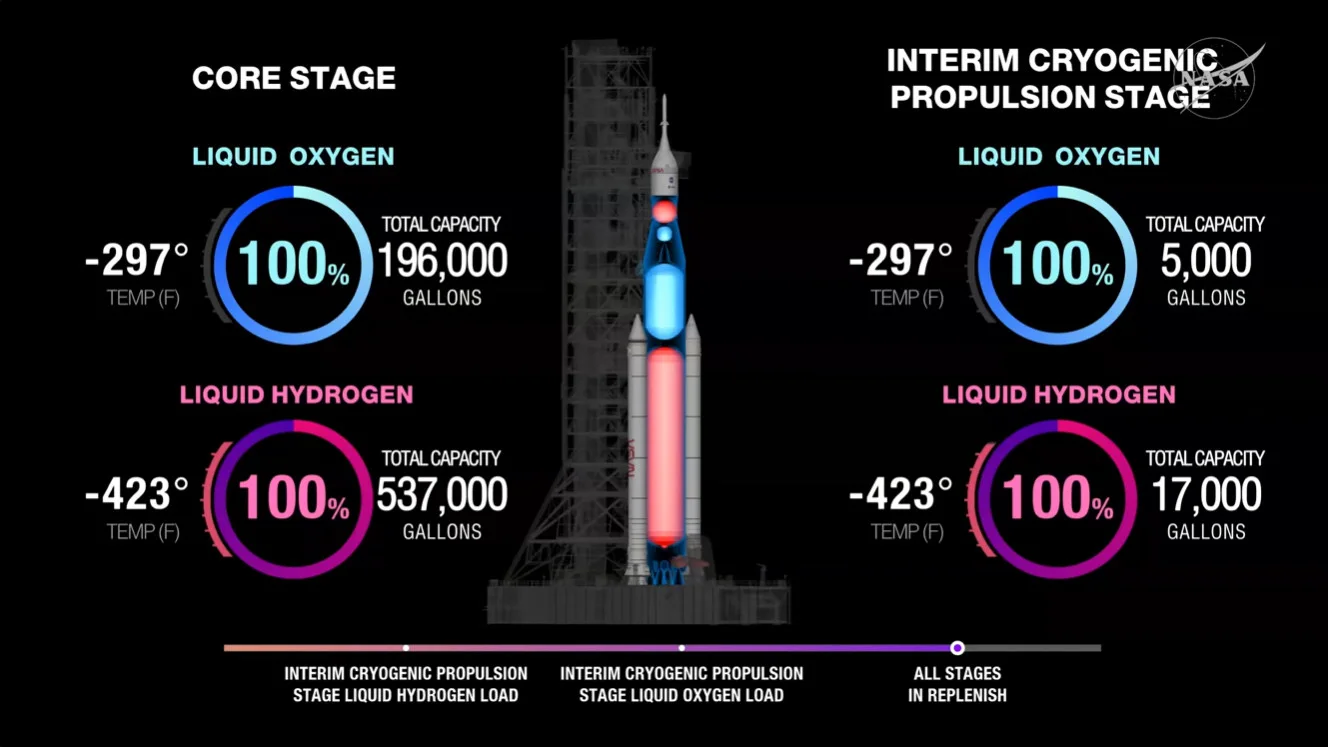
(NASA TV)
The ground crew also reports that there are no leaks from the fuel system, which is excellent news after the problems noted during a the previous fueling attempt, as they conducted wet dress rehearsal on Thursday, February 19.
12:20 p.m. EDT
As of about 6 hours from when the Artemis 2 launch window opens, the launch weather officer informed mission control that some showers were expected over the next couple of hours, but there is no threat of lightning.
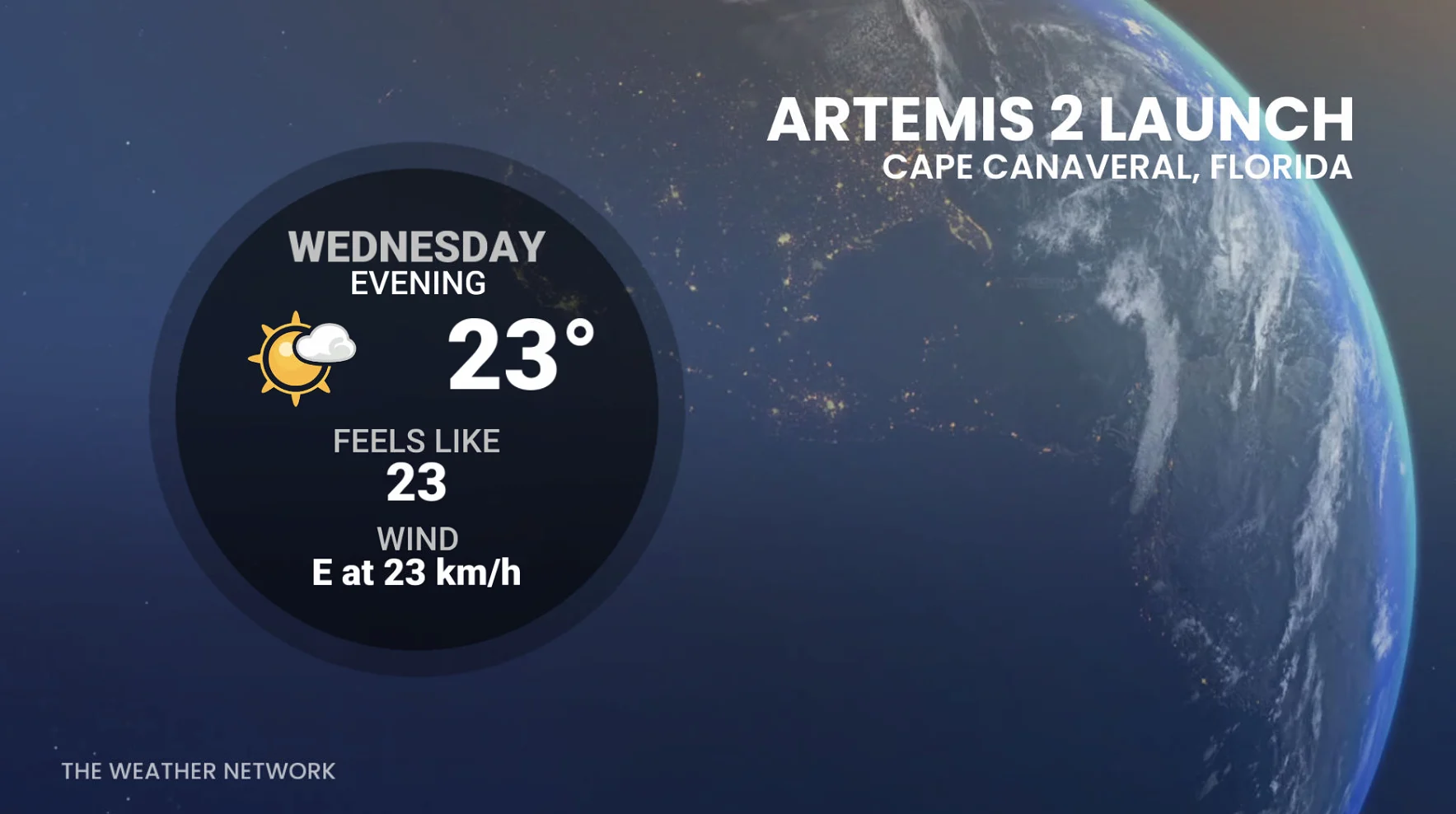
However, they are still expecting weather conditions to be 80 per cent "go" for the launch window later today.
DON'T MISS: Look up in April! Two comets may shine along with the Lyrid meteor shower
11:46 a.m. EDT
A long tradition for NASA's human spaceflight missions continues with Artemis 2, as the crew will be bringing a "zero-gravity indicator" on the Orion spacecraft with them.
Zero-gravity indicator is a fancy name for a small plushie that accompanies the crew in their capsule. While everyone and everything else on the flight is either stowed or secured, this item is left out, so that it will begin to float once they reach orbit, indicating to the crew that they are, indeed, experiencing zero-g.
The Artemis 2 zero-g indicator is named "Rise."
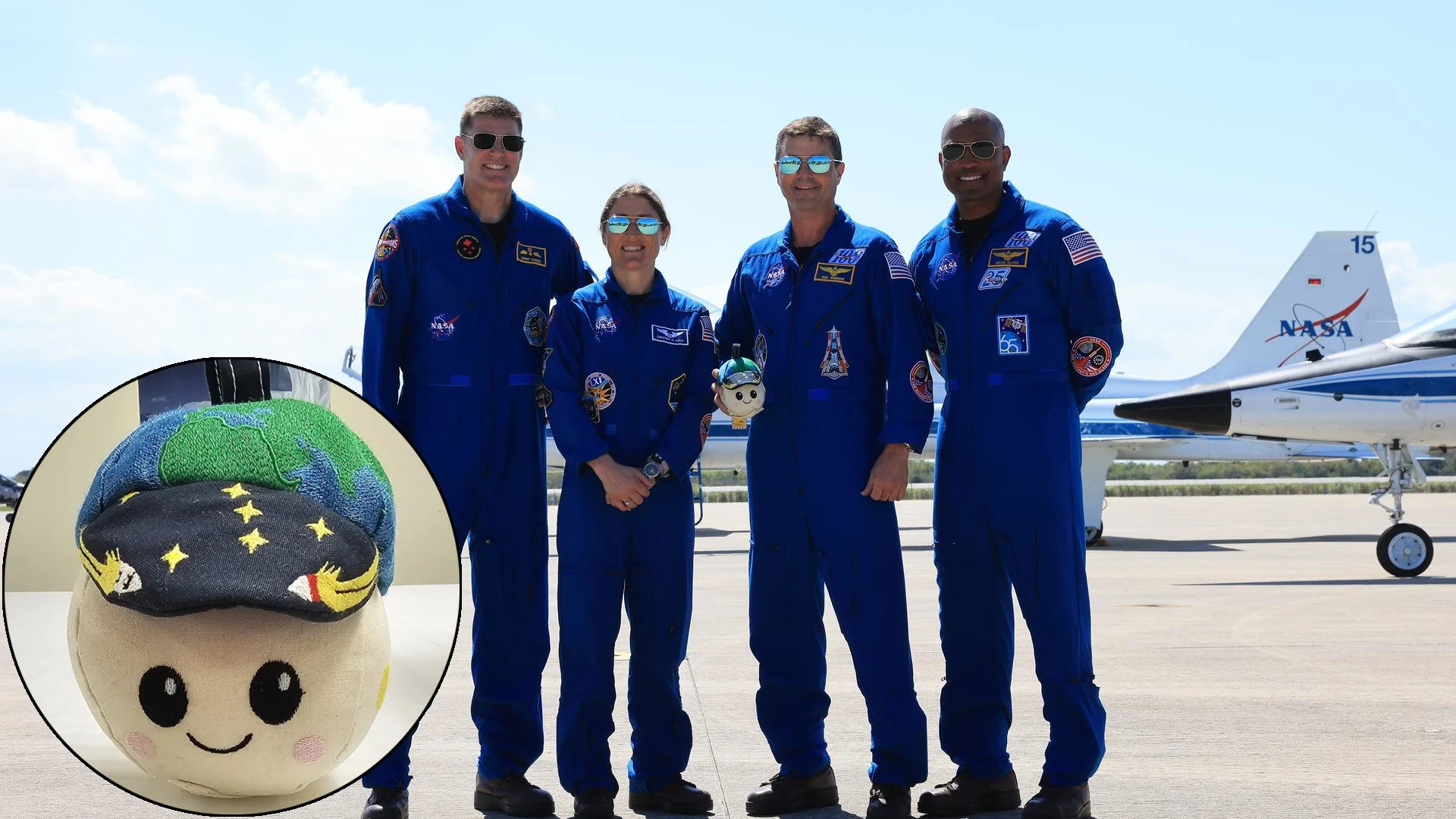
From left to right, CSA astronaut Jeremy Hansen, NASA astronauts Christina Koch, Reid Wiseman, and Victor Glover stand on a flight runway at Kennedy Space Center, with Wiseman holding "Rise," the small plush zero-g indicator the crew will bring with them on the Orion spacecraft. Inset, lower left: a closeup of Rise. (NASA/Kim Shiflett)
Designed by Lucas Ye of Mountain View, California, "Rise" was inspired by the iconic Earthrise moment captured by the Apollo 8 crew as they emerged from the far side of the Moon, during their mission in December 1968.
Rise was one of 25 finalists, picked last August from over 2,600 submissions that came in from around the world as part of a public contest to choose the Moon Mascot of this mission.
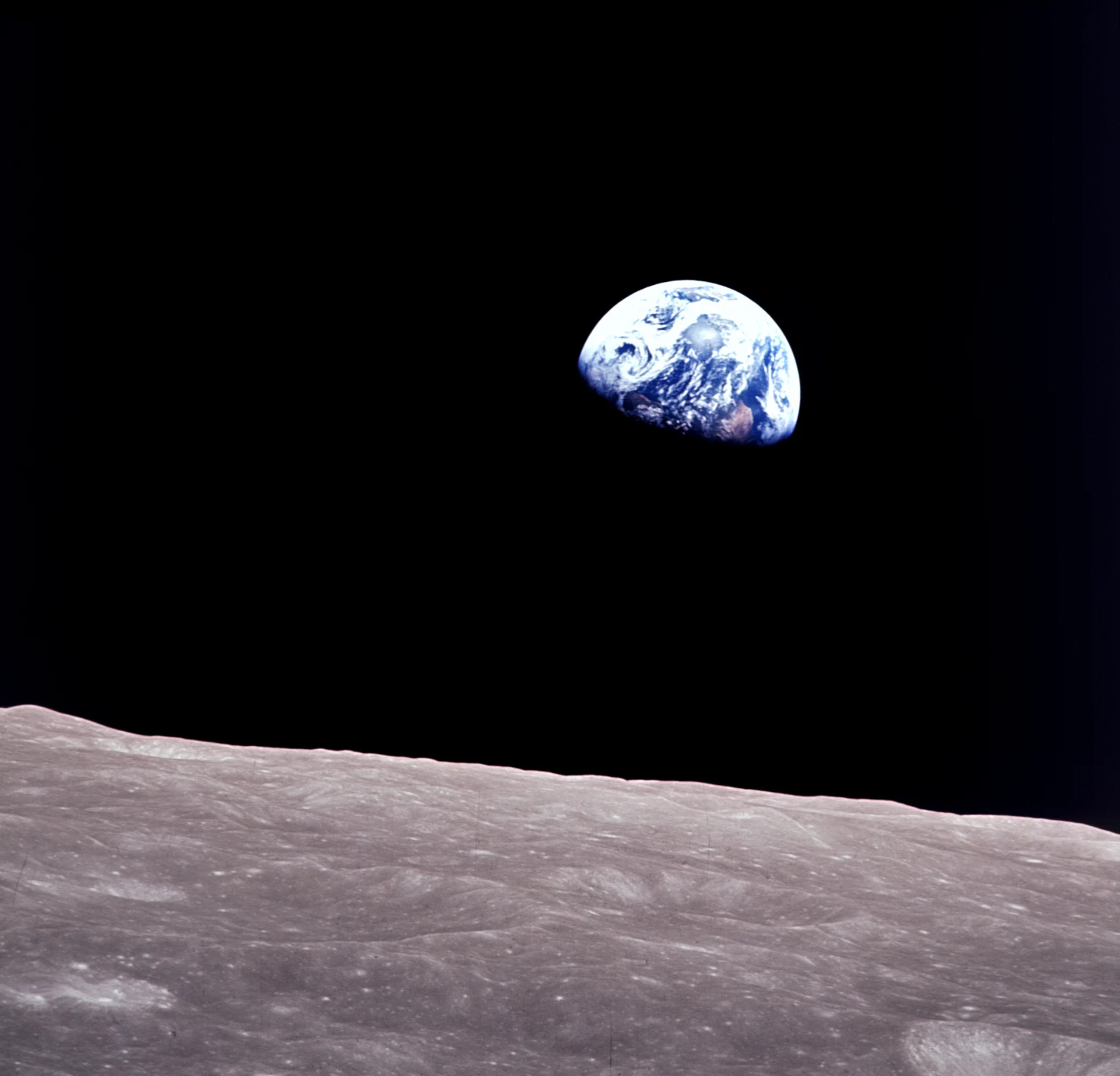
The Apollo 8 Earthrise photo, taken by NASA astronaut William Anders on December 24, 1968. (NASA)
The astronauts on board the spacecraft will be able to tell they are in space simply by the feel. Since they are strapped in and everything else in the capsule is stowed away, for safety, this little plush provides a proof to those of us watching from the ground that they have actually reached the microgravity of Earth orbit.
11:21 a.m. EDT
The core stage of the Space Launch System rocket is now fully fuelled, and ground crews have transitioned the process to "replenish mode" for the rest of the Artemis 2 countdown to launch. For the upper interim cryogenic propulsion stage, they are in replenish mode for liquid hydrogen, and "fast fill" mode for liquid oxygen.
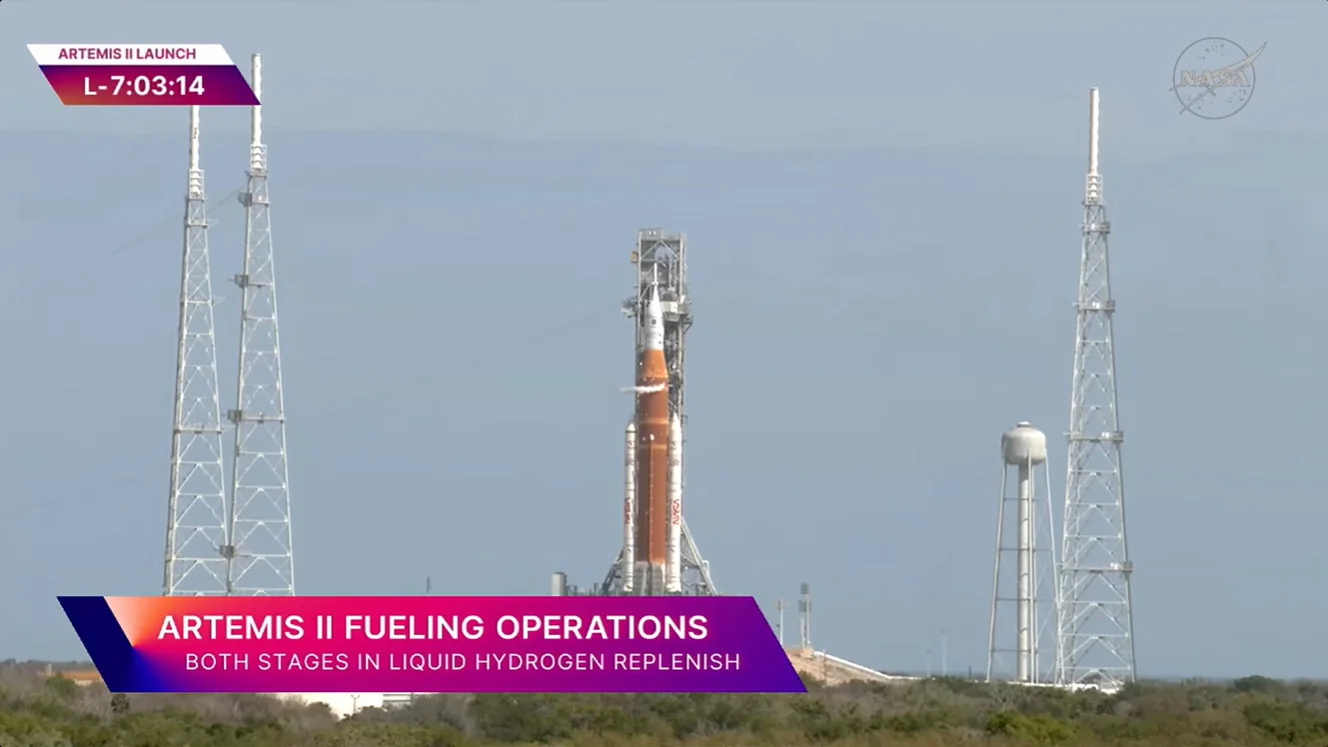
(NASA TV)
There is always some bleed-off of these supercooled fuels, which we can see as tiny plumes of gas streaming away from the rocket (as seen in the screencapture above). This "replenish mode" keeps the fuel tanks topped up and ready for lift off.
9:52 a.m. EDT
After chilling the fuel system of the upper stage of the rocket, ground crews began filling the interim cryogenic propulsion stage with liquid hydrogen.

(NASA TV)
According to NASA, "this step rapidly loads super-cold LH2 into the SLS upper stage tanks, ensuring the upper stage is fueled and ready to perform its fundamental role of raising the Orion spacecraft into a high Earth orbit ahead of a proximity operations demonstration test and Orion's translunar injection burn."
8:35 a.m. EDT
Fueling of the SLS core stage has begun, as liquid hydrogen and liquid oxygen flow into the rocket's fuel tanks.
The filling of these tanks over the next few hours begins slowsly, to ensure the least amount of temperature stress on the rocket's components, as it allows the fuel system to gradually adjust to the extremely low temperatures of the liquid oxygen (less than -183°C) and liquid hydrogen (less than -253°C).

(NASA TV)
After the system is properly chilled, the ground crew will initiate fast-fill to more rapidly load the tanks with super-chilled fuel.
7:45 a.m. EDT
NASA ground crews at Kennedy Space Center's Launch Complex 39B began the process of chilling down the fuel lines between the mobile launch platform and the Space Launch System (SLS) rocket, in preparation for those lines to transfer liquid oxygen and liquid hydrogen fuel to the rocket core stage.

(NASA TV)
According to NASA: "Chilldown is a critical step in preparing the rocket for safe and efficient fueling, reducing risks and maintaining system integrity. The process gradually cools the rocket’s plumbing and engine systems to cryogenic temperatures using super-cold liquid hydrogen, helping to prevent thermal shock and ensuring the hardware is conditioned for the full flow of propellant during tanking."