Arctic blast delays Artemis 2 Moon mission launch until at least Feb 8

With this frigid blast of Arctic air stretching down through the Gulf States, can the Artemis 2 crew still launch in time to make history?
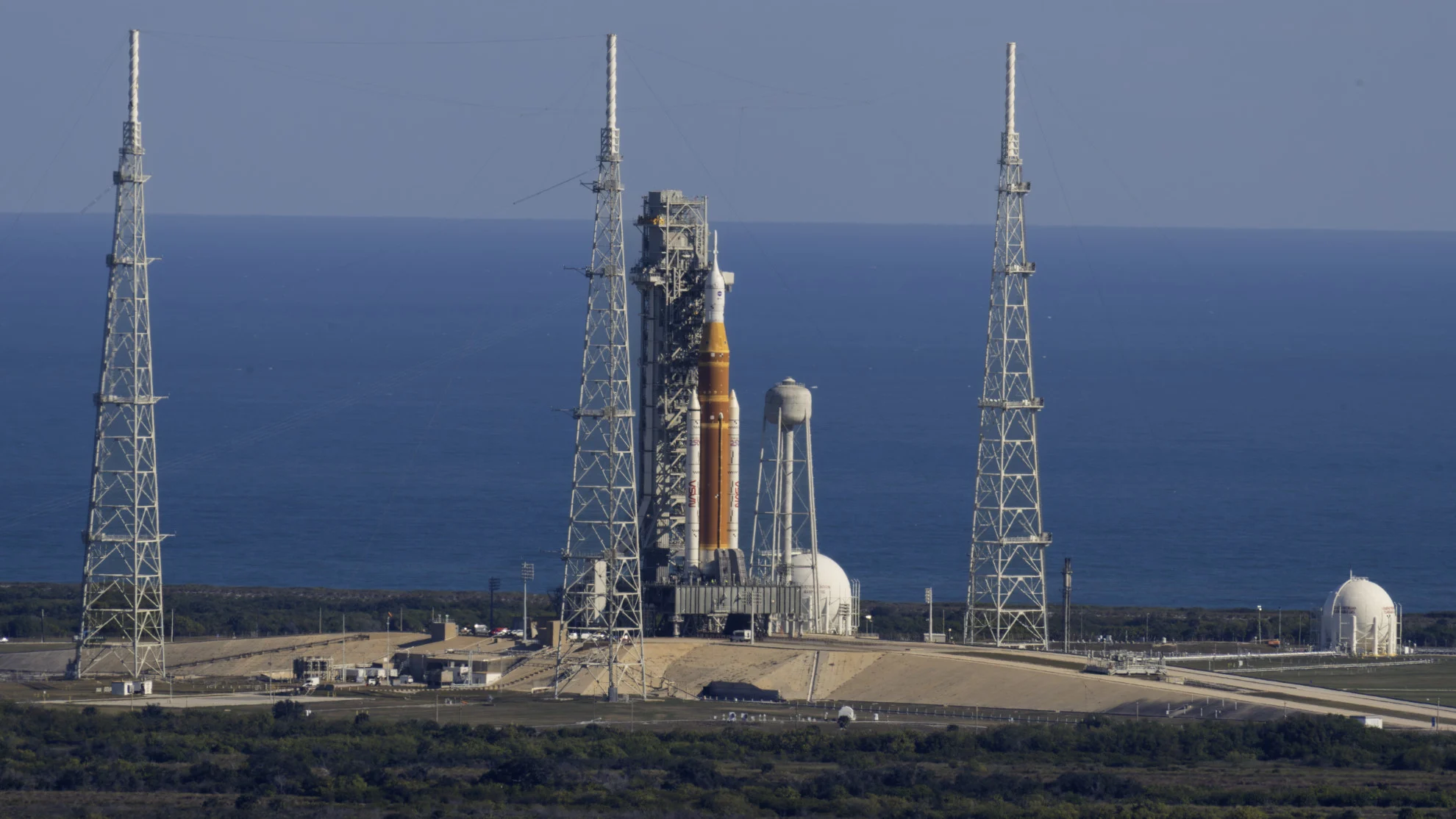
With just one week to go until the launch of the Artemis 2 mission, NASA has delayed liftoff due to the extreme cold weather that has reached central Florida.
The rocket is on the launch pad. The four astronauts are in quarantine ahead of the mission. Everything appears set to go, and we were all waiting in anticipation of the first launch of a human mission to the Moon since 1972.
Then, the weather stepped in, with a frigid Arctic blast that will push south from the Great Lakes down to the Gulf States this weekend.
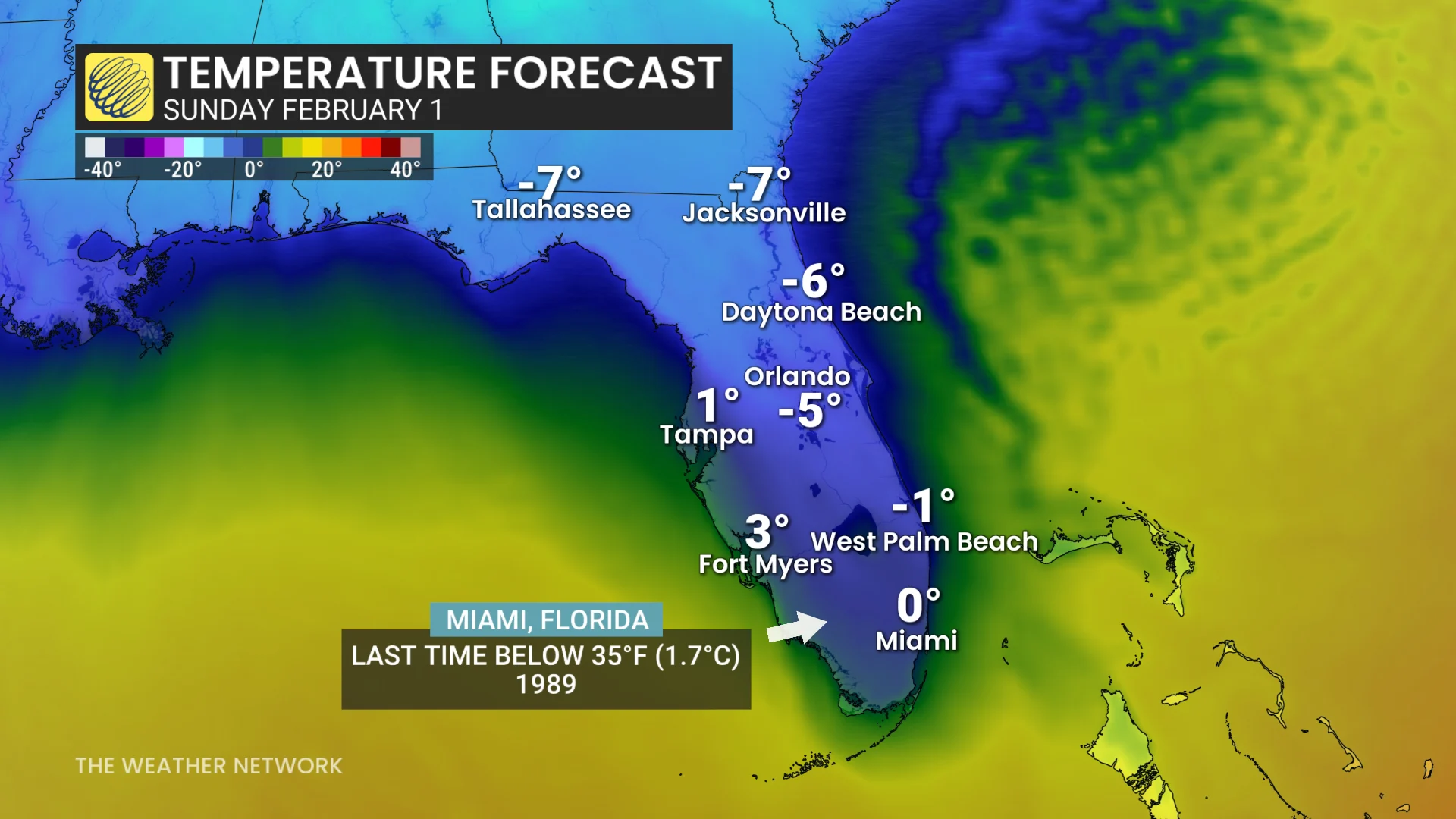
On Friday, January 30, NASA made the choice to delay the Artemis 2 launch due to this cold weather. This is just two days after the 40th anniversary of the Space Shuttle Challenger disaster, which claimed the lives of seven astronauts on January 28, 1986. Cold weather was the root cause of that tragic accident, as the frigid temperatures impacted components of the shuttle's booster rockets, resulting in an explosion that destroyed the spacecraft.
"Over the past several days, engineers have been closely monitoring conditions as cold weather and winds move through Florida. Managers have assessed hardware capabilities against the projected forecast given the rare arctic outbreak affecting the state and decided to change the timeline," NASA posted on the mission blog. "Teams and preparations at the launch pad remain ready for the wet dress rehearsal. However, adjusting the timeline for the test will position NASA for success during the rehearsal, as the expected weather this weekend would violate launch conditions."
A 'wet dress rehearsal' is a safety test run by the mission ground crew, where they run through the entire check list of the launch, including loading liquid propellant into the rocket's fuel tanks. However, when they reach the end of the list, they stop short of igniting the rocket's engines.
This test was originally set to occur on Saturday, January 31, ahead of the initial launch window on the 6th.
As of today, it has been pushed to 9 p.m. EST, on Monday, February 2. If the test proceeds as expected, the mission will lift off no earlier than Sunday, February 8. However, any further delays for the wet dress rehearsal will push the launch date farther back.
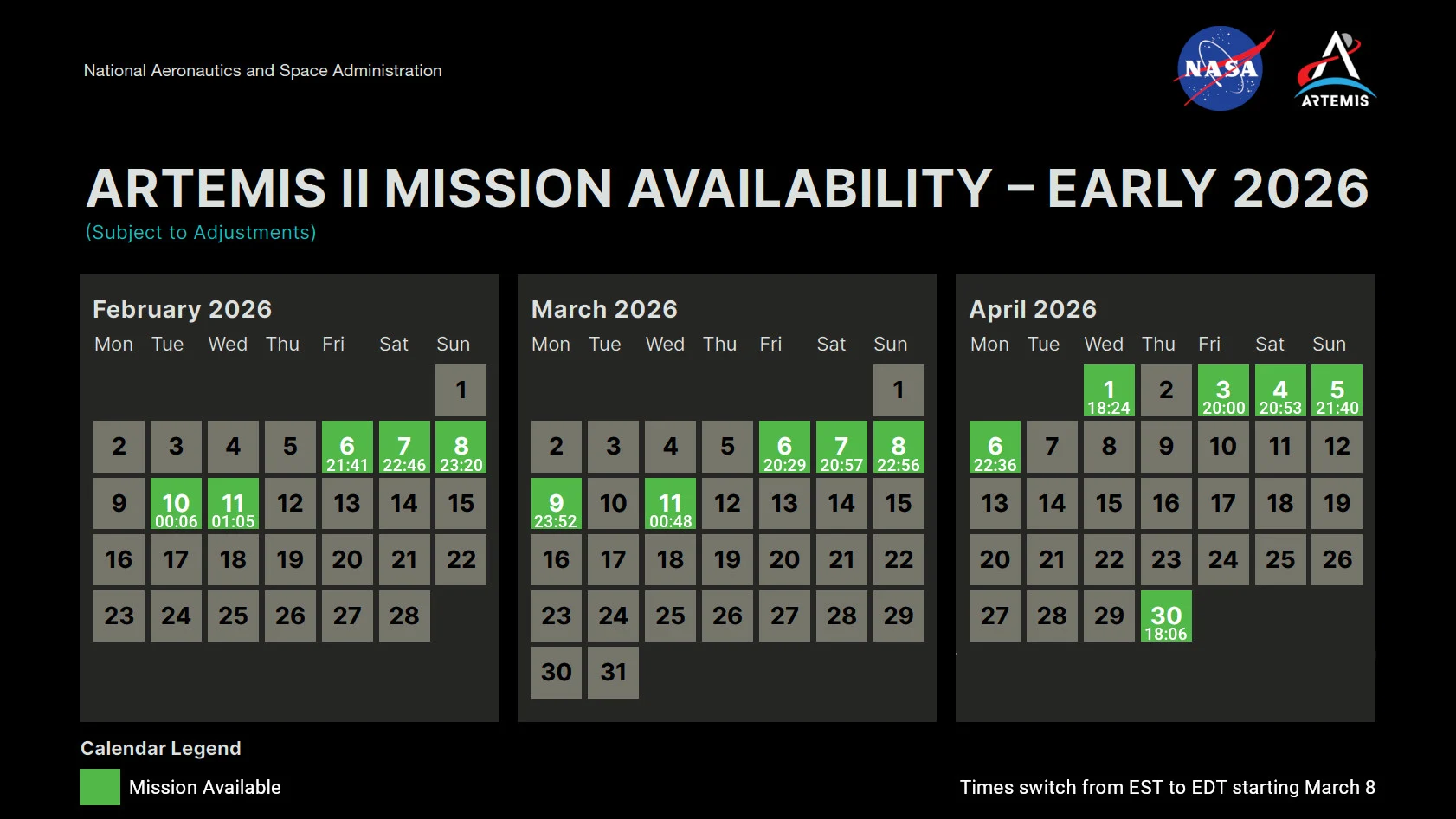
The potential launch windows for Artemis 2 (highlighted in green), in early-2026. (NASA)
Based on the flight schedule, as well as the distance, position, and phase of the Moon, NASA has until February 11 to launch the Artemis 2 mission. Otherwise they will need to wait until early March for everything to line up for another attempt.
What is Artemis 2?
Artemis 2 represents humanity's first return to the Moon in over 53 years, with the last crewed mission to the Moon being Apollo 17, which launched on December 7, 1972.
This is also the first multinational human mission to the Moon.
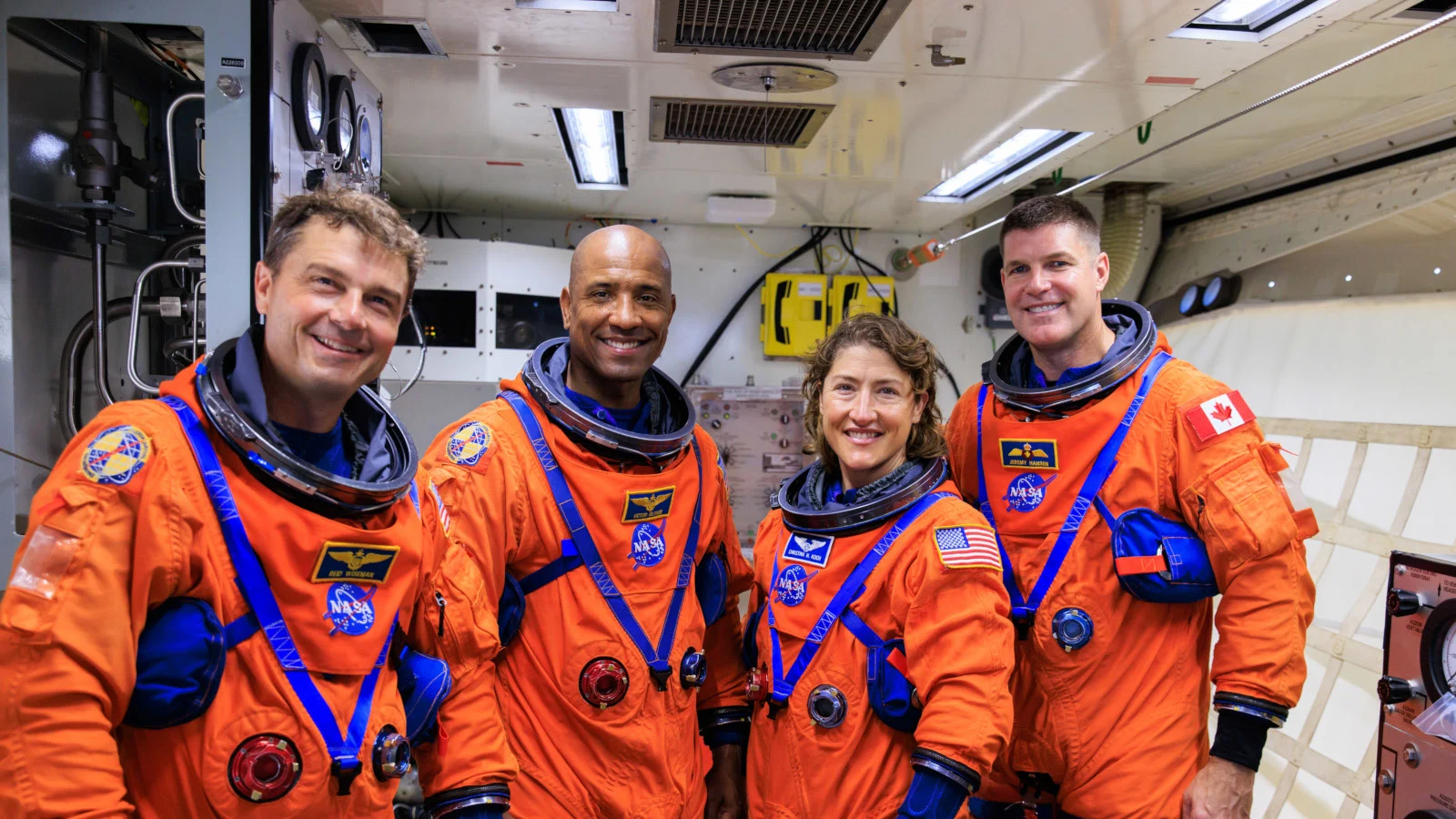
Left to right, Reid Wiseman, Victor Glover, and Christina Koch, all from NASA, and Jeremy Hansen, from the Canadian Space Agency. (NASA)
In addition to American astronauts Reid Wiseman, Christina Koch, and Victor Glover, Canadian astronaut Jeremy Hansen is acting as a Mission Specialist on the flight, to participate in the various science experiments and ensure the mission runs smoothly.
Also, while Orion's Crew Module was built in the United States, the ESA’s European Service Module provides the spacecraft's life support, power, and propulsion, all essential components for the mission's success.
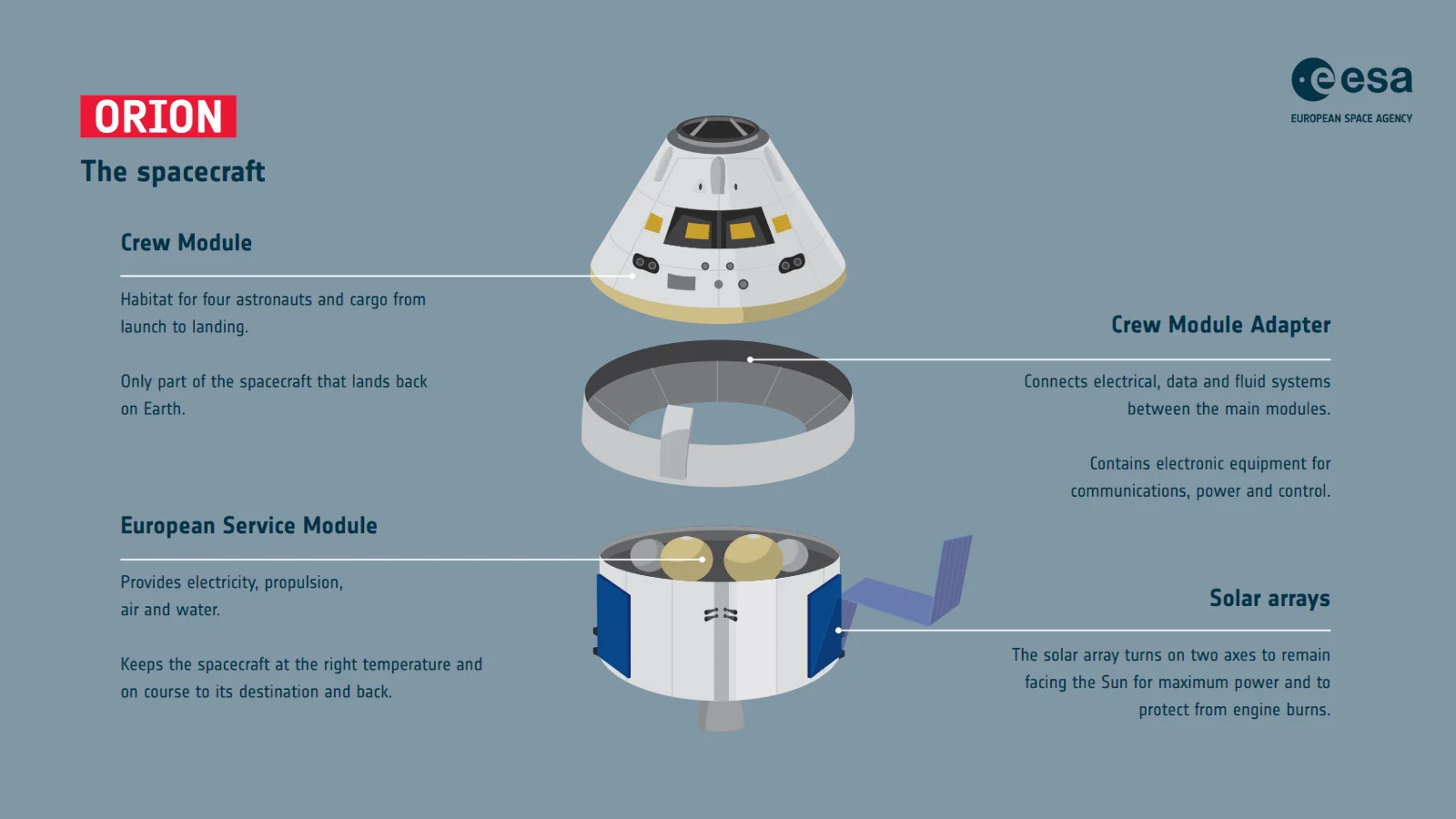
The three primary components of the Orion spacecraft. (ESA)
READ MORE: Artemis 2 may launch soon, shattering a 55-year-old spaceflight record
A potential record-breaker
If the mission can lift off on the night of February 8, and the flight stays on schedule for their 10-day trip around the Moon and back, the crew will break a 55-year-old spaceflight record.
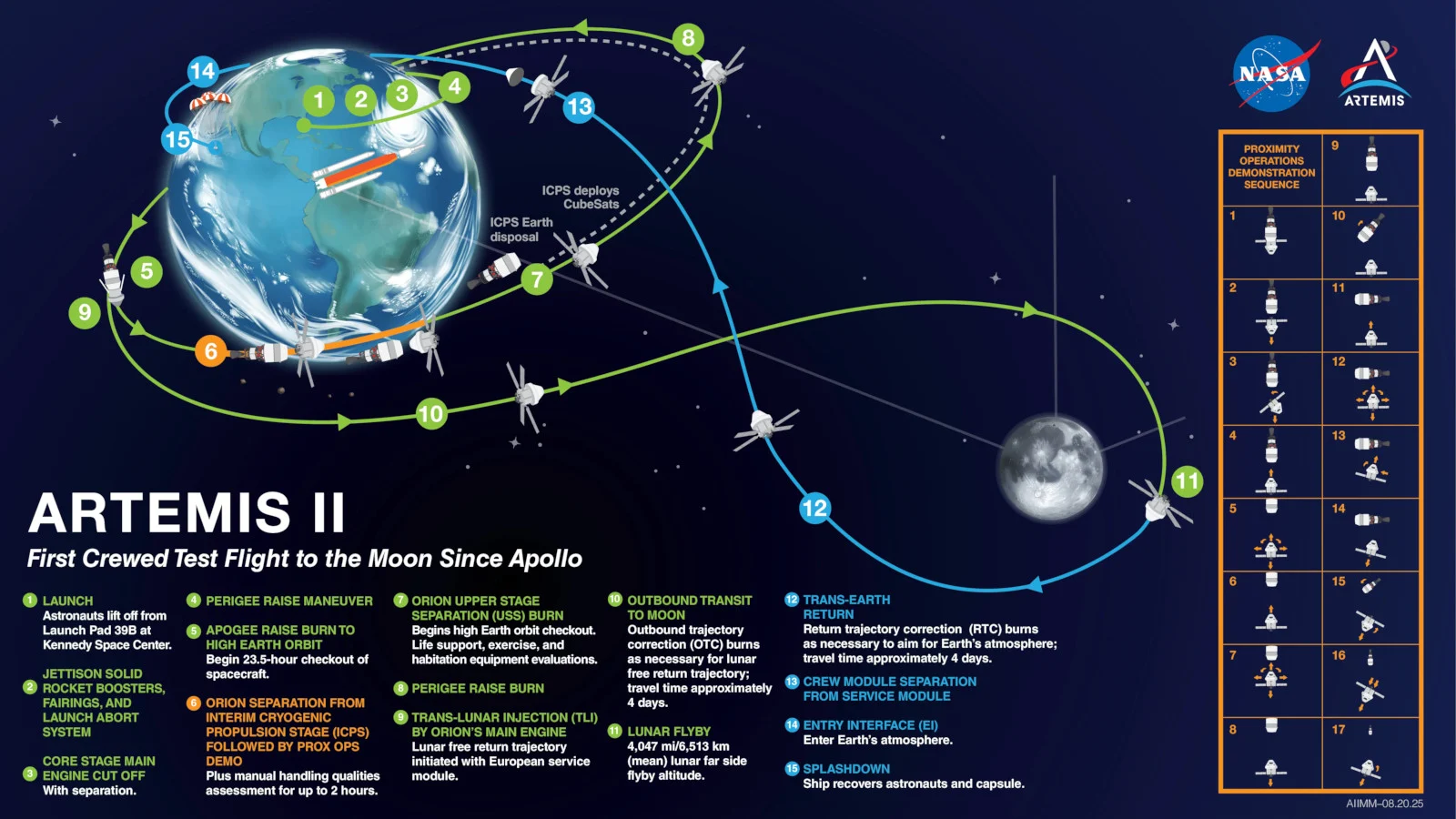
The flight plan for the 10-day Artemis 2 mission, as it flies four astronauts around the Moon and back. (NASA)
Back on April 14, 1970, the Apollo 13 spacecraft passed around the far side of the Moon just hours before the Moon reached apogee, its farthest distance from the Earth on that particular orbit. As a result, the three members of the crew — Jim Lovell, Jack Swigert, and Fred Haise — set a new distance record for the farthest any human-crewed spacecraft had flown from Earth, at 400,171 kilometers.
If the Artemis 2 crew launches on February 8, they will reach a total distance of 410,250 km from Earth as they make their flyby around the Moon on the 13th. Thus, they'll beat Apollo 13's distance by over 10,000 kilometres, setting a new record that will likely hold for years to come.

A comparison of the Artemis 2 mission to Apollo 13, specifically for a February 8 launch date, noting the differences in distance between the Earth and the Moon, and the Earth and the spacecraft, with each at its maximum distance, on the far side of the Moon. (Scott Sutherland/NASA SVS)
The key will be launching at the right time, so that the Moon will be at least 390,900 km away from Earth when they fly around the far side, roughly 5 days later. This is possible if the mission begins on February 8 or 10, on March 6-9, April 1, April 3-6, or even April 30.
However, if they lift off on February 11 or March 11, the Moon will no longer be at the right distance when they perform their flyby. While the mission will no doubt still be an amazing achievement, the Apollo 13 record will stand.