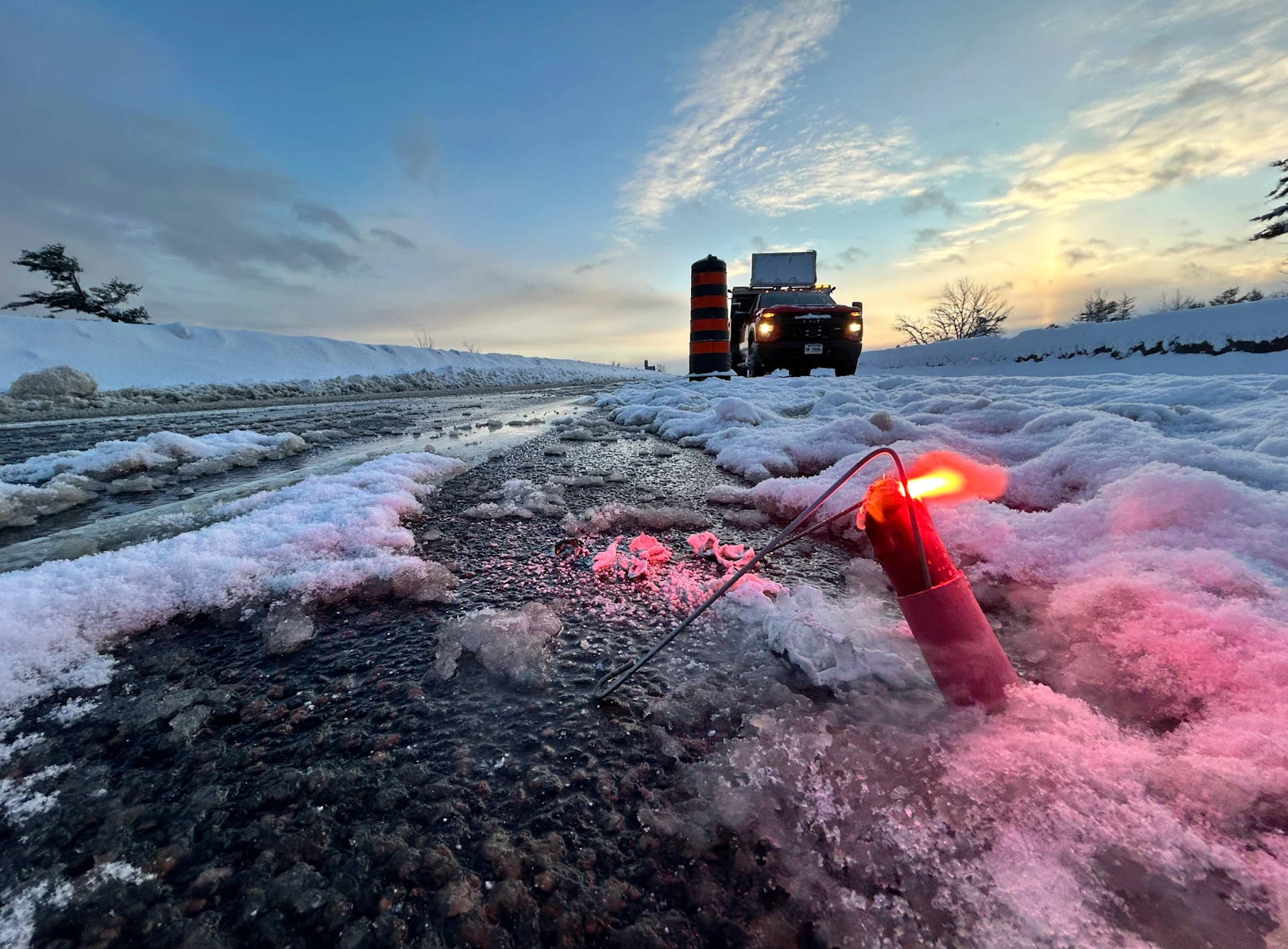
What is a flash freeze? Winter’s spontaneous danger explained

Time to add ‘flash freeze’ to your winter vocabulary so you can be better prepared when winter weather strikes.
Have you ever received a flash freeze warning for your area? Environment and Climate Change Canada issues these warnings when a sudden drop in temperature is forecast in the winter. But how is that different from an extreme cold warning?
Extreme cold warnings are issued when temperatures and wind chills reach dangerously low levels, with the criteria for the warnings varying by province and region.
SEE ALSO: Odd weather terms you may hear in the fall and winter
Flash freeze warnings are issued when forecasters predict a rapid drop in temperatures to below freezing, typically after a warmer period when there is standing water or melted snow on the streets or sidewalks.
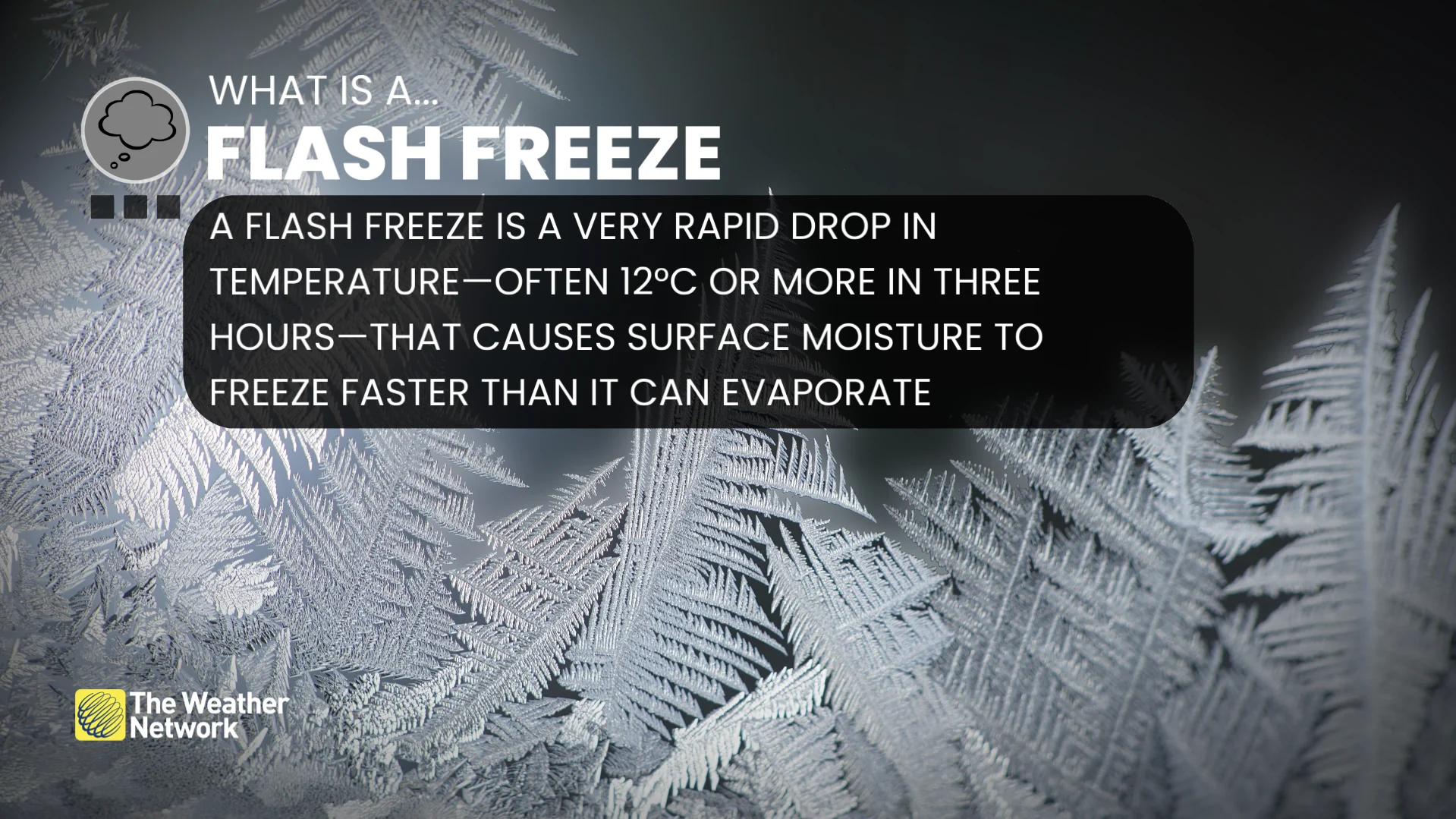
What is a flash freeze?
A flash freeze is when temperatures rapidly drop below freezing in a matter of hours, causing wet surfaces, such as roads and walkways covered in pooling water or melted snow, to rapidly freeze into ice. The faster the drop, the higher the risk is for a flash freeze to happen.
This not only makes roadways and sidewalks incredibly slippery, but it also makes the icy surface harder to see, as the ice layer is likely to be clearer. In fact, this is how we get black ice!
Snowy, slushy roads can be particularly dangerous during a flash freeze because the snow crystals make perfect, readily available seeds for the ice to form on.
DON'T MISS: It's not one season fits all: How winter weather varies across Canada
Why flash freezes can be finicky to forecast
Flash freezes can be finicky to forecast because even with a sharp temperature drop, if the air behind a cold front is dry enough, the water on the road will evaporate, drying out the road before it can freeze.
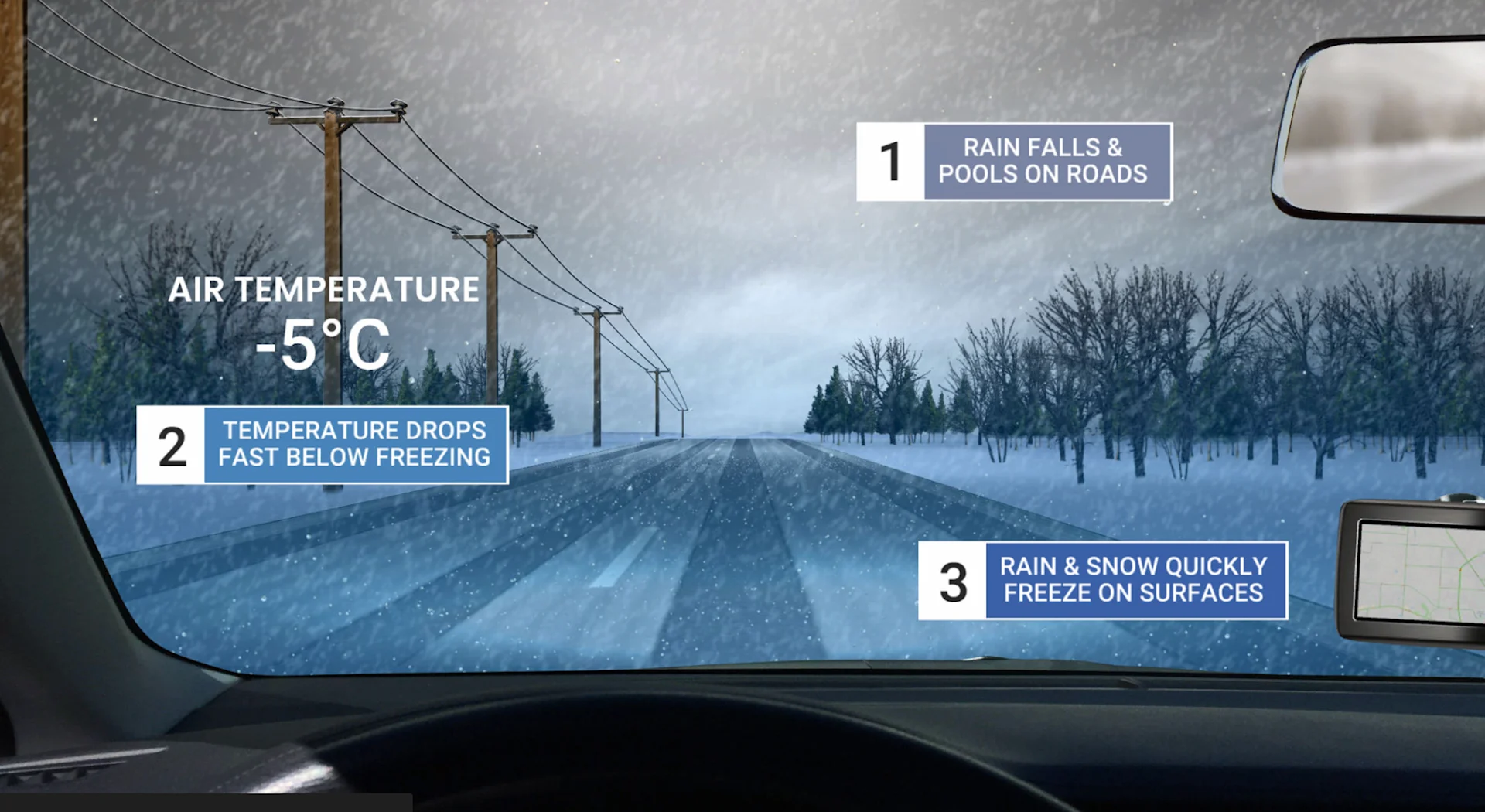
Additionally, temperatures need to rapidly drop below freezing in a matter of just a couple of hours. If the cooling slows at all, the risk of a flash freeze will diminish.
Therefore, forecasters feel the most confident in a flash freeze occurring when there is likely to be pooling water on roads or walkways from rainfall or melting snow, because that takes longer to evaporate and dry up. They will also be more confident when snow is in the forecast at the time of the freeze, as the snow indicates a higher humidity level that will prevent water evaporation.