Snow and ice are heavy hazards that can damage trees, roofs

The sheer weight of heavy snow and solid ice can cause roof damage and long-lasting power outages
Snow and ice are deceptive winter hazards.
A winter storm can turn travel into a nightmare. Even walking to the mailbox is a challenge after a fresh coating of wintry mess.
Getting around isn't the only problem after a major storm. The weight of snow and ice alone can cause significant issues, as well.
DON’T MISS: Freezing rain and ice pellets are dangerous winter hazards
Snow is a hazard to homes and businesses
Anyone who’s shovelled a blanket of snow knows that it's some heavy stuff. The weight of snow depends on its water content. Dry snow is light and fluffy. Wet snow is hefty and slushy.
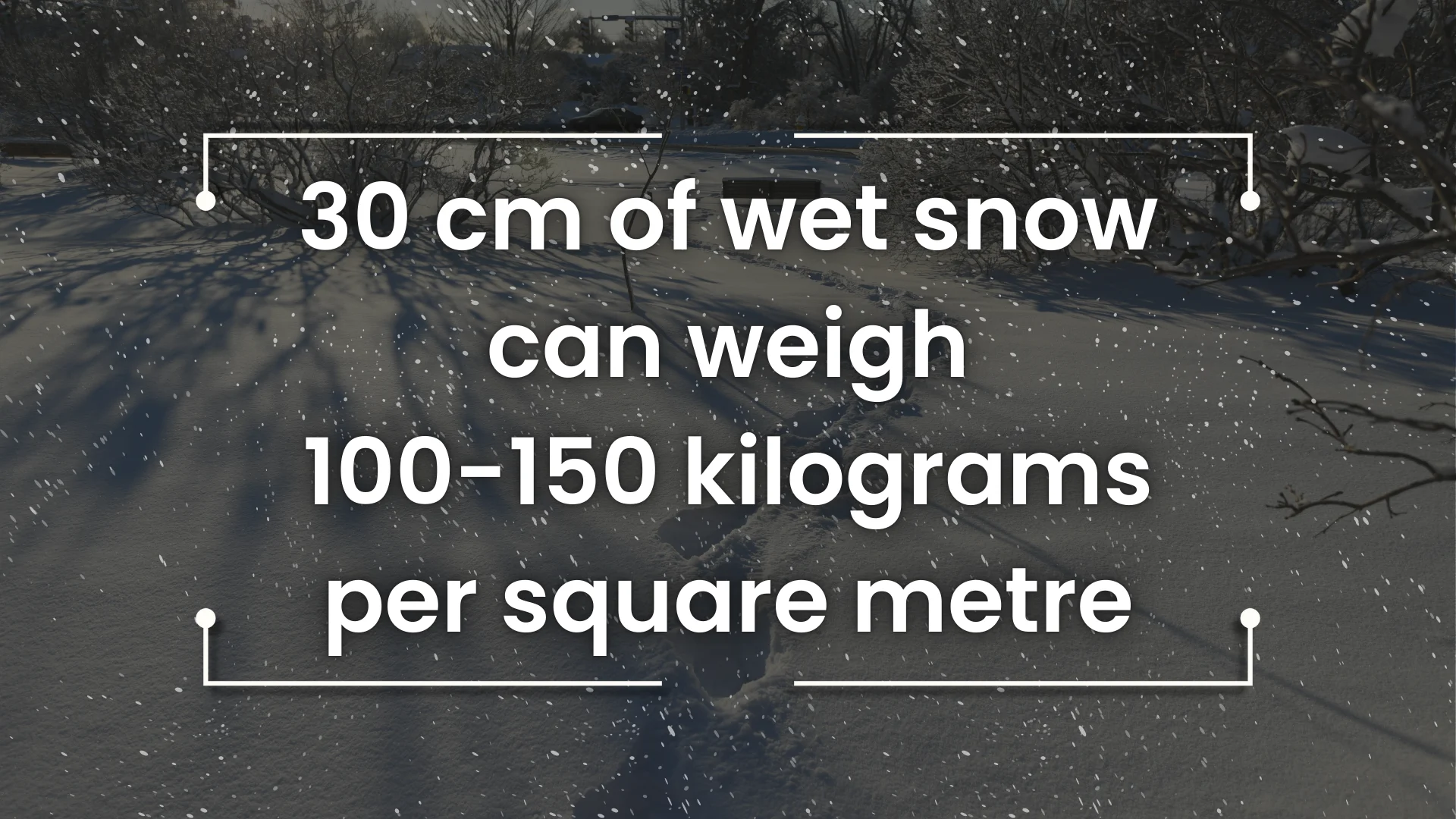
Just 30 cm of wet snow can weigh as much as 100 to 150 kilograms per square metre. That’s a tremendous force to bear for trees and structures alike.
Roof collapses sometimes occur after major snowstorms, especially among older or flat roofs that are unable to withstand the excessive weight of extreme snowfall. The problem is exacerbated when ice or rain follows a heavy snowstorm.
A blizzard in 2008 caused two fatal roof collapses in Quebec.
Nearly 100 people died in Washington, D.C., in January 1922, after the roof of the crowded Knickerbocker Theatre collapsed under the weight of a blizzard’s intense snowfall.
Freezing rain can crumple steel transmission towers
Solid ice produced by freezing rain is even heavier than snow.
20 to 30 mm of ice accretion can add 20 to 30 kilograms per square metre to exposed surfaces, causing damage to trees and power lines.
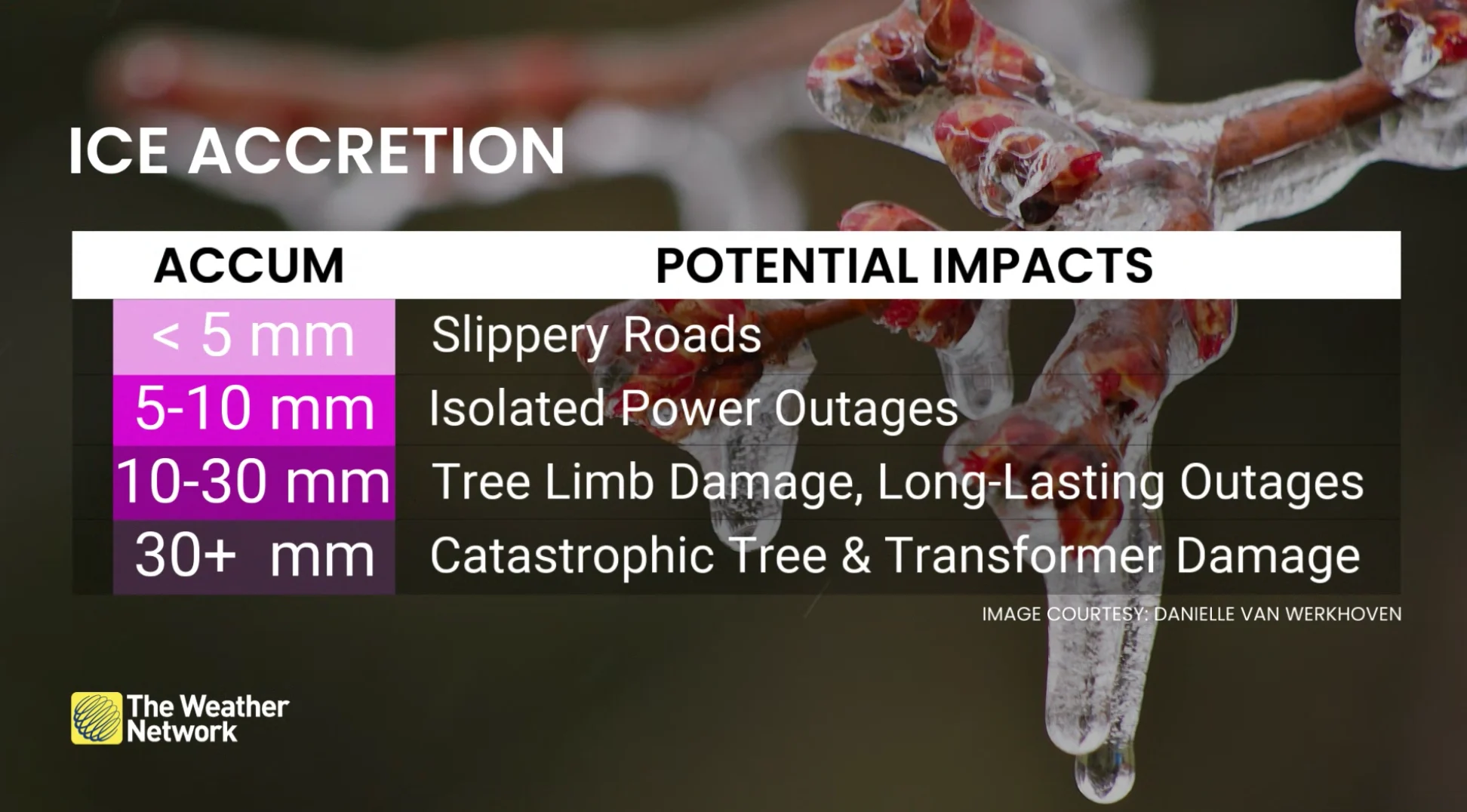
How bad can it get? A 2014 ice storm in Slovenia produced 50-100 mm of ice accretion in spots, which reportedly damaged 40 per cent of the country’s Alpine forests.
RELATED: The 1998 ice storm that called for the deployment of 16,000 military personnel
One of Canada’s costliest disasters was the infamous ice storm of 1998. Several days of freezing rain produced more than 100 mm of ice accretion in portions of eastern Ontario and southern Quebec.
Countless trees and wooden power poles snapped under the weight of the ice. More than one thousand steel transmission towers crumpled under the jacket of ice. Long-lasting power outages affected millions of people throughout the region.
Header image created using graphics and imagery from Canva.