
Five reasons to appreciate Lake Ontario

Did you know that the province was named after Lake Ontario and not the other way around?
Canada is lucky to be home to the Great Lakes, which provide valuable resources for both us and our neighbours south of the border.
This includes Lake Ontario, which serves as the entryway to the Great Lakes from the St. Lawrence waterway to the Atlantic Ocean.
So let’s give this great lake some of the love it deserves with five facts you may not have known!
1: It may be small, but it is mighty
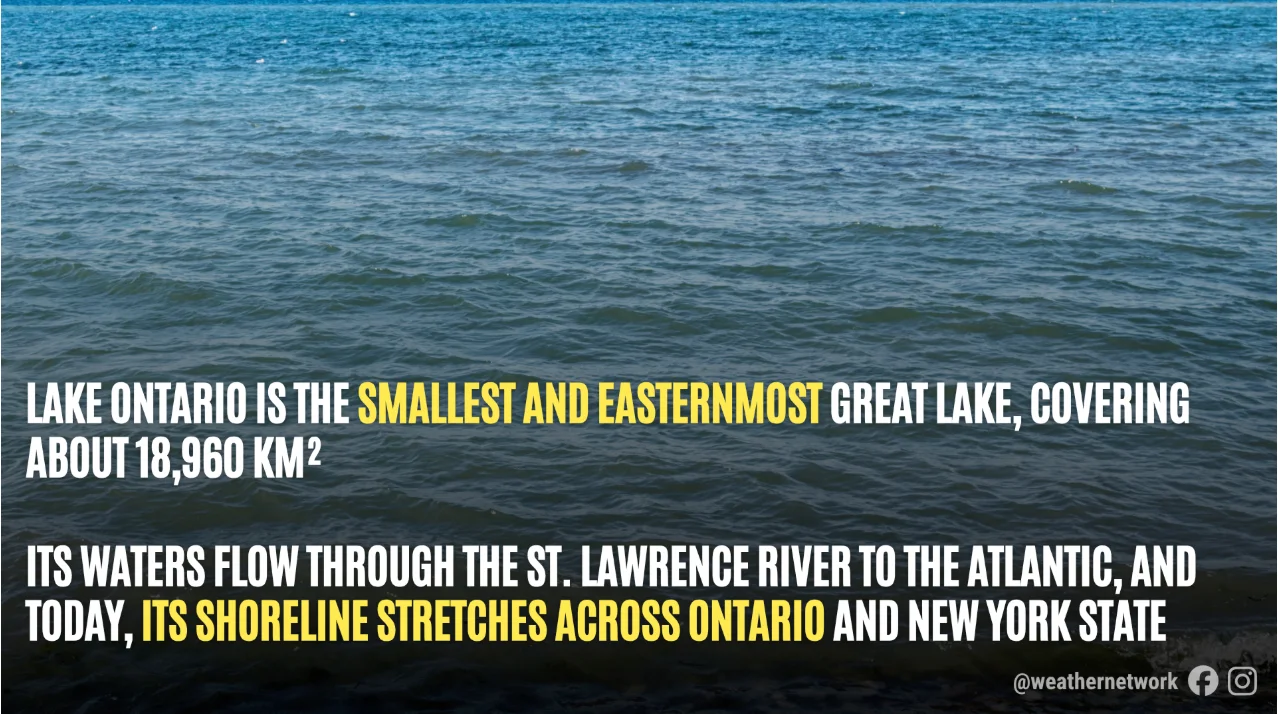
Lake Ontario may be the smallest of the Great Lakes, measuring at about 18,960 square kilometres, but it is still the fourteenth-largest lake in the world.
Even more impressive is that, despite its small size, it actually holds the second-most amount of water by volume of all the Great Lakes. That’s thanks to its impressive depth, with an average of 86 metres in depth and maximum of 244 metres.
2: It has deep Indigenous ties
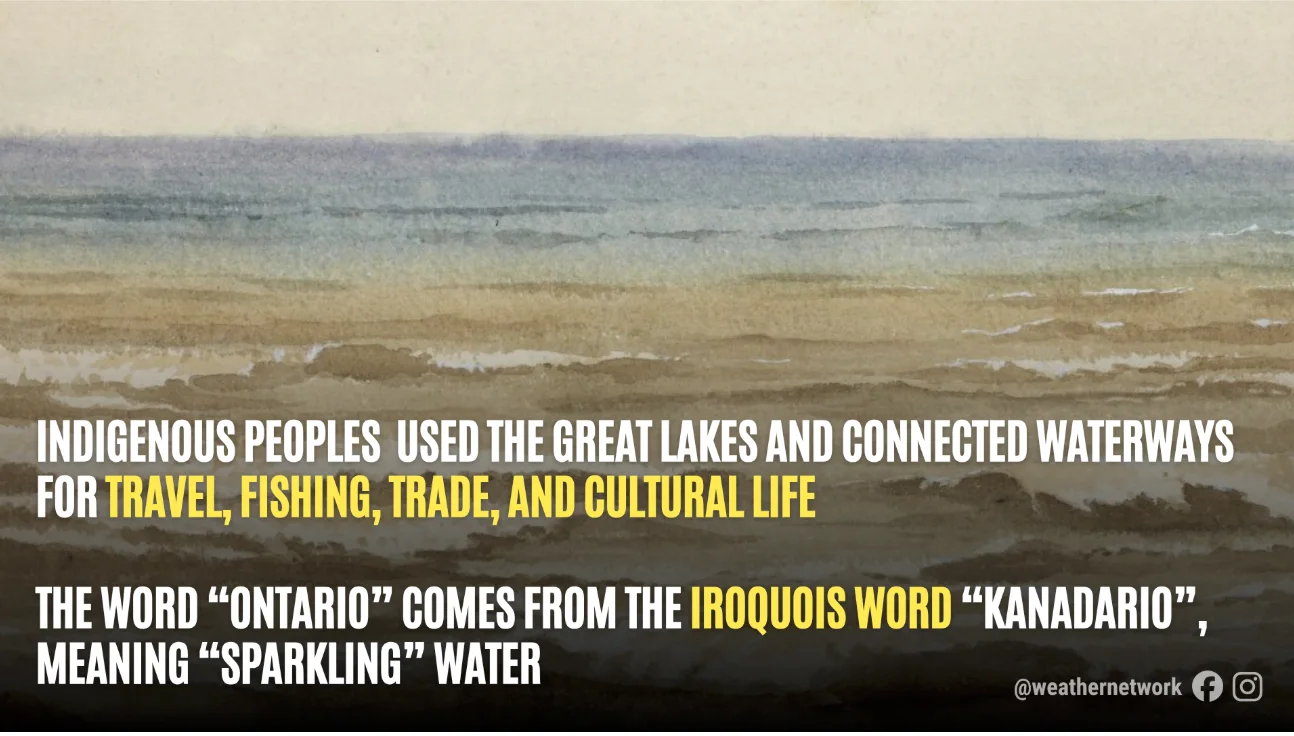
Photo: E. May Martin (Canadian, 1865 – 1957), Breakers, watercolour on paper
Before European settlers arrived in North America, the land surrounding the Great Lakes was home to Indigenous peoples for thousands of years. Around Lake Ontario, specifically, were the Haudenosaunee peoples.
The name “Ontario” comes from the Wendat word, “Ontari’io,” as well as the Mohawk word “Kanadario.” While these words differ in spelling and pronunciation, they both mean essentially the same thing: “sparkling waters,” “great lake,” and “beautiful lake.” Which are fitting descriptions for Lake Ontario when you look across the waters and take in its beauty.
The first time the area was referred to as “Ontario” dates back to around 1641. The province of Ontario was not established or named until over 200 years later in 1867.
3: It was by shaped ancient ice
Lake Ontario’s deep basin was formed about 11,000 years ago through erosion and glaciation wearing down bedrock over one hundred thousand years.
Before its formation, however, sat an even larger glacier lake called Lake Iroquois, which was formed as the ancient Laurentide ice retreated north due to a warming climate.
Lake Iroquois was about 60 metres higher than Lake Ontario, but thousands of years of erosion wore the basin down into what we see today.
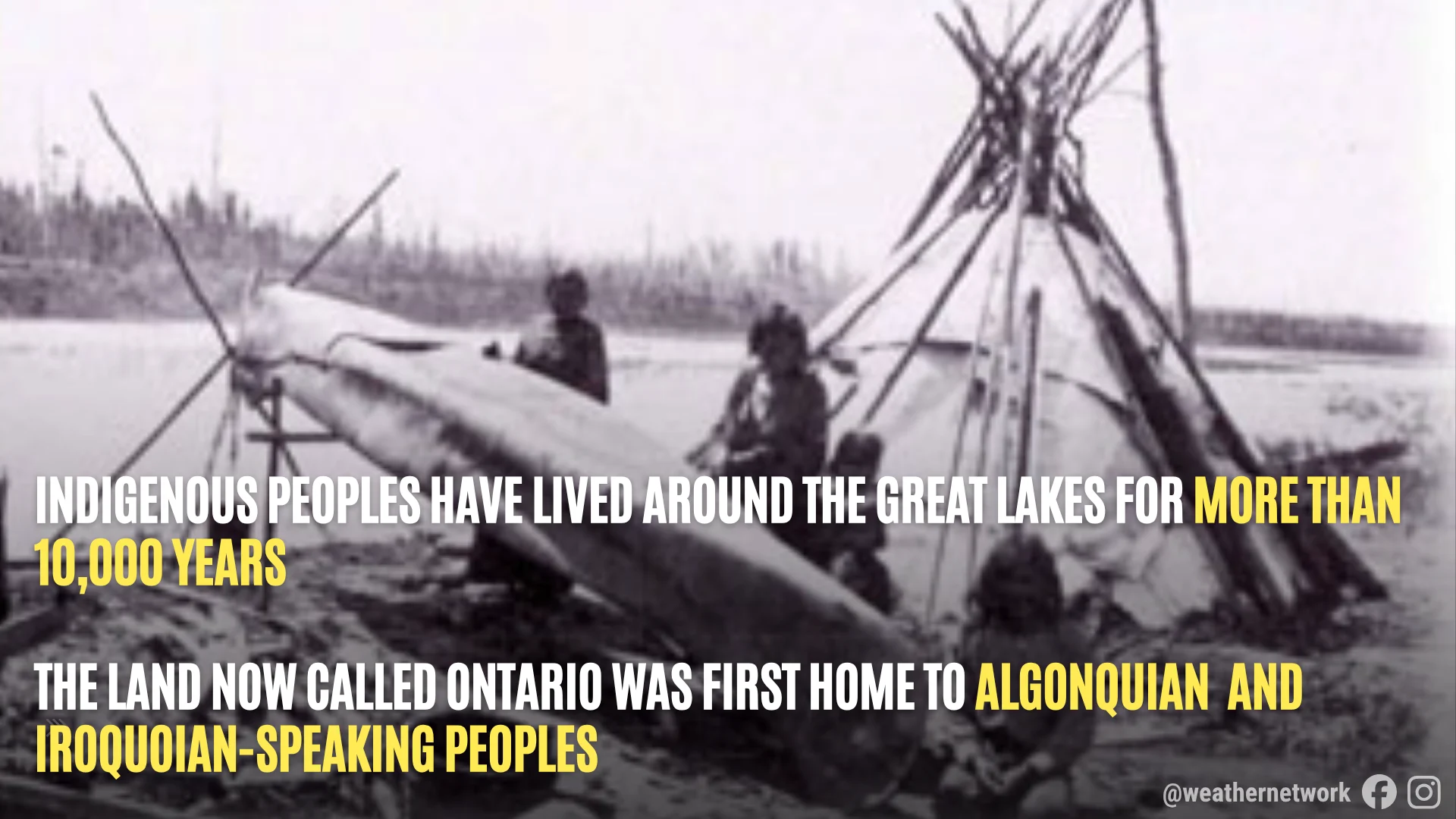
An Ojibwa family camp near a lake in Ontario, circa 1870. (Government of Canada)
RELATED: Why do the Great Lakes freeze unevenly?
4: It was the site of significant historical events
If you travel around Lake Ontario’s shores, you’ll notice a number of historical forts and military bases.
This is largely due to the fact that Lake Ontario’s shores were key battlegrounds during the War of 1812. Here, Indigenous peoples came to the aid of British Loyalists to help win the war against the American forces and secure Canada’s freedom.
Today, many of the old forts from the war still stand along Lake Ontario’s shores and continue to operate as historical sites to educate others on Canadian history.
5: It is a major economic driver for both Canada and the United States

In addition to supporting tourism, recreation, industry, and local businesses, Lake Ontario is part of the Great Lakes–St. Lawrence Seaway, a major trade route connecting North America to the Atlantic.
The Seaway supports more than 240,000 jobs and generates about $46.8 billion in economic activity across Canada and the U.S. The system moves about 160 metric tons of cargo each year, including grain, iron ore, steel, salt and other goods.
One of the main shipping points on Lake Ontario is Hamilton Harbour, which is a major shipping hub and one of Canada's largest heavy-industry centres.
In all, Lake Ontario is more than just a lake; it’s a significant part of our past, present, and our future. Many efforts are in place to protect the water, ecosystems, and communities that are tied to and depend on this great lake for generations to come.
WATCH BELOW: How the Great Lakes power (or hinder) fall storms
Header image courtesy: Tyler Rooney via Unsplash.