Rare hurricanes can form during the wintertime

A small percentage of all tropical systems in the Atlantic have formed outside of hurricane season
Hurricanes are warm storms that thrive on warm waters during the warm months. But can one of these toasty systems form over the Atlantic Ocean in the winter?
It’s exceptionally rare, but we have seen tropical cyclones form over the Atlantic during the colder months of the year.
DON’T MISS: What’s the difference between hurricanes, typhoons, and cyclones?
The Atlantic hurricane season runs between June 1 and Nov. 30. Forecasters chose those dates because almost all recorded tropical cyclone activity occurs during that six-month period.
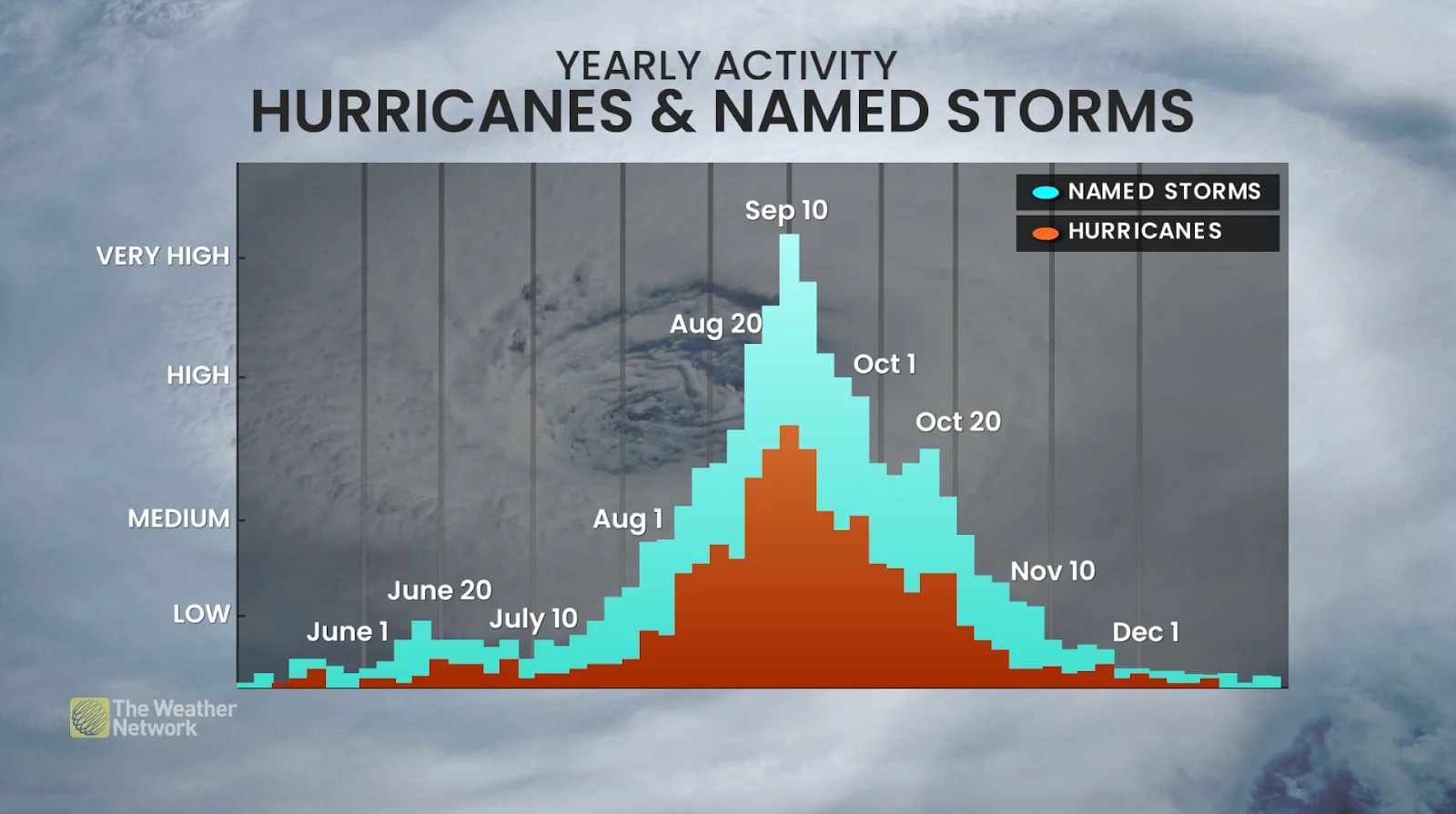
Tropical cyclones need warm waters, ample moisture, and low wind shear in order to form, which are tough to come by outside of that window of time.
But some storms defy history and spin to life beyond those dates.
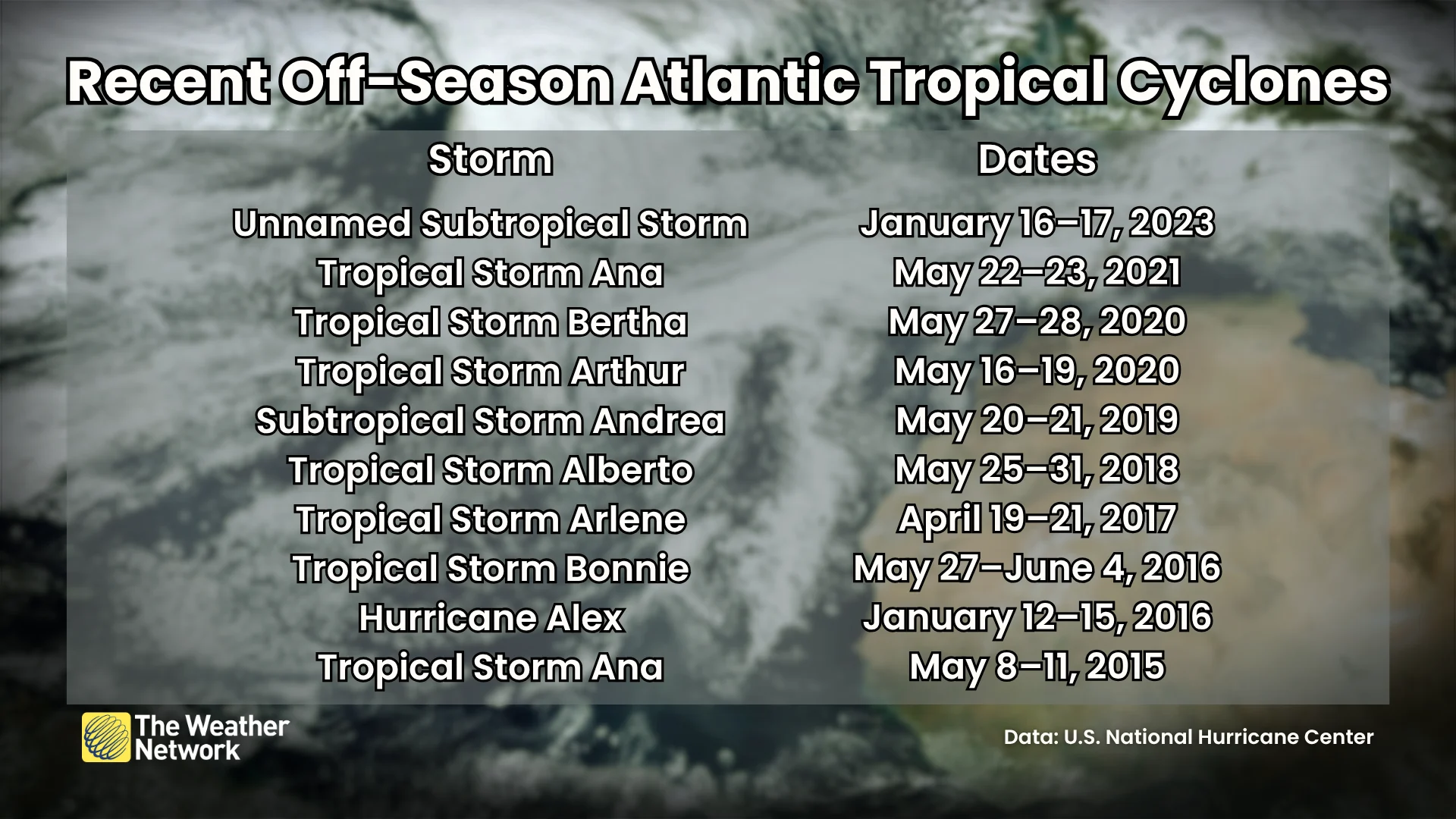
We’ve seen about 70 tropical storms or hurricanes exist outside of our traditional idea of hurricane season since reliable records began in 1851. Most of those off-season storms either formed during the month of May or they developed in November and crossed over into December.
RELATED: How do Atlantic hurricanes get their names?
Several dozen storms have popped up in May. It’s happened so often since 2010 that some meteorologists have argued in favour of moving the start of hurricane season up to May 15.
Many of these early risers formed from cold fronts or low-pressure systems that moved offshore and gradually acquired some tropical or subtropical characteristics.
In fact, just about every off-season tropical storm or hurricane has to find a ‘loophole’ of sorts in order to take root and strengthen.

Take the first hurricane of the 2016 season as an example. Hurricane Alex popped up near the Azores Islands between Jan. 12 and Jan. 15 that year, one of the only January hurricanes on record.
Sea surface temperatures beneath Hurricane Alex were only around 22°C, unusually warm but still not warm enough to support a full-fledged hurricane. Making up the deficit was very cold temperatures in the upper-levels of the atmosphere that boosted the instability needed for Alex to briefly thrive in those otherwise hostile conditions.
Header image created using graphics and imagery from Canva and NASA.