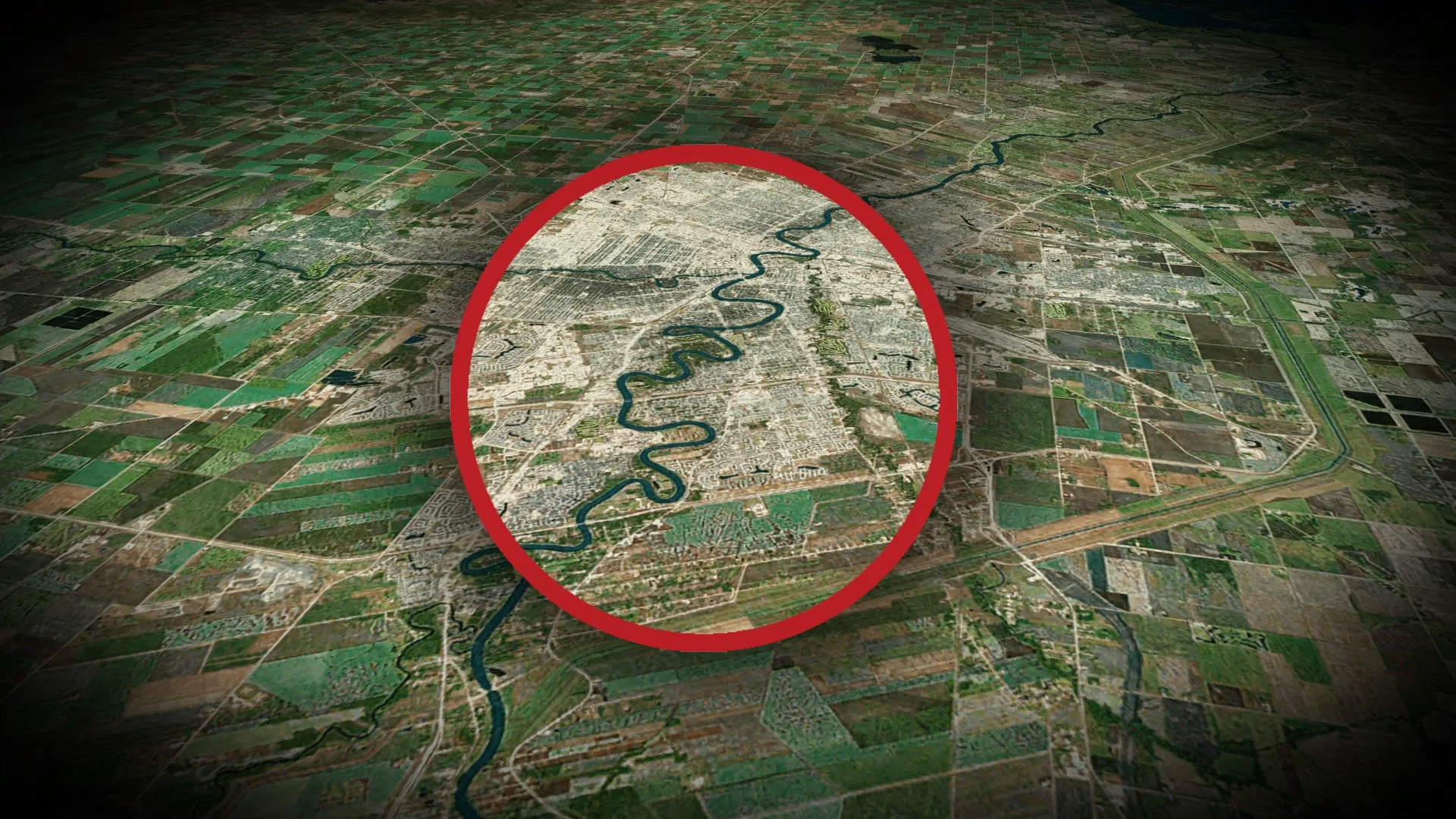
How does a river know where to bend? Turns out, it’s chaos

Duelling computer simulations reveal important information about how a river forges its shape
Rivers curve and bend as they carry water across the land. And as communities expand into floodplains, can scientists help by predicting where these paths may twist next?
A new study from New York University’s Tandon School of Engineering explored one of the major forces behind the shape of a river, and the researchers discovered that it’s pure chaos.
DON'T MISS: Tips to stay safe during a flash flood as peak season draws near
Mighty rivers around the world are characterized by their iconic meanders, which are the bends that form along the paths of these waterways.
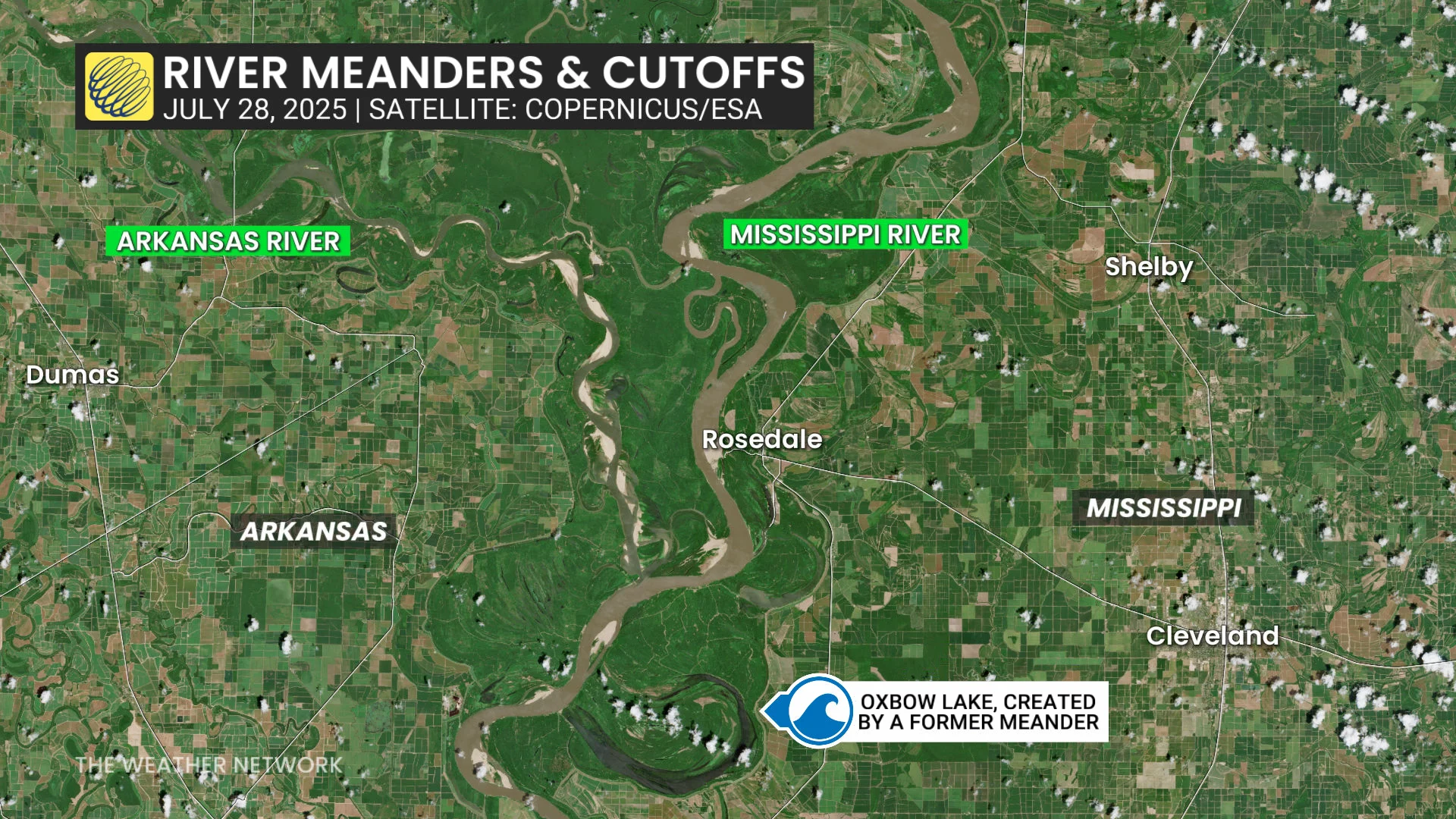
A seemingly endless list of factors can determine where a river decides to bend. Friction, sediment deposits, soil composition, and obstacles can erode some riverbanks while padding others. Over time, these differences redirect the flow of the river itself to create a meander.
Meanders eventually grow large enough that the river pinches them off; this cutoff causes a sudden redirection of the river itself.
Engineers recently tested the theory that it’s these cutoffs that contribute to the unpredictability of a river’s shape over time.
Running complex simulations, the team from NYU tested two main scenarios: one in which rivers could develop cutoffs, and one in which meandering rivers never pinched off their twists and turns.
Simulated rivers in which cutoffs were disabled developed a predictable and almost rhythmic pattern of meanders.
RELATED: Six ways the weather can scar, shift, and snap the Earth itself
The hypothetical rivers that were free to redirect themselves, on the other hand, were the very definition of chaos. No two waterways carved the same path. Like a fingerprint in the earth, each one developed a unique character.
What does this mean in practical terms?
Rivers are important for everyone from ecologists to emergency managers.
Knowing that the shape of a river is inherently unpredictable without human intervention (such as levees) can help scientists and government officials plan for how floodplains may evolve around vulnerable communities.
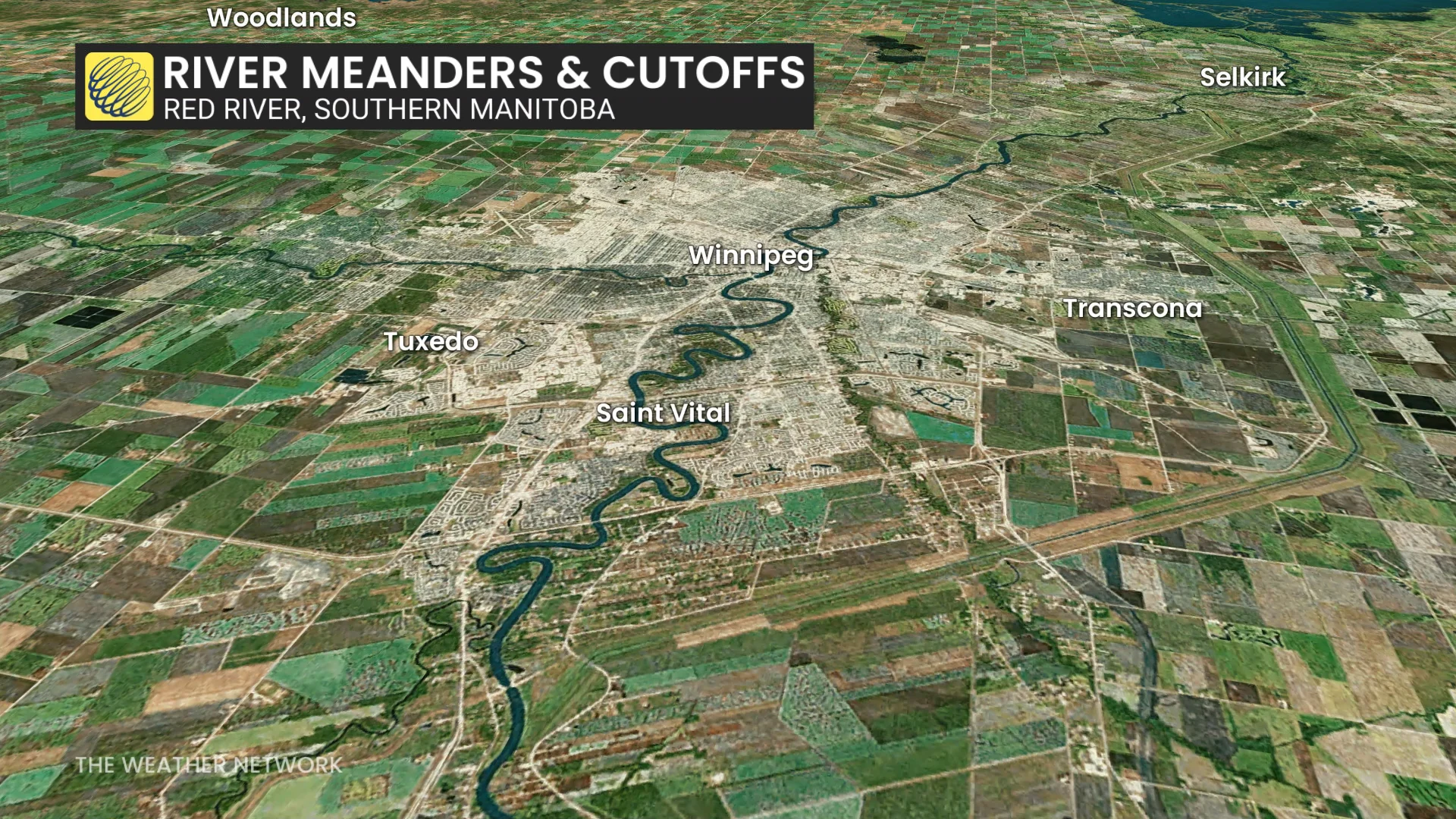
Many of the costliest and most disruptive natural disasters in Canadian history were river floods, such as the 1997 'Flood of the Century' in Manitoba.