
Nature finds a way? Wild plant gets ‘evolutionary rescue’ from drought

New research says the scarlet monkeyflower can adapt to and make a recovery from extreme drought events, offering hope of a boost in conservation efforts to help declining or threatened species.
In a world that is seeing more extreme heat and drought, a pleasant discovery from scientists found a particular wild plant can not only endure such events, but it can actually rebound from the effects of the hot temperatures and dry conditions.
According to a new study involving researchers from the universities of Cornell and British Columbia (UBC), published in Science, certain plant species are able to evolve quick enough to make a recovery from intense drought.
DON'T MISS: A looming crisis: Are we facing a water emergency?
Amy Angert, a UBC botany and zoology professor, said watching them adapt and persist in real-time is "really encouraging."
"This really is a remarkable resilience that these wildflowers showed. It is really resilient to the kinds of events that are going to be more and more likely to happen, more frequently, as climate change continues," said Angert, in a recent interview with The Weather Network.
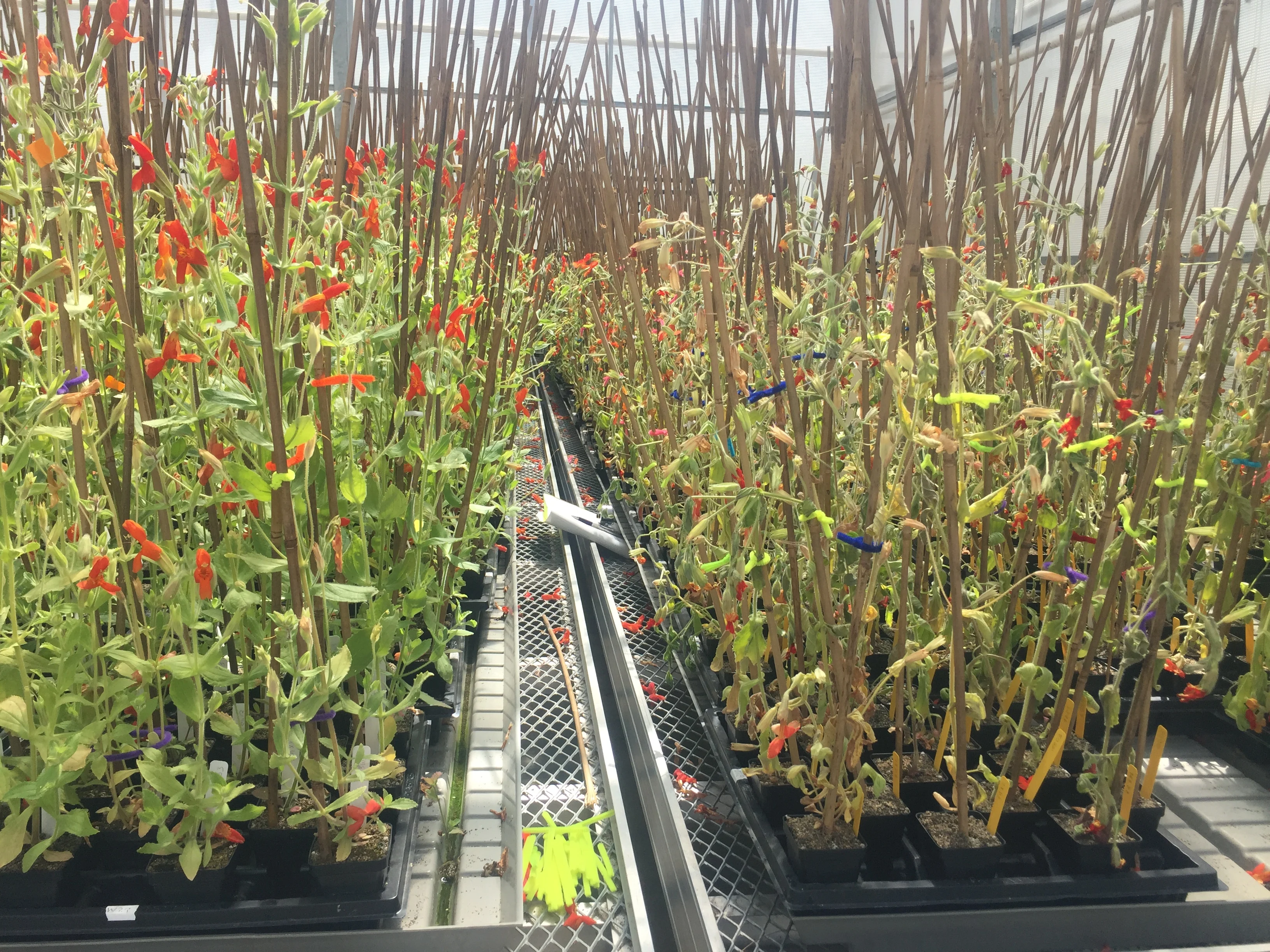
Greenhouse drought experiment on the scarlet monkeyflower. (Daniel Anstett/Submitted to The Weather Network)
But her optimism does come with a cautionary note.
"We know that not every species will be able to do this. Just because these wildflowers were able to sort of rescue themselves through adaptation...there are still a lot of species that are vulnerable and probably don't have the raw material to do this," said Angert.
Scarlet monkeyflower gets 'evolutionary rescue'
For the study, UBC and Cornell researchers monitored the scarlet monkeyflower, a common western North American wildflower that is frequently used in evolutionary research, in Oregon and California for more than 10 years. The examination reviewed the genetics of leaf and seed samples before and during a four-year drought that began in 2012.
The results of the study show what scientists call “evolutionary rescue," a term used when genetic alteration allows populations to avoid extinction under severe, environmental stress.
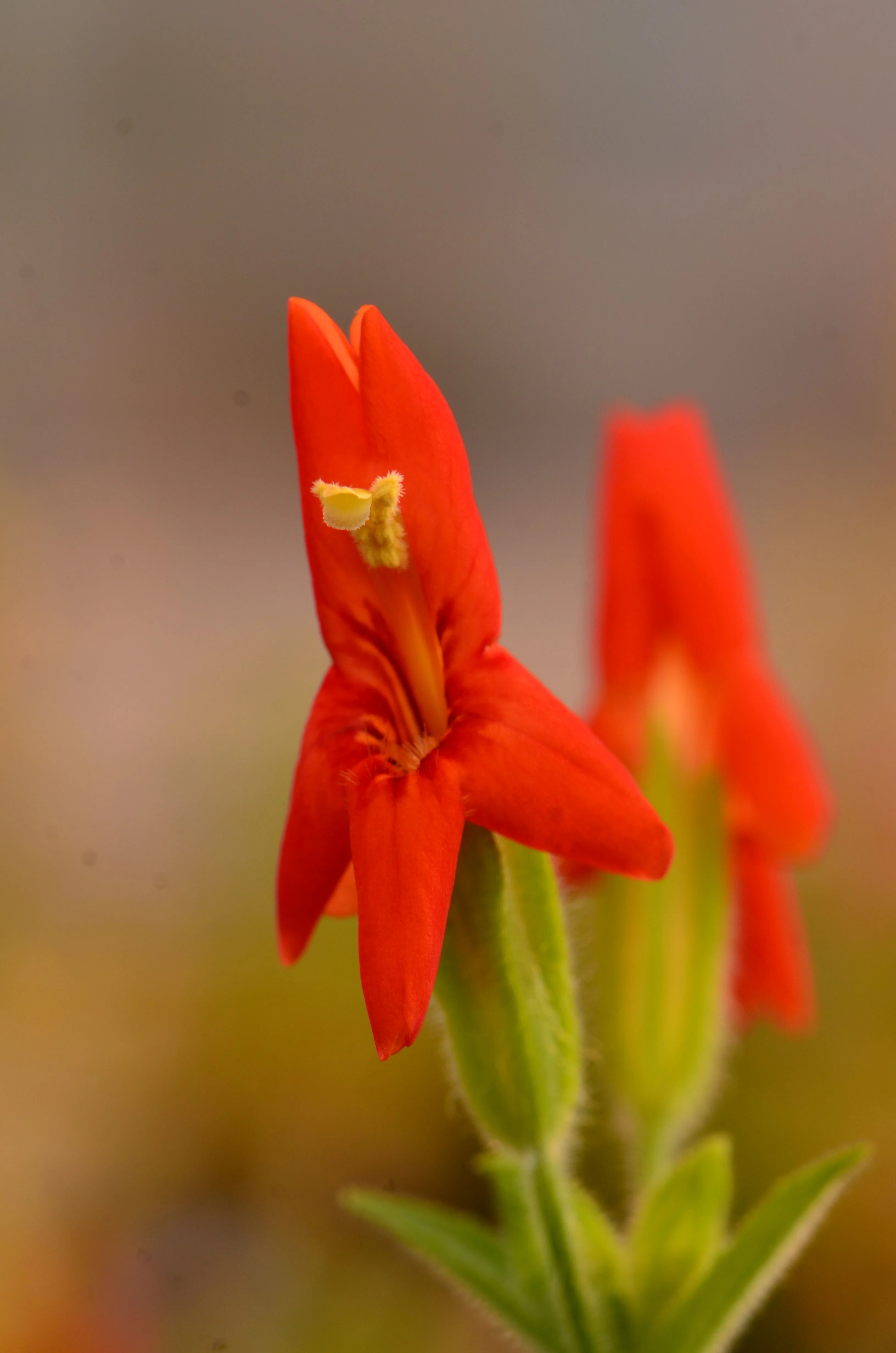
Scarlet monkeyflower. (Daniel Anstett/Submitted to The Weather Network)
According to Angert, an evolutionary rescue has three main stages.
The first involves an environmental change that forces wildflower populations into decline, helping to push them towards extinction, she noted.
"That's really detrimental. Unfortunately, that part is relatively easy to demonstrate these days. The next two parts are the ones that are a little more challenging," said Angert.
SEE ALSO: Why 'leaky plants' are a troublesome issue for the planet
The second stage to the evolutionary rescue is for populations to "actually evolve," allowing them to handle the detrimental environment, the UBC professor said.
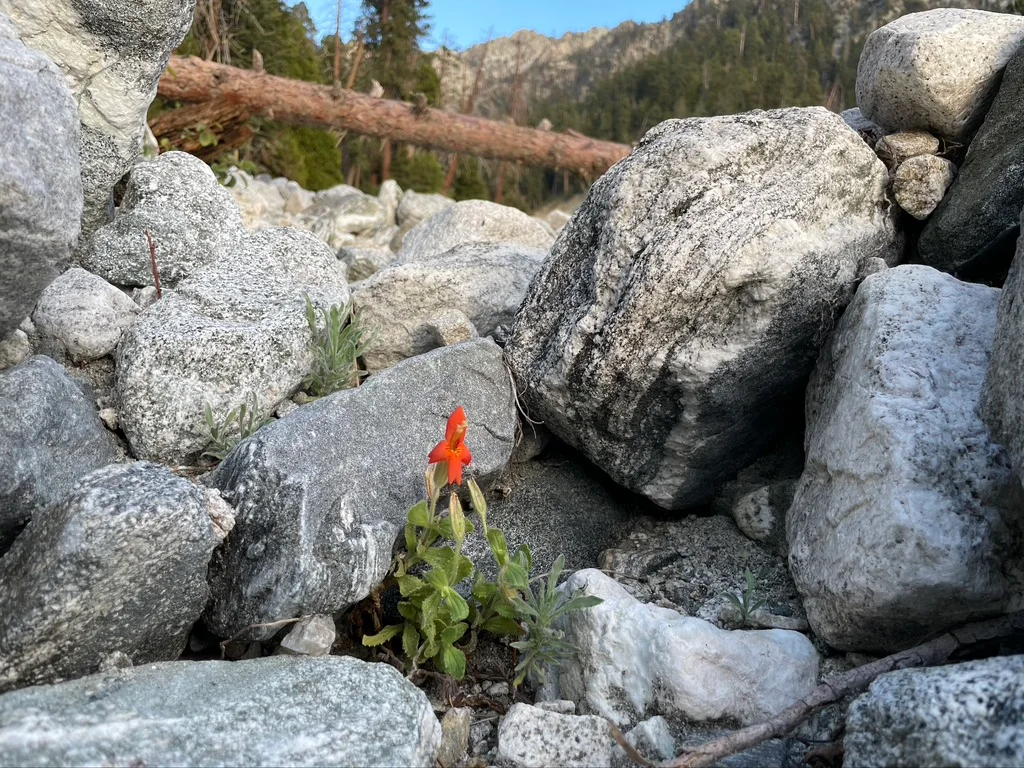
Scarlet monkeyflower plant in natural habitat. (Seema Sheth/Submitted to The Weather Network)
Finally, in the third stage, the adaptation needs to help bring the population path back towards persistence.
"By monitoring these wildflowers for so many years in a row, we could watch that time course of decline and recovery," said Angert. "By looking at the genetic differences the populations had over time, we could see the genetic changes that were happening, associated with the recovery."
Can plants show resilience quick enough, though?
While Angert and her colleagues were able to determine the scarlet monkeyflower's resilience to drought, the focus then shifts to its recovery and if it can match the pace at which extreme drought is occurring nowadays.
"Having that raw material, those genetic differences, is really important. Even long-lived species could have some of that raw material to work with. But the question is one of time scale. How long would it take for reproduction, survival and recruitment to play out?" said Angert.
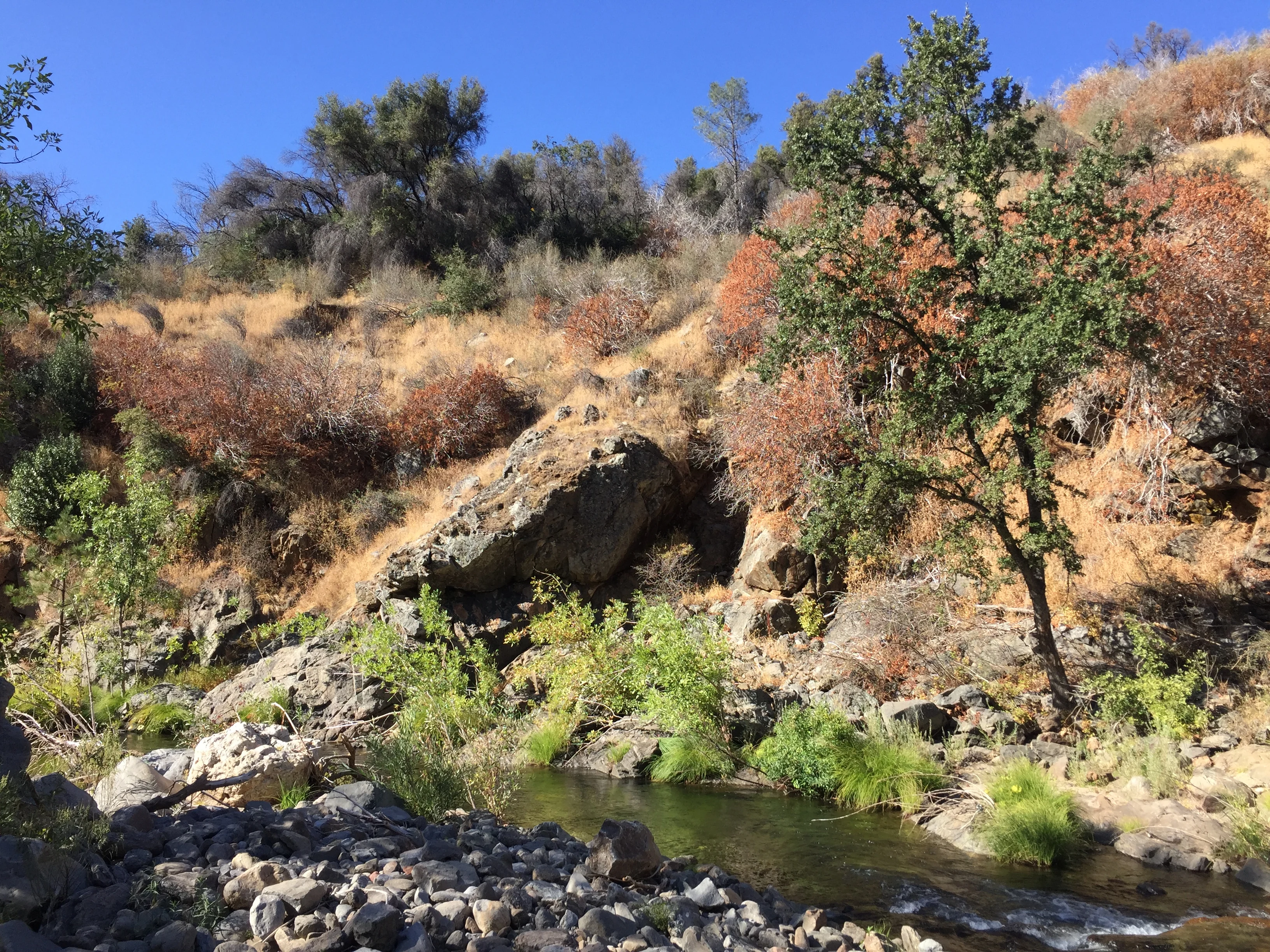
Stream in California with scarlet monkeyflower. (Daniel Anstett/Submitted to The Weather Network)
She noted that for a perennial plant such as a tree, it might be harder to overcome such an extremity in a relatively short time frame because it takes decades before it even reaches reproduction.
"Their cycles of adaptation just proceed slower in real-time," said Angert.
Researchers were monitoring the scarlet monkeyflower for numerous years before they encountered a strong drought, she said, noting the wild plant was already on a "path towards extinction in most of the places we were watching [it]."
WATCH: Arctic wildflowers known as dwarf fireweed blow in the summer breeze
However, in some places, the plant's genetics had changed to cope with the drought, happening in locales where recovery happened the quickest, Angert added.
The scarlet monkeyflower isn't the only species that has demonstrated an evolutionary rescue.
Angert said other instances in nature have been found where the environmental stressor is a disease.
"For example, we've introduced novel pathogens, and they have caused some vertebrate populations to evolve really quickly. It looks like evolutionary rescue," said Angert. "In those cases, we also have examples of rapid adaptation to adverse climate changes. But in those cases, we don't have the population dynamics of decline and recovery associated with the adaptation."
What will happen when the next drought hits?
The UBC scientist believes the study she was involved in is one of the first to show the genetic change, decline and recovery, which are the "hallmarks of evolutionary rescue."
"One way you can think about it is [like] adaptation jogging on a treadmill, and climate change is speeding that treadmill up really fast," said Angert.
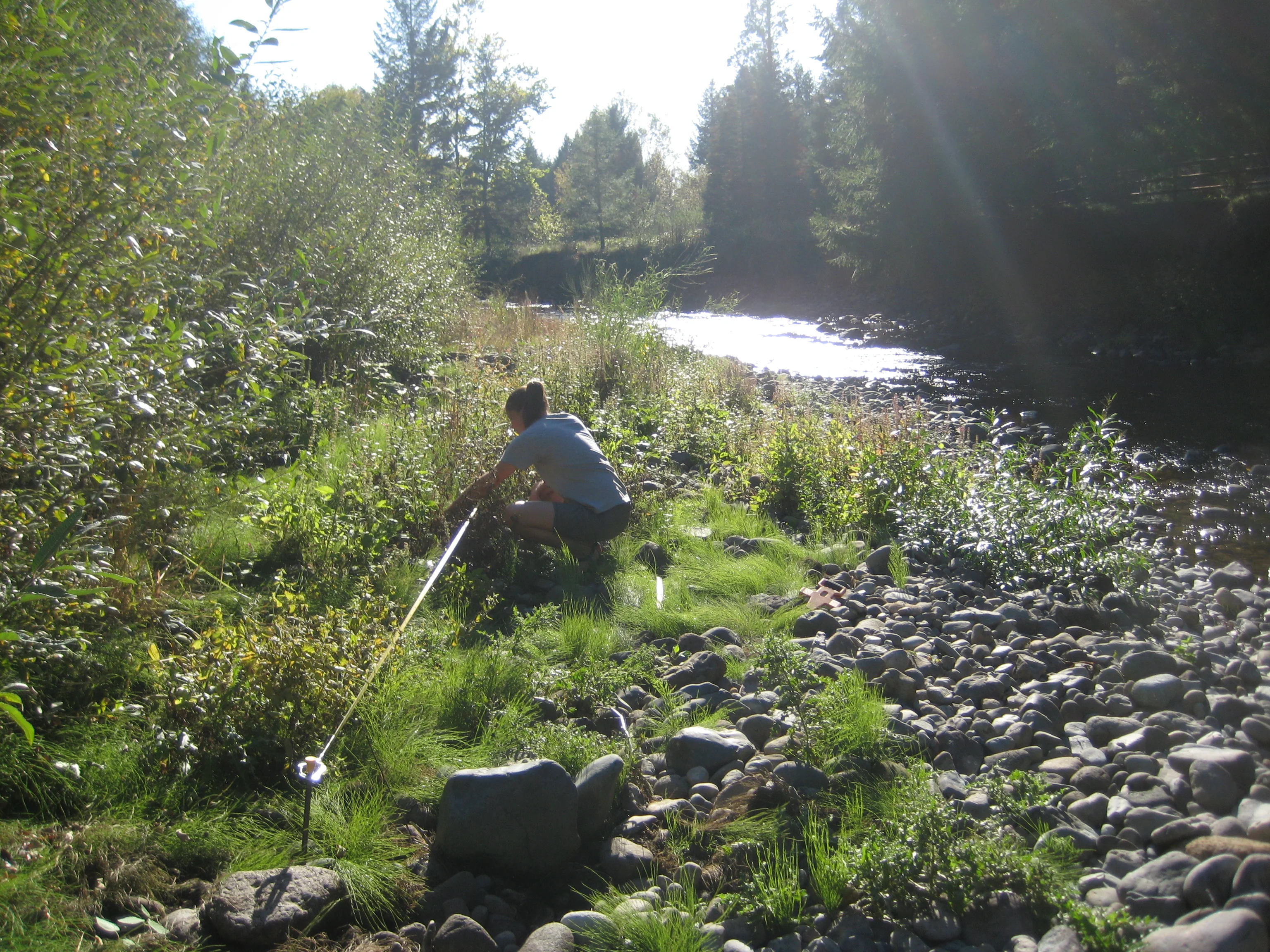
Scarlet monkeyflower plant habitat. (Amy Angert/Submitted to The Weather Network)
"The concern has been that species aren't going to be able to run quickly enough to stay on the treadmill. And in this case, for these wildflowers, we were able to show that they were [actually] running fast enough, and they didn't want the treadmill."
One of the next steps for researchers is to continue monitoring the scarlet monkeyflower populations, tracking their persistence and evolution as part of it, she noted.
"One of the big questions is, 'what will happen when the next drought hits?'" said Angert. Did the adaptation that we just observed give them a head start for the next drought? Or did it actually use up the genetic differences?"
Can this data be useful to help other species of concern?
When looking at the number of threatened or at-risk species in North America, and globally, the data from the March 2026 study could prove useful for conservation actions that boost population sizes because it will offer the "raw material to fuel adaptation," Angert said.
Another area of focus that arises from the study then is how to categorize species based on self-resilience versus others that may require human intervention or management, she added.
"One of the things we were able to see in the data was that some populations entered the drought with just a lucky combination of genetic differences that were kind of pre-adapting them to the climate stress that came," said Angert.
"One thing we hope to do is test whether that knowledge of the genetic differences that populations hold can be predictive, even for systems where we don't have these long-term monitoring datasets like we did."
WATCH: Canada loses billions annually due to invasive species, how you can help
Thumbnail courtesy of Seema Sheth.