Artillery shells and shipwrecks revealed as Central Europe's rivers dry up
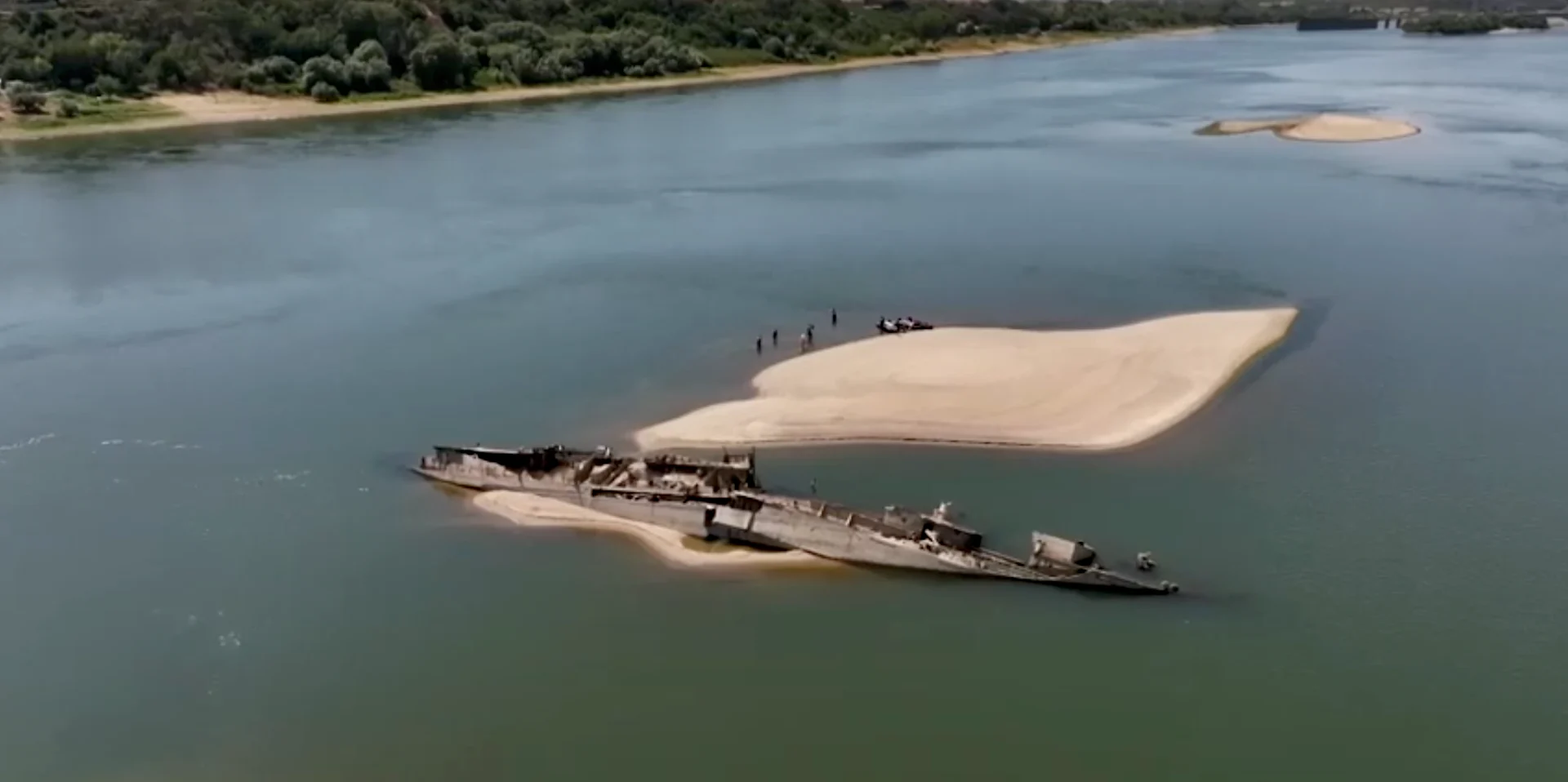
In 1944, with the Red Army pushing into Europe, retreating Nazi German troops intentionally sunk hundreds of warships in the Danube. Now, as a severe drought pushes the river to record low levels, the sunken fleet has re-emerged.
The fleet is among a hoard of items revealed by the receding waters. Along with numerous shipwrecks, the remains of what could be a mammoth were discovered in Bulgaria.
The animal's remains were found in July by a local in Ryahovo village, who noticed the unusual find on the river bed. Villagers then alerted specialists in the Regional History Museum in the nearby town of Ruse, who are examining the remains to verify if it is the prehistoric giant.
But the drought has exposed some more concerning finds too. In Osijek, Croatia, experts removed an artillery shell discovered in the Drava river. In Budapest, an explosive disposal squad briefly shut down a major city centre bridge after the remains of a 75mm shell, dating from WW2, were discovered.
But with the shell removed, the new Danube island quickly became a spot for locals to visit and take seldom-possible photos in the middle of the river.
Throughout Central Europe, falling water levels have exposed sandbanks and riverbeds, leaving vessels stranded and stemming water flows to nuclear power plants.
On Friday (August 7), Hungarian Prime Minister Peter Magyar said rains in Austria would temporarily raise Danube water levels.
(Editing, production and writing: Thomas Holdstock)