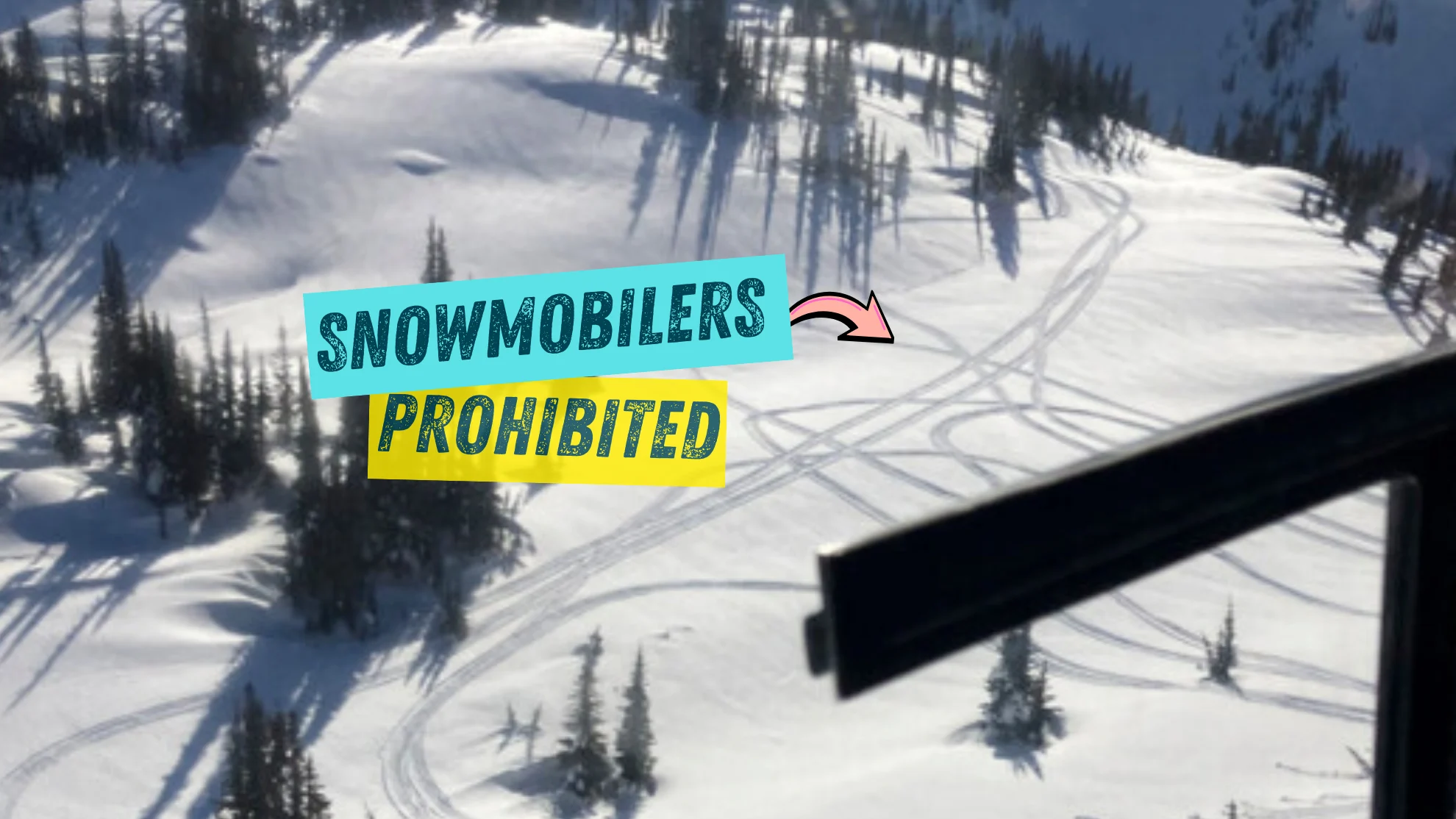
Illegal snowmobile tracks found in protected B.C. caribou habitat

Individuals caught snowmobiling in a sensitive habitat such as the one above can face fines of $575, while repeat offenders can be fined upwards of $200,000 and face up to six months in jail.
Conservation officers conducting aerial patrols over protected habitat in B.C.’s Peace and Okanagan regions have spotted snowmobile tracks in a sensitive area where endangered mountain caribou roam.
“While no snowmobiles were actively seen in a closed area, officers noted snowmobile tracks in several of these locations. On one flight, officers observed approx. 50 caribou throughout the patrol,” B.C.’s Conservation Officer Service says in a Facebook post.
“Recreational snowmobiling in illegal areas can displace mountain caribou and threaten an endangered population. Please make sure to know before you go and recreate responsibly."
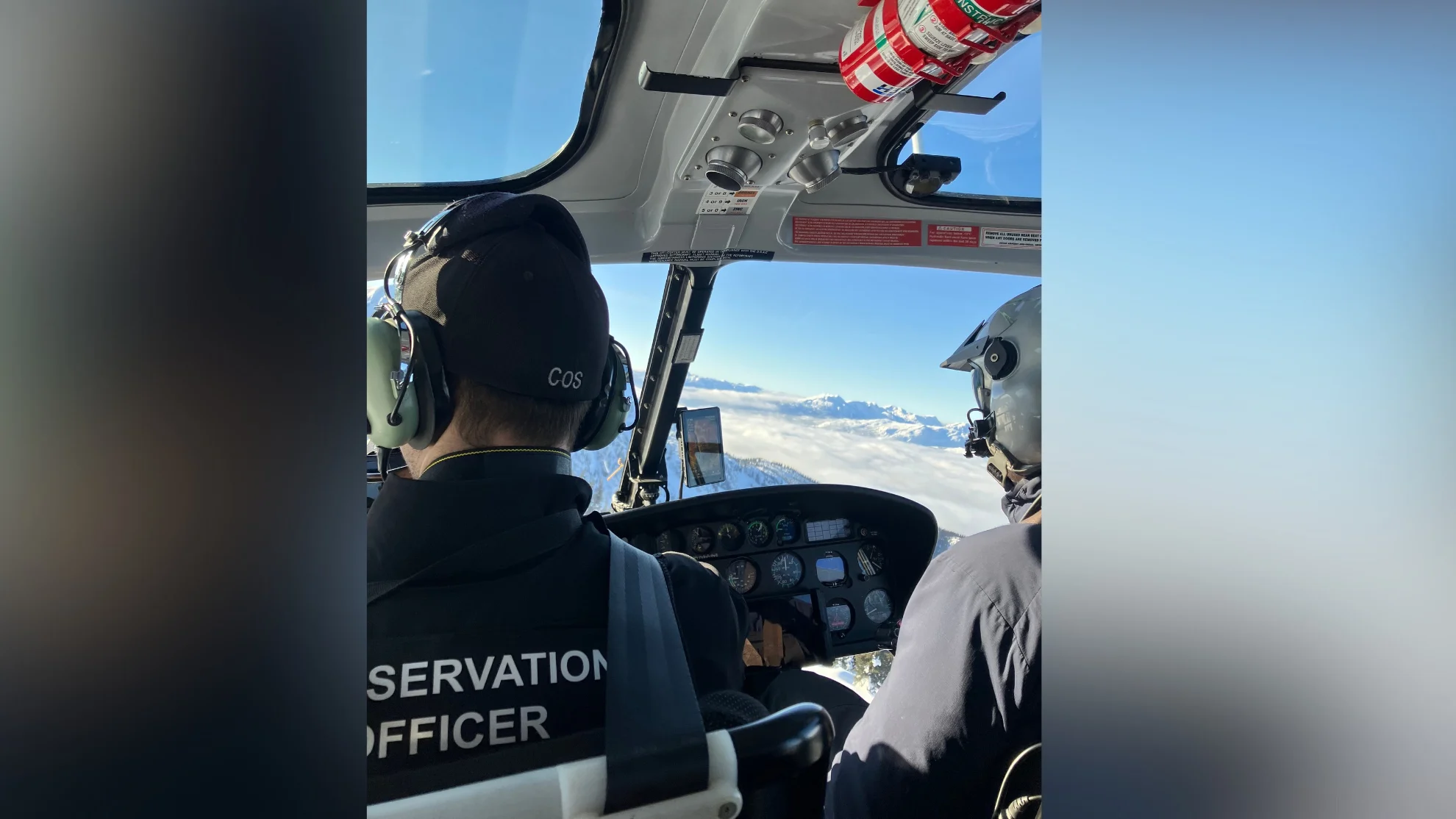
Conservation officers patrolling protected areas in B.C. (Conservation Officer Service/Facebook)
Officials did not disclose the exact location of the tracks.
Individuals caught snowmobiling in a sensitive habitat can face fines of $575, while repeat offenders can face fines upwards of $200,000 and up to six months in jail.
Big fines for four snowmobilers in 2016
In 2016, four snowmobilers were fined hundreds of dollars after becoming stranded in B.C. Glacier National Park, where mountain caribou can be found.
The men — three from Alberta and one from Saskatchewan — also had to pay an additional $4,000 to have their equipment airlifted out of the park.
Glacier National Park does not allow motorized vehicles. The group had been sledding there and required rescue after getting stuck in heavy snow.
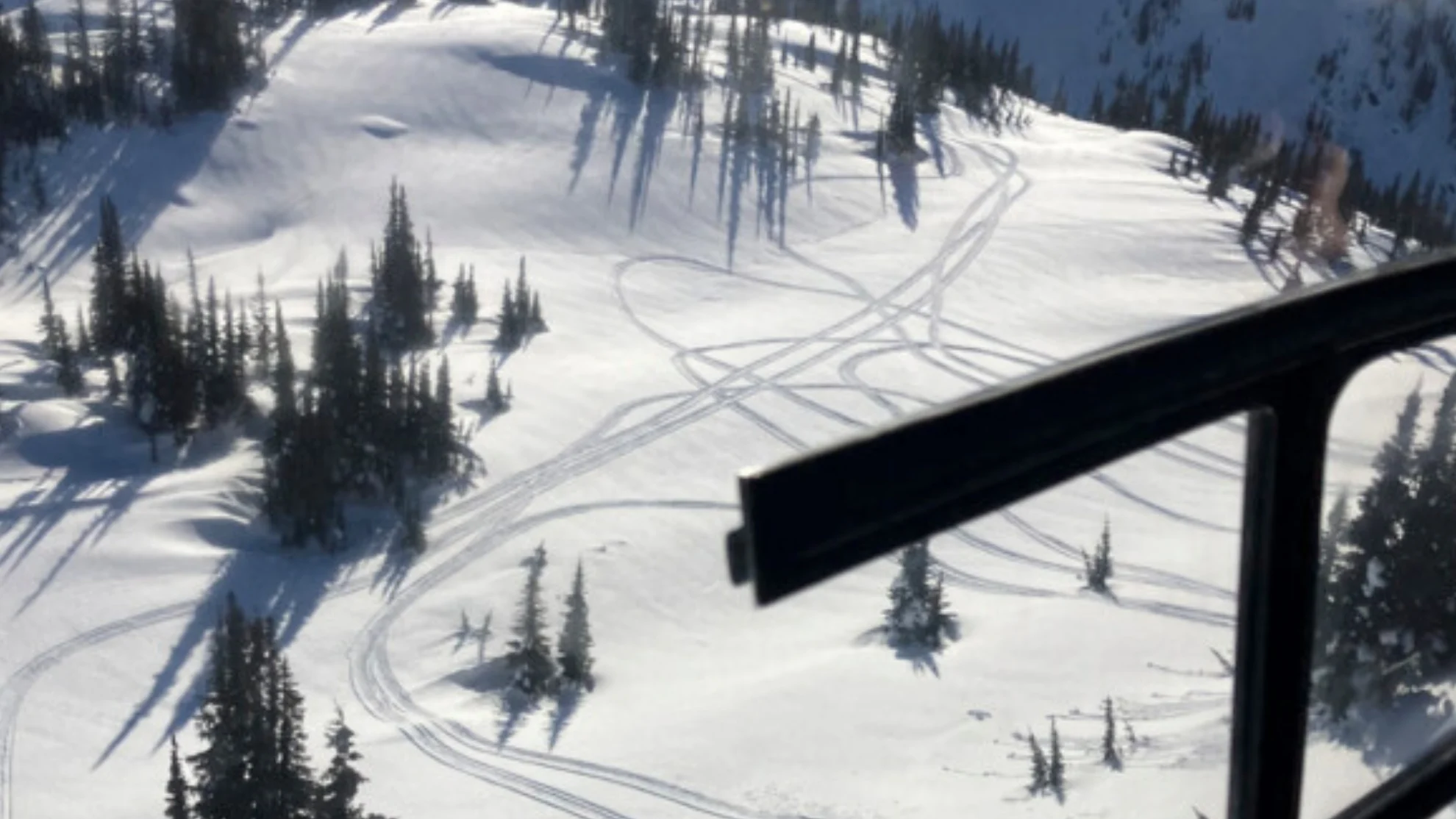
Image of the snowmobile tracks, taken in an undisclosed area.(Conservation Officer Service/Facebook)
At risk of extinction
According to the Government of British Columbia, about 98 per cent of the world’s 2,500 mountain caribou live in B.C.
The government says the species is “at risk of extinction,” with the main threats being human activity and wolf predation.
Officials have taken steps to restore the species, including protecting 2.2 million hectares of habitat. In January 2015, government officials made what they call a “difficult decision” that involved removal of wolves from South Selkirk and South Peace, two areas where mountain caribou populations are particularly at risk. Officials say grey wolf populations are stable or increasing in parts of B.C., and that the controversial decision to limit populations in two areas had a positive impact on mountain caribou calves in regions where it is most needed.
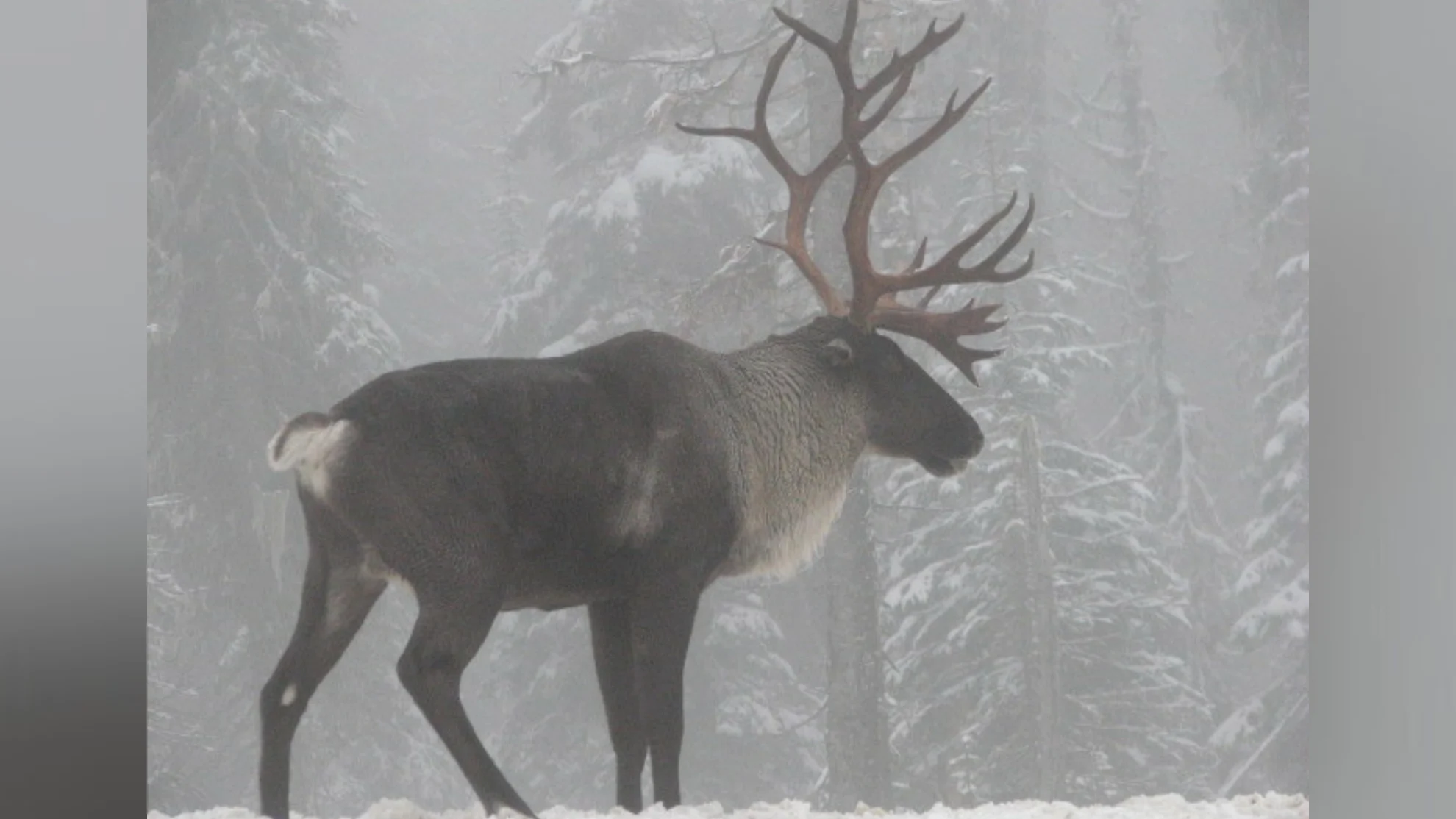
File photo of a mountain caribou (Steve Forrest/Facebook)
Some critics have called this move a band-aid approach, arguing that controlling wolf populations is an ineffective tactic in comparison to the habitat destruction associated with human development.
Others believe the current conservation efforts in place are inefficient: Earlier this month, several environmental groups, sued the federal government due to what it calls delays in protecting the mountain caribou. The lawsuit, filed Monday against Canada’s Environment Department, argues that officials have stalled on mapping out the species’ critical habitat for more than a decade.