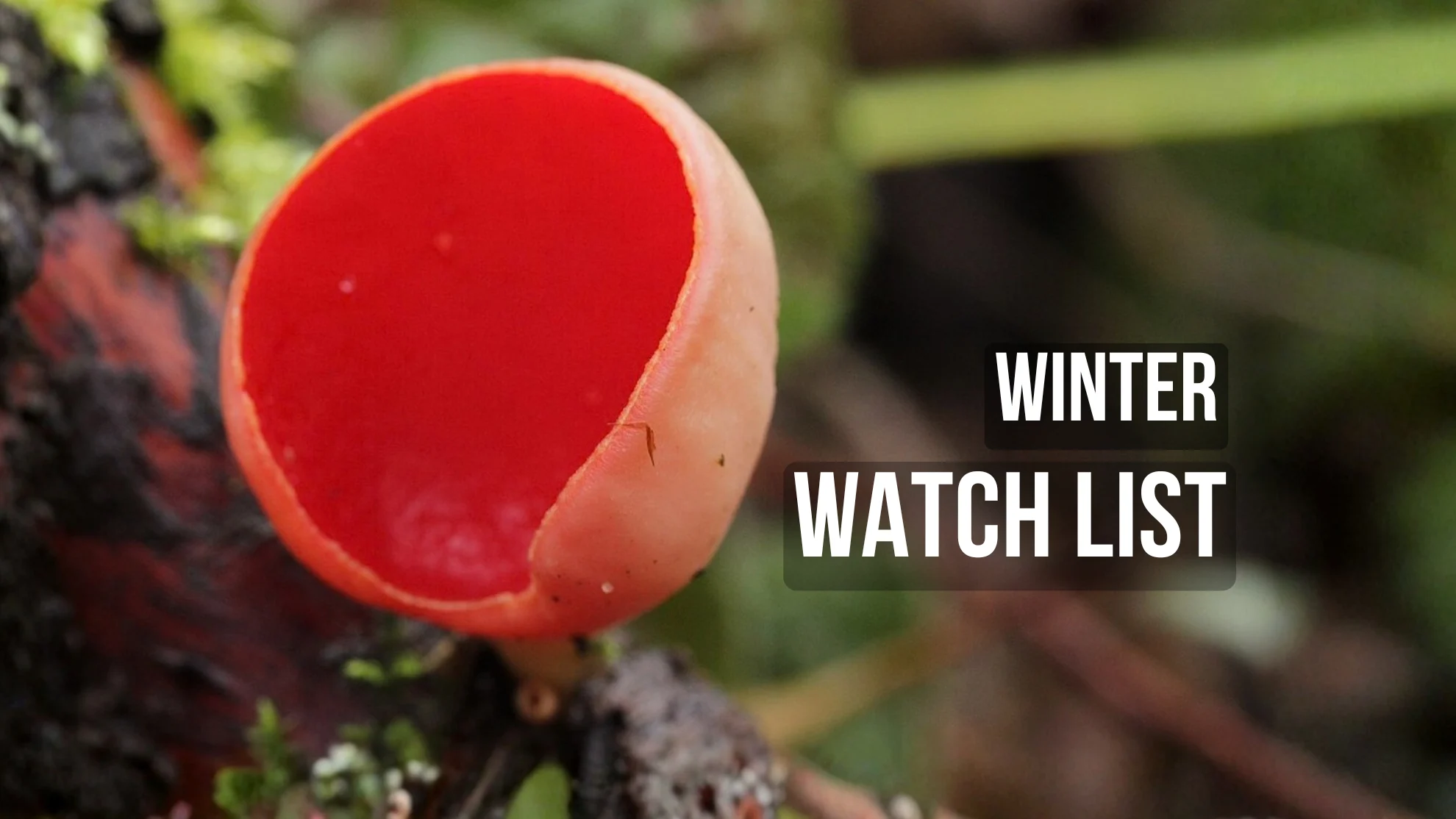
Increase in scarlet elf cup sightings signify winter is coming to a close

Scarlet elf cup (or scarlet cup) is usually one of the first bursts of colour you'll see in the woods, marking the end of winter.
The next time you head out for a walk in the woods, keep your eyes peeled for scarlet elf cup, or Sarcoscypha coccinea.
This fungus species is often one of the first bursts of colour to dot woodland floors in late winter and, according to iNaturalist, it's already making an appearance, with at least 150 sightings recorded in January 2026.
That's up from 20 sightings the month prior.
Most of the reports come from Europe, but a handful hail from B.C.’s Aldergrove Regional Park.
Despite the lack of recorded sightings, there is a possibility it is also quietly appearing in forests elsewhere in Canada, as it’s capable of growing in below-freezing temperatures.
Scarlet elf cups appear on damp, decaying sticks and branches, and are sometimes buried under leaf litter piles. They’re usually 1-5 cm tall, but can grow as big as 8 centimetres.

(Holger Krisp/Wikipedia CC BY 3.0)
While edible, they’re often described as having a “tough” texture. Historically, the fungus has been used for medicinal purposes, especially by Oneida Native Americans, who applied it under bandages to stop bleeding and promote healing.
Though tiny in size, this native fungus is a power player when it comes to keeping the forest healthy.
It helps decompose leaves and wood on the forest floor, releasing nutrients into the soil and supporting the growth of other spring plants.
While it’s often referred to as a sign of winter’s end, scarlet elf cup can persist for several weeks.

(Björn S/Wikipedia CC BY-SA 2.0)
The next time you head out, consider adding this interesting fungus to your winter watch list.